Jamia Zia-ul-Uloom in Poonch marked its 50-year journey, celebrating its founding vision, expanding its educational mission, and reaffirming enduring communal harmony, as reflected in Omar Abdullah’s tribute and the institution’s evolving academic and humanitarian role. Syed Shadab Ali Gillani, who attended the Golden Jubilee event, reports
“Before formally starting the institute, Maulana Ghulam Qadir, our founder, met Sheikh Mohammad Abdullah in Deoband, where he was advised that he should establish such an institution back home,” said Maulana Sayeed Habib, Chairman of Jamia Zia-ul-Uloom, Poonch’s reputed education institution. “Years passed, and later Maulana Ghulam Qadir laid the foundation of this institution”, Habib, the founder’s son, said. Sheikh, incidentally, was part of the institution’s primary function at a time when the border town was among the most backwards in the erstwhile state.
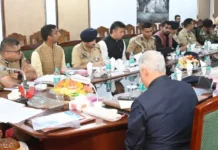
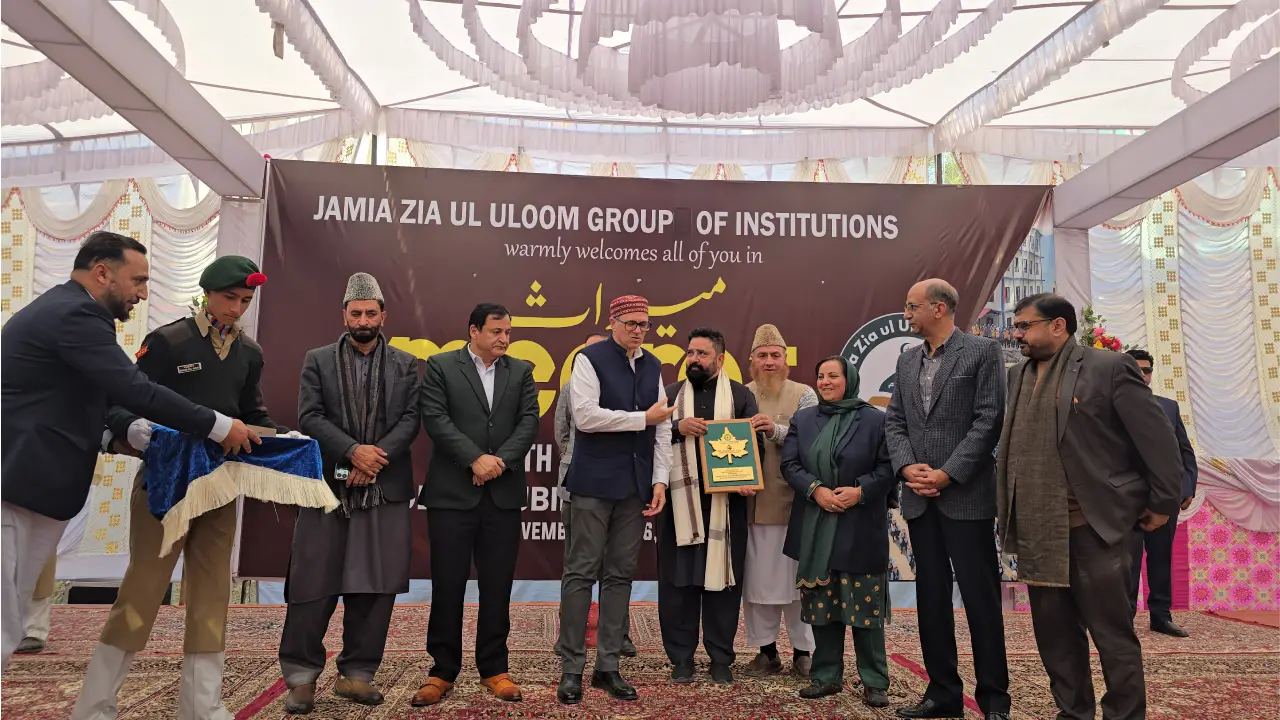
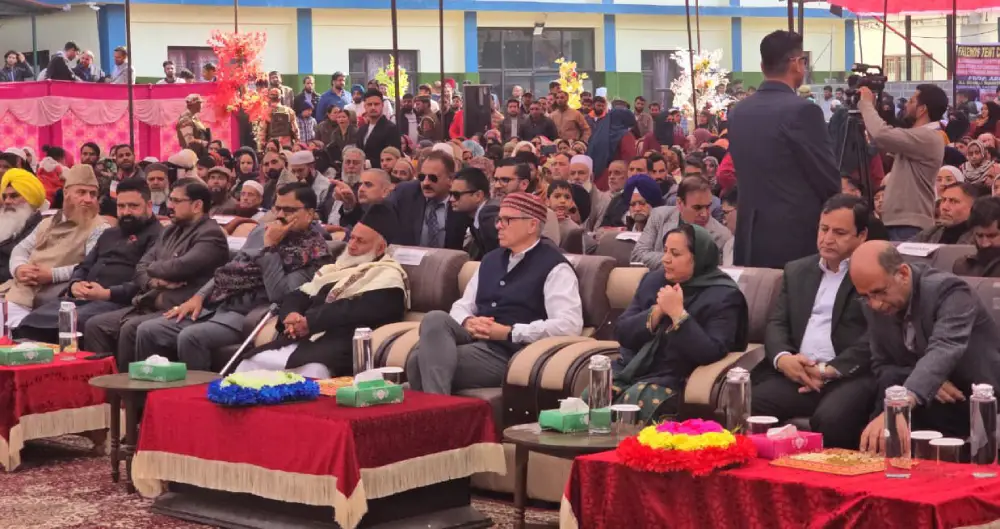
As the institution that is synonymous with the educational movement of the region celebrated its half-century, Sheikh’s grandson, Omar Abdullah, now Jammu and Kashmir’s Chief Minister for the second term, was the chief guest. Flanked by most of his council of ministers, Habib said they cherish the family’s continued attachment with the institution that is trying every bit to manage Poonch’s educational deficit.
Golden Jubilee Celebrations
Jamia Zia Ul Uloom, the prominent seminary in the Pir Panchal valley, comprising Poonch and Rajouri districts, had packaged its 50th Annual Day as Meeras (the inheritance). The event honoured the institution’s five-decade journey in education, character building, and social upliftment. It brought together dignitaries, alumni, faculty, and community members to look back at the evolution of a centre that has made enormous contributions to its credit.
Meeras represented a reaffirmation of the institution’s mission to strengthen society through knowledge and harmony, promoters reasserted.
Omar showered praise upon the Jamia for its role in shaping the educational landscape of the region. It has helped thousands of families and has emerged as a symbol of unity, discipline, and peaceful coexistence, he said. Omar urged people to visit the campus and understand how it has upheld communal harmony and mutual respect through its teachings and outreach.
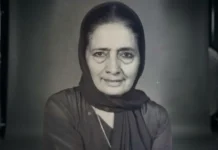
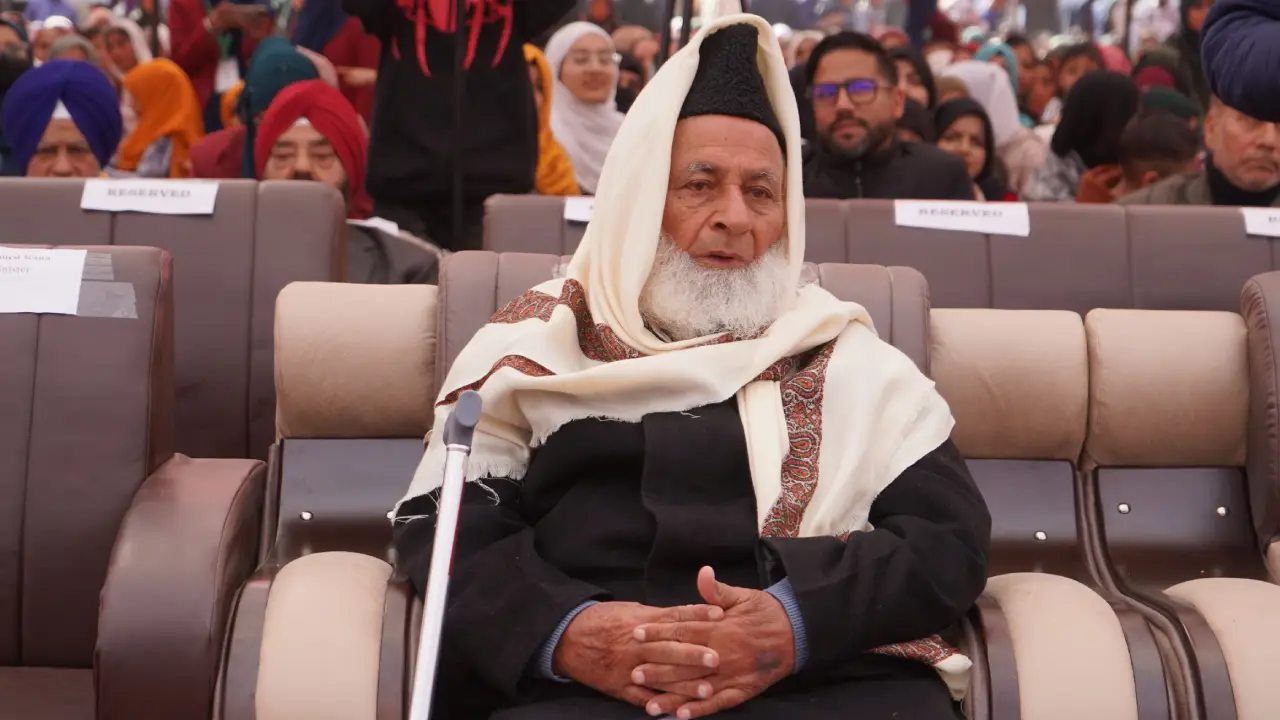
Paying rich tributes to Maulana Ghulam Qadir and terming him “a voice of brotherhood and educational influence”, Omar noted that sustaining such work over fifty years reflects rare dedication. The founder is alive but is indisposed. He lives within the premises of the institution he created.
An Evolution Sketch
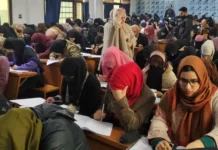
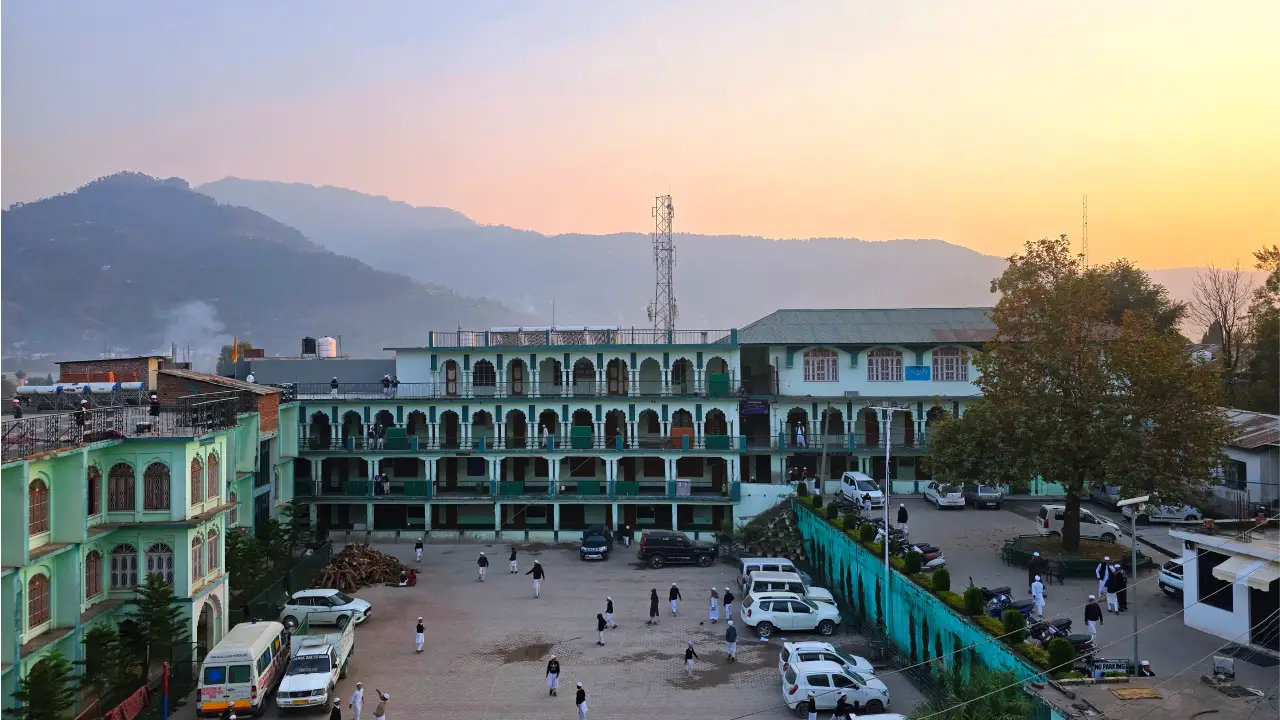
What began as a modest two-room structure, over the last 50 years, the Jamia Darul Uloom has grown into a vast campus serving both male and female students. The institution now operates separate facilities for boys and girls, each equipped with its own hostel. A central kitchen in the main building prepares daily meals, which are then delivered to the female students’ residence. The campus also features an outdoor play area for the students.
The Jamia School, part of the initial seminary and its educational network, mirrors this setup with two distinct academic buildings for boys and girls and a masjid situated within the premises for all the inmates.
“My association with this institution now spans more than three decades, Maulana Syed Anwar Shah, a teacher at the Jamia, said, while offering an overview of the academic structure. “Jamia began in 1974 in a small mosque in Poonch, and it was a solo show by our founder.”
With passing days, as the infrastructure improved, the systems and procedures also changed. “Today, the institution has a complete system of Qur’anic studies, Hadith studies, Tajweed and Qira’at. Besides, the Jamia runs an organised recitation department,” Shah said. “At the entry level, children begin with Hindi. As the course progresses, those entering Arabic studies are taught English as well. For senior classes, computer training is part of the regular timetable.”
Parallel Systems
The institution has two parallel set-ups, one each for males and females. “Jamia-tul-Tayyibat brings girls from various districts across the region,” he said. “They follow the same curriculum and also learn basic vocational skills such as sewing. This branch, too, has completed fifty years of work.”
Shah summarised the overall scale, “Across the campus, the school division now teaches nearly 2,500 children. Senior-level girls study in a separate building. The curriculum runs from English and Mathematics to Sciences and Islamic studies, while Qur’anic learning continues simultaneously.”
Presently, the seminary alone has more than 1000 students enrolled, and the school, with all the modern facilities, comprises around 2200 students. However, not all the students enrolled in the twin institutions avail the residential facilities, as some of them who live nearby go home after the schooling days conclude.
“The Madrassa does not charge students any fees. Instead, the seminary operates primarily on public donations and Zakaat contributions,” Habib said. “In contrast, the school follows a nominal fee structure, with monthly charges ranging from Rs 500 to 1,000.”
The Beginning
“When people speak of Jamia today, they see a 50-year-old institution standing with confidence in the hills,” Maulana Sayeed Habib said. “But if you truly want to understand what makes this institution special, you must travel back to 1974, to the dust and quiet of a small town where even a night’s stay was a hardship.”
In 1974, when the institution started, the site in the hills lacked everything: not a single necessity of life, no proper road, no hotel, barely any houses. “In that landscape of scarcity, my father dreamed of abundance, an abundance of knowledge, of dignity, and light,” Habib said, insisting on every single word.
The institution had a dual mission: “In 1974, he established the madrasa, and later he founded the school,” he said. “Today, Zia-ul-Uloom has completed 50 years, and so has our school. In these five decades, this institution has produced scholars, teachers, officers, doctors, engineers, and gifts to the nation that no one in 1974 could have imagined.”
Explaining the institution’s ‘unique’ educational philosophy, Habib said they educate and train children for deen and duniya, without allowing one to eclipse the other. “People often ask why a madrasa would teach English, Hindi, or computers,” he said. “I tell them that if you truly wish to face the challenges of the age, you must first free yourself from the prison of labels. Language is not the enemy, ignorance is.”
Omar used the celebration to defend the role of religious educational institutions in Jammu and Kashmir and challenged, as he said, the unfounded allegations routinely levelled against the seminary set-up.
Abdullah argued that the milestone itself was testimony to the Jamia’s endurance. Many institutions, he noted, have collapsed quickly or have been created for financial exploitation, unlike Jamia, which survived difficult decades and continued to expand its influence.
The Legacy
Pointing towards a poster displaying alumni of the institution, Omar highlighted the contributions. Some of its students have qualified for difficult examinations and made their way into the IAS, KAS, and KPS. The success of these students, he said, demonstrated the institution’s wide reach.
Student presentations included patriotic songs and a recitation of the National Anthem and Constitution Day pledges. Abdullah said those performances alone demolished the narrative circulated on social media and in sections of the press that such institutions promote hatred or sectarianism. “I wish those people who use social media and the press to spread poison against religious and educational institutions could sit here and watch this programme,” he said.
Omar praised Maulana Ghulam Qadir, the founder, for maintaining brotherhood and communal harmony, and for the Jamia’s record of helping people during natural disasters and assisting the government in maintaining peace.
In Poonch, there is a moving story of friendship and humanity, which emerged when Jamia was caught in the crossfire between India and Pakistan during Operation Sindoor. As the shells rained down, Pardeep Sharma, a former BJP MLC, was seen on the ground helping the injured, rising above lines of faith and politics. When a mortar struck the madrassa, its patron, Maulana Sayeed Habib, immediately called Sharma, his childhood friend, to carry wounded children to safety. The blast claimed the life of a teacher and injured several students.
“We were classmates in Class 9 at Poonch Government School,” Sayeed recalled. Decades later, despite walking different paths, one into religious leadership, the other into politics, their bond had only deepened. That bond resurfaced in a moment of crisis.
“The maulvi breathed his last in Pardeep’s arms. He tried to save him, even pressed a cloth to his cheek, but he could not be saved,” Sayeed said. “I was busy rescuing the children, and I called him, asking him to rush to the hospital.”
“I did not think twice,” Sayeed said. “I called Pardeep bhai knowing he would come, and he did.” While Sharma tended to the injured, Sayeed coordinated the evacuation of more than a thousand children. “This is not the first time Poonch has seen Hindus and Muslims working together. We have always stood by each other for the sake of our society,” he added.
The Jamia, he said, imparts the full curriculum mandated by the regulator. The seminary has an additional curriculum, but there is a language basket and the modern tool the inmates use as part of the routine.
Service and Survival
Pradeep Khanna, Social Activist, Poonch, emphasised Jamia’s crucial role in the community, “Jamia has been functioning since 1974. In those years, this region had a limited population, limited connectivity, and almost no facilities for residents or visitors,” Khanna said. “Jamia filled that basic gap by creating a residential space and an educational space together.”
Khanna acknowledged the Jamia’s support during times of crisis, “During the years when militancy affected this region, Jamia kept its internal system structured. It admitted students who needed shelter, gave them food and living space, and helped them continue their studies. This support kept many young people engaged in education during a difficult period.”
Besides, he highlighted the institution’s humanitarian service. “This institution responded whenever displacement or public emergencies took place,” he said. “During the border build-ups, when families from Hindu and Sikh villages shifted to safer zones, Jamia arranged food, milk, and shelter for them. During the 2014 floods, Jamia distributed essentials. During the COVID period, it ran food-distribution efforts across the district.”