Kashmir’s Muslims fasted through Ramzan 2026 as a market collapse at home and a chain of distant events left little room for peace of mind, reports Babra Wani and Shadab Gillani
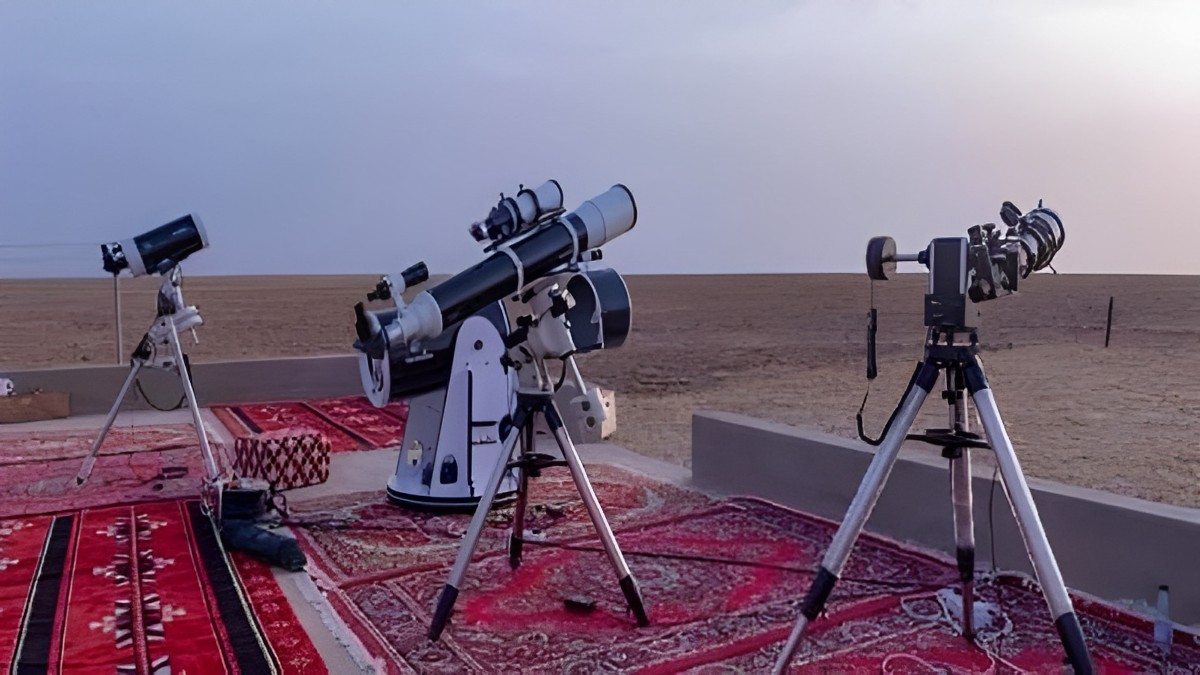
2026, Ramzan, the Muslim month of fasting, arrived in Kashmir carrying more weight than usual. As the faithful gave up food and water from dawn to dusk, the people found themselves fasting not just from meals but from peace of mind. War, assassination, economic distress and fuel panic compressed into a single holy month, the year’s most sacred.
They were not part of the mess. But in a globalised world where conflict streams into every bedroom, Kashmiris could not remain isolated. Conflicts extract costs from fence sitters, too. What people missed this Ramzan was not just the watermelons.
The Night
It was around 1:30 am. Saba sat on the prayer mat; the silence of the night wrapped around her. It was Laylat-ul-Qadr, the most sacred night in Islam, believed to be a night of forgiveness, mercy and immeasurable reward.
For years, she had marked this night with devotion. Since she was 12, Saba had spent the Shab in night-long prayers, setting herself a quiet goal each year to complete the recitation of the Quran before dawn. Now 25, the ritual had become a part of her faith, her rhythm.
But this year was different.
She prayed, recited, and tried to stay awake. Yet somewhere between verses and supplications, sleep took over her. When she opened her eyes again, it was already 3 am. Disoriented, she sat up, unsure of what had happened or why.
“It was like someone sang me to sleep,” she regretted. “It happened to me for the first time in the past 13 years, and I still have no answers or reasons to understand.”
This Ramzan was different, she said. Almost every day, as we broke our fast, the news felt like it was breaking something within us.
“There is no peace at all,” she lamented. “Everywhere, people are being killed, maimed, bombed, and displaced. Watching this day after day is so mentally exhausting that it has begun to take a physical toll. You see, 2025 was already a turbulent year, and now this one has begun with a blast too.”
Saba’s anguish mirrors the torment of a generation that cannot switch off. In a world where war, assassinations, and conflict stream onto every phone screen, Kashmiris, a people intimately familiar with turmoil, find the weight of globalised grief settling over an already burdened Ramzan.
Saba recalls that as soon as she woke up, she opened her phone. Only to find that as the Muslims around the globe were seeking forgiveness, Pakistan had launched an attack on an Afghan hospital. “The same night when people were praying for well-being and safety, hundreds of Muslims were killed by Muslims themselves,” Saba said, “it was so disappointing, so heart-wrenching.”
The Middle East In Turmoil
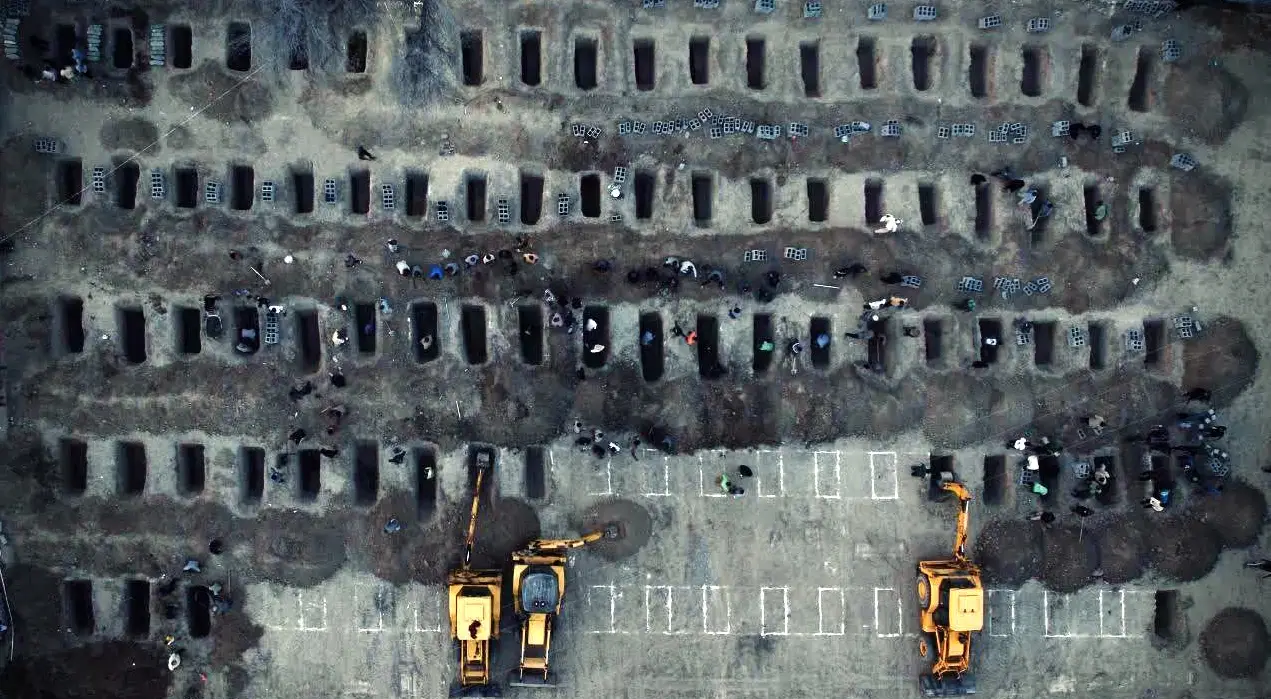
The Kabul-Islamabad confrontation came at a time when the Middle East was already burning. Saba recalled the fateful morning of Sunday, March 1, when the news of the assassination of Ayatollah Ali Hosseini Khamenei broke.
“Everyone was panicked and guessing. And people took to the streets,” Saba recalled, “soon there were photos and videos all over social media of people protesting.”
Ghanta Ghar, Lal Chowk, witnessed the highest crowd of people as thousands gathered for the peaceful mass mourning.
“It felt like 2008 and 2010,” recalled an eyewitness. “People were fasting, and still they were protesting against the USA and Israel.” What followed was a strike call from Mirwaiz Umar Farooq and then almost a week-long restriction. The public vehicular movement was almost nil, while people travelled in their own vehicles.
Internet speed was slowed down. Certain pages were restricted, and the focus remained on keeping the streets clean. Some areas in Lal Chowk were fenced for some days to prevent unlawful assemblies.
Unlike the rest of the Muslim world, Ramazan is seen as a slowdown in economic activity for almost three of the four weeks. A market closure has a cascading impact on things beyond routine earnings.
“It is easy to call for bandhs or restrict movement, but not for people like us,” said Khursheed Ahmad, an auto-rickshaw driver from Srinagar. “Everything is already expensive, and during the fasting month, consumption rises—and so do prices. For that entire week, I kept wondering: what am I doing, how will I provide for my family? My income was restricted, but my expenses had doubled. In any case, I could not earn much this Ramzan, unlike previous years. Sometimes, I feel that instead of giving charity, I should first feed my own stomach.”
He added that living itself costs a fortune, “but not everyone is born privileged.”
The Ramzan Market
“It is a blessed month, and spending on family and charity peaks during this period,” said Faiz Bakshi, General Secretary of the Kashmir Chamber of Commerce and Industries (KCCI), recalling the bustling markets he once saw. This year, however, he noted, “national, international, and local factors beyond our control” have dampened business sentiment.
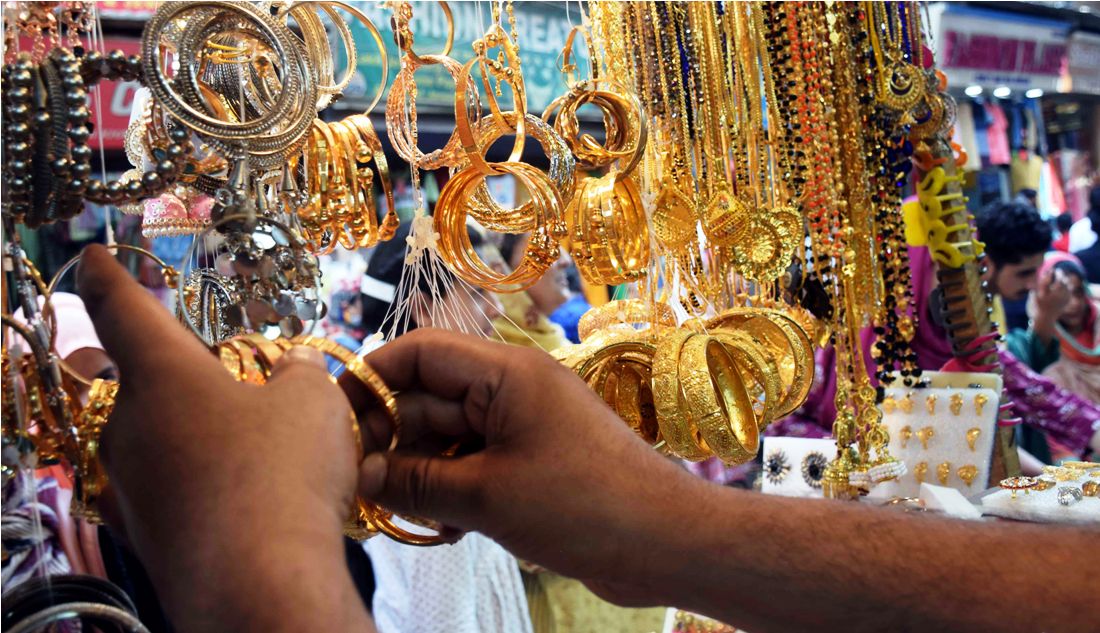
“I spoke to bakery owners who said they have done only 30-40 per cent of their usual business this year because the sentiment is very low,” he said, adding that even during peak Ramazan days, the expected rush is missing.
Inflation has also weakened purchasing power. “Gas prices have increased, petrol prices have gone up, and once fuel prices rise, it impacts every sector,” he explained. Jammu Kashmir’s GST collection, he said, has decreased by around Rs 500 crore, which directly indicates reduced consumption.
The slowdown extends across all sectors of the economy. “Our entire business sector has declined, construction, tourism, industry, retail and wholesale,” he said, warning that many businesses are under financial stress. “People have taken loans, stocked goods, but sales are not happening, and they are unable to repay bank interest.”
He highlighted Kashmir’s structural economic vulnerability. “We are largely a consumer state… 60–70 per cent of our goods come from outside,” he said, adding that this dependence makes the local economy highly sensitive to external shocks, which has been clearly reflected in this year’s subdued Ramazan market.
Online Shopping
While the retail in Kashmir is facing the music of the times, the online is doing better. For almost 10 days, when Srinagar and parts of the periphery witnessed protests over the war, online deliveries faced disruptions but have since returned to normal.
People acknowledge that online shopping leads to capital flight, yet find its convenience and presentation hard to resist. Even Saba shops online.
“I myself prefer online markets over traditional ones,” she said. “The prices are lower. There is no need to go out. You are not facing anyone, and it is comfortable.”
Apart from online, this year, the sales were very low, a shopkeeper in Lal Chowk said. He was running in and out of his shop to grab customers, “You see, my shop is empty. I have lowered the rates of my dresses.”
These cost more than Rs 3000, he said, pointing out at a white and teal blue sharara set, “but I am selling it at 1800. We are no longer looking at the profits. But at least the basic earnings to celebrate Eid.”
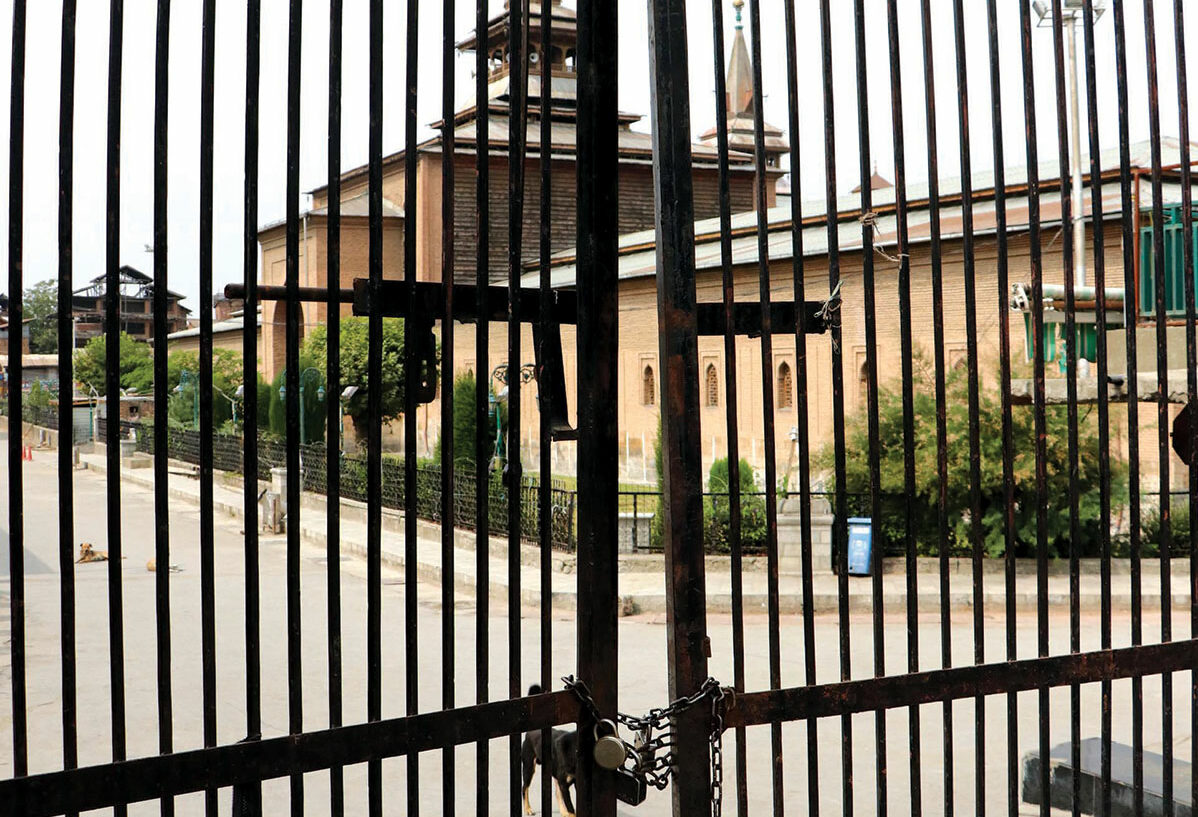
He understands the crisis. “People have no money to spend,” he said. “The one or two customers who come, sometimes not even daily, ask for lower prices, and you can see it on their faces: they want to buy, but cannot. Like us, they are suffering too. There is no money.”
Saba admitted that she looks for lower prices online so that she can save money. “There is a lot of uncertainty looming over,” she said. “I do not earn more than Rs 500 a day, but market rates are so high. I had to buy clothes for my daughter, even though vendors were selling expensive clothes.”
Not just clothes but eatables too.
Khursheed said he can only afford to buy a kilogram of cheese and a chicken for Eid.
“In the previous years, I used to buy mutton and chicken in kilograms, cheese and bakery items in bulk. This year, I do not have the income and the luxury. That is why it is better not to spread my feet much.”
Seller Stress
Buyers alone are not in crisis. Even sellers are in distress.
Adnan Shah, Secretary General of the Chamber of Commerce and Industries Kashmir (CCIK), said Ramazan shopping typically follows a predictable pattern. “In previous years, the first ten days were always slow, with activity picking up after the 10th,” he noted.
This year, however, he expressed disappointment. “Unfortunately, Kashmiris face one disruption or another every year, leaving the market little space to bloom,” he said. While there is a visible rush and traffic in the last days of Ramazan, he added, it does not translate into strong sales, as people are buying only essentials.
The Fuel Crisis
The Middle East conflict has reshaped priorities. While craft items and dry fruits once moved freely to the region, the closure of the Strait of Hormuz has disrupted these flows, forcing a shift in priorities as essential supplies take precedence.
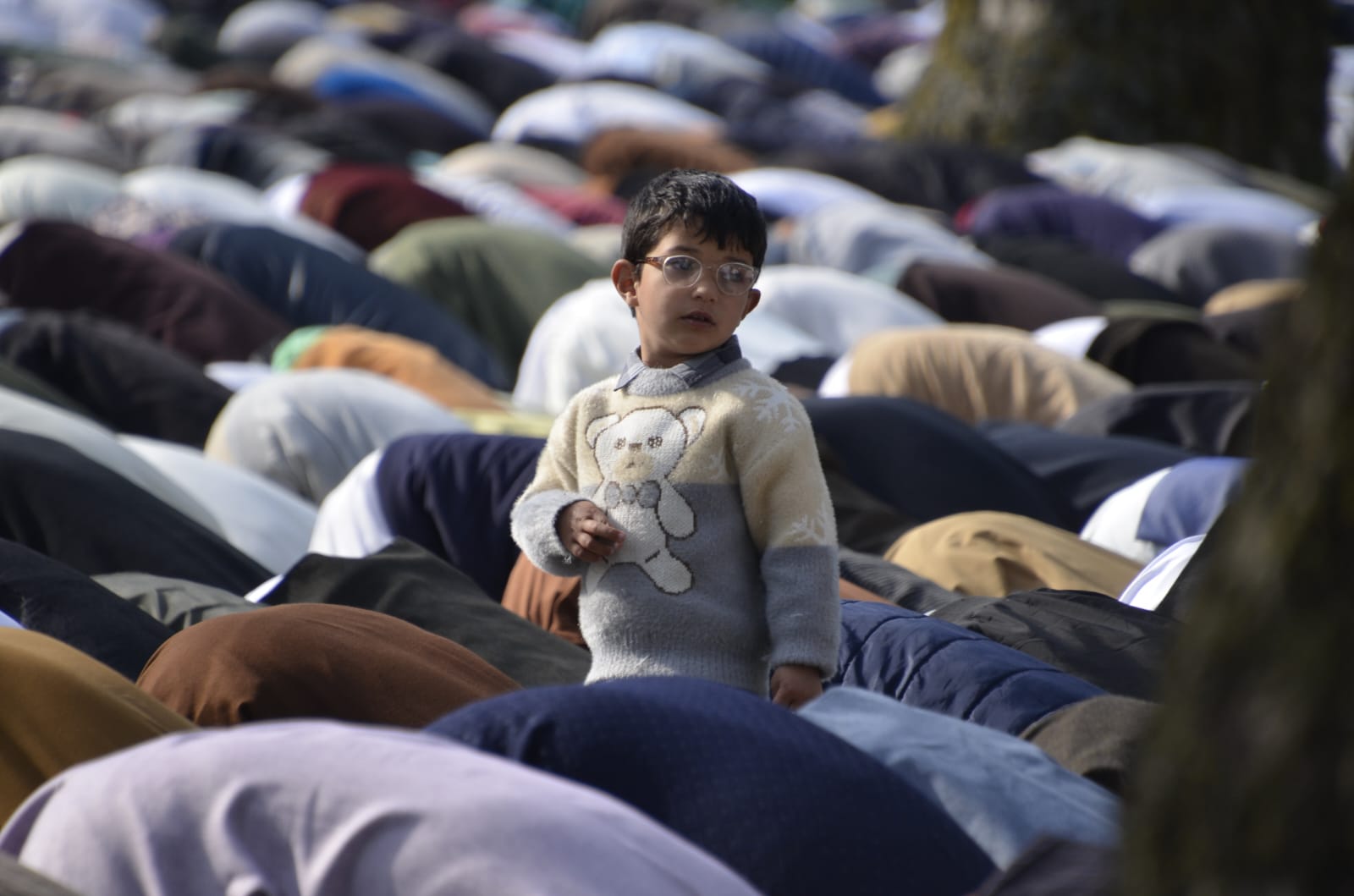
Though officials maintain that stocks are sufficient for a fortnight, panic buying has already set in. Rafiq Ahmad, a resident of Nowgam, was among the many Kashmiris unable to book an LPG cylinder. “As soon as I heard about the fuel crisis, I tried to book one, but couldn’t; there were too many people,” he said.
A Srinagar-based restaurant owner, requesting anonymity, said he had to buy cylinders in the black market. “People are panicked,” he said, adding that he is now considering shifting to induction and infrared cookers.
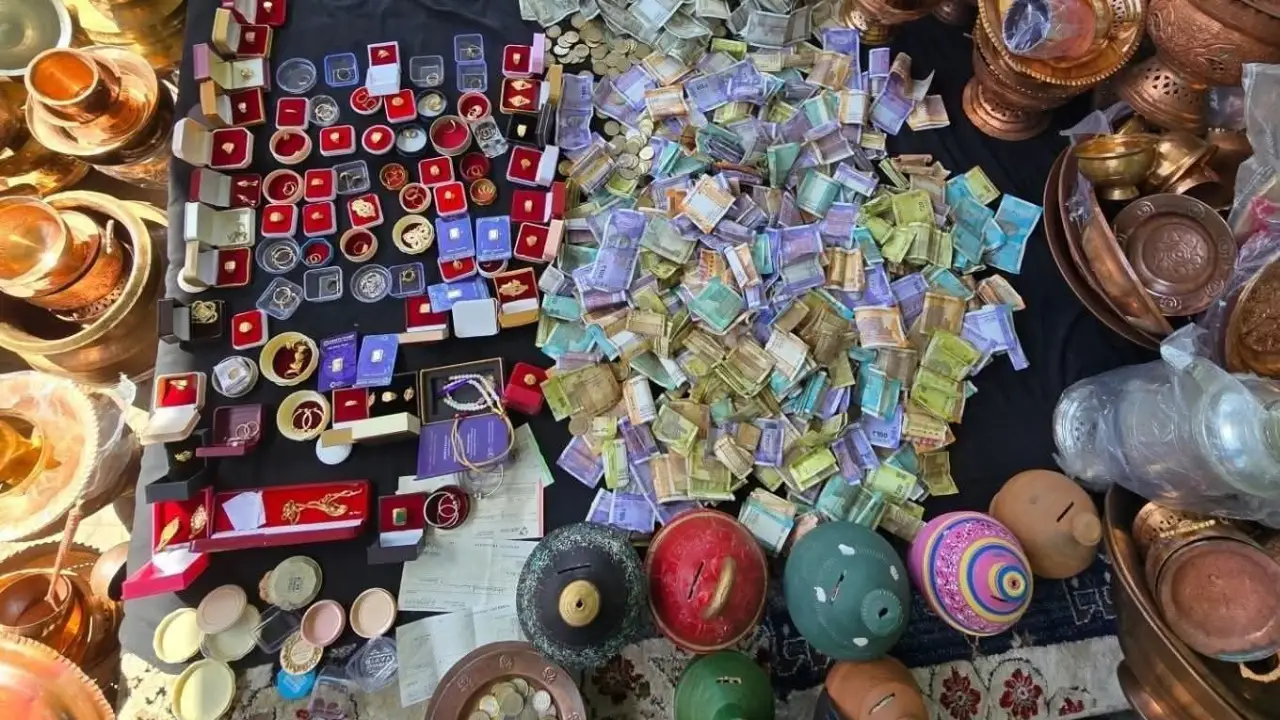
Saba is among those people who have already bought an induction cooker. “My father headed towards the market and bought the electric cooktop. Now we are stressed because our electricity bills will increase,” she admitted, while laughing, “this month has been so eventful. We do not know what happens next.”
Thousands of people also thronged petrol pumps to fill and refill their tanks and cans. Many carried with them cans to stock fuel for some uncertain times.
While the focus remains on fuel, the potential damage to handicrafts and walnut exports is being overlooked. The Gulf is a major market for Kashmiri products and a key source of remittances. Nearly 50,000 Kashmiri families live and work in the region, deepening these economic ties.
Low Charity
Most social sector organisations are feeling the strain of the economic slowdown.
“Several donors from the Middle East who were once consistent contributors have not been able to send funds this year,” said an insider in an NGO, adding that while local giving continues, larger institutions and major projects are under severe financial stress. A lack of awareness around structured charity, such as Zakat, Sadaqah, and Fitrana, has further limited organised giving.
Another fundraiser, who typically collected Rs 1-2 lakh during the holy month, said Ramazan 2026 has been particularly difficult. “People are contributing less; we simply could not raise enough this year. This month has always been the strongest for charity, but this time is different.”
The Gulf crisis has not only hit markets and charities but also students. Many from Kashmir studying in Iran have returned home, their futures uncertain.
Students in Distress
Nearly 600 Kashmiri students remain stranded in Iran as the conflict involving Israel, the United States, and Tehran enters a dangerous new phase. Many of those who managed to return did so on their own, crossing the Iran-Armenia land border.
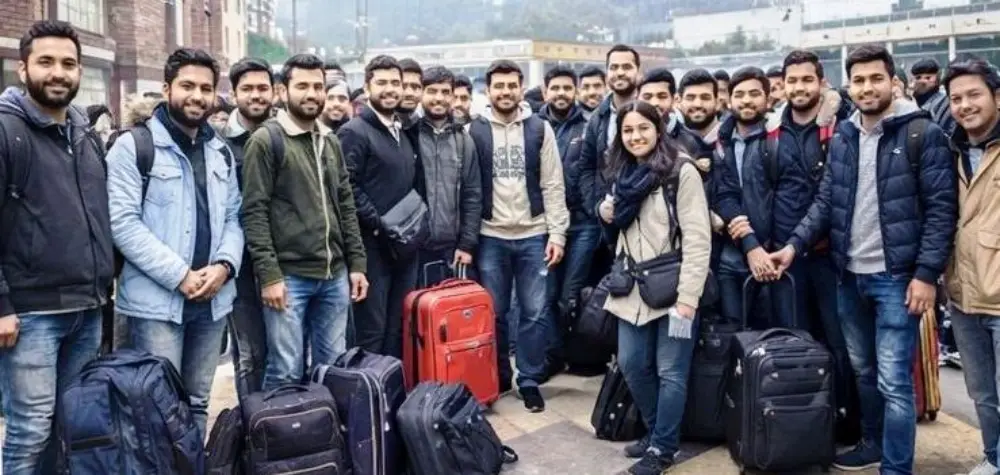
As tensions escalated in February 2026, around 900 students came back, while nearly 1,200 stayed on to complete their examinations. On March 1, following reports of the killing of Khamenei in an Israeli-American strike, communication links between Iran and Kashmir were severed, leaving families in panic.
“This is mentally draining and exhausting. It is the second time our studies have been disrupted. MBBS is already a demanding course, and all of this is adding to the stress,” said a student who recently returned. “We are becoming hopeless. Some students are still stuck there. Families are barely managing our education expenses, and evacuation itself is a challenge—tickets are expensive, and some cannot even afford them.”
A Ramazan of Extremes
Saba said this Ramazan was marked not just by shifting events, but by shifting weather. The first half felt unusually hot, “almost like April,” she recalled, making fasting more difficult. “We felt very thirsty at first, but later the weather turned pleasant. The rains brought much-needed relief, and these days feel refreshing.”
“This Ramazan, we saw everything,” she said. “Flowers bloomed early, leaving farmers distressed. We saw dry spells and rain, struggling farmers, anxious shoppers, and worried shopkeepers. And there was a political development too.”

However, what was most shocking was that Jammu and Kashmir’s five-time chief minister, Dr Farooq Abdullah, survived an assassination attempt during the month. On March 11, at a wedding in Jammu’s Greater Kailash, a 63-year-old man pressed a licensed revolver to his neck. An NSG commando intervened in time, forcing the gun upward as the shot was fired. The attacker, Kamal Singh Jamwal, later told investigators he had harboured the intent for two decades. Within 48 hours, Abdullah attended an iftaar and then faced a non-bailable warrant in the JKCA financial case.
For much of Ramazan, Srinagar’s Jamia Masjid also remained closed. “Even on Shab-e-Qadr it was shut,” Saba said. “We had planned to go there for prayers, but we couldn’t. It is very unfortunate.” Recalling earlier years, she added, “I went there twice as a teenager on Shab, it was always special. Now it is sealed.” Authorities had closed the mosque ahead of Shab-e-Qadr, disallowing night-long prayers, while Mirwaiz Umar Farooq was placed under house arrest.
Amid the turbulence, there was one moment of relief. The Jammu and Kashmir cricket team won the Ranji Trophy, defeating Karnataka to claim their first title since entering the competition in 1959-60. “Among all the sadness, that victory was something people had been waiting for,” Saba said. “With Eid approaching, I just hope nothing bad happens now.”