Jammu and Kashmir lost more than 150 people in the last three weeks to weather conditions, and the arterial Jammu-Srinagar highway is still closed. Syed Shadab Ali Gillani, after reporting the crisis from Kishtwar to Khanabal, writes his personal account of chasing the waters and the clouds
Fields, green and golden, fading away under a blanket of muddy water, roads with vehicles plying turned into roaring torrents and homes shaking with each surge. And people are keeping their fingers crossed over how the Jhelum behaves next.
This was not the crafted imagery of a film, but the raw reality I lived through for the past three weeks as Kashmir gradually began to live with fear. With people on edge, the surging river revived the horrifying memories of the 2014 flood.
Most days, my work is routine: I report on daily developments, politics, accidents, shortages, and outbreaks. For the past three weeks, however, my priorities shifted. It was about crises, climate, disasters, landslides, cloudbursts, and floods.
When the last flood devastated Kashmir in September 2014, I was a schoolboy. More than a decade later, I was looking at an evolving disaster to report it for the people panicked by the unpredictable weather. Then, I was running away from the water. Now, I was running after it, chasing its trail of destruction.
I have walked the very streets that were swallowed by water. From Kishtwar to Pampore, from old Srinagar city to uptown, the scenes were indelible; people crying, wailing, and clutching what little they could carry.
In Kishtwar, I stayed for days reporting on the cloudburst and its ruin that killed more than 100 so far. In Pampore, I followed the fear of floods and evacuations. In Budgam, I traced the rescue operations. In Peerbagh, I reported how the flood channel breached and spread across Rawalpora and Peerbagh.
I saw fear etched across faces. I saw green fields drown under waves of muddy water. I saw families clutching their belongings, desperate to salvage what they could. And in equal measure, I saw the will not to surrender, the unity of people bound together by calamity.
In daily reporting, I often meet silence. People turn away or refuse to speak. This time, they spoke. They voiced their fears, their grief, their sense of loss, on and off camera.
The Cloudburst
Of the three weeks, I spent the first week in Kishtwar.
The road there is among the deadliest, narrow and broken by landslides, leading to Chishoti. That was where the cloudburst struck. Rain fell in intervals, the sky pressing down. Reporting from there was unlike anything I had done before.
I travelled with Umar Dar. On our way to Chishoti, we saw ambulances streaming from the opposite direction. It was surreal to be reporting while knowing that, at that very moment, lives were being pulled from the wreckage.
The people we met had all seen death: a body floating, a neighbour buried in debris, a loved one lost. Their words carried the weight of loss. Listening, I felt a shiver run down my back. Those images will not fade soon.
The weather was harsh, the terrain unforgiving. We covered 700 to 800 kilometres, often cut off from any network, living within the crisis we were reporting. Every step was uncertain, like walking on a trembling raft.
We told the stories of survivors and victims, of rescue vehicles braving the wreckage, of exhausted officials and grieving locals. Many of those killed had come for a pilgrimage. Nature struck in the midst of faith, sweeping away around sixty-five lives, leaving hundreds injured, and more than 30 still missing.
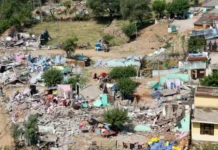
What made the tragedy unbearable was the discovery of bodies even a week later. The village, once alive with green fields and families, now lay buried beneath debris. It was nature’s fury laid bare.
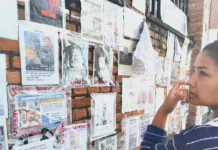
One image continues to haunt me. Two women stood before the wreckage of their homes. They had built those walls with everything they had, and now nothing remained but rubble.
Rising Waters
In the second week, panic spread as flood-like conditions emerged. It brought back memories of 2014, although this time it remained just within control. Heavy rainfall had triggered it. Jammu was inundated. Entire parts of the region disappeared under floodwaters. Reporting there was a challenge. With no correspondents on the ground, we relied on acquaintances and friends to source visuals.
In Jammu, it was a flood. In Kashmir, it was a whisker short of that. That week, the greatest challenge was not water but silence. For nearly 24 hours, networks collapsed. Phones went dead. To confirm reports, bust rumours, and gather facts was close to impossible. The internet was cut off on most devices. Jio worked, but at a crawling pace. To download a single image took more than an hour. Websites froze or failed to open. Even in those conditions, we managed to be the first newsroom in Kashmir to report developments. Only when the internet returned did normality resume. It was almost a rerun of 2014 foods when our newsroom was the last to fall silent and the first to resume routine.
The Deluge Returns
With the flood threat receding, routine reporting resumed. But in the first days of September, events changed again.
On the evening of the first, heavy rain began, and traffic choked the roads. Crowds rushed to petrol pumps and ration depots. An unease spread. We knew another flood was possible.
By Tuesday night, the rain intensified. It fell without pause. By morning, it was no longer a threat but a flood. Large parts of South Kashmir were underwater. Evacuations began. Water levels in South and Central Kashmir crossed danger marks.
Warnings grew. A yellow alert was followed by a red alert. People panicked yet endured. One elderly man said quietly that they were used to such calamities.
On September 3, Kashmir woke to unending rain, rising water, and flooded streets. My team and I worked through the night to deliver precise reports. By evening, the newsroom was tense. Every figure and update was checked and rechecked.
We went to flood-hit areas and waited by the riverbanks to watch the Jhelum rise. Fear was everywhere. Social media noise magnified it.
Back at the office, editors uploaded updates in real time. When we returned to brief them, it was already night. Only then did we plan for dinner.
Seeking Answers
Reaching officials proved difficult. We eventually spoke to the Chief Engineer of the Irrigation and Flood Control Department. That conversation brought some relief, but the panic outside his office was visible.
Soon after, LCMA issued a notice that Dal gates might be opened. Dal dwellers grew alarmed, and within an hour, our phones filled with calls. At half past midnight, we finally managed to speak to an LCMA boss. Only then did the fear ease, if only slightly.
For journalists, breaking news is central, but in this moment, it was more than that. It was a responsibility we carried for society, both through our website and in the audio-visual space. In a crisis, every word counts. Each had to be weighed with care.
Coordination
The newsroom was in chaos, but this was not the first disaster that our newsroom had covered. It knows what carpet bombing means in a news ecosystem. Three of our video editors, Shuaib Wani, Shahid Dar, and Iqra Hayat, worked without pause to shape every visual we received. Our cameramen, Umar Dar, who travelled with me, and Shoaib Nazir, captured as much ground reality as they could.
My colleague, Nawshaba Iqbal, went to Tailbal, which was submerged under floodwater. She reported the anguish of those stranded there and, in the process, fell ill after standing in the water for over an hour.
Reports arrived from Bhaderwah, Ratnipora, and Kakapora, gathered through acquaintances, many of whom worked with us for the first time.
We reached out to officials whenever possible. When the water rose, we called the Chief Engineer of Irrigation. He was in South Kashmir, and we requested an interview so his words could calm people.
That day alone, we carried more than forty audio-visual stories. I cannot explain how, but we managed to break almost every major development. Our contributing reporters, Sheikh Hilal from Shopian, Shah Hilal from Anantnag, and Manzoor Ahmad from Budgam, sent important stories and visuals as well.
One crucial update we covered concerned Dal Lake. There was an order that its gates could be opened to divert the Jhelum. We spoke to LCMA, and Dal residents said the communication gave them some relief.
Meanwhile, our online team, Maleeha Sofi and Rameez Mir, worked tirelessly, delivering news and updates with precision and an unwavering commitment to journalistic ethics.
Responsibility and Learning
Over these weeks, we realised that crisis reporting is a test of judgment and endurance. We learned how to act responsibly under strain, to place accuracy above speed, and to keep our words steady even when events were spiralling.
I remained cautious throughout. I knew that whatever I said on record would shape public thought. I weighed every phrase, ensuring it conveyed fact without exaggeration, so that fear would not spread further.
Every report had to be constructed with care. People were watching, and our task was not to create panic but to present information fully and precisely. Everything my team at Kashmir Life released was sourced, verified, and shaped with intent, so that rather than causing alarm, it made people aware.
The response reassured us. We received calls from people thanking us for our restraint. One late-night call touched us deeply. A man said our reports had given people strength because we had avoided exaggeration and instead focused on awareness.