When nearly three-quarters of Jammu and Kashmir’s lakes disappear or shrink, a region’s ecological identity, and its people’s safety and livelihood, hang in the balance, reports Afreen Ashraf
Picture a landscape once threaded with glittering water bodies. A valley with a network of lakes fed by rivers, while sheltering migratory birds, recharging aquifers, and steadying the climate of one of the world’s most fragile mountain ecosystems. Now three-quarters of them are gone, or nearly so. This is not a distant climate projection. This is Jammu and Kashmir, today.
A bombshell audit by the Comptroller and Auditor General of India has laid bare what years of bureaucratic neglect quietly allowed to happen. Of 697 lakes catalogued across Jammu and Kashmir, 518 have either vanished entirely or shrunk to a shadow of their former selves. That is 74 per cent of a region’s liquid heritage, lost. These water-bodies have gone to encroachment, siltation, and pollution, decades of institutional indifference or to the urbanised development. The finding has now jolted the National Green Tribunal (NGT) into action. Legal and environmental observers are already calling it a potential watershed moment in Indian environmental jurisprudence.
The numbers are staggering. They deserve to be read slowly.
Of the 697 lakes surveyed, 315, nearly 45 per cent, have completely disappeared, revealed the CAG report placed on record in the assembly early this month. Not reduced or degraded but erased, completely. Together, they once spread across 1,537 acres of the Kashmiri and Jammu landscape. Among these vanished lakes, 80 fell under the Forest Department, and another 235 were under the Revenue and Agriculture Departments. That jurisdictional spread, critics argue, partly explains why accountability has been so difficult to pin down. An additional 203 lakes, another 29 per cent, have seen their water area shrink by 1,314 hectares.
The CAG report covered the period up to March 2022. It was damning. Despite the ecological criticality of these water bodies, conservation and management plans exist for only six lakes – Dal, Wular, Hokersar, Manasbal, Surinsar and Mansar, which are six out of nearly seven hundred. The rest have been left to fend for themselves. No plan or monitoring. No one is formally tasked with their survival.
CAG has pointed out that the government spent only about one per cent of its capital expenditure between 2017 and 2022, amounting to Rs 560.65 crore on these lakes.
The CAG’s findings also revealed a troubling absence of coordination. The Forest Department, Revenue Department, Agriculture Department, Fisheries Department, and the Department of Ecology, Environment and Remote Sensing all hold overlapping mandates. Yet the audit found no unified framework binding them together. Lakes fell through the cracks, not because no one owned them, but because too many agencies did. None was willing to take primary responsibility for their decline.
Kashmir Valley is drained by only one river, the Jhelum. All the streams coming from all sides between Khanbal and Kahdanyar are its tributaries. Yet it has too many agencies to manage. The tourist hub of Dal Lake has LAWDA, now renamed, Jammu and Kashmir Lake Conservation and Management Authority (LCMA) as the main manager, with Srinagar Municipal Corporation (SMC) having some sort of control over the banks and the urbanisation taking place there. The Wular Lake, Kashmir’s oldest Ramsar site and Asia’s major freshwater lake, should ideally have the LCMA control over it, but the Forest Department’s insistence created another body, the Wular Conservation and Management Authority (WUCMA). The river itself is managed by the Irrigation and Flood Control as the Mining Department has rights over the riverbed. Miners damage it, and the IFC department seeks funds for repairs.
The consequences of this neglect and mismanagement are not ecological abstractions. They are written into the region’s history in the most devastating terms.
The Devastating Flood
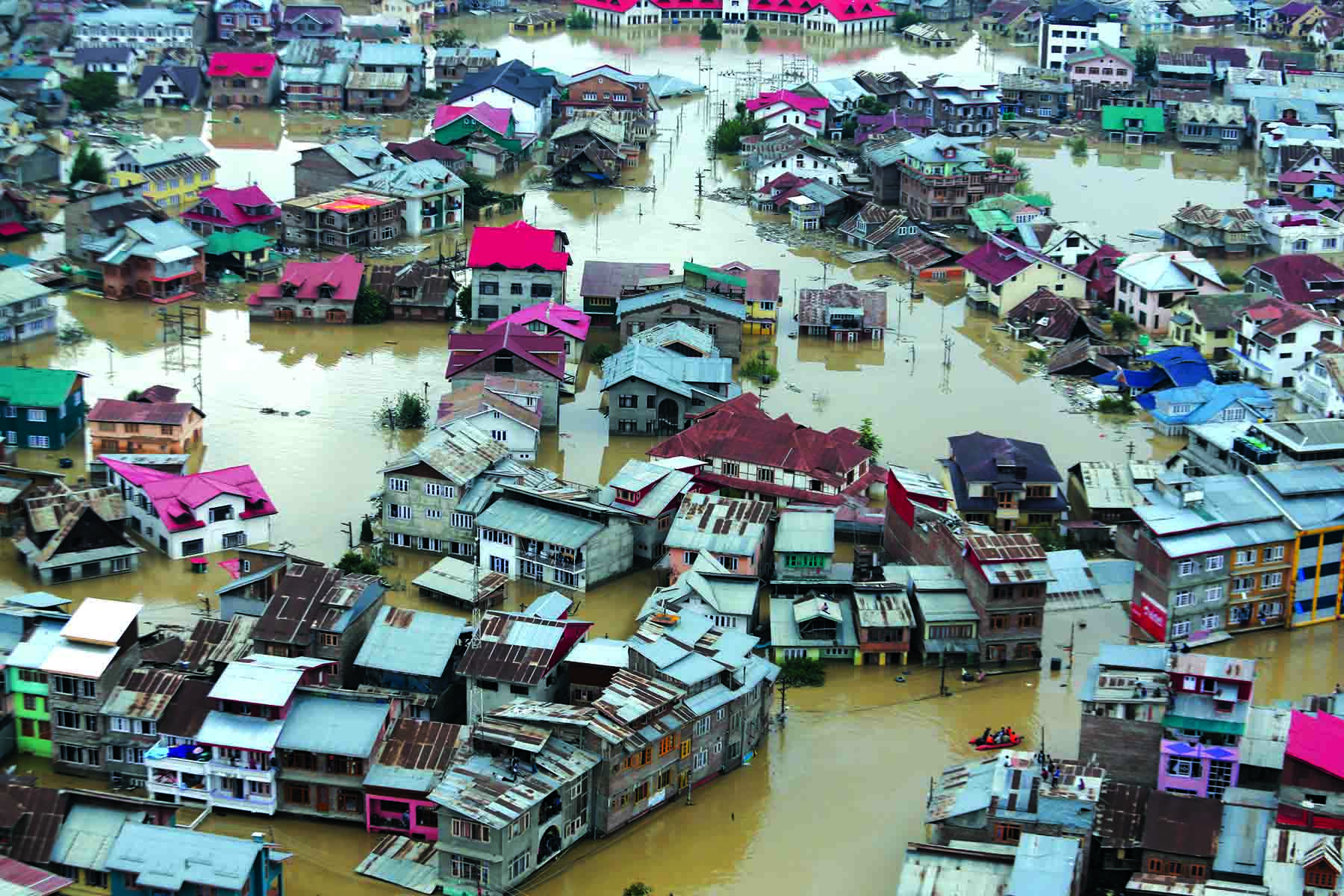
Experts and the Tribunal both point to the catastrophic 2014 Jammu and Kashmir floods. They argue it was a direct consequence of eroded natural buffers. Lakes, in a healthy landscape, function as nature’s shock absorbers, home to the aquatic biodiversity and directly linked to the livelihoods. When monsoon fury strikes or snowmelt runs unchecked, intact lakes absorb the surge. They slow the flow. They protect settlements downstream. When those lakes disappear, that buffering capacity disappears with them. Floodwaters then have nowhere to go but into homes, fields, and roads.
The 2014 floods killed nearly 300 people. Hundreds of thousands were displaced. Damage ran into thousands of crores of rupees. Conservative estimates put the loss to Srinagar city at Rs 100,000 crores. Whether more intact water bodies could have softened that disaster is a question science cannot answer with certainty. But the causal logic is hard to dismiss. The NGT acknowledged it directly in its order. A region that has lost nearly half its lakes has also lost nearly half its natural resilience.
The ecological cascade does not stop at flood control. Lakes are keystone features of their surrounding environments. They regulate the local water table. They feed groundwater reserves that sustain agriculture and drinking water through dry months. They moderate microclimates, tempering extremes of heat and cold. They support distinct vegetation systems, wetland grasses, reed beds, aquatic plants, that shelter invertebrates, fish, amphibians, and the birds and mammals that depend on them.
The Global Connection
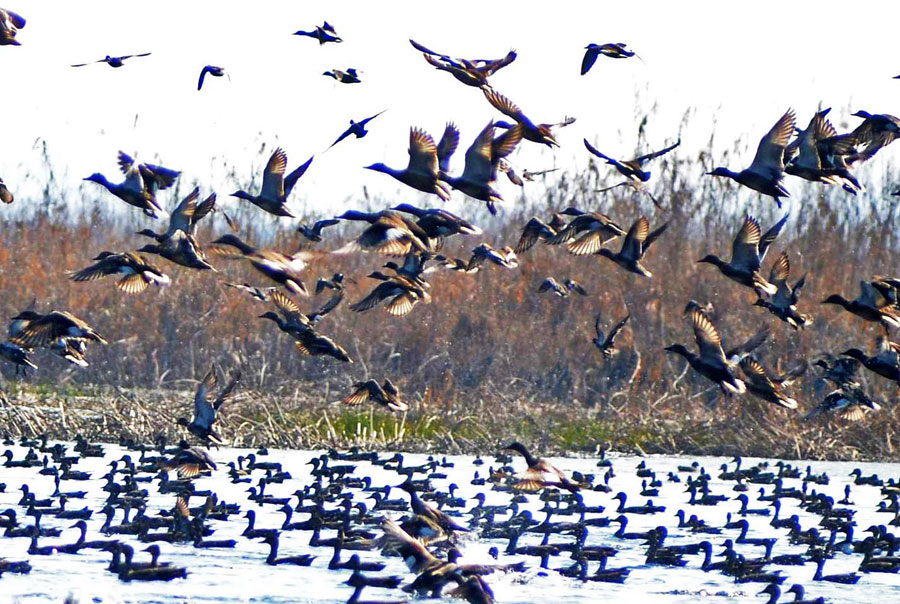
Unlike many other places, Jammu and Kashmir sits on a migratory flyway of global ecological significance. Its wetlands once hosted spectacular congregations of waterfowl. Bar-headed geese, common teals, pochards, and dozens of other species travel thousands of kilometres between breeding and wintering grounds. A vanished lake does not merely reduce local biodiversity. It removes a way-station from a continental-scale network. The ripple effects extend far beyond the valley.
The shrinking of water bodies also strikes agriculture directly. Irrigation patterns dependent on lake-fed channels are disrupted. The fertility of adjoining land, historically sustained by seasonal flooding and sediment deposition, declines. Fishing communities that have worked these waters for generations find their livelihoods literally draining away. The human cost is invisible in the aggregate statistics. But it is real, and it is accumulating.
A Living Lake, No More
No lake tells this story more vividly than Dal. Srinagar’s famed “liquid heart” has been quietly dying in plain sight.
Satellite data cited by the CAG captures the scale of loss with precision. Between 2007 and 2020, the lake’s open water and submerged vegetation shrank from 15.40 sq km to 12.91 sq km, a loss of over 2.5 sq km in 13 years. Floating vegetation expanded by 29 per cent over the same period. Built-up areas within the lake grew by 38 per cent. The numbers tell a story of a water body being steadily consumed from within.
Historically, Dal once spread across nearly 24 sq km in the 1850s. It now covers roughly 11.5 sq km, which means less than half remains.
The pressure is relentless. Every day, approximately 70 million litres of untreated sewage pour into the lake through around 15 major drains. Houseboats, hotels, livestock waste, and agricultural runoff add to the burden. Existing sewage treatment plants have largely failed to function as designed. Waste enters the lake almost entirely untreated. High phosphorus and nitrogen loads have accelerated eutrophication, the process by which excess nutrients choke a water body of oxygen and light.
The biological fallout is visible. Native fish populations have declined sharply. Invasive species such as Eurasian watermilfoil now blanket significant stretches of the lake’s open waters. Rapid urbanisation in Hazratbal, Nishat, and Rainawari has intensified encroachment. Floating gardens continue to expand. Monitoring has remained inconsistent. Infrastructure upgrades have been delayed. Construction along the lake’s margins has gone largely unregulated.
The change is not merely visual but physical. It shapes how people move, work, and live around what was once one of the most celebrated lakes in the world.
Wular: A Giant Diminished
If Dal’s decline is the story of a city suffocating its own lake, Wular’s is the story of a giant being slowly erased.
Wular is, or was, among Asia’s largest freshwater lakes, having a Ramsar Convention status. It holds a management plan, one of only six lakes in all of Jammu and Kashmir that do. It has received governmental and international attention for decades. And yet it has shrunk by nearly 50 per cent.
The causes are familiar. Large-scale encroachments along the lake’s periphery have steadily eaten into its water spread. Continuous siltation has further reduced its depth and area, weakening its critical role as a natural flood buffer for the Kashmir Valley. As the lake shrinks, so does its capacity to absorb excess rainfall, making the Valley more, not less, vulnerable to the kind of catastrophic flooding that struck in 2014.
For the 26 villages that ring Wular’s shores, this is not an environmental statistic. It is a lived reality. Mohammad Ismail Khan has fished these waters for decades. “In my youth, you could see fish clearly,” he said. “Now much of it is covered in weeds and algae.” His falling catch reflects a pattern repeated across the lakeshore: declining fish populations, advancing invasive vegetation, and an occupation that fewer young people are willing to inherit.
Anchar Lake, not far away, is in a worse state still. Unchecked urban growth has steadily transformed it into a severely polluted basin. Reports of mass fish deaths have become increasingly common.
Hokersar, a designated wetland of ecological importance between Srinagar and Budgam, follows the same trajectory. Once celebrated for its biodiversity and its role as a staging ground for migratory birds, it is now under pressure from encroachment, pollution, and unregulated land-use change. Open water has retreated, replaced by dense vegetation, silt deposits, and expanding scrub. Untreated inflows from surrounding settlements continue to degrade what remains.
What unites these lakes, beyond their decline, is a governance structure designed, it seems, for failure. Authority is scattered across the Forest, Revenue, Urban Development, and Tourism departments. No single agency holds a clearly defined conservation mandate.
The economic stakes are considerable. Jammu and Kashmir’s tourism sector contributes nearly seven per cent to the GSDP, and a significant share of that is directly tied to lake-based destinations. Thousands more households depend on fisheries and wetland resources for their daily income. These water bodies are not scenic backdrops. They are productive economic assets, and they are being lost.
The Tribunal Observations
The NGT’s own expert members described the damage in stark terms. The disappearance of lakes, they noted, is not simply about water scarcity. It triggers a chain reaction. Hydrology and groundwater recharge are struck simultaneously. So are forest ecosystems, vegetation cover, agricultural sustainability, micro-climatic balance, and aquatic biodiversity.
In the fragile Himalayan ecosystem, where environmental systems are tightly interlocked, recovery timelines are long. Continued neglect risks damage that cannot be undone. The experts warned that irreversible harm remains a genuine and proximate possibility if intervention does not come swiftly.
It is against this backdrop that the NGT’s intervention assumes its full significance. The Tribunal is headed by Chairperson Justice Prakash Shrivastava. Expert Members Dr A Senthil Vel and Dr Afroz Ahmad sit alongside him. The bench took suo motu cognisance after news reports brought the CAG findings to public attention. It held that the revelation raises substantial questions about compliance with environmental norms and the implementation of key legislation.
The Tribunal’s order identified prima facie violations of several foundational laws. These include the Environment Protection Act of 1986, the Biological Diversity Act of 2002, the Water Prevention and Control of Pollution Act of 1974, and the Forest Conservation Act of 1980. So many statutes appear to have been simultaneously breached across multiple departments and over multiple decades. The bench called it systemic lapses in environmental governance.
The NGT invoked the Supreme Court’s landmark ruling in Municipal Corporation of Greater Mumbai versus Ankita Sinha. That judgment affirmed the Tribunal’s power to act on its own initiative in matters of environmental degradation. The court then impleaded a formidable list of respondents. They include the Ministry of Environment, Forest and Climate Change, the National Wetland Committee, the J&K Wetland Authority, the J&K Pollution Control Committee, the Principal Chief Conservator of Forests, the Department of Ecology, Environment and Remote Sensing, the Revenue Department, the Fisheries Department, and the National Disaster Management Authority.
All have been directed to file detailed replies before the next hearing on May 15, 2026. The case has also been linked to Original Application No 239/2024. That linkage signals the Tribunal’s intent to place this matter within a broader judicial scrutiny of environmental governance in the region. The breadth of agencies summoned, spanning central ministries, UT departments, regulatory bodies, and disaster management authorities, reflects one clear recognition. The failure was not localised. It was systemic, multi-layered, and demands an equally comprehensive reckoning.
The question hanging over these proceedings, and over the landscape itself, is whether legal intervention alone can reverse what took decades to destroy. Conservation is not a courtroom exercise. It demands money, political will, inter-departmental coordination, community engagement, and sustained scientific monitoring. India has no shortage of environmental legislation. What it has historically struggled with is enforcement – the last mile between the laws on the books and the lakes on the ground.
Hope Rekindles
And yet there is reason, cautiously, for hope. Suo motu action by the NGT has, in the past, produced concrete outcomes and resulted in court-monitored restoration programmes and departmental accountability mechanisms. It helped in getting directed funding. The breadth of respondents impleaded suggests the Tribunal will not allow any single agency to deflect blame onto another. The explicit identification of violated statutes creates a legal foundation for enforceable orders.
For the farmers, fishermen, and urban communities of Jammu and Kashmir, however, the stakes could not be higher. The disappearance of a lake is rarely dramatic. It happens slowly, the edges retreat year by year, the water grows shallower, the reeds advance, and the birds grow fewer. And then one season, finally, almost without anyone noticing, what was a lake becomes a field, or a construction site, or simply a dry depression where children play without knowing what was once there.
That quiet erasure makes this story difficult to confront. It also makes it essential to tell. Jammu and Kashmir’s lakes are not a peripheral concern. They are the region’s hydrological backbone; its climate stabilisers; its flood buffer and its biodiversity reservoir. They are a key source of livelihood and cultural identity stretching back centuries. Their loss diminishes all of that, simultaneously and irreversibly.
The NGT has signalled, with unusual force, that this erasure will no longer go unexamined. Whether the institutions summoned will rise to meet that scrutiny or retreat into procedural delay remains to be seen. What is certain is that the clock is running and the lakes are not waiting.
The next hearing in the suo motu case is scheduled before the National Green Tribunal on May 15, 2026.