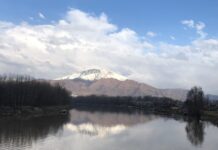
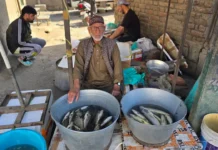
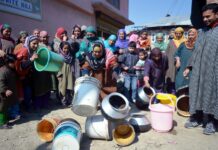
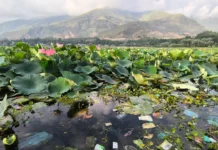
A new study across Kashmir’s four water bodies finds water chestnut fruits carrying cadmium levels 5.5 times above safe limits, with Dal Lake recording the worst contamination across every measured parameter, reports Masood Hussain
Kashmir’s lakes are under siege. That much has been known for years: the discharges into Dal Lake, the unchecked agricultural runoff feeding Hokersar Wetland, the creeping urban encroachment that has narrowed water bodies and choked their capacity to flush and heal. What a new scientific study has now established, with precision and alarm, is that this contamination has crossed into the food chain and onto the plates of people.
Researchers examining four major water bodies in Kashmir, Dal Lake, Hokersar Wetland, Manasbal Lake, and Wular Lake, have found that Trapa natans, the floating aquatic plant whose fruit is sold across Kashmir as singhara, or water chestnut, is accumulating dangerous levels of heavy metals. The findings, which span water quality, sediment chemistry, and plant tissue analysis across all four sites, show that fruits harvested from Dal Lake carry cadmium concentrations approximately 5.5 times higher than the World Health Organisation’s permissible limit, and zinc levels nearly 30 times above threshold.
The study, Accumulation of eight heavy metals in water chestnut (Trapa natans L.) of four major water bodies of Jammu and Kashmir, published in Scientific Reports by Nature in February 2026, was conducted by Mohssen Elbagory, Faizah Amer Altihani, Hany S, El-Mesery, Amer Ali Mahdi, EI EL-Shafeey, Sahar El-Nahrawy, Ibrahim Mohamed, Ivan Siric, and Pankaj Kumar. It ranks among the most comprehensive multi-site assessments of heavy metal contamination in Kashmir’s freshwater ecosystems. It goes beyond analysing water and sediment quality, tracing contaminants from the lake bed into water chestnuts consumed by thousands across the Valley.
Yet the larger reality offers a silver lining. The bulk of Kashmir’s water chestnut harvest comes from Wular and Manasbal lakes, while Dal Lake is traditionally associated with the cultivation of lotus stems, nadru, one of the most cherished ingredients in Kashmiri kitchens.
The study measured eight heavy metals – cadmium, copper, chromium, cobalt, iron, manganese, nickel, and zinc, across the roots, shoots, and fruits of water chestnut plants collected from each water body. In every case, Dal Lake recorded the highest contamination, followed by Hokersar Wetland, Manasbal Lake, and Wular Lake, in a consistent declining gradient that the researchers attribute to differences in anthropogenic pressure and hydrological flushing.
With comparatively higher water exchange rates and lower human interference, Wular Lake consistently recorded the lowest heavy metal loads across all tissues and parameters. In effect, it serves as a control site, making the ecological degradation of Dal Lake and Hokersar all the more stark.
Massive Pollution
The water quality data establishes the scale of the problem. Dal Lake’s biochemical oxygen demand (BOD) and chemical oxygen demand (COD) levels far exceed WHO standards, at 16.12 mg/L and 139.54 mg/L, respectively. This suggests intense organic contamination and a sharply diminished capacity for self-purification. Cadmium, chromium, iron, manganese, and nickel concentrations in the water exceeded safe limits at all four sites, with Dal recording the highest readings across the board.
The fast silting-up Hokersar Wetland followed closely. Its elevated contamination was attributed to intensified waste inflow and reduced dilution capacity, particularly during summer months. Manasbal and Wular, benefiting from better flushing and reduced catchment pressure, showed measurably lower pollutant loads, though neither was entirely clean.
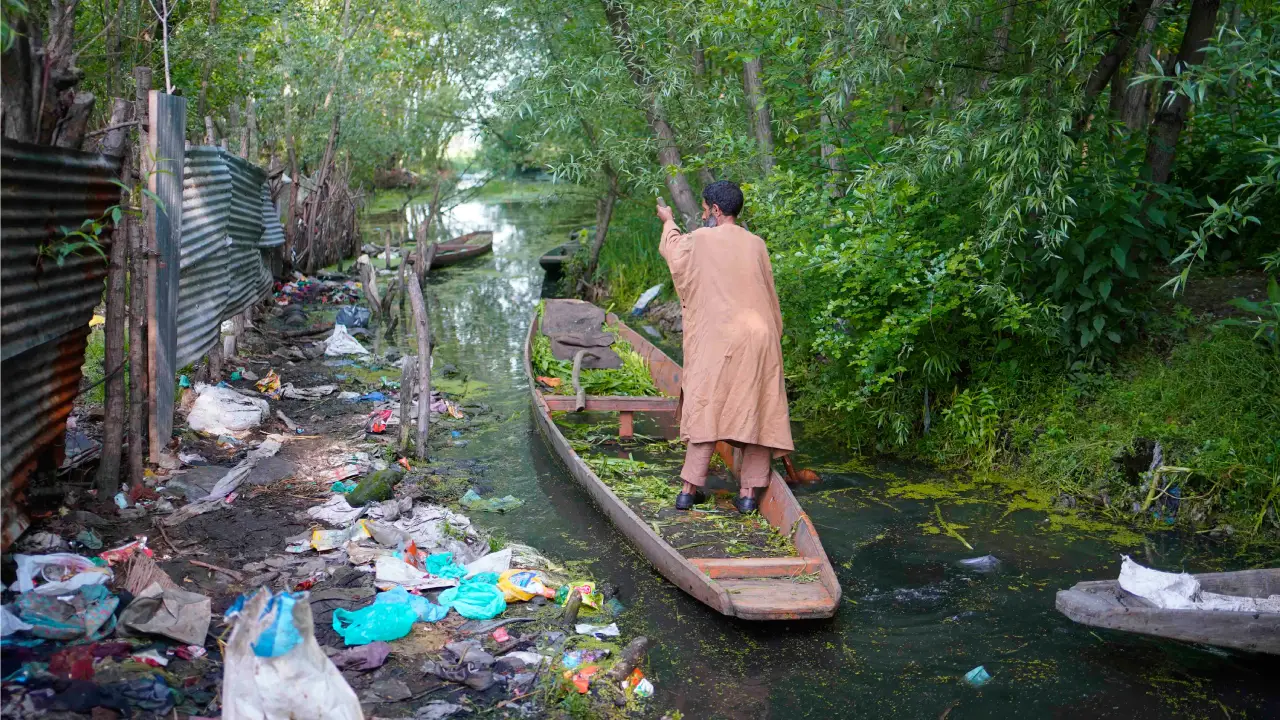
Unlike the Wular and Mansbal, the Dal Lake and Hokersar are part of the larger Srinagar. The city of nearly 2.5 million people is one of the major contributors to pollution in its water bodies. The study has referred to the Jammu and Kashmir Pollution Control Committee report, suggesting that of the 193 MLD of domestic sewage generated in Srinagar city, 140 MLD remains untreated, and most of it flows into Dal Lake.
Sediment Load
The sediment story is equally troubling. Across all four water bodies, bottom sediments showed heavy metal enrichment that exceeded Canadian Sediment Quality Guidelines for cadmium, chromium, nickel, and iron. Dal Lake recorded the highest sediment cadmium at 1.05 mg per kilogram and copper at 16.32 mg/kg, driven by urban effluents, boating activity, and sediment re-suspension.
The researchers note that sediments function as long-term reservoirs: metals introduced into the water column bind to suspended particles and organic matter, settle, and accumulate over years. Unlike water that undergoes dilution and seasonal turnover, sediments archive pollution history.
In Hokersar, pronounced metal enrichment in sediment has been linked in previous studies to sustained waste inflow. In Wular, contamination remains comparatively moderate, associated with Jhelum-borne inputs rather than local urban discharge.
The study’s sediment findings align with a body of prior research that has mapped Kashmir’s lakes as slow-accumulating pollution archives. Earlier work on Dal Lake sediments documented substantial iron, manganese, cobalt, chromium, copper, nickel, and zinc levels linked to persistent sewage discharge, macrophyte decay, and boating-induced resuspension.
Research on Anchar Lake identified copper, chromium, zinc, nickel, cadmium, and lead as dominant sediment pollutants relative to water and macrophytes.
In Wular, however, previous studies found low-to-moderate ecological risk overall, with localised hotspots traceable to industrial and agri-urban sources, consistent with the comparatively lower sediment loads the present study records for that basin.
A Distinct Study
What makes the new study distinctive is its systematic tracing of contamination from water and sediment into the plant body itself and ultimately into the edible fruit. The pattern of accumulation follows a clear biological logic: roots show the highest heavy metal concentrations, followed by shoots, with fruits at the lowest end.
In Dal Lake, root iron concentrations reached 322.50 mg/kg dry weight, the highest recorded for any metal in any tissue across the study. Cadmium in roots stood at 0.42 mg/kg, nickel at 6.12, and zinc at 82.45. Even at the fruit level, cadmium registered at 0.11 mg/kg in Dal Lake samples against a WHO limit of 0.02 mg/kg. Zinc in Dal Lake fruits stood at 18.21 mg/kg, against a guideline value of 0.60 mg/kg.
Across the gradient, Hokersar fruits showed the next highest contamination, followed by Manasbal and Wular, the latter two remaining below several threshold values, though not entirely free of concern.
The bio-concentration factors confirm that the water chestnut is actively drawing heavy metals from both water and sediment. Translocation factors, measuring how efficiently metals move from roots upward into aerial tissues, remains below 1.0 across all metals and all four sites. It indicates that the plant’s internal defences are partly working. Root cells bind incoming metals using phytochelatins and metallothioneins, limiting systemic distribution. But the researchers make clear this sequestration is incomplete: measurable cadmium and zinc in edible fruits represent a genuine pathway of human dietary exposure.
The plant’s accumulation behaviour is not incidental. Water chestnut roots are anchored directly in contaminated sediment, and the plant actively absorbs metals through specific membrane transport pathways because it requires them for photosynthesis and enzyme function. Cadmium and chromium, though non-essential, enter through the same channels by mimicking the ionic signature of zinc and iron. The study also applied an Accumulation of Nutrient Elements model, which confirmed that iron dominates the total heavy metal load across all tissues, contributing over 80 per cent, with zinc second at 11 to 14 per cent, and cadmium and chromium present at under 0.6 per cent but persistent across all tissues and all sites.
The Risk
The health risk assessment, conducted using the United States Environmental Protection Agency methodology, is unambiguous in its findings. For Dal Lake fruits, cadmium returned a Target Hazard Quotient exceeding unity, the threshold above which non-carcinogenic health risk is flagged, the only metal across the entire study to do so. Chromium showed moderately elevated values in Dal and Hokersar, though below the threshold.
Fruits from Manasbal and Wular registered a negligible risk across all metals. The spatial gradient of risk followed the contamination gradient exactly: Dal Lake, then Hokersar, then Manasbal, then Wular.
The broader implications extend beyond individual dietary risk. The study positions water chestnuts as a reliable bioindicator of freshwater pollution, a plant that, through its accumulation patterns, effectively maps contamination intensity across a landscape. That the four lakes in this study produced a contamination gradient consistent across water chemistry, sediment analysis, plant tissue concentration, bioaccumulation indices, and health risk scores simultaneously suggests the findings are robust. It also means the lakes themselves are telling a coherent story, one that monitoring agencies and policymakers have the tools to read, if they choose to act on it.
The researchers call for immediate and layered policy responses: wastewater treatment infrastructure, controls on agricultural runoff, sediment remediation, and, most urgently, the introduction of designated harvesting zones with mandatory periodic heavy metal screening for edible aquatic crops. Their conclusion regarding Dal Lake is unambiguous: consumption of water chestnuts from its waters should be restricted until effective pollution-control and remediation measures are in place.
For Wular and Manasbal, the picture offers cautious reassurance, but the study is also a warning. The gradient from clean to contaminated is not fixed. Without intervention, it moves in only one direction.