Educated youth across Kashmir are turning to private trout farming, building sustainable livelihoods from the region’s cold waters despite growing risks and limited insurance protection, reports Afreen Ashraf
In 2018, Sadia Iman completed her master’s in organic chemistry. She was doing what thousands of educated youth across Kashmir do after finishing their studies: applying for jobs. She hoped for a seat in a laboratory, or perhaps an office. Her husband, an engineering graduate, was also on a job-searching mission. In the course of that search, the couple landed somewhere neither had expected. It was a place that would change their lives.
An advertising campaign by the fisheries department caught Sadia’s attention. It was promoting private fish farming. The couple realised something. A piece of family land in Harwan met the requirements for a trout farm. They applied under a government scheme. They received approval. They invested around Rs 5–6 lakh to build two modest raceways. They were stepping into an industry they knew almost nothing about.
Eight years on, theirs is a different story. Those two raceways have grown into 18 operational units. Water flows continuously through the channels. Thousands of rainbow trout stay alive inside them. Sadia’s venture has changed more than her own fortunes. What began as an alternative to unemployment has become something bigger. It is now a business sustaining several families besides her own.
“We have five full-time workers at the farm, but there are many other tasks that require additional hands.,” Sadia said. “Altogether, around ten people earn their livelihood through this farm.” The farm now records an annual turnover of around Rs 25–30 lakh. “If young people come into this sector, they won’t just earn for themselves, they can create employment for others too,” she says.
Sadia’s journey is no longer an isolated one. Nearly 60 kilometres away, in Kupwara, 35-year-old Mohammad Ashraf arrived at the same conclusion. He took a different route. A graduate, Ashraf applied for jobs soon after finishing college. He eventually secured a position at a private office. But the job offered little financial security, he said. He eventually left. He joined his father and brother in fish farming, a venture the family had started in 2011. Today, they operate eight trout raceways. They sell directly to customers and local markets.
“The private job was not helping me much,” he said. “This work has given us stability.” Like Sadia, Ashraf found something valuable in fish farming. It gave him the chance to build something of his own while working alongside family.
A New Livelihood
Beyond individual stories, the sector itself is changing shape. Private trout farming was once a niche occupation. It is steadily emerging as a mainstream livelihood option across Kashmir. Educated youth are turning to it in search of sustainable incomes.
Under the Holistic Agriculture Development Programme (HADP), the government has set a target. It aims to establish nearly 900 private trout farming units over five years. By November 2025, officials said 561 units had already been created. Of these, 198 were contributing around 561 metric tonnes of trout annually. Alongside this expansion, Jammu and Kashmir’s overall fish production has grown too. It rose from 20,039 metric tonnes in 2016-17 to 29,400 metric tonnes in 2024-25. This steady rise mirrors the sector’s broader momentum.
Officials involved with the programme insist the emphasis is shifting. Early phases of HADP focused on setting up units quickly. Now the focus is turning to training and skill-building. Many new entrants to the sector have no farming background at all. Several are graduates, like Sadia and Ashraf. Others are school leavers looking for a stable income closer to home. The department has begun organising short orientation programmes for such applicants. These cover basic rearing practices, feeding schedules and water management before a unit is even approved. Farmers said this early guidance has made a difference. It has reduced the number of failed attempts in the sector’s early years, when many units shut down within the first season due to poor planning.
The growing number of private farms reflects a shift in perception. Fish farming is increasingly seen as a profession worth investing in. It offers both financial stability and room to grow. Farmers and traders also point to changing eating habits in the Valley. These are opening fresh opportunities for those entering the business.
According to Faris Punjoo, founder of Al Wadi Fish Farm in Srinagar, fish consumption in Kashmir has been rising steadily. He partly attributes this to growing awareness of its health benefits. His own farm has been operational since 2022. It produces both carp and trout. It includes a retail outlet and a small seating area, where customers can buy or eat freshly prepared fish.
Many private growers sell directly to customers who visit their farms for fresh trout. Others have built links with hotels, restaurants and local markets. This ensures steady demand. “Most of our fish is sold directly to customers and local markets,” Ashraf revealed. “People prefer fresh fish, and when they know where it is coming from, they trust the quality.”
At Gousia Fish Farm in Bijbehara, the family follows a similar model. Customers visit to buy fresh trout. Restaurants and hotels remain regular buyers. During summer, fish consumption in Kashmir typically dips. So, the family sends part of its produce outside Jammu and Kashmir to sustain sales.
For Sadia, building a market was one of her first challenges. She began by approaching hotels and restaurants. A steady flow of tourists created demand for locally produced cold-water fish. “Kashmir receives visitors from different places, and many tourists want to try new food options. We initially reached out to hotels and restaurants, and over time, by maintaining quality, we built our own customer base,” she said. Today, a mix of direct customers, restaurants and local buyers sustains her farm’s sales.
Water Matters
The rise of private farming in Kashmir owes much to geography. It owes just as much to policy. The same rivers, streams and freshwater channels have supported traditional fishing for generations. Now they form the foundation of a new form of aquaculture.
“I saw that Kashmir already had the natural conditions needed for trout farming- cold water and a suitable environment, Sadia said. “That gave me the confidence to try something different.”
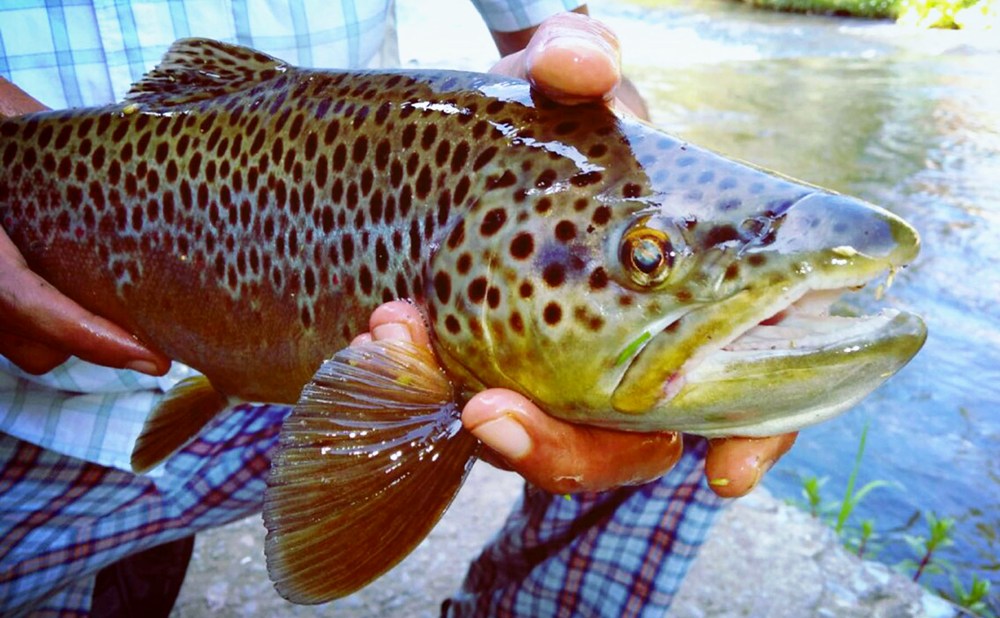
These natural advantages matter at a larger scale, too. They have helped Jammu and Kashmir emerge as one of India’s important cold-water fisheries regions. The Ministry of Fisheries, in its Annual Report 2024–25, identifies the Union Territory’s potential. It has significant potential for high-value cold-water species. These include rainbow trout, brown trout, snow trout and mahaseer.
Yet fish farming demands far more than access to water. At Gousia Fish Farm, a young grower operates six trout units alongside other responsibilities. For him, water is the single most important factor in the business. “The fish is highly sensitive to its surroundings. It needs cold, clean and continuously flowing water to survive. The temperature, oxygen level, speed of flow and quality of water decide whether a farm will succeed or fail,” he explained.
To maintain these conditions, farmers rely on specially designed raceways. These are long, narrow concrete channels. Water flows through them continuously. This regulates oxygen levels. It recreates conditions close to the fish’s natural habitat.
Kashmir’s overall suitability for trout farming has a limit, though. Not every stream or plot of land qualifies. “People may assume that having land and water is enough to start fish farming, but that is not the case. Not every stream can support trout, and not every piece of land is suitable. The farm needs a reliable source of cold water throughout the year, along with the right altitude and conditions for the fish to grow,” he said.
This dependence on natural resources cuts both ways. It is also the sector’s greatest vulnerability. Any shift in water quality, temperature or flow can directly affect fish survival. It can, in turn, threaten the livelihoods built around it. The sector’s future is closely tied to one thing: protecting the very rivers and streams that sustain it.
From Support to Scale
Kashmir’s natural advantages provide the foundation for trout farming. But they are not enough on their own. Setting up a farm requires capital. It requires technical knowledge, specialised equipment and sustained guidance. For many private growers, government support has been the bridge. It connects an idea to a working business.
The story of Gousia Fish Farm illustrates this well. In 2016, the family’s father learnt of a government programme promoting private trout farming. “My father attended a seminar about fish farming, and that is where he got the idea that we could also start a farm. We applied to the department, they inspected our land, approved it and supported us in setting up our first two raceways,” his son said. What began as a small venture has since expanded. It now runs six operational units, producing around 600 kgs of trout annually. “In the beginning, the department helped us with the setup and guided us on how to manage the farm. After that, we gradually started investing on our own side and expanded.”
Sadia’s journey followed a similar arc. The couple applied under the fisheries department’s scheme in 2018. Officials inspected and approved their land. They supported the setup of the first two units. They also offered technical guidance on rearing practices and water management. What started as a modest operation gradually became a more advanced one. Departmental support helped Sadia upgrade to improved raceways, pumps and other equipment. These were needed to maintain water flow and oxygen levels. “The department supported us in the beginning and continued guiding us whenever we needed help,” she admitted.
That support has mattered most during moments of crisis. Last year, temperatures rose sharply. Oxygen levels in the water fell as a result. This created a serious risk of mortality across several farms. This year, the fisheries department stepped in earlier. It offered preventive guidance well before the season turned. “We have been advised to regularly monitor the temperature and install oxygen tanks to maintain the required levels. The department is helping us a lot.”
Government schemes have played a growing role here. These include the Pradhan Mantri Matsya Sampada Yojana (PMMSY) and HADP. Private fish farming has received greater policy attention in recent years. The government aims to expand trout production through more private units. HADP was launched in 2023–24. Under it, the fisheries sector has been allocated Rs 176.05 crore over five years. It covers all 20 districts of Jammu and Kashmir. It offers a 50 per cent subsidy for general category beneficiaries. The subsidy element goes up to 60 per cent in the case of Scheduled Caste, Scheduled Tribe and women beneficiaries. Beyond raceway construction, the scheme also part-funds equipment such as aerators, feed and cold storage, which officials claim has helped smaller farmers move beyond the most basic setups.
For farmers, support is not only about money, though. Regular technical guidance matters just as much. So does a quick response during crises. As the sector grows, that support cannot stop once a farm is established.
Crisis Time
For all the success stories, farmers are candid about one thing. The work carries constant uncertainty. Behind every operational unit lies a delicate balance. A small shift in water temperature, oxygen or flow can turn into a major loss. It can happen within hours.
Sadia experienced this in 2025 summer. Increased sediment in the water affected fish health. Rising summer temperatures added further risk. Trout need cold, oxygen-rich water to survive. Even a brief disruption can raise mortality sharply. To guard against this, she has invested in motors. These maintain continuous flow. She has also added oxygen tanks for difficult periods. These solutions remain out of reach for many newer or smaller growers, she said. “If someone cannot afford these systems and loses fish, it is not just a loss of business. It is their bread and butter that gets affected.”
The Bungus Valley Fish Farm learned this the hard way last year. Heavy snowfall blocked the water supply. This disrupted the continuous flow that the fish depended on. The interruption killed around 7,500 trout. The loss came to nearly Rs 3 lakh. It was not the farm’s first such setback either. A similar crisis had struck in 2019, when an early cold spell froze part of the intake channel and cut off supply for nearly two days. The farm recovered both times, but only after months of reduced output, and growers there assert the repeated losses have made it harder to plan investment with any confidence.
Farmers point to a wider pattern of environmental pressure. Pollution is one concern. Rising temperatures are another. Declining water quality adds to it. Together, these are a growing worry for a sector where fish depend entirely on the health of their surroundings.
For Ashraf, the deepest anxiety is financial. The loss of thousands of fish can happen fast. A disrupted water supply or a sudden change in weather is enough. It can wipe out months of investment in a single incident. Many other agricultural activities offer some cushion through insurance or other mechanisms. Trout farmers regret that they currently have little such protection.
“There is no insurance system for these kinds of losses. If a farmer loses fish because of a disease outbreak or a natural problem, the entire burden falls on them. We need some kind of protection so that farmers do not lose everything after one incident,” Sadia asserted.
Beyond financial security, farmers also want stronger technical backing. Many losses happen for a simple reason. A disease or a change in water quality goes unnoticed until it is too late. Sadia believes every district should have testing facilities. Farmers could get water and fish samples analysed there. They could receive timely advice too. “We need laboratories in every district where farmers can test water quality and get information about diseases. If problems are identified early, mortality can be reduced,” she believes. Growers also call for more regular training. This matters most for those newer to the field.
For them, the future of fish farming in Kashmir depends on two things. One is creating more farms. The other is making the existing ones more resilient.
A Shaping Up Sector
Despite the risks, private trout farming is steadily becoming a genuine livelihood option in Kashmir. For Sadia, what began as a search for employment has grown into something more. It is now a business that provides work for others. For Ashraf, leaving a low-paying private job led somewhere better. It led to a far steadier income through fish farming.
Their stories reflect a wider shift taking place across Kashmir. More people are turning to fish farming for a reason beyond unemployment. They see it as a profession with the potential to build livelihoods of its own. As government support matures and more graduates enter the field, farmers assert the sector’s next challenge will be less about starting new units and more about protecting the ones already built.