by Iqbal Ahmad
From Herbal Remedies to Modern Medicines: Reflections on Changing Health Practices in Kashmir
Nowadays, it is difficult to imagine life without medicines. Alongside prescribed drugs, many people also resort to self-medication. This is especially true in Kashmir, where the use of medicines has become so common that many people feel they cannot live without them. Even for minor ailments, people often prefer consulting doctors and taking medicines rather than relying on simple home remedies.
As dependence on medicines has increased, the medical sector has grown into a major industry. From wholesale distributors to retail pharmacies, medical stores and diagnostic laboratories are now found not only in cities and towns but also in remote villages across the Kashmir Valley. Medicines are sold in large quantities, reflecting people’s growing dependence on modern healthcare.
Traditional Healing
A few decades ago, however, the situation was very different. People largely depended on healthy lifestyles, traditional herbal remedies, spiritual healing, and home-based treatments. Pharmacies were rare, and the number of patients seeking medical treatment appeared to be much lower.
Kashmir had a rich tradition of local Vaids and Hakeems who treated patients with medicinal herbs. This herbal healing culture was widely respected and has been documented in both indigenous and foreign historical records. The British administrator and scholar W. R. Lawrence, in his classic work The Valley of Kashmir, described the remarkable knowledge of Kashmiri Hakeems:
“The Hakeems of Kashmir, the native physicians, attribute some property to every plant… the Punjabis employed in my departments usually inclined to despise all Kashmiri methods, yet showed great respect for the Hakeems and have told me of wonderful cures effected by the herbs of the valley.”
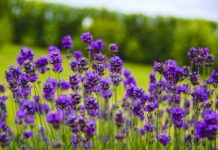
Lawrence documented nearly ninety-five medicinal plants used by local Hakeems and experienced village elders. Herbs such as Thwin, Kot, and Nar-Mada were exported to Delhi, Mumbai, Lahore, and Amritsar before eventually reaching overseas markets.
Spiritual Healing
Alongside herbal medicine, spiritual healing occupied an important place in Kashmiri society. I recall an incident from the early 1990s while travelling through a remote village in Shopian district. I met an elderly man walking hurriedly along the road. When I asked where he was going, he replied that he was rushing to a distant medical store. He then reflected that, in earlier times, there had been no medical stores in the area. People instead relied upon a local spiritual healer whose prayers and blessings were believed to cure illnesses. After the healer passed away, medicines gradually became the only option. His story reflected the deep faith people once placed in spirituality. Such beliefs strengthened not only their relationship with God but also their attachment to spiritual institutions.
Traditional Kashmiri life was supported by healthy diets rich in wild vegetables, physically active lifestyles, close family bonds, and caring neighbourhoods that helped reduce stress. Temples, Gurdwaras, Khanqahs, and Dargahs served not only as places of worship but also as centres of spiritual guidance. They encouraged compassion, tolerance, brotherhood, and peaceful coexistence among different communities.
Spiritual healing generally aimed at restoring inner peace and emotional balance rather than merely treating physical symptoms. Muslim Peers and Kashmiri Pandit priests followed their own established traditions of prayers and sacred practices. Muslim spiritual healers often preserved handwritten manuscripts known locally as the Tawiz Kitab, containing Qur’anic verses, prayers, numerical formulas, and symbolic illustrations used in preparing amulets. In earlier times, many illnesses were believed to result from supernatural influences such as evil spirits or unseen forces. Consequently, people frequently sought spiritual remedies alongside herbal treatments.
Interfaith Heritage
One of my earliest childhood memories takes me back to my village, where an annual Sufi Urs was held at a nearby shrine. Like many village children, I eagerly attended the celebrations. People from different castes, faiths, and communities gathered with offerings, seeking God’s blessings.
After delivering his sermon, an elderly Sufi saint wearing a white turban raised his hands in prayer. Silence descended upon the gathering. His opening words were in Arabic, but when he continued in Kashmiri, every listener understood the message. Tears streamed down his face as he prayed. Soon the entire gathering became emotional. The prayers sought forgiveness, good harvests, protection from natural calamities, and peace for everyone. One line of the Kashmiri prayer remains deeply engraved in my memory:
“Ya Allah, preith Hendis te Musalmanas reham.”
(O God, shower Your blessings upon every Hindu and every Muslim.)
What struck me was that the prayer sought blessings for everyone without distinction. As a child, I could not fully appreciate its significance. Years later, after studying Kashmiri Sufism and Reshism and reading the verses of Lal Ded and Sheikh Noor-ud-Din Noorani (Nund Rishi), I understood the deeper meaning of that prayer. Lal Ded’s teaching, “Par the pan hewoy zanun” (Treat everyone alike), beautifully captures the spirit of Kashmiri Sufism—that all humanity belongs to one God. The teachings of saints such as Mir Sayyid Ali Hamadani, Sheikh Noor-ud-Din, and Lal Ded nurtured a society founded upon love, humility, compassion, and mutual respect. Their Khanqahs and Astanas promoted the oneness of God, interfaith harmony, social responsibility, and moral values.
The Transition
Modern education, science, and digital technology have undoubtedly improved healthcare and made life more comfortable. At the same time, however, many traditional social bonds have weakened. Joint families have become smaller, neighbours have grown more distant, and relationships often lack the warmth they once possessed. Although we have advanced scientifically, many moral, spiritual, and community values have declined.
Nevertheless, traditional herbal medicine and spiritual healing have not disappeared entirely. They continue to exist in many villages and towns of Kashmir, where they remain an important part of the region’s cultural heritage.
Conclusion

Remembering these traditions reminds us not only of Kashmir’s rich heritage of herbal knowledge and spiritual healing but also of the values that once held society together, compassion, simplicity, mutual support, and faith.
Modern medicine has transformed healthcare and saved countless lives. At the same time, there is much to learn from our traditional way of life. By adopting healthier lifestyles, practising meditation and stress management, strengthening family and community relationships, and preserving our valuable herbal knowledge, we can complement modern medical care while promoting overall well-being.
(The writer is a former Assistant Curator, SPS Museum, Srinagar. Ideas are personal.)