Numerically, Jammu and Kashmir’s battle against the drug menace has reached an unprecedented scale, with property attachments accounting for nearly half of the total recorded across the country, writes Masood Hussain
Years after battling the drug menace, the Jammu and Kashmir government is working on a Narcotics Control Roadmap 2026-29 that would guide the systemic and systematic response to the crisis prevailing on the ground. The roadmap envisages stakeholder-specific action plans focusing on disrupting networks and smashing hot-spots.
Officials said this is inevitable given that drug trafficking has become “highly technology-driven, trans-national” and difficult to detect through conventional policing. Increasingly, the cartels use encrypted communication, dead-drop delivery, drones, courier and parcel channels, and have access to dark-web markets and systems for crypto-enabled payments.
The New Policy
Under the new plan, the focus shall remain on strict enforcement, precursor control, demand reduction, and capacity building. The stated objective is to move “from seizure-centric action to network-centric disruption.”
The first of the four steps envisages enforcement, intelligence and operations, something that the security grid is already carrying out. While the agencies are already working at the transnational, interstate, state, and district levels, the response would now reach them through the dark web and cryptocurrency channels.
The security grid intends to address dual-use chemicals like acetic anhydride, which is used both in heroin manufacture and in the textile and pharmaceutical industries. This would be done without disrupting the legitimate trade.
Given that the menace cannot be managed merely by enforcement, the government plans to expand the Nasha Mukt Bharat Abhiyaan. It will also contribute to the revision of the National De-addiction and Rehabilitation Programme (NAPDDR), and use sport and youth engagement as prevention tools in vulnerable areas.
While doing all these efforts, the government plans to add to the capacities with the help of the centre, which provides adequate resources and manpower support to take the battle against drugs forward.
Impressive Numbers
The available data suggests that the battle against drugs has reached an unprecedented level. NDPS cases registered in Q1 (April-June 2026) rose to 1856, more than four times the 428 recorded in the same period of 2025 and nearly five times the 381 recorded in 2024. Arrests climbed to 2190, against 607 and 572 in the two preceding years. Narcotic drugs seized touched 1455 kilograms, higher than either comparable quarter, while the value of property attached leapt to Rs138.34 crore, nearly 19 times the Rs 7.36 crore attached in the same quarter of 2025, and 23 times the Rs 6 crore of 2024.
Officials believe Jammu and Kashmir alone now accounts for nearly half the total value of property attached under the NDPS Act across India in 2026.
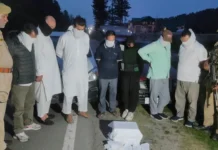
While more than 40 intelligence-based operations were conducted in the quarter, officials highlight two major cases. One is a Jammu-based network linked to Vinod Kumar, alias Kunda, whose financial trail has led sleuths to the first-ever inter-state attachment of properties in Gurdaspur, Pathankot and Amritsar. Another case is about Gulzar Ahmad, alias Lau Gujjar, who was wanted in 28 cases with inter-state ramifications. His arrest led to the detention of three other players, the recovery of roughly 1.5 kgs of heroin, an AK-47 rifle, a pistol with live ammunition, Rs 11 lakh in cash, three luxury vehicles, three smartphones and a weighing scale.
Besides, the security grid has increasingly relied on “non-kinetic measures”, administrative penalties designed to raise the cost of drug trafficking for criminal networks. Of 839 driving licences recommended for cancellation, 470 had been cancelled, and 414 more were under process. Of 612 registration certificates recommended for suspension, 372 have been acted upon. So far, 52 passport cases were identified and five have been cancelled. In the near future, people involved in NDPS cases would be denied government subsidies and institutional loans.
The Money Chase
Financial investigation has emerged as one area where officials point to genuine speed-up. Properties attached in NDPS cases have risen from 31, worth Rs 7.36 crore, in the second quarter of 2025 to 228, worth Rs 138.34 crore, in the same period of 2026. Besides, Rs 1.4 crore stands frozen in bank accounts linked to narcotics offenders.
The law enforcement agencies are also seizing the automobiles involved in the drug trafficking. In established cases, the police approach the court to seek permission to auction these vehicles. In this quarter, nearly 41 vehicles were auctioned for around Rs 37 lakh.
In Q1, 4872 kgs of narcotic drugs and 48865 units of psychotropic substances were destroyed.
The Judicial Process
There were 124 acquittals during 2025, and the prosecution recommended appeals in 30 cases. Almost 94 cases are being closed, officials said.
As far as the bails granted to the accused are concerned, of the 32 bail orders issued in commercial-quantity cases in three months, nine were contested by the prosecution.
Rehabilitation
While the battle against the drug peddlers is going on, those impated need to be treated and rehabilitated. Officials were told in the latest NCORD meeting in Srinagar that addiction Treatment Facilities are now operational in every district. However, the in-patient de-addiction services have expanded unevenly according to local caseload: 40 beds at Government Medical College (GMC) Jammu, 20 each at GMCs in Doda, Kathua, Rajouri, Handwara, Baramulla, Anantnag and Udhampur, and 10 each at district hospitals in Kishtwar, Poonch, Ramban, Reasi and Samba, with services also running at Kulgam, Shopian, Pulwama, Ganderbal, Budgam and Bandipora.
The Institute of Mental Health and Neurosciences (IMHANS) in Kashmir has trained 4123 master trainers and resource persons who are now conducting further training at the institutional level. Authorities are seriously considering creating a Drug De-addiction Registry Portal, using Aadhaar-authenticated patient registration on the basis of which unique patient identification can be generated. There is a proposal for divisional rehabilitation centres at Jammu and Srinagar, and a dedicated de-addiction and rehabilitation centre at Government Rajiv Gandhi Hospital.
The security grid is battling yet another crisis, and people are not aware. During investigations, several employees were found involved in narcotics offences. So far, 404 government employees were found involved in drug trafficking, and only 171 of them were dismissed from service. Jammu and Kashmir police is the top performer as it dismissed 113 of the 223 cops implicated in NDPS cases so far.
The Supply Chain Issues
The law enforcement agencies had been seeking Satellite imagery of the narcotic crops being grown in Jammu and Kashmir. The Narcotics Control Bureau imagery did reach them but only after the illicit crop had already been destroyed. They had identified an estimated 380.51 acres of illicit cultivation across six districts of the Kashmir division. Physical destruction was carried out at 96 kanals of poppy and 1157 kanals of cannabis, against 16 and 1152 kanals respectively in the same quarter of 2025. As many as 247 FIRs were registered against cultivators in three months, which is a quantum jump in comparison to Q1 of 2025.
The Narcotics Control Bureau has issued 17 Unique Registration Numbers for precursor chemicals in Jammu and Kashmir, covering just three of the seven controlled dual-use substances: acetic anhydride, pseudoephedrine and ephedrine. Official sources said full compliance with storage and handling norms was found on inspection, with no diversion detected.
Involving the Community
Briefing the high-level meeting about how the community has been associated in the battle, the officials said excise officials ran 853 camps reaching over 30,000 people, the School Education Department conducted nearly 2.4 lakh sessions reaching close to 38 lakh participants, and police ran a further 3964 hotspot-focused programmes.
In Kashmir, officials said, 8502 religious preachers and 8491 mosques and shrines were drawn into the campaign, with Friday sermons used as a platform to carry the message against drug abuse.
The Key Deficits
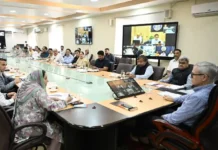
The meeting discussed various other suggestions to make the battle result-oriented. The meeting felt a need to expand rehabilitation services and counselling facilities across districts still under-served. Community participation was emphasised to be taken further. There was a demand for creation of fast-track special courts to handle NDPS cases, and, at the same time, to build the capacity of investigators and prosecutors
Preventive detentions under the NDPS Act have risen from 77 orders in Q1 of 2024-25 to 113 in Q1 of 2025-26.