by Sri Varshith Kumar Reddy E
Tibetan Muslims in Kashmir, descendants of a centuries-old trans-Himalayan community, remain culturally integrated yet face unresolved questions
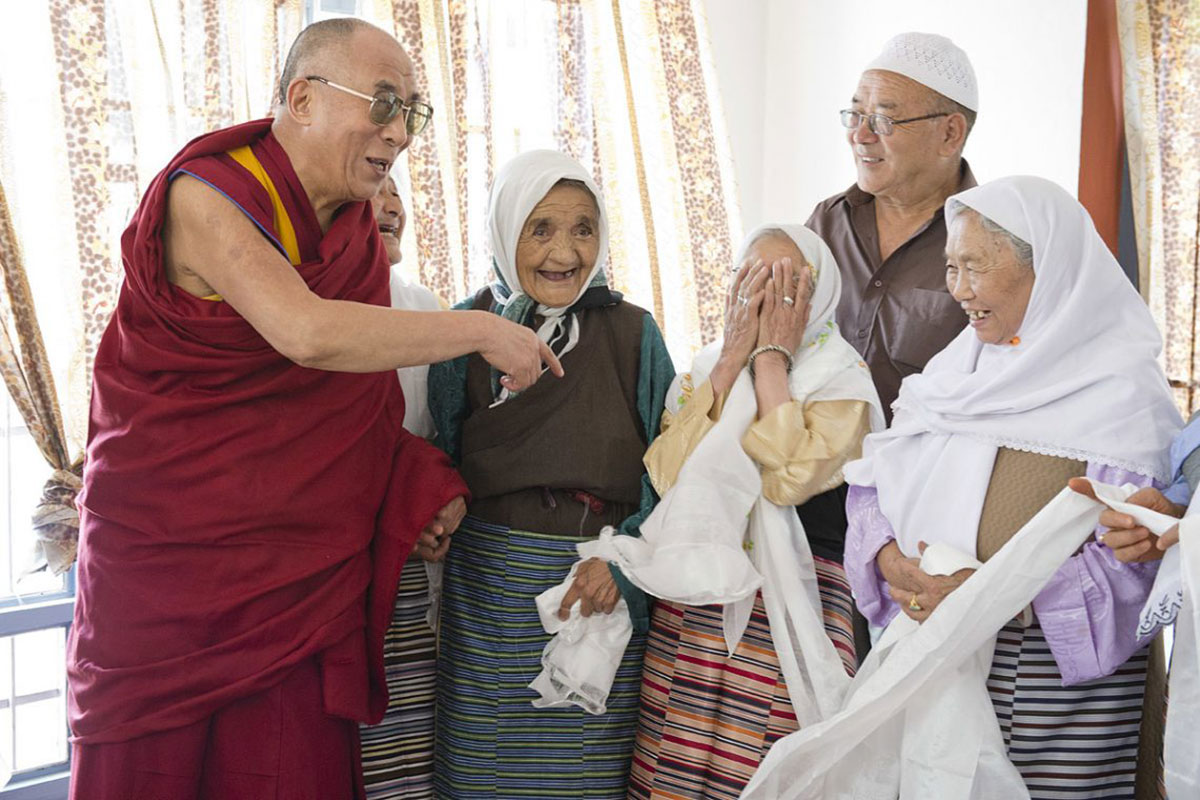
The story of Tibetan Muslims in Kashmir begins not with exile, but with trade, theology, and centuries-old trans-Himalayan connectivity. Long before the Himalayas hardened into borders, pilgrims, pastoralists, and pashmina traders linked the sacred highlands of Tibet with the valleys of Kashmir. In the 17th century, the first Muslim traders and scholars from Ladakh and western Tibet, many of Central Asian or Kashmiri origin, settled in Lhasa and Shigatse. Over generations, they forged a distinct Tibetan Muslim identity: ethnically Tibetan, religiously Muslim, linguistically syncretic, and resistant to narrow definition.
The rupture came in 1959, after the failed uprising against Chinese rule and the Dalai Lama’s flight to India. The world’s attention fixed on Tibetan Buddhists, but around 200 Tibetan Muslim families also fled Lhasa during the crackdown. Some of their forebears had originally come from Kashmir or Leh generations earlier, and they now retraced that journey south, this time as refugees. The Buddhist exiles were routed through Dharamshala and the exile administration; the Tibetan Muslims were not. Many instead sought repatriation to what they considered their ancestral home: Kashmir.
Prime Minister Bakshi Ghulam Mohammad’s government permitted their settlement in Idgah, Hawal, Lal Bazar, and Karan Nagar in Srinagar. Though technically refugees, locals treated them as “returnees,” often calling them “our own people who had gone to Tibet generations ago.” That welcome ran aground on bureaucracy soon after. Tibetan Muslims were denied permanent resident status, leaving them neither foreigners nor full citizens of the state. They mastered fluent Kashmiri, intermarried with locals, and built Srinagar’s artisanal economy, but remained stateless in practice.
This community, now estimated between 1,200 and 2,000 across Srinagar’s Hawal, Eidgah, and Gulshan colonies, is a living remnant of the Himalayan cosmopolitanism that once linked Kashmir to Central Asia and Tibet. As nationalist borders harden and refugee rights are contested worldwide, their case shows how a community can be embraced culturally while excluded structurally. Their marginality despite deep integration is a test of India’s democratic and federal imagination. It has begun drawing wider academic notice too: a February 2026 seminar at Denison University, Tibetan Muslims of Kashmir: Identity, Belonging, and the Loss of Homeland, is the latest sign of that renewed scrutiny.
Over six decades, Tibetan Muslims have revived schools, built businesses, and absorbed local culture, but key rights remain unresolved. A 1980 promise of state-subject status under Sheikh Abdullah’s government died with him in 1982 and was never revived. Only after the 2019 abrogation of Article 370 did Jammu and Kashmir authorities begin issuing domicile certificates to the community. Reporting as recent as December 2024 finds many Tibetan Muslims still holding onto older “state subject” certificates because, as one resident put it, “it is difficult to make bureaucrats understand that we are also citizens of India.”
Seven years on from abrogation, J&K is still governed as a Union Territory awaiting the statehood that Chief Minister Omar Abdullah has called “the foundation” for restoring any special status. That bureaucratic ambiguity has had little institutional push to resolve. Local and central governments, together with Kashmiri civil society, must address citizenship clarity, education and skills, economic inclusion, and cultural integration for Tibetan Muslims: domains where community testimony consistently points to concrete reforms.
Legal Status
At the heart of the community’s marginalisation is legal ambiguity. Lacking pre-2019 “state subject” status, Tibetan Muslims could not own property or hold government jobs. Houses granted on state land could not be sold to them even as outside workers gained the right to buy local land. Domicile certificates issued after August 2019 nominally opened land purchase and public employment, but officials often treat them with suspicion, and some families report marrying local Kashmiris simply “to avail state benefits.” As one study bluntly notes, “there is no clarity about their legal status” when applying for loans, passports, or university seats. That gap corrodes their sense of belonging even seven years after the law nominally changed.
Governments must codify Tibetan Muslims’ status explicitly. The J&K administration should amend domicile rules, or legislate directly, to recognise them as equivalent to state subjects, much as it granted permanent-resident certificates to West Pakistan Refugees after 2019. A dedicated state subject certificate or identity card would end the bureaucratic confusion documented as recently as 2024. Civil administration should in the interim treat post-2019 domicile certificates as fully equivalent to pre-2019 rights. A single-window cell at the District Magistrate’s office could help Tibetan Muslims secure land deeds, bank loans, and job applications without prejudice. Political inclusion matters too: authorities could reserve a quota of local civil-service or police positions for the community, as done for Scheduled Tribes elsewhere. Assembly elections have already been held and Omar Abdullah’s government is in office, so J&K’s Electoral Roll authorities should affirm the community’s full voting rights now, as an overdue marker of equal citizenship.
Removing these legal hurdles would unlock real human capital. Tibetan Muslims in Kashmir “kept on keeping Kashmiris as their brothers” and speak the local language fluently, but remain alienated by law. Official recognition would honor their identity while integrating a skilled community into the formal economy. India could also engage the Central Tibetan Administration, which has already helped build schools and health centers for the community, to jointly widen outreach and trust. Harmonizing their legal status with Kashmiri law remains the essential first step to ending this limbo.
Education and Skills Development
Educational inclusion is crucial to social mobility, but Tibetan Muslim youth often stop schooling around Class 10–12. The community revived the Hawal madrassa into a 900-student school (up to Class 10) with CTA support. Beyond that, students must attend other schools or leave the Valley for college, and Kashmiri universities typically require domicile or PR certificates that the community long lacked. Literacy hovers around 61 per cent, below the state average, with Tibetan women dropping out after matriculation at especially high rates. Where access exists, though, the community thrives.
Policy must bridge this gap. Existing centrally-funded minority scholarship schemes, including Post-Matric and Merit-cum-Means scholarships for Muslims, should explicitly list Tibetan Muslims as beneficiaries, alongside tailored bridge courses given many speak Urdu and Kashmiri at varying fluency. The Tibetan Public School (established 2004 with CTA funds) could be folded into the formal education system, perhaps under Sarva Shiksha Abhiyan, bringing state curriculum and grants while preserving its cultural character.
Vocational training should build on the community’s traditional crafts. KVIC/NSDC crafts schemes and J&K’s artisan programs should proactively enroll Tibetan Muslim embroidery workers, while Srinagar’s District Skill Centers and ITIs reserve seats in tailoring, weaving, and hospitality. NGOs and educational trusts could run mentorship programs linking Tibetan youth with Kashmiri college students. The cost of inaction is documented plainly: “without permanent resident certificate we are unable to get government jobs… this leads to poor literacy rate.” Investment in schooling only pays off, for families weighing whether it’s worth it, if real opportunities follow.
Economic Empowerment and Employment
Kashmir’s labour market remains strained. Official government data put J&K’s unemployment rate at 6.7 per cent for 2024–25, nearly double the national average of 3.5 per cent, with youth unemployment even higher at 17.4 per cent; independent estimates from CMIE have run as high as 23 per cent at points. More than 3.6 lakh registered unemployed youth compete for a shrinking pool of formal jobs, even as migrant labour from UP, Bihar, and Punjab fills much of the Valley’s construction and agricultural work, a paradox increasingly debated in Kashmir’s press through 2026. Tibetan Muslims, concentrated in embroidery and small restaurants, sit outside this formal economy altogether. Post-2019 tax and utility changes squeezed artisan margins further, while seasonal conflict throttles tourism-linked sales, pushing youth toward the Gulf or Indian cities rather than an uncertain future at home.
Policy must support these livelihoods instead of penalizing them. A “Tibetan Muslim Artisans Cluster” scheme under J&K’s existing handicraft initiatives could provide subsidized workspaces, modern tools, and design assistance to help them compete against mass-produced imitations. The Tourism Department could spotlight Tibetan restaurants and handicrafts in its promotional campaigns, making them a recognized strand of Kashmir’s brand.
Financial support matters equally. Banks should actively market SHG and microfinance loans, including Atma Nirbhar Bharat artisan credit, in Tibetan quarters, with simplified KYC that recognizes Aadhaar and voter ID despite domicile quirks. Even modest measures could shift outcomes meaningfully: tiered electricity tariffs for old Tibetan quarter businesses, or Lieutenant Governor’s office funds earmarked for sewing or food-hygiene training.
The alternative is grim. Without support, more people drift into precarious work or leave the Valley altogether. Tibetan Muslim artisans have shown adaptability before, introducing machine-embroidered pherans in the early 2000s and expanding into cuisine. Targeted credit and training would let them withstand market swings rather than merely survive them. Subsidies, credit, and training would stabilize these micro-enterprises while pulling the community into Kashmir’s modest but real growth.
Cultural Identity and Social Inclusion
Tibetan Muslims today embody a genuine fusion. They speak fluent Kashmiri, eat wazwan at weddings, wear pherans, while elders keep Tibetan language and cuisine alive at home. Intermarriage with Kashmiri Muslims is rising, and momo shops now dot Srinagar. The community still reports being stereotyped, nicknamed “Tipti,” a derogatory slang, and feeling only partially accepted, a social exclusion that discourages youth from claiming their heritage openly.
Civil society has a strong role here. Local cultural festivals and public forums should actively include Tibetan artisans and cuisine. Muslim community organizations could publicly embrace Tibetan congregants and host joint iftars highlighting Tibet’s Islamic scholarly tradition. Kashmiri textbooks or media features on the community’s migration history would help normalize the fact that erstwhile neighbours are, in fact, distant cousins. That kind of exposure is where prejudice tends to give way to empathy.
Government measures matter too. A Cultural Liaison Cell within J&K’s Minority Affairs department could document oral histories, support translation of religious texts, and protect heritage sites like the Hawal colony, working alongside the Central Tibetan Schools Administration that already runs the community’s school. Grants for festivals celebrating the community’s Kashmiri-Tibetan blend would send a clear signal that this is part of Kashmir’s plural fabric, not an isolated enclave. Officials already count the community in state census exercises, as researchers have noted. The harder task is converting that recognition into citizenship rights, rather than treating it as merely a data point.
Inaction risks real cultural loss. Studies warn that without PR certificates, education and government careers dwindle, pushing youth to abandon tradition or emigrate. Culturally affirming steps, such as featuring Tibetan Muslim embroidery in Kashmiri handicraft fairs or engaging Tibetan youth in civic groups, would blur the “us-versus-them” divide over time. The goal here is valuing diversity, and recognition, consistently offered, tends to build the pride that keeps a community rooted rather than resigned.
Policy Recommendations and Conclusion
Drawing on these themes, we propose targeted steps for government and society alike:
Clarify and Enforce Citizenship Rights: Amend J&K domicile laws to explicitly include Tibetan Muslims; issue state-subject or permanent-resident certificates recognizing their Kashmiri ancestry; ensure officials treat these on par with other residents’ rights on land, jobs, and voting; reserve a share of local government jobs and college seats until parity is reached.
Expand Educational Access: Extend scholarships and fee waivers to Tibetan Muslim students at all levels; integrate the Tibetan Public School into state and central education schemes in partnership with the CTA; fund vocational training in embroidery, IT, and hospitality with seats earmarked for the community.
Boost Economic Opportunities: Fold Tibetan artisans and restaurateurs into J&K’s artisan cluster and tourism programs; facilitate micro-credit through schemes like PM Mudra; offer accounting and marketing support via local NGOs; consider tax relief for enterprises in Hawal and Eidgah to offset costs like higher electricity tariffs.
Promote Cultural Integration: Sponsor intercultural events around Tibetan Muslim music, food, and art; add the community’s history to school curricula and public media; engage Kashmiri civil society and religious leaders to publicly affirm their place in the social fabric.
Monitor and Advocate: Establish a grievance-redressal cell under J&K’s social welfare department; have the Ministries of Minority Affairs and Home Affairs periodically review implementation; keep local NGOs, academics, and media documenting the community’s situation to hold policymakers accountable.

The case of Tibetan Muslims in Kashmir is both a challenge and an opportunity. This August marks seven years since Article 370’s abrogation opened, on paper, a path to their inclusion, but J&K’s own statehood remains unrestored, and with it, the political will to finish that unfinished business.
Integrating this community properly would correct decades of oversight and enrich Kashmir’s plural society. Development, after all, works best when no group is left behind. By guaranteeing citizenship rights, investing in education and employment, and celebrating this community’s heritage, Kashmir’s leaders can turn a story of marginality into one of genuine inclusion.
Ensuring Tibetan Muslims thrive in the Valley strengthens Kashmiri identity rather than diluting it, reflecting the very coexistence and syncretism Kashmir has long claimed as its spirit. It is now incumbent on government and society to match that resilience with real policy support, so Tibetan Muslims become not just neighbours in geography, but full stakeholders in Kashmir’s future.
(The author is a pracademic working on government policy and public institutions. Ideas are personal.)