Jammu and Kashmir’s revised climate plan carries an Rs 50,012.70 Cr price tag to 2030. Officials have already tied down about 59 per cent but do not know where the balance resources will come from
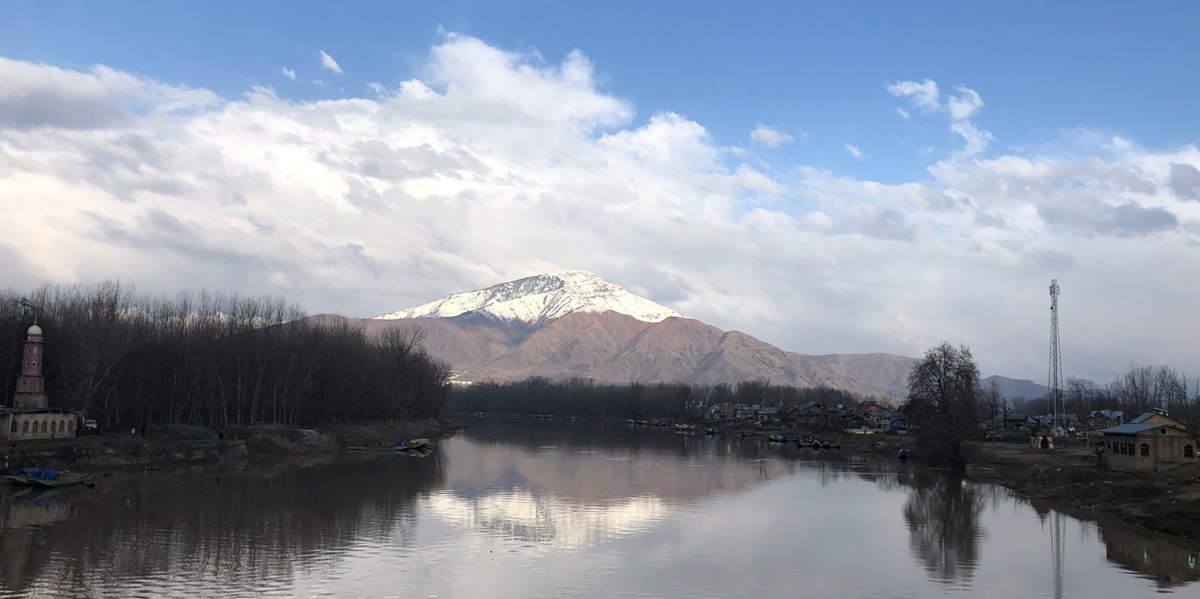
Managing climate change in Jammu and Kashmir will cost Rs 50,012.70 Cr by 2030, according to the revised State Action Plan on Climate Change (SAPCC 2.0). That is nearly eight times the Rs 6,435.2 Cr indicative outlay of the first plan, drawn up initially in 2013-14.
Officials said Rs 29,517.81 Cr is already committed. The remaining Rs 20,494.88 Cr (41%), is “expected” from the budget and central schemes.
Costing Method
The bill is not a fresh wish list. It is built from budgets that already exist.
The plan’s authors, working with TERI, first listed strategies and assessed how far current schemes already cover them. They then mapped each strategy to a budget line and measured what was left over as a resource gap. The same exercise ran across 17 departments, which were consulted in October 2023.
This process has helped the planners create a clear graph about what they have and what they still require.
Jammu and Kashmir’s own budget has committed Rs 9,847.32 Cr. Central schemes account for Rs 19,670.49 Cr. The plan suggests that mitigation needs Rs 22,976.77 Cr and adaptation Rs 27,031.55 Cr. A further Rs 4.38 Cr is set aside to staff a project management unit in the Climate Change Cell.
Where Money Goes
Three departments dominate the bill. Housing and Urban Development needs Rs 16,000.28 Cr. Jal Shakti needs Rs 14,991.99 Cr. Rural Development needs Rs 9,383.60 Cr. Together they make up over four fifths of the total.
Unlike Jal Shakti, Rural Development and HUD, the Transport sector tells a different story on the mitigation side. It needs Rs 11,318.68 Cr, mostly for electric mobility and traffic management. Only Rs 51 Cr. Together, housing and transport account for most of the unfunded gap.
Smaller departments carry smaller figures. Agriculture needs Rs 1,050.71 Cr, Forests Rs 382.08 Cr, Tourism Rs 132.08 Cr and Health and Medical Education needs Rs 2.78 Cr.
What It Buys
The plan sets out 55 mitigation strategies. They include solar power and floating solar plants, small hydropower and wind, lower transmission losses, energy efficiency, electric vehicles, intelligent traffic systems and waste management. Officials estimate they will cut about 2.6 million tonnes of CO₂ equivalent by 2030.
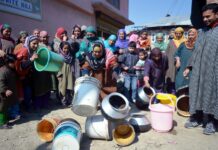
On the adaptation side, 100 actions are proposed for agriculture, water, health, forests, tourism and disaster risk reduction. They are shaped by a vulnerability assessment of 42 indicators. The assessment ranks districts as high, medium or low vulnerability. It finds Ramban and Kishtwar most exposed on agriculture, Jammu most at risk on water, and Kupwara and Bandipora most fragile on health.
The projections behind the plan are sobering. Temperatures could rise by about 1.5°C by 2050 under a moderate emission path, and rainfall by around 5 per cent. A high emission path raises the rainfall figure to 15 per cent.
Oversight Plans
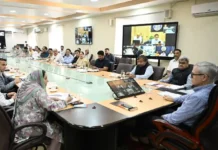
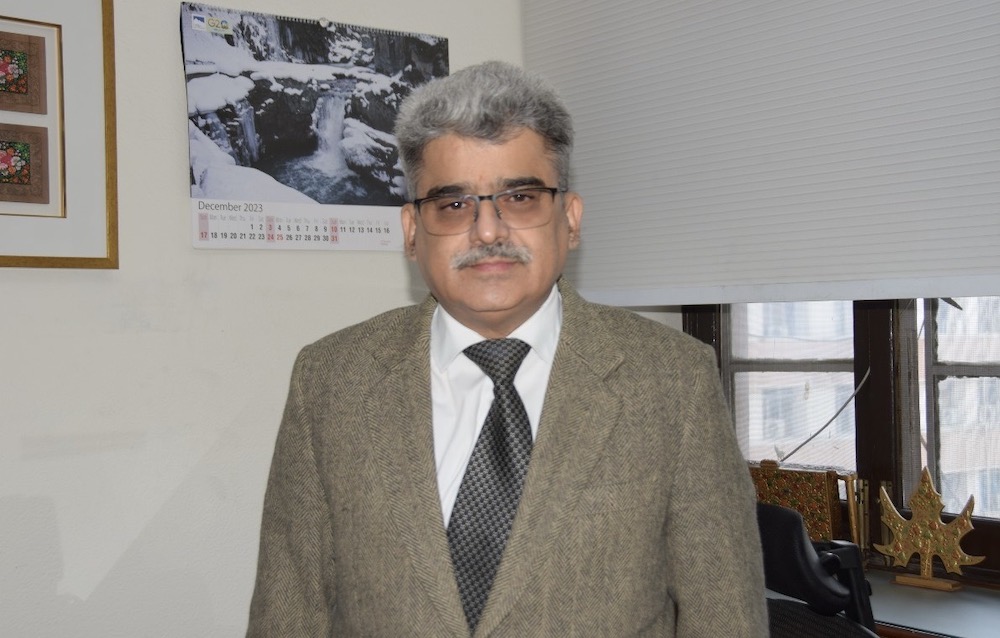
Chief Secretary Atal Dulloo told a recent meeting that officers must add department wise actions, outcomes and milestones to 2030. He asked for clear responsibilities, measurable indicators and convergence with existing schemes. His message, in effect, was to say who does what, by when and with what result.
The plan proposes a Governing Council under the Chief Minister, meeting once a year. An Executive Council under the Chief Secretary would meet twice a year. A monitoring committee and a coordination cell would meet quarterly and every two months. Departmental nodal officers would update a digital dashboard each quarter, and directors would verify the data. Random independent checks and public participation would add a third layer.
The plan now goes to the State Level Steering Committee. After that it goes to the National Level Steering Committee at the Ministry of Environment, Forest and Climate Change.
Open Questions
The draft are ready but whether the plan can be delivered is less certain.
The first concern is the gap, a substantial sum of Rs 20,495 Cr not secured. Nearly three quarters of it sits in one department, Housing and Urban Development. The plan has roughly four years to run.
The second concern is the weight of existing schemes. A large share of the “committed” money is regular scheme funding that would flow anyway. The plan re-labels it as climate spending. That makes the bill look well covered. It does not show what extra will happen because of the plan.
Health is the most visible mismatch. The assessment flags infant mortality, thin health workforces and low insurance enrolment in several districts. Bandipora’s infant mortality rate is 75.72 per 1,000 live births, the highest in Jammu and Kashmir. The plan proposes 20 health actions. It prices the whole sector at Rs 2.78 Cr.
Mitigation raises a different question. The plan sets aside Rs 22,976.77 Cr for strategies expected to cut 2.6 million tonnes of carbon dioxide equivalent by 2030. It requires explanation if it is an annual saving or a total over the plan period. It also lacks clarity about how much of the saving each sector delivers. Jammu and Kashmir is a net negative emission region, as its forests absorb 17.5 million tonnes against 8.95 million tonnes emitted. The case for the spending would be easier to judge if the plan set out what each rupee buys in emissions saved.
Besides, the plan lacks year wise phasing of costs. The planners need to work and link costs with clear outcomes.