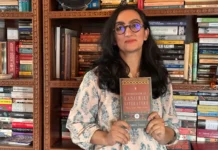
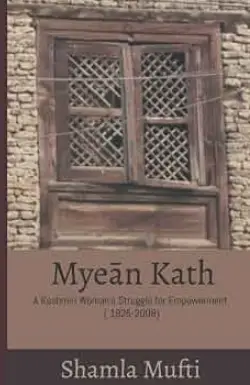
Shamla Mufti topped every examination she sat, and her in-laws felt embarrassed as her success became news. From Zaldagar girlhood in Srinagar to a Nawakadal principal’s office, she wrote her way out. Lilac AIi read her biography to tell her story
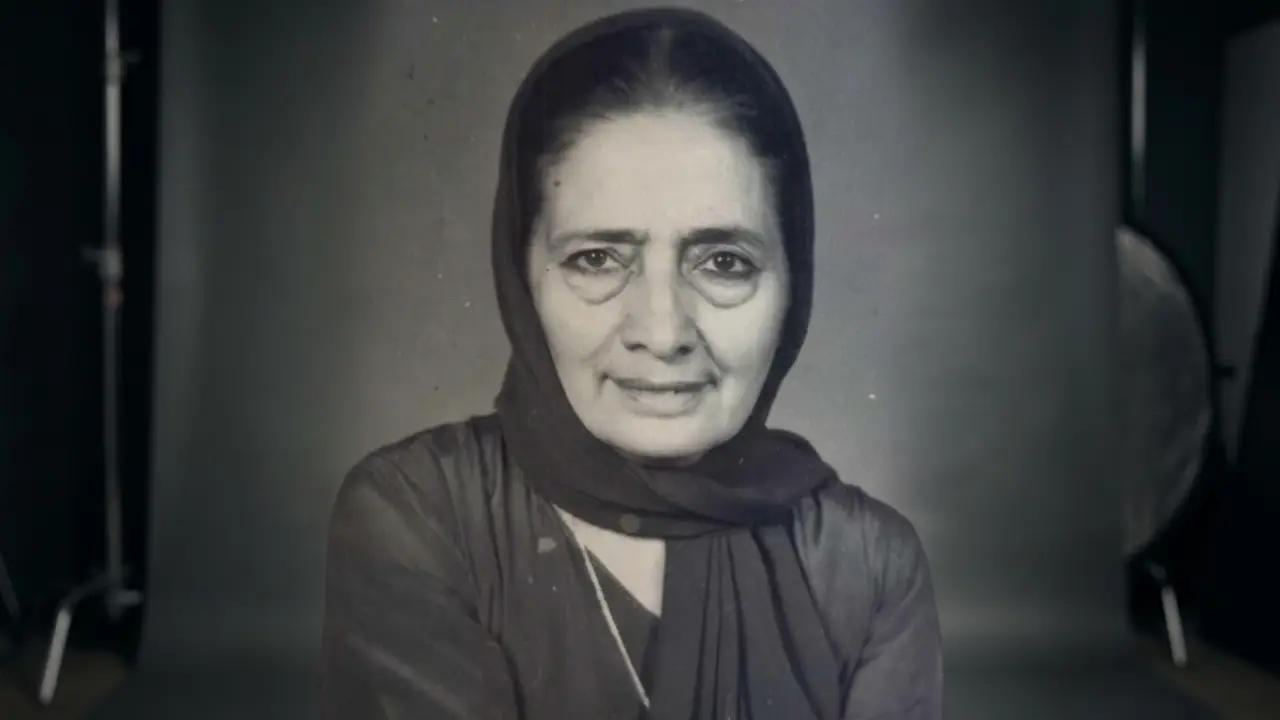
Shamla Mufti was an educator, a college principal, and, in the last decades of her life, a writer. Myean Kath, her autobiography, was first published in Kashmiri. It was later converted into Chilman-se-Chaman in Urdu and finally republished in English, with the same as the Kashmiri edition.
Prof Mufti spent the better part of a century inside Srinagar’s classrooms. First as a girl trying to stay enrolled in one. Then, as a teacher. And finally as the woman running an entire institution.
She was born in 1925 into a Kashmiri Muslim household. Family tradition traced its lineage to Mulla Muhammad Jawhar, a scholar who had taught at the university founded under Emperor Jahangir. She was one of four children, three daughters and a son. She was born in Chasti Kocha (Zaldagar). Her mother taught her the Quran at home; in the patient, repetitive manner such lessons were given then. From her earliest days she carried a quiet, intense passion for learning, and kept seeking ways to continue.
Shamla’s childhood unfolded under Dogra rule. Education for Muslim subjects was scarce. Social life in the Old City, the Shehr-e-Khas, was bound by strict conservative custom. Her father, Saadudin Chisti, whom she called Toath, was a teacher himself and stood somewhat apart from that consensus. His modern instincts showed less in argument than in small, deliberate departures. When his daughters married, he dressed them not in the traditional pheran but in a qamiz and shalwar. It was a minor reordering of what a Kashmiri Muslim bride was expected to wear. It suggested he did not regard his daughters’ presentation, any more than their education, as beyond negotiation.
First Silence
In 1937, aged twelve and in the sixth standard, her nikah was formalised. The fuller ceremony that would send her to her husband’s roof was still years off. For a time, the arrangement changed little about her days.
In 1939 she sat the middle school examination under the Punjab Board and topped her school. Relatives arrived at the house in huge numbers to congratulate her. From her in-laws’ house near the Jamia Masjid, nothing arrived at all. In that silence, her father understood the character of the family into which he had married her. A woman’s education registered there as an irrelevance, not an achievement.
Modest Wedding
The fuller wedding took place in November 1940, joining her to Ghulam Din Mufti. She was in the tenth grade. Her matriculation examinations were months away. The affair was modest, curtailed even by the standards of the period. Her in-laws did not wait for her own brother to return from his travels. Only 21 guests attended. She would later record, without much apparent need to argue the point, a saying that circulated freely in households like the one she had married into. A son’s marriage is a matter of desire and learning. A daughter’s is a matter of necessity and helplessness.
She sat her matriculation examination in March 1941 at the Convent School that served as the examination centre. She topped her school again. Her name appeared in the newspaper alongside the results, as was customary. Her own household broke into celebration. Her in-laws sent a message instead, informing her family that a daughter-in-law’s name in print had brought them nothing but shame and ridicule among neighbours and relatives. The pattern set three years earlier had repeated itself in sharper form. Her education could be tolerated so long as it stayed private.
Jinnah’s Visit
In 1943, amid the quiet pressures of her new life, Shamla gave birth to her son, Altaf. She took up motherhood while still holding on to her academic ambitions. Kashmir was moving through its final years under Dogra rule. The old princely order was already straining against a rising tide of nationalist politics on either side of the subcontinent. Something of that unrest reached even a household absorbed in the ordinary business of raising an infant.
In June 1944 Muhammad Ali Jinnah passed through Srinagar. Her home stood near the venue where he was to speak, and the entire neighbourhood bustled with unprecedented activity. Women went out to hear him, Shamla among them. What stayed with her afterwards was the steady chatter running through the crowd around her. She was left wondering why so many women had come at all, if only to talk through the event.
Maisuma Secret
The years that followed folded into the unremarked rhythm of a young mother’s labour. Feeding, minding, and managing a household. At some point in this stretch, she decided she wanted to work, and specifically to teach. Through family connections, she secured a temporary two-month teaching post at a primary school in Maisuma.
The neighbourhood held a controversial reputation in traditional circles. She did not share the exact location with her household, telling them the post was elsewhere. She went to Maisuma regardless. She left each day on tea and a single tchot, threading the narrow lanes of the old city to reach the school, then returned to housework that had not paused in her absence. The post lasted two months. It did not spare her the household’s disapproval, which arrived steadily regardless of the lie meant to prevent it.
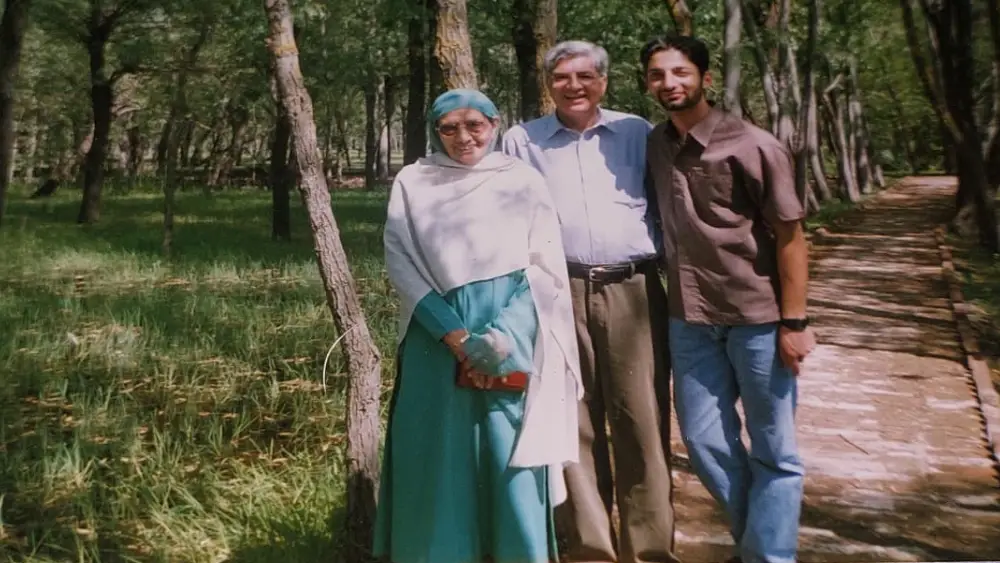
Smoke Damage
Not long after the post ended, a difficult winter forced her to cook over a damp daan, a clay stove, using unseasoned firewood. Heavy smoke filled her kitchen seven to eight hours a day. Her eyes gave out under the strain in a way no home remedy could touch. Custom required that an ailing woman be sent to her parents for care rather than tended by her in-laws. She returned to Zaldagar. The plain domestic arrangement became an unexpected break from household demands, and gave her time to read and prepare for further study.
Her family used the interval well. A private tutor was arranged. With less than six months before the FA examinations, she prepared in earnest. She sat the exam on May 15, 1950, in the hall of Raj Garh, a former Dogra palace converted post-1947 into a public examination centre. She wrote among 50 other women, under electric light, in a room that within living memory had been closed to them entirely. She passed in a high second division.
Residency Road
Once her results were confirmed, the qualifying girls of that year were called together for an orientation. There, without informing her family beforehand, Shamla registered for higher studies at the newly established Government Degree College for Women on Residency Road. She entered in June 1951, in a building recently vacated by Dogra royal women. She studied English, English literature, Political Science and Persian, with Urdu as her optional subject. Some of her teachers were professors deputed from the boys’ colleges, for want of enough qualified female faculty.
She was elected president of the Students’ Council for a full year and took part in the extracurricular life the college required of every student. When the college organised a camp to Gulmarg lasting a week, she had to ask permission to go, uncertain whether it would be granted. Her husband told her plainly that if she wished to go, she could. She went, hiring a tonga to the bus with a small case and bedding in tow. By the time she completed her degree, she was the first woman in her entire clan to hold one.
Her husband had by then been persuaded to sit the same examination. The two spent evenings together, after her college hours and her household work were done, working through the same material late into the night. Results were declared two months later. Hers came through in a high second division. His was withheld. The household absorbed the imbalance with visible unease at the thought of a wife whose marks had outpaced her husband’s.
In 1953, a small incident nearly undid the fragile peace she had built at home. She joined a group of classmates for an ordinary group photograph. Word reached home, and it created a crisis: a daughter-in-law posing for a photograph. She never established exactly how the story travelled. The episode made clear how tightly her extended family policed a woman’s public exposure.
Aligarh Years
By the mid-1950s, degree secured and capability proven, Shamla felt her academic trajectory was not yet complete. To establish herself securely in higher education and command real authority as an educator, she needed a postgraduate degree. Kashmir offered limited avenues for advanced study in her field. The urge to go deeper into Persian literature pushed her ambition beyond the valley.
Leaving Kashmir to study was a request of a different order. Aligarh Muslim University sat many days’ journey from Srinagar, in a plains town shaped by an entirely different Muslim social world. A small number of Kashmiri Muslim women had studied outside the state before. Taking up residence in a hostel hundreds of miles away still required extensive family negotiation. It meant convincing an entire extended family that a married woman’s proper place could, for a period, be a hostel room far from her own kitchen.
She went anyway, in burqa, carrying into Aligarh’s lecture halls and library the same veil she had worn into the examination hall at Raj Garh and the corridors of Women’s College. She found the academic environment vibrant, intellectually stimulating and far more open than the restrictive atmosphere back home. She earned her master’s degree in Persian.
On the journey home, during a hot bus ride back towards Kashmir, she briefly lifted the face cover of her veil for ventilation. The rest of the burqa stayed intact. A distant relative travelling the same route saw her and reported it to her family before she arrived. She was reprimanded on her return.
Asking Permission
She returned to Kashmir and to teaching, taking a longer post at Gojwara School once her degrees were behind her. Even with an MA, asking to work required courage her qualifications did not supply. She was, by her own account, frightened to raise the subject at home. She was uncertain at first whom in the household she was even meant to ask, before approaching her husband directly.
He agreed. The agreement did not go unchallenged. One of his uncles confronted him, demanding to know how he could allow his wife to work when no one in the family’s history had ever permitted it, and warning that it would embarrass the family. Her husband’s reply was a single sentence, offered without further explanation. He had been left with no choice. It was answer enough. The matter was not raised openly again.
She held to the discipline she had kept before. She left each morning for the school and returned each afternoon to a household whose chores did not pause to accommodate where she had spent the day.
Nawakadal Principal
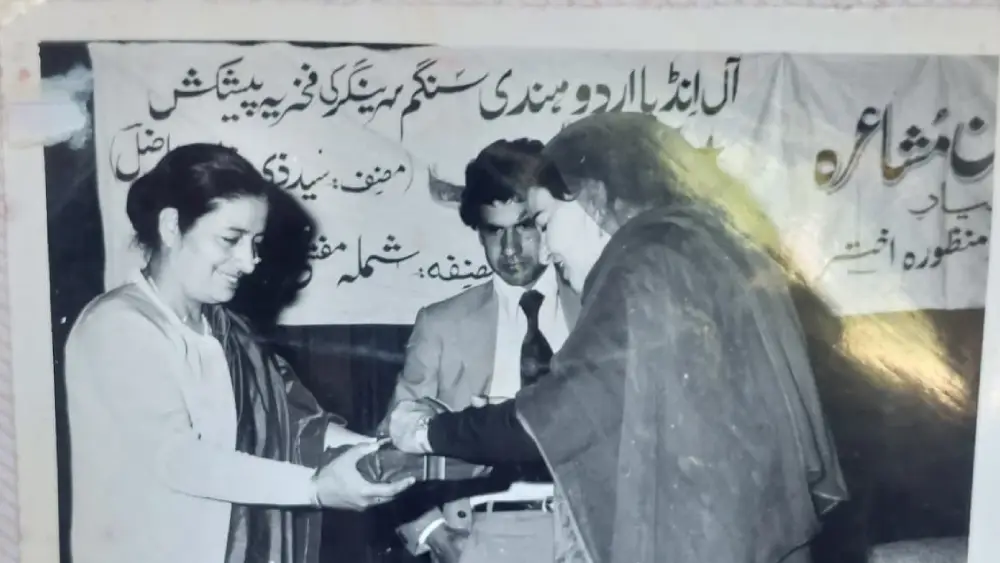
Years of steady work carried her into administration. In 1966 she was appointed Principal of Government College for Women, Nawakadal, a post she held until 1974. Ghulam Din Mufti would in time become Principal of The Islamia School. Later, she headed the Government Women’s College, M A Road in Srinagar from 1972 to 1978.
The role was closer to institution building than administration in the ordinary sense. Kashmir’s colleges for women were still new enough that the policies governing how young women could safely and acceptably move through higher education were largely being written for the first time. Shamla was among the women writing them. She organised for her own students the kind of excursions she had once had to ask permission to join. Alongside other educators of her generation, she led students into rural communities as part of social service programmes, spreading awareness among families about hygiene, health and the importance of keeping girls in school. The woman who had once lied about the location of a two-month teaching post spent her later career persuading entire communities that their daughters belonged in a classroom.
Her son Altaf grew up to become a prominent paediatrician of the valley. She was persistent in pushing for his training to take him abroad, a determination that mirrored the resolve with which she had once pursued her own education against a household that preferred she stop.