A review of Rama Rajya, Prafull Goradia and Jaganniwas Iyer’s reinterpretation of the Ramayana as a treatise on ethical statecraft and governance, writes Babra Wani
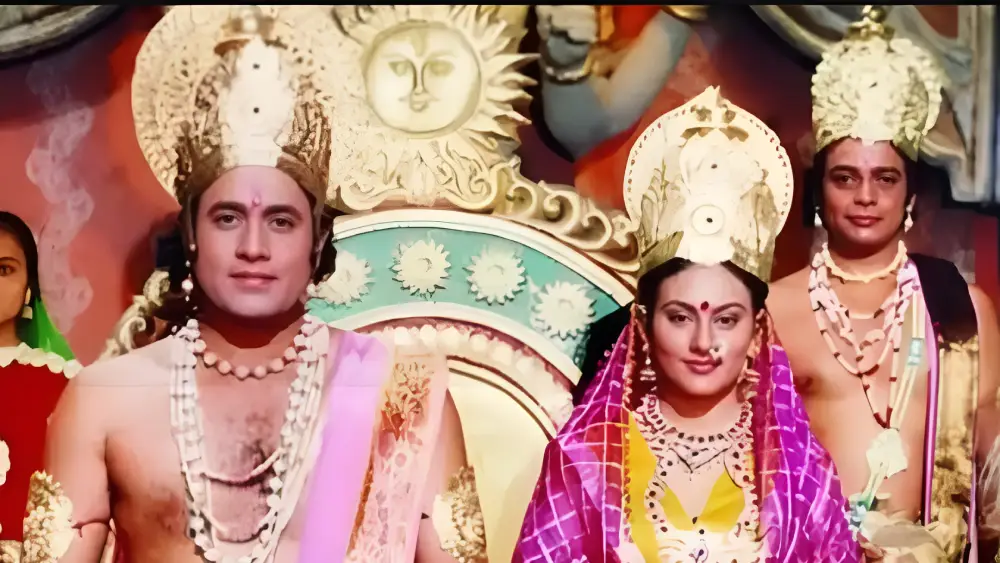
Growing up, I knew the Ramayana chiefly as the story of Rama and Ravana, good against evil. Rama Rajya, a new book by Prafull Goradia, who left the tea industry for politics, and Jaganniwas Iyer, an editor, writer and analyst, offers a different lens. Published by Rupa Publications, it reads the epic not as legend but as a study in statecraft and governance, with the moral laws expected of a ruler placed at its centre.
The Book
Spread across 15 chapters, the book opens with genealogical and anthropological groundwork, tracing the Surya and Chandra Vanshas, questioning the identity of Asuras and Rakshasas, and framing early civilisational conflict alongside Ravana’s expansionist reign. It then turns to Rama’s life, treating the succession dispute, exile and southern alliances as tactical moves within a wider geopolitical landscape rather than simple legend. The closing chapters shift fully into statecraft, examining the administrative systems, legal thought, social order and legacy of Rama Rajya.
For the authors, Rama Rajya has endured for centuries as a civilisational ideal, a society built on dharma, welfare, harmony, accountability and compassionate rule. Drawing mainly on the Valmiki Ramayana, they trace the principles behind Rama’s polity, from kingship and diplomacy to warfare, justice and governance, and present the model as one still relevant to building a just and developed India today.
Core Argument
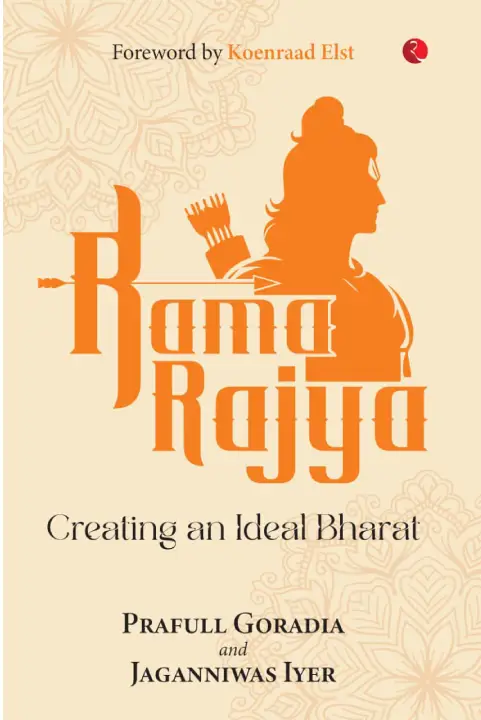
Before this book, Rama Rajya was an unfamiliar term to me. The authors present it as “ancient India’s foundational model of constitutional, ethical, and geopolitical governance”, describing a political order where absolute power answers to dharma, where territorial integrity sits alongside ecological care, and where legitimacy rests on collective welfare rather than conquest.
Unlike despotic or unrestrained rule, Rama Rajya binds the monarch entirely to dharma. Sovereignty becomes an act of service, not self-interest. As the book puts it, “The rule of dharma… imposes restrictions and boundaries upon the monarch so that he does not rule arbitrarily.” The authors call this a shift from patrimonial kingship to normative sovereignty, where moral order precedes and shapes political order.
Legitimacy, the book argues, demands both social justice and ecological preservation: “the well-being and happiness of all citizens… along with the care and preservation of nature… constitute its inalienable foundation.” Hanuman’s reference to the land as Vanam is read as an early idea of resource stewardship, tying political legitimacy to care of the land itself.
Key Themes
A recurring distinction runs through the book, between rashtra, the living spirit of the people, and rajya, the institutional machinery of the state. A healthy polity, the authors write, needs harmony between the two, spanning natural frontiers “from the Himalayas to the oceans.”
The book insists this was no utopia. “Rama Rajya was not a utopia of divine perfection, but a pragmatic and ethical polity rooted in fairness, transparency, and social welfare,” built on moral accountability, decentralised administration and citizen welfare. This pragmatism is illustrated through Rama’s decision not to occupy Lanka after defeating Ravana, choosing instead to install Vibhishana as ruler. The authors call it proof of “a commitment to self-determination, restraint, and ethical leadership,” and the foundation of a tri-regional order linking Kosala, Kishkindha and Lanka through shared values rather than conquest.
Long before Chanakya or Machiavelli, they argue, Rama Rajya showed that power must serve virtue: “power must serve virtue, and governance must embody justice.” This synthesis of strength and morality, the authors write, is what made it endure as a political ideal.
Reviewer’s View
The chapters on Asuras, Yakshas and Rakshasas stood out to me, drawing on the Vedas, the Mahabharata and the puranas to define these figures, alongside anecdotes such as the story of Pulastya, one of Brahma’s mind born sons, and the experience of Ilvila, daughter of sage Trinabindu.
The language is simple, and the authors do offer background on unfamiliar characters, though many remained new to me even so. Readers already familiar with the Ramayana will likely follow the political argument more easily, since several interpretations lean on episodes and characters from the epic. I found myself rereading some passages more than once.
What the book makes clear, finally, is that Rama Rajya is not simply the rule of Rama, but a model of governance where power answers to dharma, citizen welfare comes before personal ambition, and the ruler serves as custodian rather than absolute authority, an argument the authors build with care.