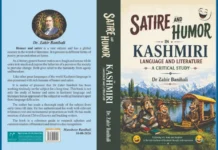
Manisha Sobhrajani’s 2014 book documents the resilience, suffering and everyday realities of Kashmir’s women, capturing violence, displacement, survival and shared humanity through deeply personal encounters, finds Babra Wani
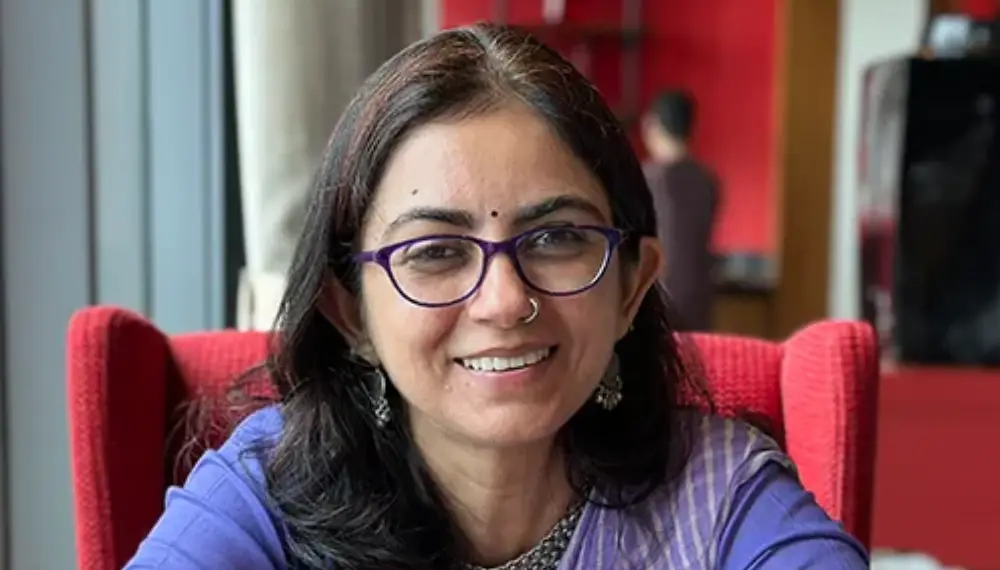
Manisha Sobhrajani’s book, The Land I Dream of: The Story of Kashmir’s Women grew out of what was meant to be a casual holiday. That single visit became a ten-year involvement with the region. It later led to her volunteer work with the Samarpan Foundation in the Sunderbans.
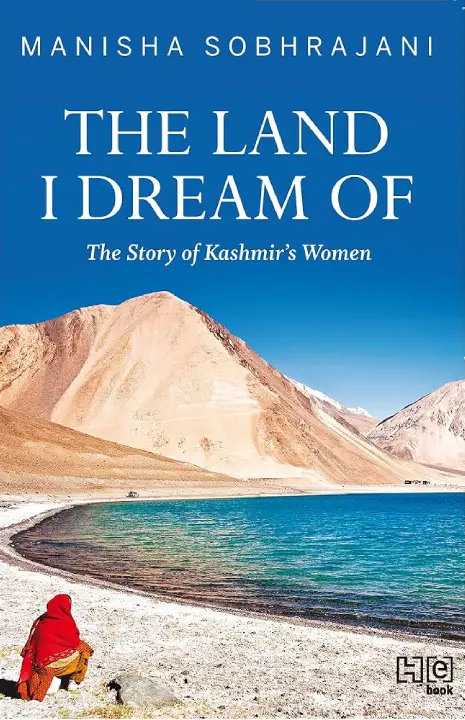
Hachette India published the 191-page book in 2014. It steps away from political commentary, television debates and troop statistics. Sobhrajani, a journalist and researcher, documents the daily realities of women across Kashmir, Jammu and Ladakh. Five chapters carry the story: Bhawani & Isbandh, Narcissus & Lotus, Humsaya & Boonye, Yogini, and Khanaqah & Ziyarat. Each opens with a fourteenth-century vakh by the mystic poet Lal Ded.
The book reads like a personal attempt to record how women negotiate survival, family and their own sense of Azaadi under the daily presence of the gun.
Pioneer Generation
The opening chapters push past the romanticised Bollywood trope of the delicate Kashmir ki Kali. Sobhrajani looks back at Habba Khatun, the sixteenth -century peasant girl who married Yusuf Shah Chak. She introduced the lyrical lol form to Kashmiri poetry. She spent her later years wandering in grief after Akbar imprisoned her husband in Bihar. Malika Pukhraj sang in the court of Maharaja Hari Singh. Her memoir, Song Sung True, wrote frankly about palace life and princely politics.
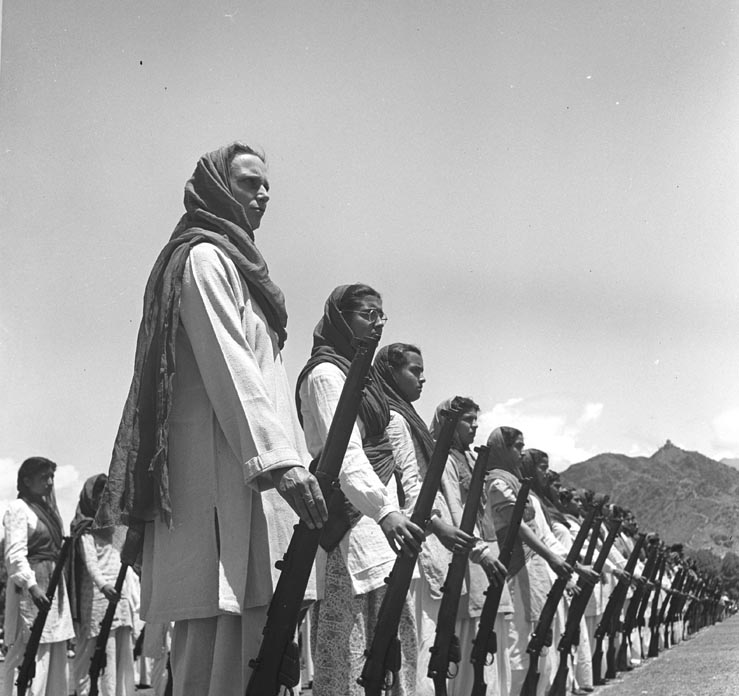
The history becomes tangible when Sobhrajani sits down with eighty-year-old Sukanya Parashar at her home in Rajbagh, Srinagar. In 1947, as kabailis entered Kashmir, Sheikh Abdullah and the National Conference set up the Women’s Self Defence Corps. Sukanya was part of a group that later led schools and public institutions. It included: Mahmooda Ahmad Ali Shah, the fiercely independent head of the Government Women’s College, who chose never to marry; Krishna Misri, a lifelong educationist and Communist Party member; Dr Girija Dhar, the surgeon who entered Kashmir’s first prominent interreligious marriage and headed the State Women’s Commission; besides, Volunteers Sajida Zameer, Kaushalya Kaul and Usha Kak.
Sukanya recalled their weapons training under General Cariappa and Colonel Sher Jung. They practised firing .303 rifles and throwing grenades. Basic commodities were scarce, so doing well on the range had practical perks. “There was a scarcity of salt at that time,” she has recorded. “Whenever we were tested [at the gun range] and did well, we were given salt and soap as reward! They used to keep targets in front of us, and we used to shoot. And a lot of us shot in the bull’s eye…”
Sukanya’s family moved to a Muslim neighbourhood for safety during the raid panic. The neighbours told them, “If anything had to happen, it would first happen to us!”
Poonch Defenders
That instinct to protect one’s home resurfaces decades later in Poonch. In the twin villages of Kulali Marrah in Surankote, foreign fighters had occupied Hill Kaka for years. They forced locals into unpaid porter labour and harassed families. After the 2004 Teeyalikatha massacre, local Gujjar women formed Jammu and Kashmir’s first all-women Village Defence Committee (VDC).
Elderly Munira Begum explained the psychological change plainly. “The gun made me feel that I have an equal status to that of my husband in our family.”
Najma Akhtar noted that men carried weapons everywhere, while women kept theirs inside the house. They brought them out to clean or drill. “When I first held a gun in my hands, the recurring thought in my head was that either I will die or I will kill the enemy… I feel much more in control of the situation.”
Khursheeda Begum fed the author a hot meal while handling a crying ten-month-old. She discussed defensive tactics in the same breath. In the upper pastures, Alisha Bi herded sheep with an AK-47 slung over her shoulder. “When I first held a gun in my hand, I forgot what fear is.”
Sixteen-year-old Ameera admitted that guns were sometimes pulled out during petty village land disputes. Sahba Bano summed up their reality. “We don’t know whether we will live for one hour or one year, but we live without fear.”
Reaching these homes was an ordeal. Sobhrajani insisted on walking past Kulali across two mountain passes and deserted militant caves. Her guide, Lal Bhai, tried hard to talk her out of it. Four Army jawans escorted her. She later learned they had laid bets on whether the city visitor would finish the three-hour trek or give up halfway.
Against this backdrop of village defence, the book introduces Zooni. Sobhrajani first met her while serving tea at Sukanya’s house in Srinagar.
Zooni had grown up in Kulali Marrah. She fell in love with a militant named Khalid while the village was organising against the insurgents. The relationship turned dangerous. Neighbours and insurgents both threatened her family. The two planned to elope. Two days before they could leave, Khalid disappeared. His commanders had moved him elsewhere, unwilling to let a fighter be distracted by domestic ties.
Zooni faced the fallout alone. Sukanya took her in and brought her to Srinagar. There she found shelter, an education and a quiet life away from community hostility.
Frontier Contradictions
Sobhrajani captures the small, strange contradictions of life on the frontier. At Jhalas in Poonch, Indian mobile signals vanish from handsets. Pakistani networks like Ufone and Mobilink replace them. Near Malti, an elderly man remembered that before the border shut, it was quicker to cross over and shop at Kota than to travel into Poonch town.
During the brief cross-border trade at Chakkan da Bagh, embroidered Pakistani juttis and mojaris were a major hit on the Indian side. Pakistan took in Indian onions and lentils. Near Surankote, the author stopped at Noor e Chamb, the waterfall where Empress Noor Jehan supposedly bathed before a mirror mounted on the rock.
At the border village of Salhotri, every house is built with its front door facing away from the Line of Control. The reason is simple. Mortar shells should not land directly in the courtyard.
At a school in Laroka Laam, children sat in the open and pointed across the hills. “Do you see the smoke…that is Pakistan…” When shelling starts, classes simply shut. “We have no school! We run away from our villages temporarily and come back when things have settled.”
Half Widows
In Narcissus & Lotus, the book moves to Dardpora in Kupwara, the village of half widows. Rafiqa’s porter husband, Suleiman, was injured in a forest ambush. He disappeared after leaving a cave hideout. Through her, Sobhrajani outlines the legal and financial trap of enforced disappearances. Under state rules, a woman must wait seven years before her missing husband can be declared dead. In that time, she has no claim to his property and receives no government relief.
The village atmosphere was heavy. Rafiqa’s mother warned the author bluntly. “Yahan par charon taraf dushman hai. Kisi par bharosa nahi kiya ja sakta” (Everyone here is an enemy. No one can be trusted).
The impact on children is chilling. Rafiqa’s children pulled out their schoolbooks and explained their playground games without hesitation. “We study, and we play terrorist terrorist, and sometimes when one of us can’t be found by the others, that child is considered ‘missing’.” When shooting broke out on the ridges, the children would sit and guess whether the noise came from service rifles or Kalashnikov rifles.
The physical violence of the conflict is never far away. At a workshop in Srinagar, a participant from Dardpora took Sobhrajani’s hand after dinner. She placed it inside her pheran and showed her the scars where her breasts had been cut off. Sobhrajani also visits Kunan Poshpora in this chapter.
Against this, Sobhrajani documents Zainab, a survivor from the village. She fought her own family to finish her university education. She went on to teach Gender and Conflict at Kashmir University. In her words, “Age-old customs and traditions reaffirm that women’s bodies are meant to be used for men’s amusement, and they don’t have an independent stand or value. In such a case, women become more vulnerable in times of conflict.”
Pandit Exodus
In Humsaya & Boonye, the book examines the breakdown of communal ties during the Kashmiri Pandit exodus of 1989 and 1990. Ananya Bhat grew up in the hot, crowded tents of the Purkhoo camp near Jammu. Through her, the long bitterness of displacement becomes clear. Her father, Suresh Bhat, spent fifteen years setting up a business to move his family into a proper home. His parents died longing for the apple orchards they left behind.
Ananya recalled the night they fled. Their elderly neighbour, Mrs Kaul, lost her frail mother to a heart attack from the shock of the ultimatums. A curfew was on, and no doctors were available. The neighbours loaded the body onto the open truck alongside the children and bedding. Ananya still remembers the heavy silence of riding through the night beside a corpse.
In Misriwala camp, the author met Sarla. Her two-year-old daughter, Kamlesh, and her husband both died during the exit. The little girl had run back inside to fetch her dolls just as the house was set on fire. Her father stayed behind to look for her. Neither survived. Sarla spent the following decades tutoring camp children, while neighbours made sure she had food.
Sobhrajani does not hide her own unthinking urban assumptions. She suggested a balanced diet to a young displaced woman named Veena. The reply was immediate. “When there is never enough food, you think I could be worried about balancing it…”
Shared Grief
The book’s emotional friction peaks in the Yogini chapter. Sobhrajani brings Jehanara Maqbool, Ananya Bhat and Rafiqa together at Nishat Bagh in Srinagar.
Toward the end, the author contrasts the older world with a younger, very different generation.
What makes The Land I Dream of memorable is Sobhrajani’s refusal to clean up the awkward edges of conflict. She questions her own motives constantly. She wonders whether her presence in camps and damaged villages was just another form of “disaster tourism”.
Sukanya Parashar’s words to her during a shikara ride on Dal Lake stayed with me. “Move forward with unimpeachable integrity in all that you ever do, and your journey will be one of honesty to both yourself and those whom you will inevitably touch as you move through life.”
Sobhrajani focuses on concrete conversations, road trips, checkpoint encounters and the quiet routines women keep behind closed doors. This gives the book a strong visual quality. She captures the complicated reality of Kashmiri women beyond headlines and official statements. She shows them as the real backbone of the region.