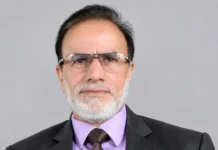
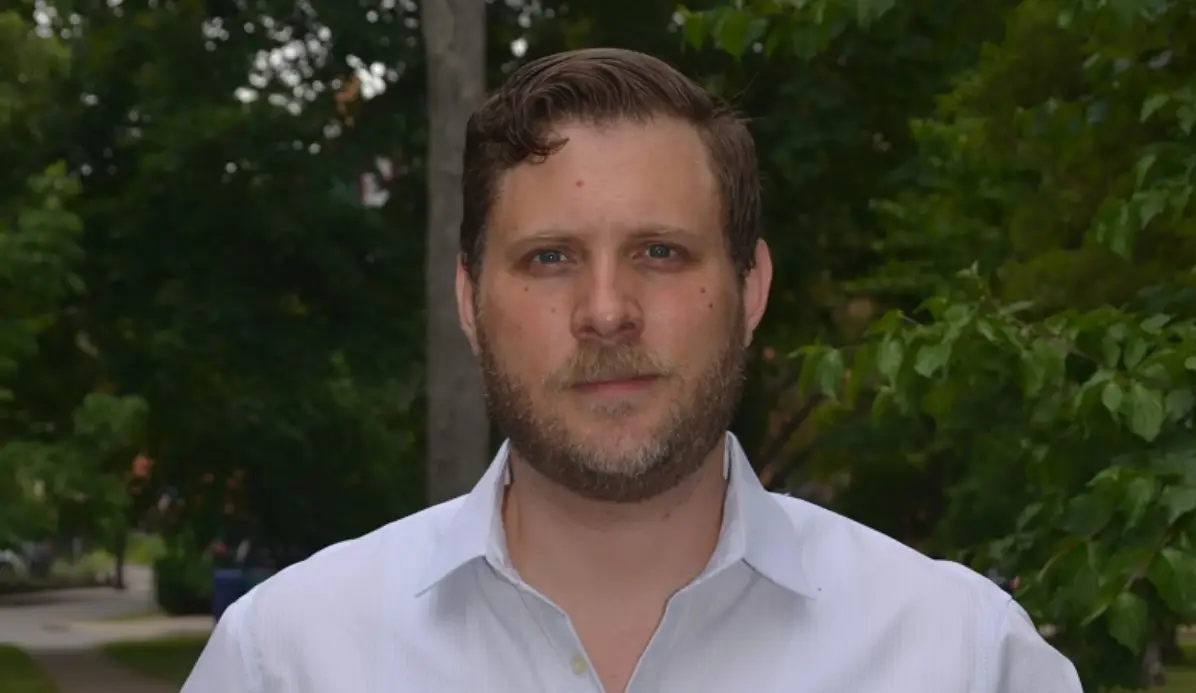
UNESCO has recognised the Rajatarangini as part of regional world heritage. Sanskritist Prof Luther Obrock, who teaches at the University of California (Berkeley), tells Masood Hussain that the twelfth-century chronicle is both history and literature.
KASHMIR LIFE (KL): The Rajatarangini is a Sanskrit kavya, written almost a millennium ago. UNESCO has now recognised it as part of the regional world heritage. Is it a historical account, a socio-political narrative, or literature?
PROF LUTHER OBROCK (LO): It is both. It is history, and it is literature. I will explain why shortly. First, for those unfamiliar with the text, let me explain what it is.
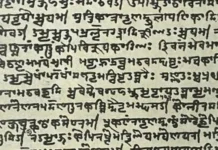
The Rajatarangini was written in the middle of the 12th century. It is a long text in Sanskrit, mainly in the shloka metre, but sometimes in longer, more poetic metres. It has eight books of very unequal length. The early books are shorter, and they grow longer with time.
It tells the story of kingship in Kashmir from the earliest times. That begins with the mythological draining of the Satisar and the creation of the Kashmir valley. It runs up to Kalhana’s own present, the 12th century.
The first seven books cover the past political dispensations and dynasties. We go through the Gonandiyas, the Karkotas and the Utpalas, up to the first Lohara dynasty. Book seven ends with the famous King Harsha. At his death, a new dispensation starts. This is the second Lohara dynasty, in which Kalhana lives.
The eighth and final book is about Kalhana’s political and social present. It covers roughly the last 50 years before him.
About half of the Rajatarangini is about those last 50 years. Everyone thinks it is about the long historical past, and most people read that part. But the stuff Kalhana spends the most time on is the world he lives in. That is about 3,000 verses. The rest is about 3,000 verses too. So it is roughly a 50/50 division.
KL: Where can a student of history locate Kalhana beyond the Rajatarangini?
LO: Oddly enough, the answer is nowhere, with an important caveat. Kalhana is very important in Kashmir. Very soon after his time, the second Lohara dynasty falls apart.
The decline triggered a very fluid position, especially due to a Mongol invasion. In the 14th century, a new political dispensation comes up. These are the Shahmiris, named after the founder Shah Mir. It is a mixture of Central Asians, Tibetan Ladakhis and Kashmiris coming together to form a new sultanate.
Under one of the most famous sultans, Zain-ul-Abidin, we have Jonaraja. He looks back to Kalhana and says, in effect, “Now I can write the story up to now.” He does the same thing. About half the text covers the past, and half covers his present in Zain-ul-Abidin’s court.
Srivara follows Jonaraja. Then it seems there was another Rajatarangini, now lost, by Prajyabhatta. Finally, we have the last Rajatarangini. It was written as Kashmir was being annexed by the Mughals. This was under the Chaks, as Akbar was about to annex the valley.
These texts tell us about a really interesting time in Kashmir’s history. But this model was never picked up in northern India, southern India or Bengal. We do not have a Bengali Rajatarangini. It remains a very Kashmiri tradition.
Persian-speaking intellectuals did like it. We get early Persian translations under the Mughals. So, it has no real afterlife in the wider Sanskrit world. But it does within Kashmir and within the Persian tradition.
KL: Kashmir had a tradition of writing from the Buddhist era, long before Kalhana?
LO: Yes. So much literature was produced in Kashmir. We have the great aesthetic theorists, the Anandavardhana. We have the great Tantric traditions and great storytelling traditions of Kshemendra and Somadeva.
Something else may interest historians. The evidentiary landscape of Kashmir is very different from the rest of the Sanskrit-speaking world. Elsewhere in India, we have lots of inscriptions. That is how we tell the history of a place, with very few narrative texts. Kashmir is almost the opposite. Almost no inscriptions remain. I think (Dr Bhushan Kumar Kaul) Deambi, in his Sharada Inscriptions of Kashmir, counts three before Kalhana.
So, we tell two different types of stories, because the evidence is so different.
KL: Beyond the stories, legends and mythology, does the text focus on the identity of the place?
LO: This is my own reading, and I am fine with people disagreeing.
My take is that it is an argument about kingship. But it is not kingship for kings. It is kingship for an educated elite. It is about how that elite should understand how kingship works. It is not patron-centred or court-centred.
It is very critical of kingship, but not anti-kingship. The political horizon of the text is kingship. There is good kingship and bad kingship, and there are dangers in kingship. Kalhana is comfortable critiquing kings and their actions. But for him, kingship must be done correctly.
I also do not think he writes for a king. He is not saying, “This is an advice book for you, Jayasimha.” Jayasimha is probably the king under whom he writes. I think Kalhana looks out towards educated elites.
The first seven books provide models. They tell the story of all these kings in order. They become things to refer to, ways to understand how we got where we are. It tells a story in time, but it is not just a chronicle. I think (Sir Marc Aurel) Stein’s translation, calling it a chronicle, is slightly misleading. It is not just a list of events in order. The events need not happen in order. But all the kings are shown in a line, with their good and bad points. The educated reader gets a baseline for understanding and judging kingship.
I can give many examples. But Kalhana wants kingship to work without devolving into violence and disorder. He wants an orderly transfer of power. That is what he is after politically. I think he also has aesthetic and religious aims, but I am talking only about the political ones here.
The good kings reign and then transfer their power. They reign well and then give up. The bad ones are people like Harsha. Kalhana says Harsha is a brilliant king who does great things. But he gets corrupted by his own power. He refuses to correct himself and refuses to relinquish power. So, he has a violent end.
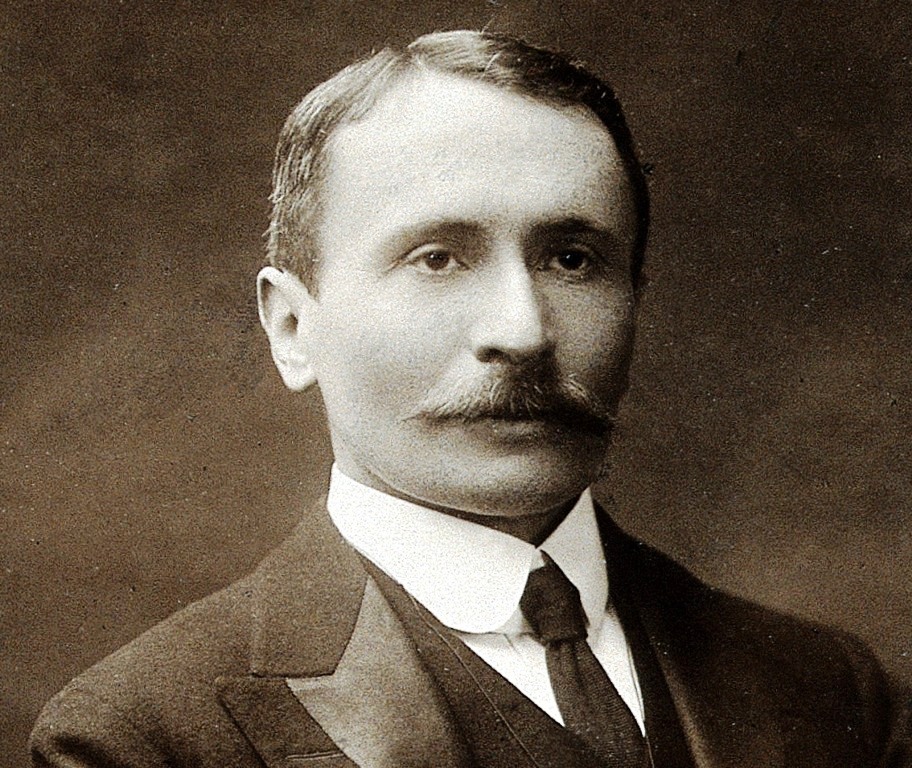
KL: Nobody can dispute what Kalhana lived and recorded, because he was a witness. Critique comes for the period before his time. He mentioned having sources. How credible could they have been? Could you trace any source he consulted, other than the Nilamata Purana?
LO: He is a very good historian in a certain way. At the very beginning, he tells you what he consulted. He consulted the Nilamata Purana, of course. He also lists two historians, Suvrata and Kshemendra.
Kalhana says Kshemendra wrote a work called the Nrpavali, “the row of kings”. We do not have it. Unfortunately, we do not have Suvrata’s work either. And Kalhana critiques them both. He says Suvrata is really hard to read because it is not well put together. And he says Kshemendra is a good poet but a bad historian. So, he critiques both form and content.
I said earlier that we have hardly any epigraphy from Kashmir. But Kalhana apparently did. He said, in effect, “I went and checked all these records at all these places.” So, his sources were previous lists of kings, previous stories of kings, epigraphy, and what he calls copper plate grants.
However, he does not follow modern citation practice. Every once in a while, he uses a Sanskrit word that I love: adyapi (even today). He says, “Even today you can see this.” Take a story in the third book. Pravarasena was a great king who ruled so well that he went up to heaven in his own body. He shot up and blew through the side of a temple, knocking off a stone in the gate. Kalhana says that even today you can see the gap where the stone is missing. That shows the story is true. So, he makes arguments in these different ways.
KL: Kalhana lays down impartiality as a cardinal principle of historiography. But did he practise what he preached? How objective was he in recording his own times?
LO: This is why I love the eighth book. It is so dense with information. There are all these factions, led by people Kalhana calls damaras. Some translate it as warlords. Others translate it as “farmers with weapons”.
All these power groups are trying to get power, kick people out and rise against kings. Of the kings of Kalhana’s time, Uchchala and Sussala both get beheaded by revolts. Jayasimha is still alive. So, it is not a peaceful time.
We have a very rich picture of factional rivalry. But “objective truth” is really hard to establish, because we have so little to corroborate with. A lot of work has gone into finding corroboration in Chinese annals and in Persian or Arabic accounts. Hermann Goetz wrote a great article on this. At a certain level, that work is really important.
But I do not think Kalhana is after quote-unquote “objective truth”. He wants to give people like himself, educated elites, the ability to judge the situation from a detached perspective. He is about detachment. You have to be detached in how you view this often-violent pageantry of power. If you look at how politics works, you see it is violent and contingent. Kings you have great hopes for, like Harsha, can become terrible people very quickly. People you rally behind can turn out badly. Uchchala and Sussala both began this way, with great hopes, and then came disappointment.
So much of this is about how to view history in a detached way. But I want to highlight that Kalhana has an agenda. It is not “nothing but the facts”. He is deeply involved. He is not like us, looking back a thousand years later. Most of what he writes about, he is living through. He traces its past, and he also explains how one can deal with it while situated in it. He always uses words for being situated in the midst of things. That is important.
KL: When Kalhana was writing, Buddhism had faded, and another faith had started influencing the surroundings. Despite being a Shaivite, how did he balance the not-so-distant past and a future awaiting around the borders?
LO: I think you are referring to the coming of Islam into Kashmir. For Kalhana, we have some notions of Islam, perhaps, but nothing direct.
One famous line in the seventh book calls Harsha a Turushka Raja. Does that mean Muslim? Does it mean Turk? In context, it means somebody violent. So, is it specifically religious? Is it cultural? We also have the Hindu Shahis, or Shahi princes and princesses. Is this after their defeat? Kalhana is not that interested in what happens outside the valley. He refers to it, but does not explain it.
The later Rajataranginis face a problem. There is no Sanskrit vocabulary to talk about it, so they have to create one. Jonaraja has to create one, and so does Srivara. I can talk at length about how these two authors create a new vocabulary. They include Islam and Islamic power, sometimes critique them, and sometimes just state obvious facts. For them, this is very important. But it is more complicated than it looks at face value.
KL: The general perception is that mlecchas should be taken as Muslims. Srinagar has Malchimar, seen as the first Muslim habitation. And there are multiple references to non-native mercenaries.
LO: We have certain words, but it is hard to know exactly what they mean. We just do not have much corroborating evidence either way.
Take Al-Biruni. When he writes his Indica, he has heard of Kashmir. But he cannot get there. For him, Kashmir is a different horizon, full of learning. But we do not really know what is going on there. So, it is hard to know the state of Islam. Were there Muslim settlements in the valley at this time? We should think there probably were some. Kashmir is a mountain valley, but it is not completely sealed off. It is hard to know exactly.
That situation changes with Srivara and Jonaraja in the 15th century. Then there is a lot to be said.
KL: The discovery story itself is fascinating. Stein recounts that the manuscript was in the possession of two brothers and that some manuscripts had fallen into the water but were miraculously recovered intact. Two things interest me: What fascinated you most about the Rajatarangini itself? And, in the course of rediscovering it, what was the most surprising or memorable discovery you made?
LO: While it is history, the core of each reign is usually a few stories, and some are incredible. We could talk about how they work and whether they are historical.
Kalhana’s language is astonishing. He is such a good writer. You read Stein and think, “This guy is boring.” But the Sanskrit itself is so lively and rich. I love how Kalhana tells stories and arranges things.
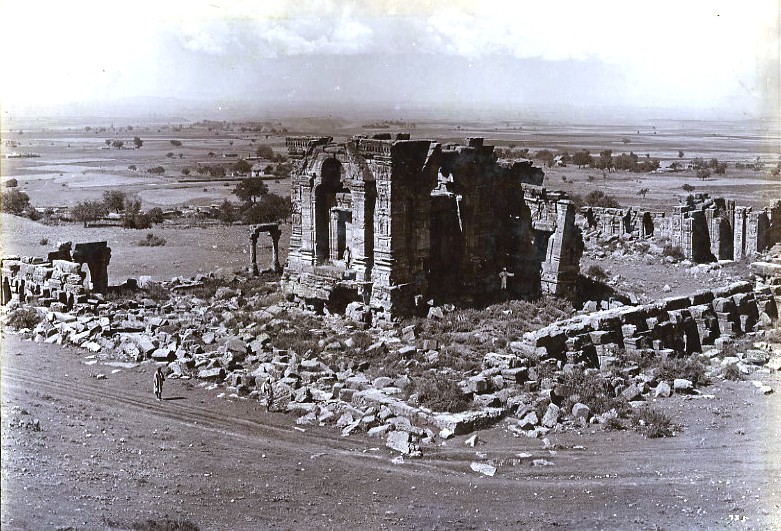
One of the most surprising things came in trying to find Kalhana. You have to go back through your predecessors, the people who also studied him. While working as a doctoral researcher in Germany, I found some pictures that Stein had taken. They were of Kashmir and the sites of the Rajatarangini.
Stein was very interested in location and locality. He went out and photographed places. He would say, “This is where they stormed this fortress; let’s find where.” He wanted to produce a Rajatarangini with pictures in it, and he took many photos. I was thrilled to find them. Nowadays it is very hard to get to many of these sites. It was beautiful to see them.
KL: What is the bitter critique you encounter as a Rajatarangini specialist, where you do not have many answers?
LO: We do not have good intellectual models for a text like this. History does not cut it. We want it to work like texts from the modern West, and it does not. It does not work like history did in ancient Rome or Greece, or in ancient China. We have to develop our own way of reading. Often people read it only in translation, and we have not come up with a good model.
I hope for a big debate on how to read this text. I hope new scholars will dive into it in Sanskrit and figure out methods of reading. It is about the past, but it is also about Kalhana’s present. It is a beautiful literary text, with deep moral, political and philosophical points. We have to develop ways of reading that reflect his brilliance.
We want to read it as if it were Kalidasa, and it is not. It is also not Herodotus. How we do it is a great challenge. I hope more people read the text, because I am sure they will become enamoured of it as I am.