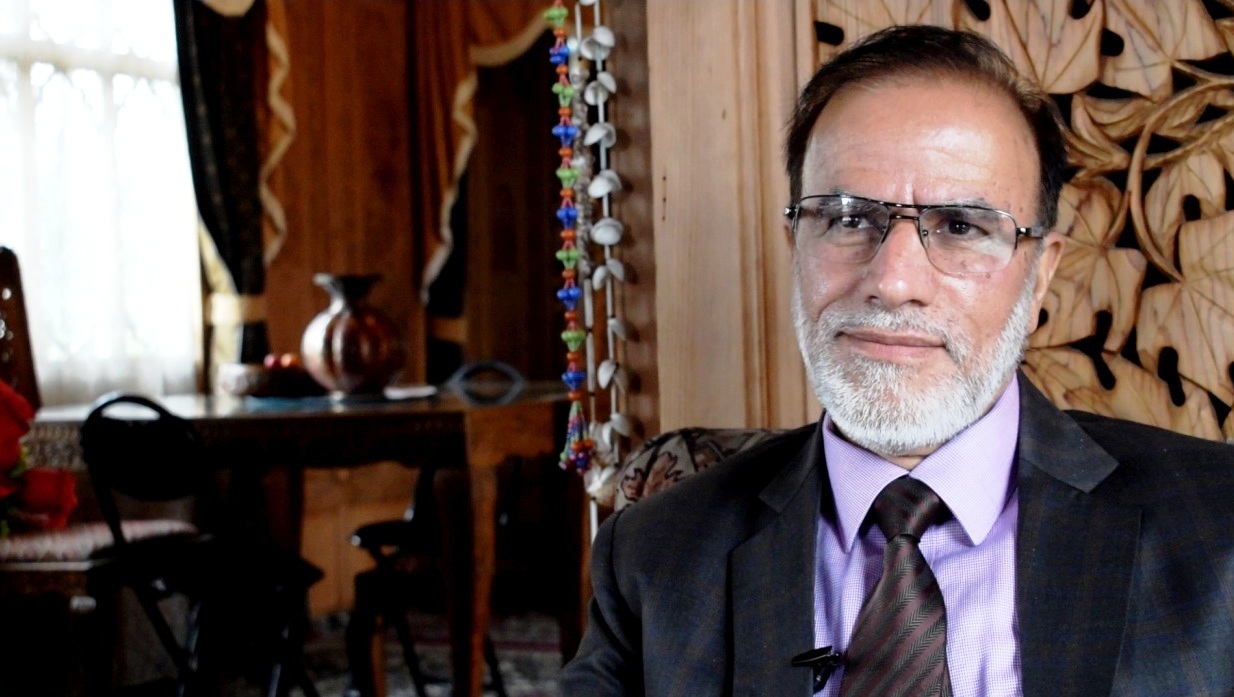
Prominent psychiatrist and SAWAB founder Dr Mushtaq Margoob explores how childhood trauma shapes adult lives, fuels addiction and is passed down through generations in Kashmir. He speaks about the need for parents to confront their own unresolved baggage and create safe, nurturing homes for their children. Wajeeha Hajira brings you the key insights from an episode of Kashmir Life’s Doctors Lounge.
KASHMIR LIFE (KL): People don’t talk much about childhood trauma and how it can affect a person for the rest of his life. Why?
DR MUSHTAQ MARGOOB (MM): Briefly, childhood trauma is a challenge for the whole world. Even in advanced countries, it was only addressed in the mid-1900s that events from our childhood affect us even after years.
Surprisingly, the risk of 7 out of 10 deadly diseases is increased by one factor. It was not pesticides or any of the usual causes. It was childhood trauma.
The generation that are parents today have also seen a lot. That is why this topic is complex and deep. Negligence or conflict between parents can traumatise a child. Abuse is another cause. It can be emotional or physical, in school, at home or elsewhere. It affects vulnerable people most; those who saw these events regularly in childhood and later suffer with childhood trauma.
KL: The term “adverse childhood experience” is used a lot. Can you explain what it means to a local Kashmiri?
MM: I did a study that was meant to be path breaking and an eye opener for medical studies. It took 17,000 people and checked their life events and reasons.
A child has emotional needs as well as physical ones. Children need nurturing, especially from their parents. If there is conflict, a child can lack that nurturing. The missing part eventually becomes a problem, even when every physical need is fulfilled.
Many things start in infancy and increase in childhood. More factors are added once a child is exposed to the outside world. Hence the adverse events.
KL: A child going through physical or mental abuse from infancy, even an eleven or twelve year old, cannot understand what is happening. How do they later understand and process it?
MM: Studies done years ago looked at how trauma stays in a community, its impact and PTSD. But unfavourable conditions and conflicts do not always lead to PTSD. It is not that simple.
Even today, in small settlements and in my clinic, I see at least one trauma case every week. If you sat with us through one of these cases, you would not be able to sleep. You would see how traumatised the child is. They blame themselves for everything that has happened.
Things have affected them deep inside. They cannot continue a normal life, and their brain development suffers. Parts of the brain associated with reward are affected. The brain, which controls everything, is bombarded with stress hormones. These affect development.
These children are always aware and scared. This leads to disease later. It affects the immune system. Continued stress hormones cause many problems, since everything is connected.
KL: We understand the problems a person faces over time. But this field is still a stigma in many households. A child cannot talk to parents or anyone else. How will parents understand what their child is going through?
MM: Abuse can be physical or sexual. Studies show its impact stays from childhood, even when people are living professional lives.
That is why parents first have to check their baggage. It may cause irritation and anger issues, or be the reason for their emotional distance. Some parents think the way they were treated in childhood is how they will treat their child. That is dysfunctional parenting. Parents first need to understand themselves, because often they cannot regulate their emotions.
It is very difficult for a child to share these things with parents. Sometimes a relative is the reason for the abuse. Many times families think speaking up will ruin relations. Some parents respond that it will bring notoriety to the family.
This affects a child deeply. They may seem okay from outside but suffer inside. They feel empty and mostly remain fearful.
In a study in 1993, I said that based on data, almost every house in Kashmir will be affected. I also said what precautions we can take. We should talk about prevention. Children should have a safe environment at home and outside. A child should feel secure.
If a child used to be jolly up to a certain age and you see a sudden change, it can be a sign of abuse.
KL: Sexual abuse has become very common almost everywhere. Incidents happen in local buses. School girls have said they happened in their own homes. When they tried to talk to their parents, they were told to shut up instead of action being taken, because parents think it will bring shame. Have you seen these females suffer mental issues?
MM: We have a team of excellent consultants. But when they see cases like these, they come to me. In such cases, you have to fill the voids caused by parents. You have to understand how much the child has suffered and how the parents were missing when support was needed.
Sexual abuse has increased over time, for many reasons. If it comes from someone related, who is part of family and daily life, the victim goes through a lot facing them every day. Most of the time, when they complain, they are not believed.
Cases are reported and people do come forward. But many cases are left unreported. The increase in sexual abuse is much greater than we see.
KL: Substance abuse has become very common. In colleges, you mostly find used syringes behind the buildings. Two questions arise. If a person has gone through childhood trauma, is that a reason they get into substance abuse? Or is substance abuse the cause of mental trauma?
MM: I will talk about addiction. Addiction is like the word slave. It is like being stuck in a cage or in a situation. It takes away a man’s conscience and makes him a slave.
Awareness is important. But it is not only about awareness. We must find the reason someone started. If the reason is childhood trauma and we miss it, we will not find any solution.
Even today, people rarely talk about emotional health. It should be taught in detail so that people understand it better, because emotional health affects a lot. Substances become a temporary escape and a source of short relief and happiness.
KL: Someone who suffers abuse in childhood may lack self-confidence. This can affect what they do and their future. Instead of understanding, people call them lazy or dumb. What can they do personally, and what message do you have for them?
MM: The person who has gone through this has to understand they are as worthy as others. They must work on their guilt feelings. We show them they are worth it and that they are wrong to doubt themselves. This happens when they are in fear or guilt. They have to work on their self-esteem, but this requires professional help.
Experts should know how to handle these cases. It is not only about giving medicines. It is a vast topic, because these patients have gone through a lot. Sometimes it is because of parents, but it is not always intentional. Parents do not always put their child through these traumas on purpose.
Parents should be aware. The person going through the problem should explore their potential.
KL: Kashmir has gone through a lot of conflict, and people suffered trauma. These people became parents and somewhere passed down generational trauma. Has this caused trauma? If a parent has gone through trauma, how do they make sure they do not pass it down?
MM: If this message reaches people, it would be great. These parents carry a lot of trauma. During the conflict, people were helpless and could do little. They saw violence and fear far more during that phase.
I already said in the 1990s that these events would cause depression. Depression can be genetic. But even where there was no history, this trauma caused changes in DNA.
On trauma being passed down, parents have to work on their baggage. They should be good role models for their children. They can start doing things they could not do before, like going on outings or making plans every week. They should accept that what happened to them is in the past.
Parents should be in harmony. If there is conflict or disharmony, the child will have some kind of trauma, no matter what you do. If parents cannot handle themselves, they can also seek medical help.