Barely eight years after the motion picture was invented, Kashmir got its first reel in 1903. It was an area that was exposed to the world of cinema much earlier than the rest of the subcontinent, Dr Nayeem Showkat, an Assistant Professor at MERC, University of Kashmir, tells Kashmir Life
KASHMIR LIFE (KL): In one of your papers, you have established that filmmaking in Kashmir goes back to the early twentieth century? What was happening here at the time?
Dr NAYEEM SHOWKAT (NS): Filmmaking in Jammu and Kashmir is certainly not something that began recently. Films were being shot here as early as 1903. Western travellers and officials associated with the British colonial regime were coming to Kashmir regularly to explore, document and record the region.
The Delhi Durbar (the fortnight long celebration of the transfer of power in London) of 1903 was a major global event. Filmmakers and travellers from different parts of the world gathered in Delhi to document it, and many subsequently travelled to other parts of undivided India.
Around this time, the prominent traveller and filmmaker Charles Urban, a German American film producer, came to Kashmir. He shot a film titled Scenes from River Jhelum, essentially a montage of boats along the Jhelum. In September 1903, he also made Galloping Tonga at Srinagar. He travelled from Rawalpindi to Kashmir and recorded these scenes.
There were also two or three other films made in Kashmir in 1903. One was shot at the Maharaja’s palace in Jammu. One of them is The Strong Man of Kashmir. In a broad sense, these films can be described as “actualities” or travelogues.
The Strong Man of Kashmir is listed in the database, while another actuality, Imperial Service Mountain Battery, is preserved in the British Film Institute archive.
The larger point is the chronology. If we look at the global history of filmmaking, cinema is generally associated with the Lumière brothers’ Workers Leaving the Lumière Factory in 1895. The Edison Company, meanwhile, had produced films even earlier, around 1890-91.
So we are talking about a gap of only eight years between the emergence of cinema in 1895 and the filming of Kashmir in 1903. That is historically significant. Yet very few people are aware that Kashmir entered the history of filmmaking so early.
KL: So Kashmir entry in the film world was early?
NS: If you visit the British Film Institute website, you will find at least 19 titles related to Kashmir. But even that is not the complete history.
Other companies, including British Pathé, the Warwick Trading Company and Gaumont Films, also played an important role in documenting Kashmir. For example, the British Pathé archives contain a film on the Amarnath Yatra from 1927.
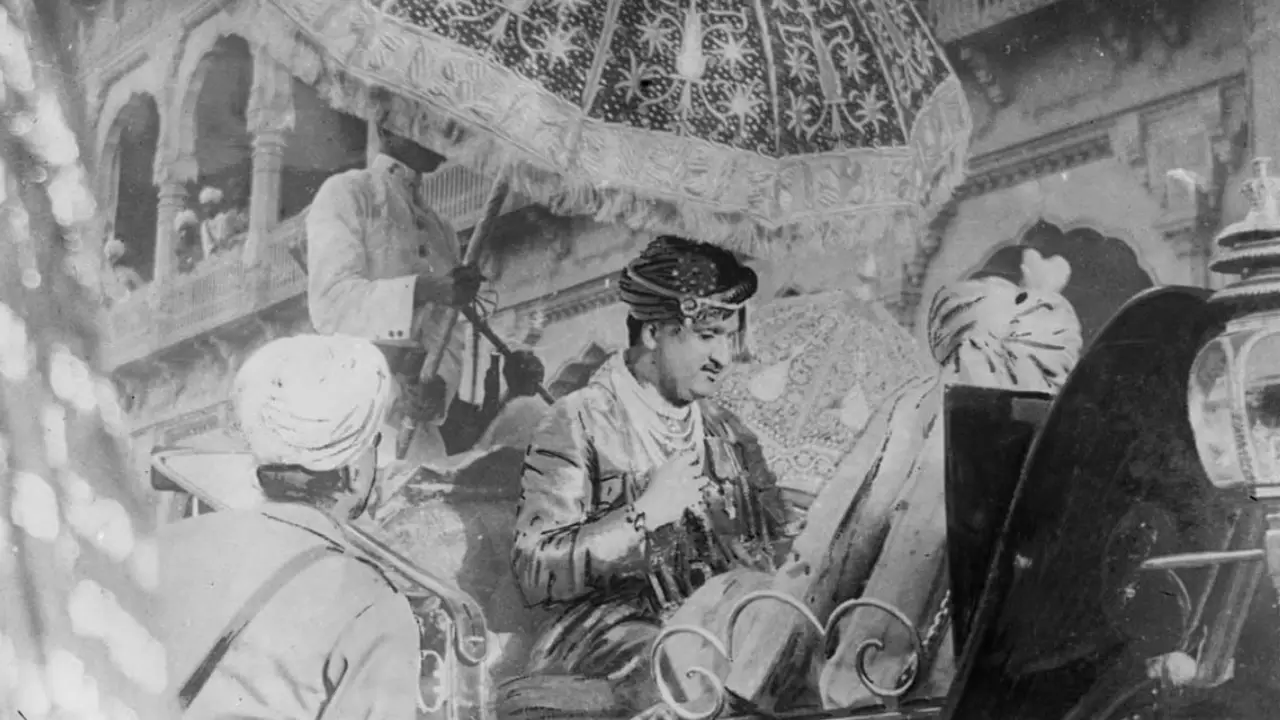
Before that is The Coronation of Maharaja Hari Singh from 1926. This was a remarkable media event because it was filmed using a multi-camera setup. Imagine a film being shot with three cameras in 1926.
Major international film companies were involved. An agreement was reached between filmmaker Herford Tynes Cowling and Maharaja Hari Singh for the filming of the coronation. It was named An Indian Durbar.
KL: So there were formal agreements even at that time?
NS: Yes. The correspondence took place through telegrams. The Maharaja was informed about the coronation ceremony scheduled for February 1926, and Cowling was offered the assignment for a fee. The exact amount is not disclosed in the material I have seen.
The logistical challenge was considerable. Cowling had to travel from America to India and then to Jammu, and he had very little time to organise everything. Major international companies contributed to the production. High-end cameras were procured from Bell & Howell, which was a prominent camera manufacturer, while Eastman supplied the film stock.
Most remarkably, an Akeley camera, also known as an “Eye-O” camera, was used. According to the material I have examined, this was the first time an Akeley camera had been used in India, and its debut took place in Jammu and Kashmir. It was a brand-new, cutting-edge camera for its time.
The production involved a complex multi-camera arrangement. Cowling travelled from America to Bombay and then to Jammu. He even arranged specialised studio lighting from Paris, which was shipped to Jammu. The resulting film was about four minutes long and is available online. It consists of four distinct sequences.
Today, we sometimes struggle with infrastructure even when discussing multi-camera productions. To organise such a production in 1926 was extraordinary.
The pre-Partition period is particularly significant because many of these films were made by foreign filmmakers, Western travellers, British filmmakers and Americans.
The Edison Company, for example, made a film simply titled Kashmir in 1912. It documented the scenic beauty of Kashmir as well as aspects of local trade. It covered Srinagar and even the famous rope suspension bridge at Uri, known as Dicks Bridge.
Then there was a couple, the Tuts (Arthur and Kate Tode), who visited Kashmir on their honeymoon around 1930. They brought two cameras with them and recorded their journey. They eventually compiled the footage into a film titled Kashmir to Benares. Whether we classify it as an actuality or a documentary, it is an important visual record of Kashmir. It captures local culture and everyday life, including Shalimar and Nishat gardens and people enjoying picnics there.
Another important film was Vale of Kashmir, made around 1936.
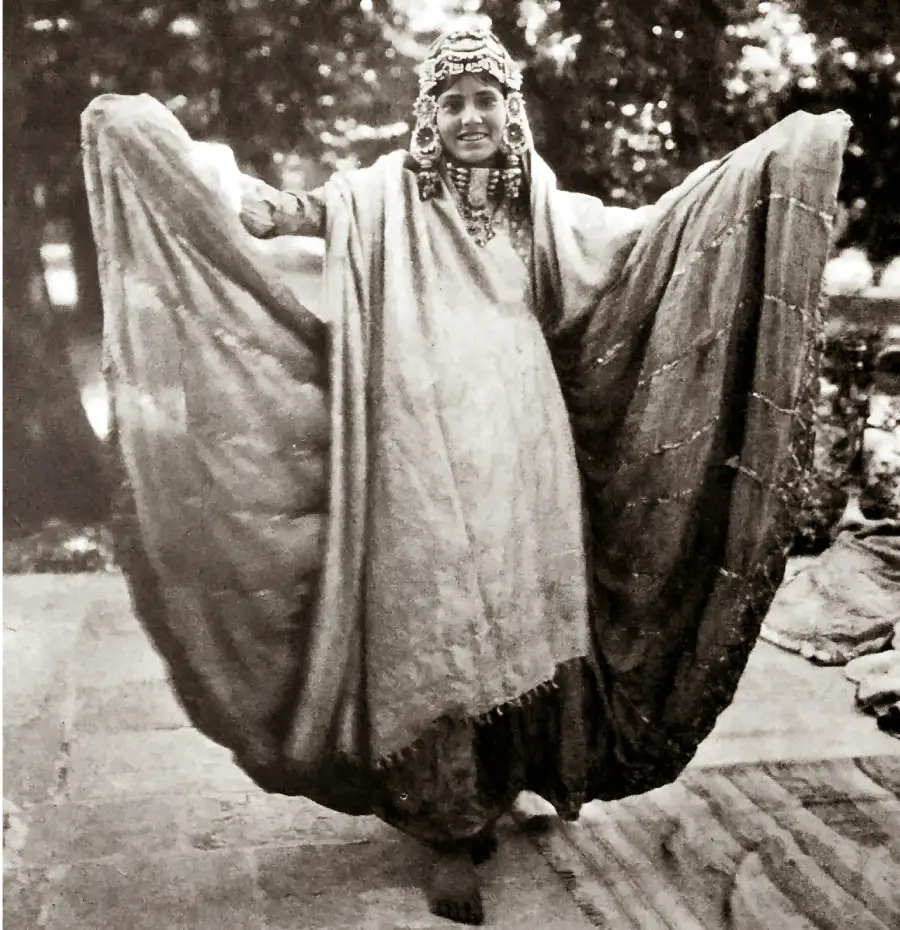
Most films of that era were silent, but Vale of Kashmir provides a remarkable visual record of traditional Kashmiri culture and marriage rituals. It shows traditional Wazwan, the use of the Kangri and various aspects of social life.
It gives us an unusually valuable glimpse into the Kashmir of that period.

KL: In the post-partition era, whenever filmmaking in Kashmir is discussed, only a few titles tend to come up, Manziraat, often described as the first Kashmiri feature film, or Khatoon. Was filmmaking in Kashmir really limited to these films?
NS: Not at all. There were many more films. There were independent productions, government-sponsored films and documentaries. In 1947-48, for example, several defence-related documentaries were shot. The Films Division website contains a long list of such productions.
The post-Partition period was somewhat different because films were increasingly being produced by local and Indian filmmakers.
KL: So Kashmir’s position as a destination for filmmakers and cinematographers is not a recent phenomenon.
NS: Even during the colonial period, filmmakers were fascinated by Kashmir and came here to record its landscape, people and culture.
Your research makes that continuity quite clear. These films also preserve an entire era for us. They allow us to look at Kashmir as it existed in 1903, 1926, 1930 or 1936.
KL: Having studied these films, what do they tell us about the society, economy and politics of the time?
NS: If you undertake an in-depth analysis of these films, you can theorise them within their respective historical contexts. But the most important issue, in my view, is that we do not yet have an institutional history of filmmaking in Kashmir.
There are actually two related but distinct histories.
One is the history of cinema, its exhibition, theatres and audiences. The other is the history of filmmaking, the production of films.
The two are interdependent, but discussions in Kashmir have traditionally focused almost entirely on cinema halls and theatres. The history of filmmaking itself has largely been ignored. We do not have a systematic institutional history of film production in Kashmir.
That is the primary objective of my research: to identify the films made in Kashmir from 1903 onwards and understand the themes they explored. Film is an extremely powerful art form and a medium capable of driving cultural transformation.
Consider Vale of Kashmir. By documenting traditional wedding rituals, it gives us an opportunity to understand aspects of our cultural past.
Culture changes through diffusion, modernisation and other processes. But understanding the roots of our traditional culture remains important.
Today, traditional folk music is often repackaged into modern and commercially popular forms. That may not always be authentic from a traditional perspective, but popular culture is also necessary for commercial circulation.
Archival films are different. They function almost like historical literature. They preserve the past and create a bridge between our past, our present and our future identity.
KL: How far have you travelled in this process of rediscovery? And how much remains to be uncovered?
NS: Research is an endless journey. The deeper you go, the more layers you uncover. The most important things are sources and data. New material emerges almost every day.
At some point, however, you have to bring your own research to a conclusion. It is not possible for one researcher to complete everything.
Scholars who come after me will continue the work. New sources will continue to emerge, and no single individual can possibly cover all of them.
That said, a significant portion of my research is complete. But bringing the project to a full conclusion will require more time.
We do not even have a comprehensive record of all the films that were made. The first task, therefore, is to compile as definitive a list as possible.
Once that is done, the next step is to place those films within their historical and socio-political contexts. Each film needs to be analysed and theorised individually.
Simply identifying titles and filmmakers gives us a broad overview, but it does not allow us to fully understand our past. That requires rigorous and detailed analysis.
KL: Yes, every film must have its own story?
NS: When we discuss filmmaking in Kashmir, the name of filmmaker Colin becomes particularly significant. Cowling came to Kashmir in August 1923. He intended to travel to Tibet, but encountered difficulties obtaining permission.
When he arrived in Kashmir, he stayed as a royal guest. Through the intervention of Hari Singh, who was the heir apparent, Cowling obtained permission to travel to Tibet. He eventually went to Tibet and is credited with being the first person to take a movie camera there.
In his travel accounts, Cowling wrote that letters of introduction from Hari Singh helped him receive extraordinary hospitality in Tibet, a place that British and other foreign visitors found extremely difficult to access at the time. This experience created a close relationship between Cowling and Hari Singh. It also appears to have contributed to the Maharaja’s growing interest in cinema.
KL: Really?
NS: Yes. Maharaja Hari Singh had studied at Oxford, and his interactions with Cowling seem to have deepened his interest in cinema.
When Cowling returned to America, he wrote extensively about the Maharaja and Kashmir’s relationship with cinema in prominent trade publications such as American Cinematographer and National Photographer. He also arranged and sent two movie projectors to the Maharaja.
One projector was installed in his palace in Srinagar and the other in his Jammu palace. The Maharaja also subscribed to a film service based in Bombay.
Cowling later wrote that after Maharaja Pratap Singh died, he read about it in the newspapers. Soon afterwards, he received a telegram concerning the coronation of the new ruler. They negotiated a fee, but Cowlng had very little time to travel from America to Bombay and then to Jammu and organise the equipment required for the coronation film.
This relationship is significant because Cowling recorded that Maharaja Hari Singh had expressed a desire to establish modern cinema theatres and halls in Kashmir. The Maharaja’s enthusiasm for the medium was therefore part of the background to the eventual development of cinema exhibition in Kashmir.
KL: Do we have evidence that the films made in Kashmir during the pre-Partition period were actually screened elsewhere?
NS: Yes, absolutely. Since many of these films were produced by foreign companies, they were exhibited internationally.
Take India, Burma and Kashmir, for example. Advertisements for the film appeared in old American trade magazines, showing that it was screened in New York.
This is why, if we want to reconstruct the history of filmmaking in Kashmir, we have to go beyond film databases.
We need to examine historical film journals and trade magazines such as The Bioscope, American Cinematographer, Moving Picture World, Moving Picture Herald and Moving Picture News.
These publications contain advertisements for screenings as well as technical information, including the lengths of individual film reels.
I particularly remember India, Burma and Kashmir because it was packaged and screened in New York alongside another film.
This again demonstrates the close relationship between filmmaking and exhibition, even though they are distinct histories.
Western filmmakers and technical companies also assisted early theatre operators in Kashmir. For example, in the September 5, 1931 issue of American Cinematographer, I found a letter written by the projection operator of the Universal Picture House in Srinagar to the journal’s editor.
The operator described technical problems with the projector’s light source and sound synchronisation and sought advice. The editor subsequently connected him with a specialised technical agency in Calcutta, now Kolkata, to help resolve the problem.
Similarly, a 1941 article in the well-known magazine Film India noted that Srinagar had a theatre catering to both foreign tourists and local residents.
It also observed that local people had the same enthusiasm for films as audiences elsewhere in the world.
The fact is the Kashmiri society encountered the magic of cinema and cameras more than a century ago and developed an appreciation for the medium very early.