SRINAGAR: For years, Shah Rukh Khan travelled across the world but deliberately stayed away from Kashmir. His father, whose mother was Kashmiri, had asked him to see Istanbul and Rome without him — but to see Kashmir only with him. It was a promise Shah Rukh kept even when friends invited him and his own family holidayed in the Valley. It was filmmaker Yash Chopra who eventually gave him a way to come to Kashmir without breaking the emotional bond he had attached to it.
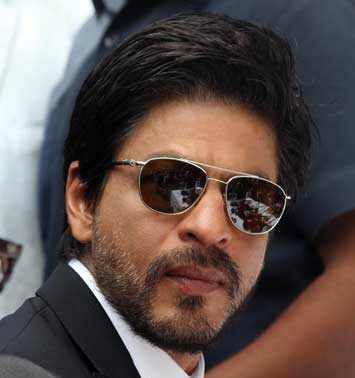
An old episode of Kaun Banega Crorepati featuring Shah Rukh Khan has resurfaced online, bringing with it an unusually intimate account of the actor’s relationship with Kashmir, a place he had never visited despite having travelled extensively around the world.
Speaking to Amitabh Bachchan, Shah Rukh explained that Kashmir was not absent from his life because he did not want to see it. Quite the opposite: it had been made too special for him to visit casually.
“My father’s mother was Kashmiri,” Shah Rukh said, recalling what his father had told him.
His father had asked him to see three places in his lifetime — Istanbul, Italy and Rome, and Kashmir. But there was a distinction.
“He said, look at Istanbul, look at Italy, Rome, and look at Kashmir. But look at the other two places without me, but don’t look at Kashmir without me.”
His father died when Shah Rukh was still young.
And the promise remained.
“So he died very early, and I’ve been all over the world, but I never went to Kashmir,” he told Bachchan.
Kashmir was the one journey he kept postponing
The actor said the opportunity to visit Kashmir came to him repeatedly.
Friends invited him. His family went on holidays to the Valley. Yet he did not go.
It was not because of a political position, a geographical difficulty or any other practical consideration.
It was because, for Shah Rukh, Kashmir had become inseparable from his father.
“I never went to Kashmir, because my father had told me, ‘Don’t visit Kashmir without me, I’ll show you’,” he recalled.
That made Kashmir fundamentally different from every other destination.
He could travel anywhere else. Kashmir was the place he could not bring himself to see without the person who had promised to show it to him.
Then came Yash Chopra
The emotional equation changed when Yash Chopra decided to shoot Jab Tak Hai Jaan in Kashmir.
The filmmaker had chosen Shah Rukh Khan as the lead, and suddenly the actor was being offered a reason to enter the Valley that was larger than a holiday.
Yash Chopra told him: “We’ll shoot in Kashmir.”
Shah Rukh said he had previously refused opportunities to visit the Valley, but this time he reconsidered.
“And normally I have refused, not for any other reason, not for any political, geographical, or any other reason, but because there was an emotion, that I’ll look at Kashmir with my father,” he said.
Then came the realisation that perhaps the promise did not have to mean never seeing Kashmir.
“But I just felt that’s not the case. So the best would be actually to go with Yashji,” he said.
And that is how Kashmir entered Shah Rukh Khan’s life, not as a tourist destination, but as part of what became one of the most emotionally significant film journeys of his career.
For Yash Chopra, Kashmir had long occupied a special place in Hindi cinema.
With Jab Tak Hai Jaan, he returned to the Valley for what became his final directorial film.
For Shah Rukh, however, the Kashmir schedule carried a meaning that went beyond the film.
He was finally seeing the place his father had spoken about — only now he was seeing it alongside another figure who had acquired immense importance in his professional life.
The circumstances gave him a way to reconcile the two: the Kashmir his father had wanted to show him, and the Kashmir he could now experience with Yash Chopra.
Jab Tak Hai Jaan, starring Shah Rukh Khan, Katrina Kaif and Anushka Sharma, was released in 2012. It became Yash Chopra’s final directorial venture.
Chopra died in October 2012, shortly before the film’s release.
Thus, the Kashmir journey acquired another layer of poignancy: the man who finally persuaded Shah Rukh to visit the Valley would himself not be around to see the film’s full journey.
A Kashmiri connection that went beyond the screen
Shah Rukh’s story also offers a reminder that his connection to Kashmir was not created by Jab Tak Hai Jaan.
It was there much earlier, through his family.
His father’s mother was Kashmiri, and his father’s request had transformed that ancestral connection into a deeply personal promise.
The actor’s words suggest that the Valley occupied a peculiar place in his imagination: it was simultaneously familiar through family memory and unknown through personal experience.
He had seen the world, but not Kashmir.
“I’ve been all over the world, but I never went to Kashmir,” he told Bachchan.
That single admission perhaps explains the unusual emotional weight the Valley carried for him.
For most people, a film location is simply a backdrop.
For Shah Rukh Khan, Kashmir became the destination itself.
Yash Chopra’s decision to shoot Jab Tak Hai Jaan in the Valley effectively transformed a professional assignment into the journey Shah Rukh had spent years postponing.
He did not go because someone persuaded him that Kashmir was beautiful. He went because Yash Chopra offered him a different way of seeing it.
His father’s Kashmir was something he was supposed to discover with his father.
Yash Chopra’s Kashmir allowed him to finally make the journey.
And in doing so, a film set became the place where Shah Rukh Khan finally met a Kashmir he had carried with him for years without ever having seen it.