Emraan Hashmi’s Ground Zero arrives at a time of national grief after the Pahalgam attack, drawing from real events in Kashmir. While the film attempts to portray complexity and compassion, it often slips into formulaic storytelling and clichés. Kashmiris, once again, find their stories simplified on screen, raising questions about Bollywood’s portrayal of conflict and belonging, writes Fahd Khan
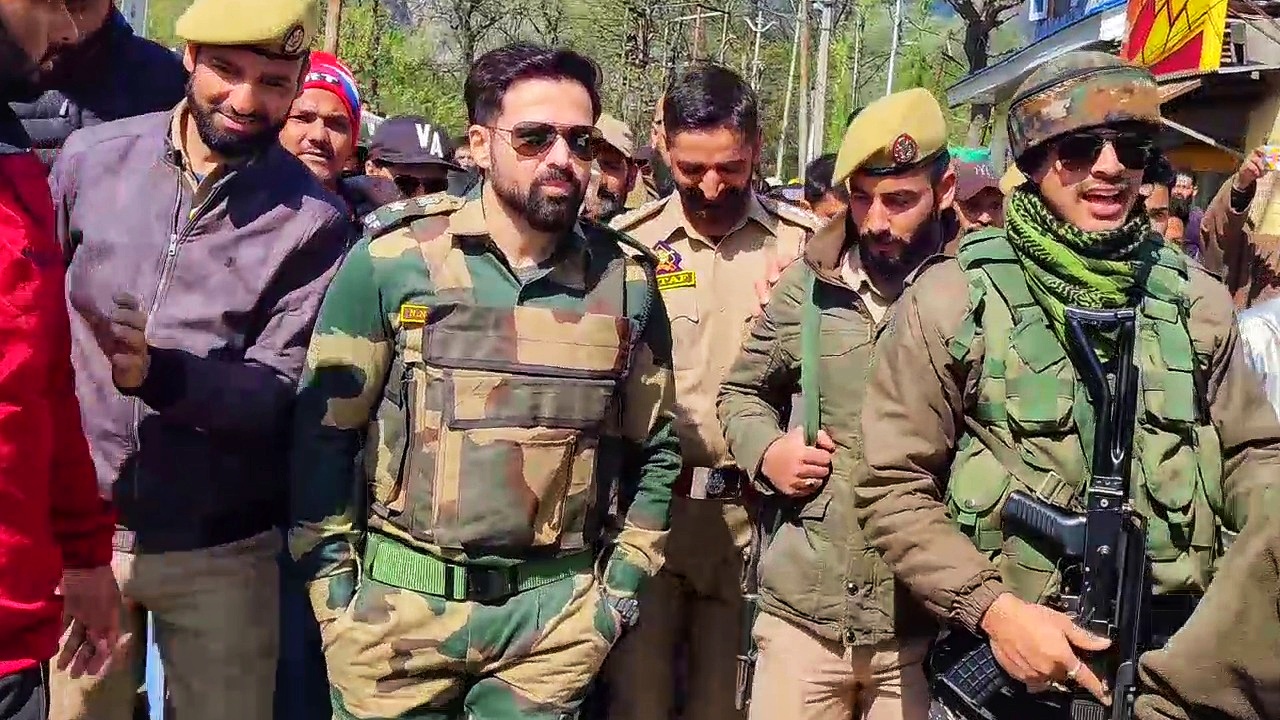
“Kashmir Ki zameen bhi hamari Hai, aur Kashmir ke log bhi hamare hain.”
Ground Zero, which released in theatres last Friday, is based on the real-life story of former BSF officer Narendra Nath Dhar Dubey, played by Emraan Hashmi, who led the encounter Operation Ghazi in Srinagar in 2003. The film shows how he led the operation and killed the mastermind behind the 2001 Parliament attack and the 2002 Akshardham attack.
The Plot
The film begins with Hussain, a young college student, and a group of other college-going students who are being brainwashed by a militant in Kashmir. The militant gives them pistols and promises to pay them Rs 5,000 for each army soldier they kill. This group of students, known as the “pistol gang,” has already killed around seventy soldiers. When it is Hussain’s turn to kill, he is caught by BSF officer Dubey. Hussain, who lives in poverty, tells Dubey that he was forced to do this because he needed to provide for his family.
Instead of punishing Hussain, Dubey feels sympathy for him and treats him like a younger brother. Dubey understands that Hussain was just a victim of the situation. Dubey decides to team up with Hussain, and together they hatch a plan to catch the real mastermind behind the killings – Ghazi Baba, the head of the militant group Jaish-e-Mohammad.
As they work together to carry out their plan, tragedy strikes. Hussain is killed in a bomb blast, and the army and media immediately label him as a terrorist. Dubey, however, is devastated by Hussain’s death. He still sees him as a hero who was forced into the world of violence by circumstances. This event deeply affects Dubey and strengthens his resolve to continue fighting against the militants. This is followed by a series of events in Delhi and Srinagar, which lead to an encounter in Srinagar, where ultimately Ghazi gets killed.
Inspiration
Narendra Nath Dhar Dubey is a retired Deputy Commandant of the Border Security Force (BSF), a paramilitary force that was raised to guard the borders but is occasionally deployed for internal security management as well. He was posted in Kashmir during the peak of insurgency and is known for leading an operation named “Operation Ghazi baba” in 2003 that resulted in the elimination of militant leader Ghazi Baba, a key figure in the now-banned Jaish-e-Mohammed group. Dubey got shot multiple times during the encounter but survived.
For his exceptional bravery, he was awarded the Kirti Chakra, India’s second-highest peacetime gallantry award, in 2004.
The film occasionally highlights the lives of the army personnel stationed in Kashmir, showing the challenges they face and how difficult it is for them and their families to live in a conflict zone like Kashmir.
The film at times suggests that Kashmiri college students are easily influenced and take up arms just for the sake of money to meet their needs. However, this seems far from the truth, as it oversimplifies the situation. It ignores the deeper reasons, like political, social, and personal factors, that lead people to become outlaws.
There are also several scenes in the film that don’t make much sense. For example, Hussain tries to kill Dubey, but Dubey catches him and later becomes his friend. A militant points a gun at an army officer’s shoulder, but the officer doesn’t respond with a bullet seems unnatural. This kind of friendly moment in a tense situation only happens in typical Bollywood films, and it feels out of place here. It weakens the seriousness of the situation and makes the film less believable.
Dubey even helps him with his mission. This sudden change from enemy to friend feels unrealistic and doesn’t explain how they could trust each other so quickly after such a dangerous situation. The director tries to justify this with a dialogue: We are here not to kill but to bring reforms.
These moments, where the story relies on unrealistic or overdramatic scenes, can take away from the film’s overall message and make it harder to connect with the real issues it tries to address.
Pahalgam Attack

The film arrives at a moment when emotions of nationalism and patriotism are surging across the country. Following the horrific attack in Pahalgam’s Baisaran Valley, where more than two dozen innocent tourists lost their lives, there has been a wave of outrage and grief that has united the nation.
The inhumane nature of the attack has ignited widespread anger and a collective call for justice.
In this charged atmosphere, the film connects powerfully with the audience, reflecting the collective mood of the nation. Its release feels both timely and meaningful.
Kashmir Premiere
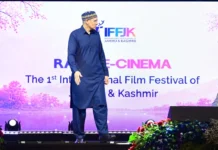
The film was shot in Kashmir at multiple locations, and the makers of the film held the red carpet premiere at the only theatre of Srinagar, INOX, dedicated to the BSF personnel, marking the first of its kind event for a Bollywood movie in Kashmir. The event was also attended by the leading actor Emraan Hashmi and the producer Farhan Akhter, and also by other notable celebrities.
Emraan Hashmi is the soul of the film, and he has done justice to his part. The film mostly focuses on him, and there are a few other actors who have also done justice to their roles. Mukesh Tiwari, as a senior officer, also appears in a few scenes and doesn’t have much scope in his role.
Box Office
On the box office front, the film could find very less viewers on its first day of release due to stiff competition from another release Kesari, which is based on the Jallianwala Bagh massacre. It would be interesting to see how the film performs on the weekends, if it has to emerge as a box office success, and only word of mouth could help it.
(With a master’s in communications, the author is a movie buff sharing candid reviews with a side of real-world insight.)