From colonial-era cameras to Cannes premieres, Kashmiri filmmakers are moving from being subjects of the lens to storytellers behind it, in Kashmir and abroad, reports Afreen Ashraf
Kashmir has been on film almost since the invention of the camera. In the beginning, filmmakers were drawn largely to its spectacular landscapes, the beauty of a place the world had come to know as paradise. Later, filmmakers from outside Kashmir arrived with their own stories, using the Valley as a backdrop for romance, drama and adventure, a practice that continues to this day. It was only when native filmmakers began experimenting with the camera that Kashmiris started telling their own stories, stories rooted in their culture, history, memory and heritage.
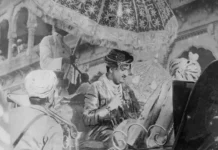
In 1964 came Mainz Raat, directed by Jagjiram Pal, regarded as the first Kashmiri-language feature film for a Kashmiri audience. It won the President’s Silver Medal for Best Film in Kashmiri.
Alongside these outside views of Kashmir, another story was building: Kashmiris making films themselves. It marked a shift. Kashmir was no longer only captured from outside. It was beginning to find its own way behind the camera. In 1978, regional filmmaker and television producer Bashir Badgami directed Habba Khatoon, a Kashmiri-language production for Doordarshan. It brought the life and legacy of the celebrated poetess to a wider audience.
The impulse to tell regional stories through cinema did not fade. Over the decades, filmmakers from the region found different ways into the craft. In the last two decades, their presence has grown more visible, across documentaries, short films, independent cinema, television and mainstream production. Together, their experiences offer a closer look at the people shaping Kashmir’s presence behind the camera.
Digital Pioneer
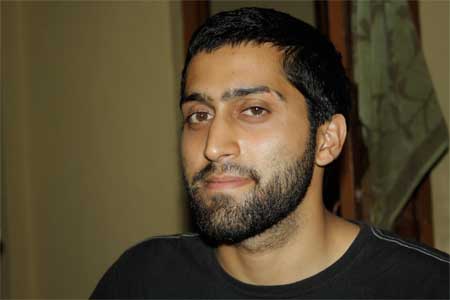
One of them is Arshad Mushtaq. In 2006, he made Akh Daleel Loalich, widely described as Kashmir’s first digital feature film. It was made when there was hardly any concept of digital filmmaking. “Initially people even laughed at me for trying to make a film that way,” said Arshad. “It was a time when even platforms like Netflix were only beginning to emerge.”
Set in 1887, at the peak of Dogra rule, the film marked an important stage in the development of digital filmmaking in Kashmir.
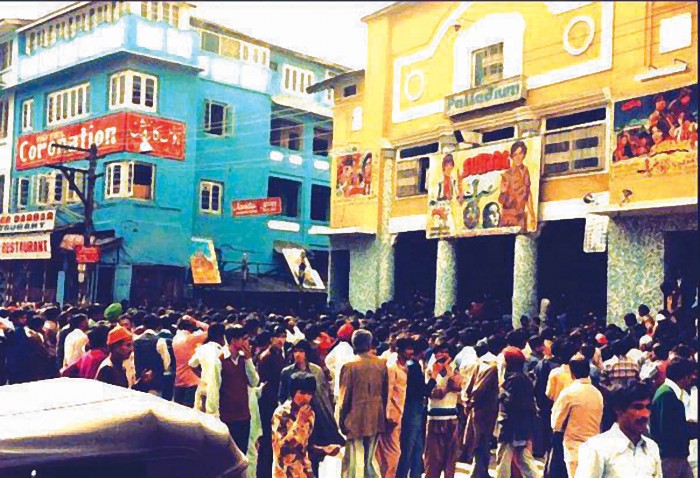
Arshad had discovered cinema much earlier. He grew up at his maternal home, where his grandmother’s family owned Regal Cinema, one of the city’s old theatres. As a child, Arshad would visit the cinema with his cousins to watch films. Because the theatre belonged to his family, they had a reserved box inside it. From there, he had access to something most people never experienced: a view of the other side of the screen. “I was fascinated towards cinema since my childhood, due to such privilege,” he said.
In October 1983, during his maternal uncle’s wedding, an American guest brought a camera and filmed the event for his own memory. He and his friends danced and posed in front of the camera. It fascinated them as they watched it on screen later. For Arshad, that moment was game-changing. Years later, it would lead him to choose cinema as a career.
Arshad completed his early education in Srinagar and moved to Delhi in 1995 to study English literature at Sri Venkateswara College. Theatre became central to his college years. He participated in public theatre and was involved in college bands. He returned to Kashmir in 1999 and spent a year moving between literature, theatre and visual storytelling. In 2000, while pursuing a master’s in mass communication at the University of Kashmir, he realised that the camera had stopped being an object of fascination. “It had become a way of telling stories to viewers.”
His early work as a filmmaker was rooted in theatre. In 2004, at Tagore Hall, he remembers receiving his first long standing ovation after his play Su Yee. The play went on to win recognition from the Jammu and Kashmir Academy of Art, Culture and Languages. The same year, he was named best director at a Doordarshan theatre festival. Su Yee was later staged across Indian cities and at the National School of Drama’s Bharat Rang Mahotsav.
After Akh Daleel Loalich, his work continued moving between theatre, television, documentaries and cinema. He wrote and directed plays, adapted European literary works and made television projects, including a 13-part adaptation of Paulo Coelho’s The Alchemist for national television. He also made the documentary A Prayer in Exile, about Muslim Tibetans, and worked on a mental health series with Médecins Sans Frontières.
Kashmir kept returning to his work. His film Aks-e-Ghalib: Dast-e-Shifa, recently screened at INOX Srinagar, is a Kashmiri-language film that looks beyond Ghalib’s poetry to his relationships, faith and political outlook.

Distant Roots
Around the same period, other filmmakers connected to Kashmir were finding their way into cinema. Some grew up in the valley. Others grew up outside it but stayed connected through family and memory.
Tariq Tapa, born in New York City to an American artist mother and a father from Srinagar, grew up away from Kashmir but remained tied to it through family. He studied at the California Institute of the Arts, where his interest in filmmaking developed. In 2008, he made Zero Bridge, a quiet, closely observed film set in Srinagar. It follows a teenage pickpocket and presents the city through everyday life, rather than through familiar images of mountains, lakes and tourist landscapes. Tapa shot the film over nine months with a small setup, keeping production simple and close to its characters. The film premiered at the Venice Film Festival and was nominated for the John Cassavetes Award at the Independent Spirit Awards.
Musa Syeed took Kashmir to a wider audience. In 2012, he released Valley of Saints, his first feature, set around Dal Lake and centred on a young boatman, his friendships and the changes around him. The film won the Sundance Audience Award and the Alfred P. Sloan Film Prize. Syeed’s work has often focused on communities, cultures and immigrant experiences. He later made A Stray, which premiered at SXSW, and co-wrote Menashe. His documentaries and shorts include The Dispossessed, about a faith healer in Kashmir, selected at Sundance.
Behind Camera
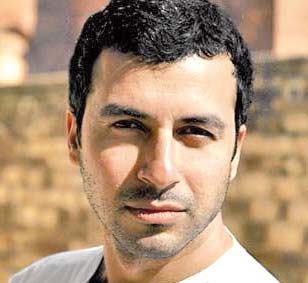
For Aamir Bashir, the path into filmmaking was different. Born in Kashmir, he first became known as an actor before moving behind the camera. After working in films and television, he made his directorial debut with Harud (Autumn) in 2010.
Set in Kashmir, it follows a young man and his family living through the uncertainty and silence of everyday life. Instead of using Kashmir only as backdrop, Bashir places his characters and their personal experiences at the centre of the story. Harud premiered at the Toronto International Film Festival and later won the National Film Award for Best Feature Film in Urdu.
A decade later, Bashir returned to directing with The Winter Within, also known as Maagh, which premiered at the Busan International Film Festival. Alongside directing, he has continued acting in films and television. But through his own films, he has repeatedly returned to Kashmir and its people, to the lives, experiences and emotions that exist behind the region’s larger image.
Local Ambition
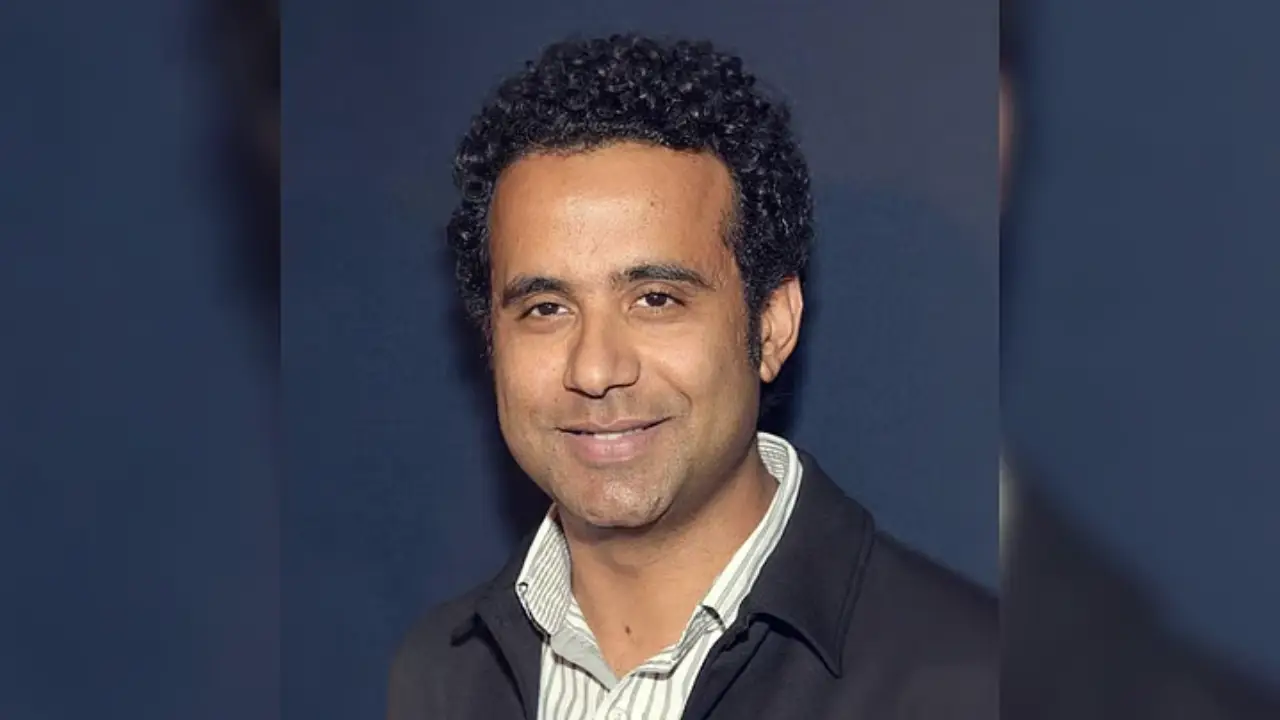
For Musa Farhat, the journey also began in front of the camera. He started as an actor, but grew fascinated with what happened behind it. Watching directors made him curious about how a scene comes together, and how different performances combine to build a film. That curiosity pulled him towards filmmaking.
Farhat began working in film in 2021, while still in college. His first directorial project was a music video he wrote and directed for a local singer. It was later featured on BBC World. Since then, he has moved between acting and filmmaking, across music videos, documentaries, docu-dramas and short fiction.
His most ambitious project so far, he says, is J in the City. The film places two familiar Western screen characters in a fictional version of Srinagar. Its streets, winter nights, cars, houses and architecture become part of the story’s world. For Farhat, the idea was not simply to transplant a Western story onto Kashmir. He wanted to ask a more personal question: what would these characters be like if their story happened in his own city?
Using familiar characters gave him an advantage. Audiences already knew who they were, so he did not need to spend much of the film introducing them. He could focus instead on placing them in Srinagar.
Fitting them into the region took more than an idea. Farhat and his team spent nearly three years on the film, made independently, without the resources of a large production. He also produced it himself. The hardest part, he said, was keeping the fictional Srinagar feel consistent. The cars, houses, roads, costumes and architecture all had to belong to the same world. Nothing could feel out of place. The valley’s weather brought its own difficulties. Much of the film was shot during Chillai Kalan, making long shoots physically demanding. Farhat now describes J in the City as his most important project so far, not because of the film itself, but because of everything he learned making it.
Farhat has worked on five projects as a filmmaker and five as an actor, alongside independently producing a short film. This variety matters to him. He does not believe Kashmir can be reduced to one kind of story.
Global Canvas
Some filmmakers took their work beyond Kashmir, into mainstream cinema, international collaborations and stories far removed from where they grew up.
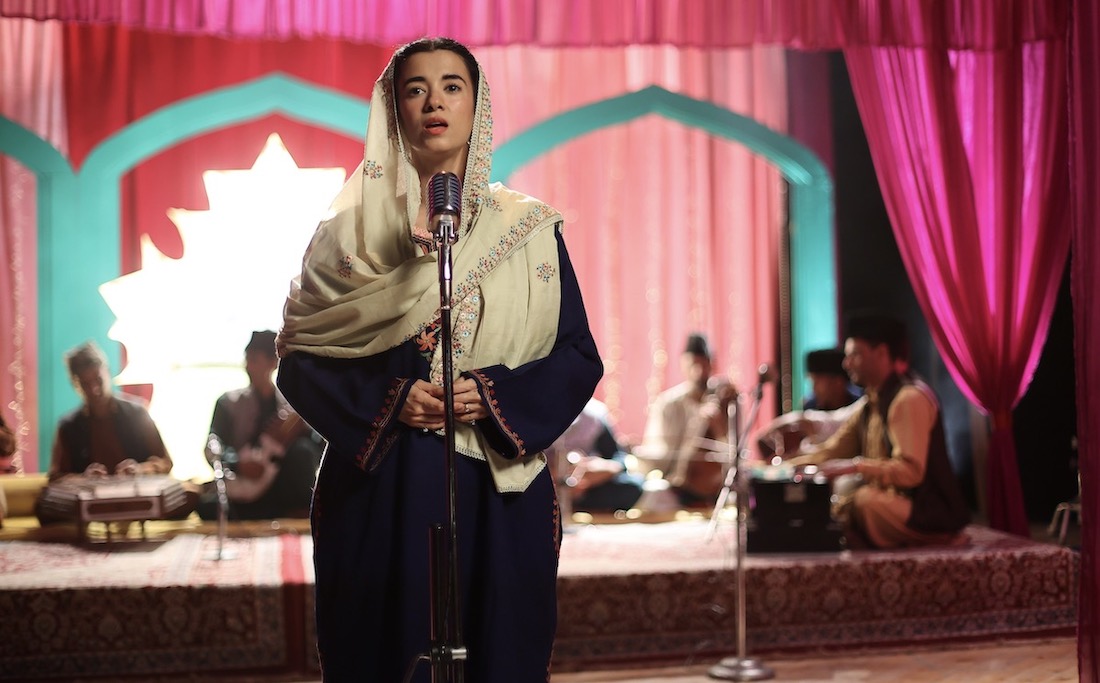
For Rahat Shah Kazmi, filmmaking has taken him far beyond the valley. Born in Poonch in 1980, he began as a writer and filmmaker before gradually finding his place in the wider Indian film industry. His work has moved across subjects and settings, from the writings of Saadat Hasan Manto to stories of love, history and conflict.
One of his better-known films, Mantostaan, drew from Manto’s stories about the partition and explored the violence and human cost of that period. It brought Kazmi international recognition. In 2017, he won the Best Director award at the UK Asian Film Festival’s BAFTA ceremony.
His upcoming film, Love in Vietnam, is an Indo-Vietnamese collaboration based on Turkish writer Sabahattin Ali’s novel Madonna in a Fur Coat. The story moves from Punjab to Vietnam, bringing together Indian actors Avneet Kaur and Shantanu Maheshwari with Vietnamese actor Kha Ngan.
The idea came after Kazmi attended the Namaste Vietnam Festival in 2023. He began thinking about how Indian audiences were becoming more familiar with cinema from different parts of the world, while Vietnamese cinema remained relatively unknown to them. That thought became a film. The project was presented at the Cannes Film Festival in 2024, bringing together a filmmaker from Jammu and Kashmir with collaborators from India, Vietnam and Turkey.
Kazmi’s journey offers a different picture of what it can mean to be a Kashmir filmmaker. His films do not always return to the valley, and there is no need for them to. For decades, filmmakers from outside Kashmir have come to the region to tell stories against its landscape. Kazmi’s journey runs the other way. He is a Kashmiri filmmaker taking his stories anywhere. For him, Kashmir is not his entire subject, but the place from which his journey began.
Return Home
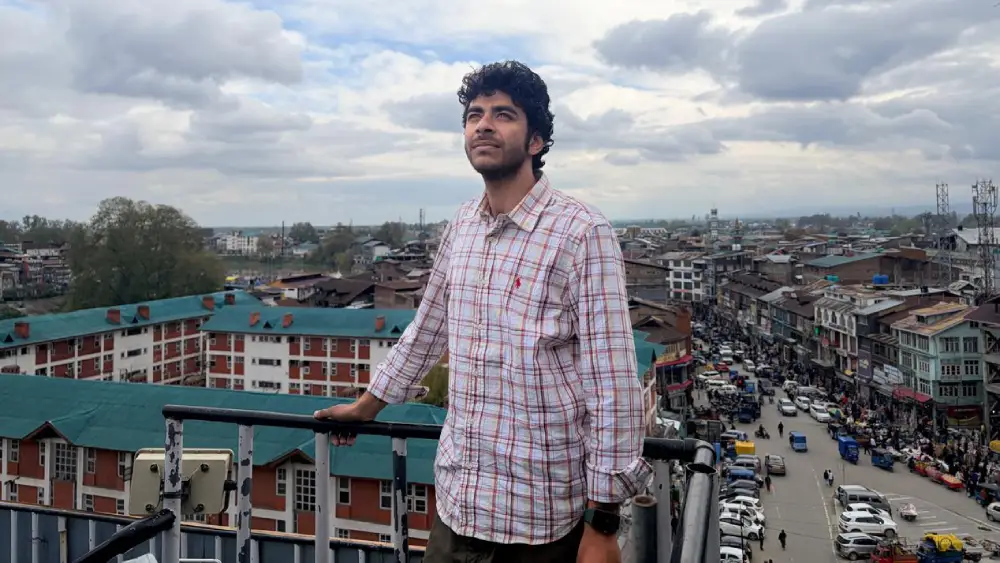
Danish Renzu’s story offers another route. He left Kashmir, built a career abroad, then returned to tell the stories, people and music of the valley.
Renzu said he wanted to become a filmmaker since childhood, drawn to stories, people and the way cinema could carry an audience into another world. But filmmaking did not immediately seem like a viable career. That changed after he moved to the United States for higher education.
Renzu studied electrical engineering at UCLA and worked as an engineer at AT&T for five years. While living in Los Angeles, he began experimenting with filmmaking. In 2014, he made his first short film, In Search of America, Inshallah. It travelled to festivals, including the Cannes Short Film Corner, and the response gave him the confidence to take filmmaking seriously. “That was the moment when filmmaking stopped being just an interest and became a career I wanted to commit to,” Renzu said.
His first feature, Half Widow, released in 2017, was made independently and fully crowdfunded. Set against the backdrop of the Kargil War, it follows a Kashmiri woman searching for her missing husband. “Half Widow will always be very special to me because it was my first feature film,” he said. “It was deeply rooted in Kashmir, yet the emotions were universal.” His next feature, The Illegal, received international attention and was shortlisted for consideration in the Best Picture category at the 2019 Academy Awards.
Growing up in Srinagar, Renzu often saw Kashmir represented through conflict and politics. But for him, that was only one part of the story. His films have tended to look beyond that long-held image. “There are so many human stories here, musicians, artists, women, families, traditions, folklore, literature, relationships and ordinary people whose lives are rarely represented on screen,” he said. That thinking led him to Songs of Paradise, his most recent feature, which explores Kashmir’s musical heritage through the life and legacy of singer Raj Begum.
In 2024, he launched Renzu Music, a label promoting musicians from Kashmir, which has since partnered with Warner Music India for distribution. “We have the talent and we have the stories,” he says. “Now we need to build the ecosystem that allows that talent to flourish.”
Coming Back
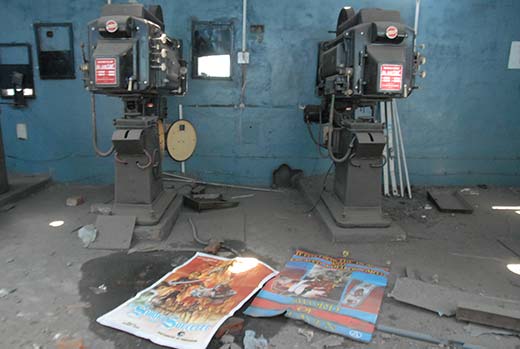
Unlike filmmakers whose path into cinema began with a clear decision, Rayit Hashmat Qazi seems to have arrived there almost by accident.
While studying audio-visual production and filmmaking at the Symbiosis Institute of Media and Communication, a course in audio production introduced him to the technical side of the craft. Slowly, his interest shifted from watching films to understanding how they were made.
Short films became his first space to experiment. His debut short, Do Cup Chai, released in 2018, follows two former lovers who meet to fulfil a promise over a cup of tea. It was nominated for Best Short Film at the New York Indian Film Festival, and later screened at the Silk Screen International Film Festival and the Brahmaputra Valley Film Festival.
Qazi moved to Mumbai and spent around six years as an assistant director on television commercials, working with Indian and international directors. He was part of campaigns for Airtel, Tanishq, Britannia, Pepsi and L’Oréal, alongside filmmakers such as Jim Sonzero, Rob Cohen and Harvey Brown. He also worked as an assistant director on Hotel Salvation, which premiered at the Venice Film Festival.
Those years taught him how large productions are planned, how directors work with crews, and how an idea gradually becomes images. He then moved from assisting to directing, and has since directed commercials for Britannia, Hindustan Unilever, BMC and Airtel, while developing his own films and television projects.
His independent projects keep returning to regional storytelling. “I always want to come back to Kashmir,” he said. “I want to film Kashmir, but more importantly, I want to film Kashmiris.” That intent shows in his recent work. His 2024 short film, An Orphanage of Memories (Yaadan Hund Yateem Khana), set against Kashmir’s winter landscape, follows a widow dealing with grief and memory. Written, directed and produced by Qazi, the film uses a quiet visual style to explore loss and the ways people hold on to memory. It was screened at the Indian Film Festival of Los Angeles and the New York Indian Film Festival.
Many Routes
These filmmakers have taken very different routes into cinema. Their paths differ, and so do their films. But together, they point to something larger. Kashmir is not only a place that filmmakers come to film. It is also a place from which filmmakers leave, learn, experiment, return, and make films of their own.