by Dr Inayat Ullah Wani
Delhi’s hostel collapse raises urgent questions about private student housing around Kashmir’s University, where rapid construction, seismic vulnerability and weak enforcement could prove deadly.
The images emerging from Delhi are difficult to ignore.
A multi-storey building housing a boys’ paying guest hostel collapsed in Satya Niketan, near Delhi University’s South Campus. At least five people had died by the latest update, while dozens of students were feared trapped under the rubble. The building was reportedly around 50 years old, and police registered a case against the owner under provisions relating to culpable homicide and negligent construction.
Beyond the immediate horror, however, the Delhi tragedy raises a question that Kashmir cannot afford to postpone:
How safe are the thousands of students living in privately rented accommodation around the University of Kashmir?
Around Hazratbal, Zakura, Sadarbal, Malla Bagh and Habbak, a parallel student-housing economy has expanded rapidly over the past decade. What was once largely a modest arrangement with families renting out an old portion of their house after moving to a new residence has gradually evolved into something much larger. Student accommodation has become a business. And wherever a great and relatively captive demand meets weak regulation, the incentive to maximise revenue can easily overpower considerations of safety.
From spare rooms to the student housing industry
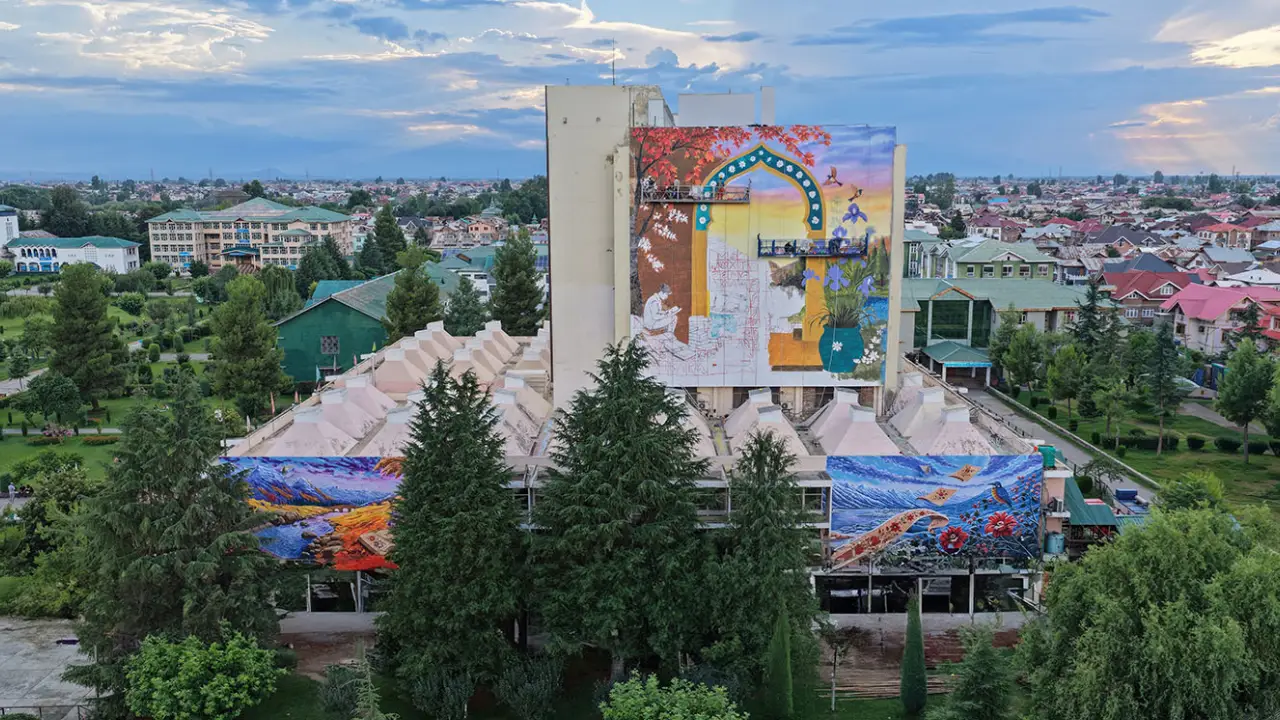
The traditional model was relatively simple. A local family would rent out one or two floors of an existing house to students. Often, the landlord and tenant lived in different portions of the same building. That model has increasingly changed. Student numbers have grown, while the availability of university accommodation remains limited. The University of Kashmir itself acknowledges that it cannot accommodate all students in its hostels. Its hostel guidelines explicitly state that hostel accommodation can cater to only a limited section of the university’s students.
The university’s current hostel information lists substantial accommodation capacity across its main and Zakura campuses, yet the very existence of a large private rental market around the university demonstrates that institutional accommodation does not meet the entire demand. This gap has created a lucrative market. Students increasingly want privacy, attached facilities, fewer roommates, uninterrupted internet, heating, better bathrooms and a degree of independence from landlords. Parents, meanwhile, are willing to pay a premium for accommodation that appears safe and convenient. The response from the market has been predictable: build more rooms, add more floors and extract more rent from every available square foot. The question is whether the regulatory system has kept pace.
The dangerous race for floors and rooms
The most worrying development is not the existence of private accommodation itself. Private rental housing is an important and legitimate part of any university ecosystem. The problem begins when housing becomes a race to maximise the number of rentable rooms without a corresponding commitment to structural safety. A two-storey residential building is not automatically safe simply because additional floors can physically be constructed on it. And a freshly painted building with modern furniture is not evidence of structural safety. Yet for a student searching for accommodation, these distinctions are almost impossible to assess.
A student can compare rent, room size, Wi-Fi, food and distance from campus. He or she cannot reasonably be expected to determine whether the foundation, columns, beams, load-bearing walls or structural design of a building can safely withstand the number of people living inside it. That responsibility belongs to the regulatory system.
Habbak is a particularly sensitive case
The issue becomes even more complicated in areas around Dal Lake. Habbak and adjoining localities lie within a sensitive environmental and regulatory landscape. The government has acknowledged that construction within the 200-metre buffer around Dal Lake is subject to restrictions, with fresh construction generally prohibited except in specified circumstances.
In 2025, the government told the J&K Assembly that construction of an additional block at the Sub-District Hospital in Habbak had been halted because the required statutory clearance from the Lakes Conservation and Management Authority was pending. This is important because it demonstrates that construction regulation in the area is not merely a theoretical concern. If even public infrastructure can encounter complex statutory restrictions and clearance requirements, the question of how hundreds of private buildings are being constructed, altered, extended and occupied deserves systematic scrutiny. The answer cannot simply be another post-disaster inspection.
Kashmir has become more vulnerable, not less
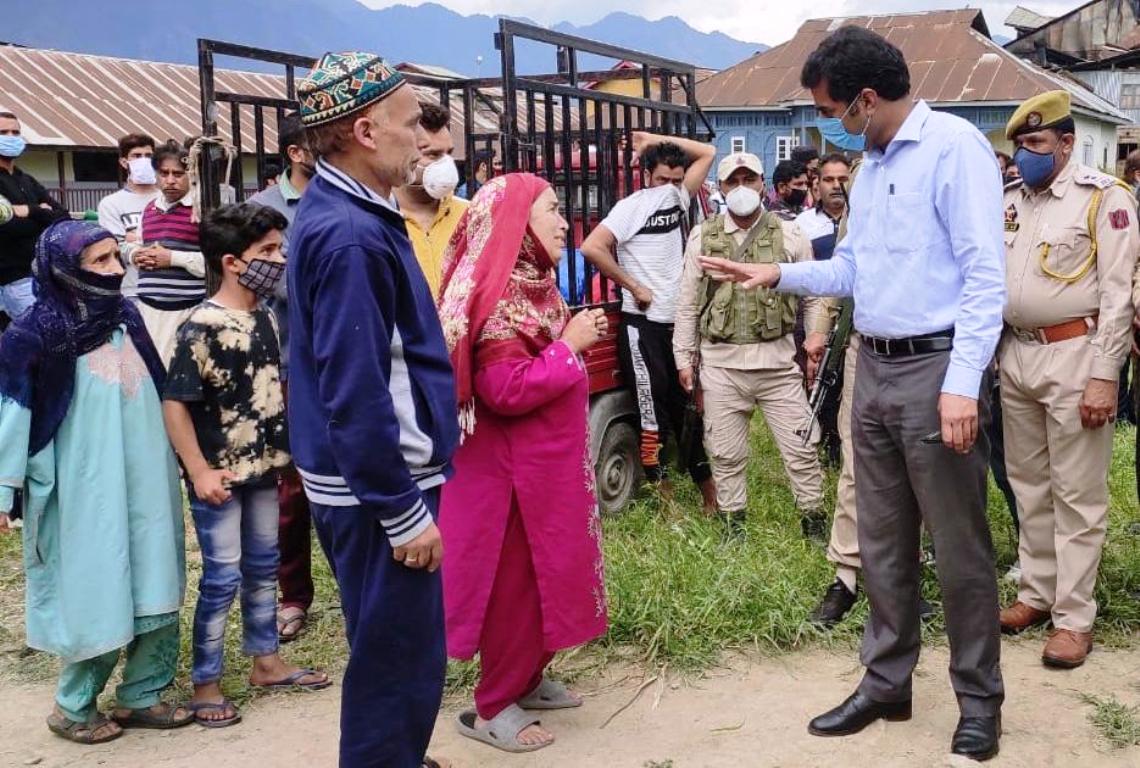
There is another reason why the issue deserves urgent attention. The earthquake risk facing Jammu and Kashmir has been officially reassessed under the revised Indian seismic design standard, IS 1893 (Part 1):2025. The new standard introduces Seismic Zone VI, the highest category in the revised framework. Srinagar is specifically listed in Zone VI with a zone factor of 0.75. The J&K government has also stated that the entire Union Territory has been placed in this highest seismic-risk category.
This fundamentally changes the conversation about construction safety. Kashmir cannot afford to treat structural safety as a bureaucratic formality. A poorly designed or illegally altered building is not merely an eyesore. In a highly seismic region, it can become a mass-casualty risk. And student accommodation creates a particularly dangerous concentration of people. A building housing a family may contain five or six occupants. A converted private residence operating as a student hostel may contain several times that number. If such a structure suffers a catastrophic failure, the consequences are correspondingly greater.
The students are the weakest party in this market
There is also a fundamental economic imbalance here. The landlord owns the asset. The student needs the accommodation. The student usually has limited information about the building. And the student may have very little bargaining power.
This is a classic information asymmetry problem. The person making the housing decision does not possess the information necessary to accurately assess the most important attribute of the product being purchased-structural safety. The market can therefore reward precisely those landlords who reduce costs in areas that tenants cannot easily observe.
Spending on good furniture is visible. Spending on structural reinforcement is not. Installing attractive lighting is visible. Ensuring structural integrity is not. Adding another rentable floor generates revenue. Maintaining adequate structural margins generates no immediate income. That is precisely why regulation is necessary.
What needs to change
The answer is not to shut down the private rental market. That would be unrealistic and unfair to both students and landlords. The answer is to formalise it. Every building being used as student accommodation around the university should have a basic registration system.
At a minimum, authorities should know:
How many students are living in the building;
How many floors are authorised;
Whether the building has an approved plan;
Whether its structural design is appropriate for its current use;
Whether subsequent additions or alterations have been approved;
Whether electrical and fire-safety requirements are met;
Whether adequate emergency exits exist;
Whether the building complies with applicable seismic-design requirements; and
Who is legally responsible for the property.
There should also be periodic safety certification, particularly for buildings that have been converted from ordinary residential use into high-occupancy student accommodation.
A building should not become a hostel merely because the owner puts beds into its rooms. The government and university should also consider creating a publicly accessible registry of approved student accommodations. Students and parents should be able to verify whether a property has passed basic safety and occupancy requirements before signing a rental agreement.
Regulation should not stop at buildings
The rental market itself also needs greater transparency.
At present, student accommodation can become an informal transaction between landlord and tenant with little standardisation in terms of amenities, occupancy, deposits, maintenance responsibilities or emergency provisions. There should be minimum standards for student accommodation. If a landlord charges a particular rent for a room, the tenant should know exactly what that rent includes: electricity, heating, water, internet, furniture, maintenance, security and other services.
A basic rental agreement should be mandatory. Occupancy limits should be clearly displayed. Emergency contact information should be available. And students should have a mechanism through which unsafe accommodation can be reported without fear of retaliation.
Do not wait for the rubble
The greatest danger in Kashmir is not that we do not know what to do. We do. Building codes exist. Planning regulations exist. Environmental restrictions exist. Fire-safety standards exist. Seismic design standards exist. Authorities exist. The problem is enforcement. And enforcement that begins only after a building collapse is not enforcement. It is post-mortem administration. After every major disaster, we routinely see committees constituted, buildings inspected, notices issued, and assurances given. But safety cannot begin with a magisterial inquiry. It must begin with the approval of the building.

The Delhi tragedy should therefore not become another news cycle that disappears after the rescue operation ends. For Kashmir, it should be a warning.
Around the University of Kashmir, a rapidly expanding student-rental economy is meeting a highly vulnerable physical environment. The demand for accommodation will continue. Students will continue to come. Landlords will continue to invest. Rents will continue to rise. That economic activity is not inherently wrong. What is unacceptable is allowing the market to decide the price of accommodation while leaving the price of unsafe construction to be paid by students with their lives. Kashmir does not need another tragedy to discover whether its buildings are safe. It needs to find out now.
(The author is an Assistant Professor at the School of Economics, NMIMS, Navi Mumbai. Ideas are personal.)