Across Kashmir, families living with epilepsy quietly battle stigma, superstition and isolation alongside seizures, as doctors urge earlier diagnosis, timely medication and greater social understanding, reports Afreen Ashraf

It was around 3 am when Feroze Ahmed heard loud bangs from behind his room door in Reshpora village of Ganderbal. He rushed toward the door and found his father outside.
“His eyes were asking for help,” Feroze recalled. “Within the next few moments, I heard shouting from another room. Without inquiring, we rushed towards the room.” On reaching the room, Feroze saw his younger brother, Hilal Ahmed, lying on the floor. His body was convulsing uncontrollably, while their mother and sister stood frozen next to him, unable to do anything except wait for it to pass. For their family, this is familiar. They have been witnessing such days and nights for over two decades.
“My brother has been living with this for as long as I can remember,” said Feroze, two years older than Hilal, now 37. “He had gone several months without an episode, and we had finally begun to relax. But somewhere in our minds, we always knew it could return.”
The uncertainty has never really left them. Every quiet day carries the possibility of another frightening night. Every outing, every family gathering and every plan is made with one question in mind: what if it happens again?
“ye ous teli variyah lakut, yeli amis kodnukh chakar aaw,” recalls Amina, Hilal’s mother, of how young Hilal was when the attacks first appeared. He was of seven years of age. That time, no one understood what was happening to him.
Hunting for Answers
Hilal often spent his afternoons playing with friends in the nearby mountains. When the episodes began, the family wondered if he had come under some supernatural influence or spiritual affliction. “aasi basyov amis chu khuda rechin jin.”
For years after Hilal’s seizures began, the family continued to seek help from a local faith healer, convinced the attacks were the result of a supernatural influence. What began as an attempt to find answers gradually grew into a relationship that came to shape much of the family’s life.
“He exploited us time and again,” said Rashid Ahmed, Hilal’s father. The faith healer instructed the family to avoid certain foods, discouraged Hilal from attending social gatherings, and insisted that every major family decision be discussed with him first. The restrictions extended even to family celebrations. When Hilal’s sister got married in 2015, Rashid said the peer warned that Hilal should not see either the bride or the groom, claiming it could trigger another seizure. Fearing the consequences, the family kept him away.
Rashid said the family continued to follow the peer’s instructions because of the constant fear surrounding Hilal’s condition. “My wife believed that if we disobeyed him, Hilal would suffer another seizure,” he said. Years ago, Rashid recalled the family made an important decision without consulting the peer, and soon afterwards Feroze fell ill. The peer told them the illness had occurred because they had ignored his advice. “At that time, the peer felt vindicated, and we reaffirmed our belief in him.”
However, as the episodes became more frequent, the family finally took Hilal to the Sher-i-Kashmir Institute of Medical Sciences (SKIMS) in Srinagar. There, doctors finally gave a name to the condition that had turned their lives upside down.
Life Altered
Over the years, the condition has come to shape not just Hilal’s life, but the lives of everyone around him. His mother, Amina, has rarely spent a night away from her son. Whether visiting relatives or attending family functions, she always takes Hilal with her, fearing an episode might occur when no one is there to help.
A few years ago, when Hilal decided to accompany his father to work as a labourer to support the family, Rashid insisted on keeping him close. The arrangement lasted only briefly. One day, Hilal suffered another attack at the worksite, forcing him to give up the job. The fear of leaving him unattended has gradually narrowed his world. He has never built a wide circle of friends and spends much of his time with close relatives. Although he has always loved cricket, he has never been part of a team. Instead, he often walks to the village ground simply to watch others play.
This is because Hilal is living with epilepsy.
Silent Fear
For Rabiya, now 27, that same fear shapes the rhythm of everyday life, even though her circumstances have been kinder than Hilal’s. Diagnosed with epilepsy when she was just two months old, Rabiya has spent her entire life learning to live alongside the condition. She considers herself fortunate to have grown up in a family that understood epilepsy and knew how to respond whenever she experienced a seizure. Their awareness spared her much of the stigma that many patients continue to face. Yet the condition has quietly shaped her life in countless ways.
Today, Rabiya is employed and leads an independent life, but every day begins with a series of precautions. She avoids prolonged exposure to heat, makes sure she never skips a meal, and follows her medication schedule diligently, knowing that even small disruptions can increase the risk of a seizure. What concerns her most is not the medication or the restrictions. It is the uncertainty.
“There is always a fear in the back of my mind,” she said. “Whenever I am walking alone or travelling somewhere, I keep thinking, what if I have a seizure here? Who will help me? Will people understand what is happening?”
It is a question that follows her everywhere. An ordinary walk to work, a crowded marketplace or a bus ride can suddenly become a source of quiet anxiety. Rabiya has learned that epilepsy is not defined only by the seizures alone, but by the constant anticipation of the next one, a burden that remains invisible to everyone except the person carrying it.
By Numbers
Hilal and Rabiya’s stories are far from unique. Across the world, millions of people and their families live with the same condition, making it one of the most common neurological disorders. The World Health Organisation (WHO) estimates that between 50 and 70 million people worldwide are affected, with more than half living in Asia. India alone accounts for nearly 12 million people living with the disorder, around one sixth of the global burden. Although effective treatment can control seizures in nearly 70 per cent of patients, many in low- and middle-income countries continue to go untreated because of limited access to healthcare, delayed diagnosis and persistent social stigma.
In Kashmir, comprehensive epidemiological data remains scarce. However, one of the largest population-based surveys conducted in the Valley, covering more than 63,000 people, estimated a prevalence of 2.47 cases per 1,000 population, with an even higher prevalence among children under the age of 14.
Experts Speak
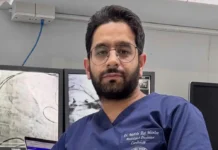
According to neuropsychologist Dr Irfan, despite being one of the most common neurological disorders, epilepsy continues to be clouded by myths and misconceptions. “Many people still mistake seizures for mental illness. Others attribute them to supernatural or spiritual causes, and some even believe the condition is contagious,” he said. “These misconceptions not only fuel stigma but also delay diagnosis and treatment, preventing many patients from receiving timely medical care.”
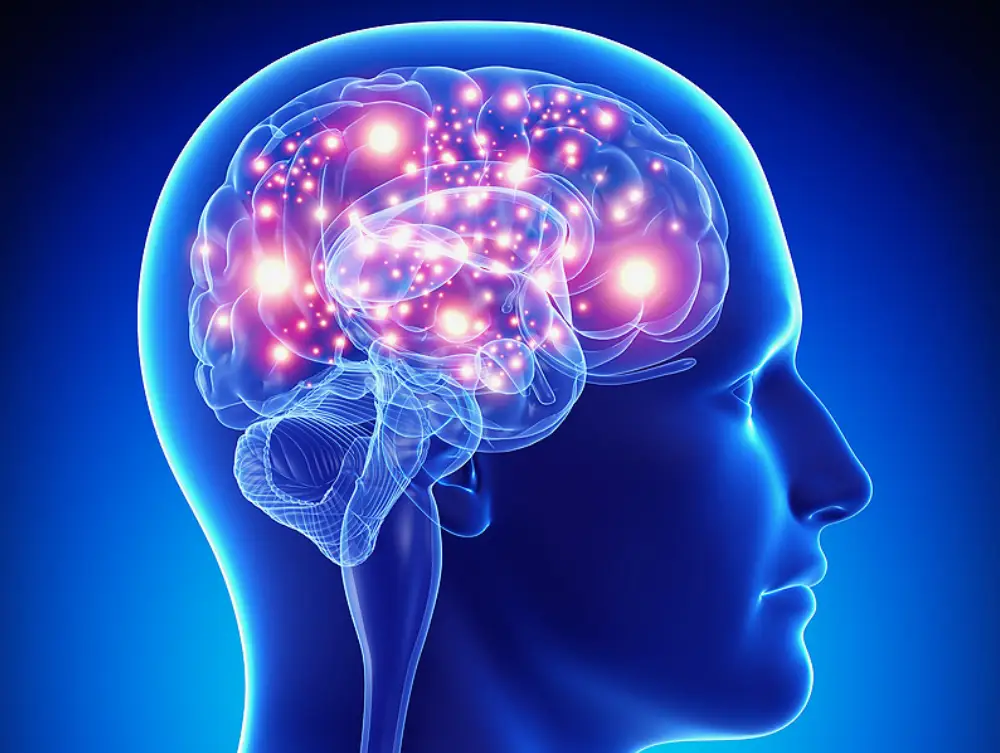
Epilepsy, Dr Irfan explains, is a neurological disorder characterised by recurrent, unprovoked seizures caused by abnormal electrical activity in the brain. “A single seizure does not necessarily mean a person has epilepsy,” he said. “The condition is diagnosed only when there is a tendency for recurrent seizures.”
Dr Irfan is firm on one point in particular. “Epilepsy is neither a psychiatric illness nor the result of spirits or black magic. It is a medical condition affecting the brain, and in many cases it can be effectively managed with medicines. With timely diagnosis, regular medication and proper follow-up, a large proportion of patients become seizure-free.”
Dr Rayees, however, believes that controlling seizures is only one part of the challenge. “The biggest challenges faced by people living with epilepsy are often psychological and social rather than purely medical,” he believes. “Many patients live with the constant fear of having a seizure in public. That fear can lead to anxiety, reduced confidence and social withdrawal.” The impact often extends beyond health. Education is interrupted, and employment opportunities become limited. “Patients frequently face discrimination, overprotection and misconceptions about their abilities, despite being fully capable of leading productive lives,” he added.
Myths and Beliefs
Those old beliefs continue to shape how people respond when someone has a seizure in front of them. Rayees, 22, still remembers his first encounter with someone having a seizure. “I was waiting outside my classroom when loud voices came from a nearby room,” he recalled. “The next thing I remember is myself entering the gate of that room, and as soon as I entered, I saw a student lying on the floor. His body was jerking violently as classmates stood around him.”
Rayees said he did not go near him. “I thought maybe he was under some spiritual influence,” he said. Like many people around him, he had grown up hearing stories that linked such episodes to possession or unseen forces. A year later, after learning about epilepsy, that memory continues to stay with him. “I still think about that day,” he said. “If I had known then what I know now, I would have helped him.”
For people living with epilepsy, such misunderstandings often have painful consequences. Rasik, 20, from Badgam, remembers suffering a seizure while he was at college. He recalled nothing about the attack itself, but when he regained consciousness, he found himself lying on the ground, covered in dust. “No one came near me,” he remembers his friends telling him. “People were afraid.” It was only when a few of his close friends, who already knew about his condition, reached him that he was finally helped up.
Rayees said this hesitation is common. Many people still do not know what to do when someone has a seizure. Others fear the illness is contagious, or believe the person is possessed. Such misconceptions often leave patients without help during the very moments they need it most.
In a family from Pahalgam, one man spent nearly three decades being treated by local faith healers, because his seizures were believed to be caused by a supernatural influence. It was only years later, when a new-born baby in the same family was diagnosed with epilepsy by doctors, that they began to question what they had believed for so long.
They finally took the man to a neurologist, where he too was diagnosed with epilepsy. But despite starting treatment, his struggles continued. During one severe seizure, his eyes rolled backwards and never returned to normal, leaving him with permanent loss of vision.
The same family remembers another such member who lived to nearly eighty years of age without ever being examined by a doctor. Whenever he had seizures, the family believed he had gone mad, and during his episodes they tied him up with chains to prevent him from hurting himself or others. No one realised he might have been living with an untreated neurological disorder.
These stories may sound exceptional, but researchers say they reflect a pattern that has existed in Kashmir for decades. One of the earliest population-based studies on epilepsy in the Valley, conducted by neurologists Roshan Koul, S Razdan and Anil Motta in South Kashmir’s Kuthar Valley and published in Epilepsia in 1988, found that nearly three-quarters of people living with active epilepsy were receiving no specific treatment. The study also found that most patients developed seizures before the age of thirty, and that generalised seizures were the most common type.
A later study led by Parvaiz A Shah, among more than 15,000 children attending school in the Kashmir Valley, found epilepsy to be more common among children in rural areas than urban ones. They found it more common among students in government schools than private ones. It suggested that social and economic inequalities continue to influence who receives timely diagnosis and care.
Research from Kupwara by Showkat Ganaie and Aadil Bashir further highlighted the burden of seizures among children in the district, while a hospital-based study from SKIMS showed that adult-onset epilepsy remains a significant challenge in the Valley, with infections, stroke and other neurological disorders emerging as important causes.
A study comparing people living with epilepsy in Kashmir and the United States, by Peter F Camfield, Roshan Koul and colleagues, found that while patients in both places relied on similar antiepileptic medicines, their lives outside the hospital were very different. People with epilepsy in Kashmir experienced greater social stigma, fewer educational and employment opportunities, and were far less likely to speak openly about their condition. Families here were also more likely to seek spiritual healing alongside medical treatment, reflecting the deep cultural beliefs surrounding the illness.
Taken together, these studies tell an important story. Epilepsy in Kashmir is not rare, nor is it poorly understood by doctors. What continues to make it difficult is everything that surrounds the illness: distance from specialised healthcare, delayed diagnosis, and beliefs that still persuade many families to seek answers everywhere except the hospital.
Beyond Seizures
For families like Hilal’s, epilepsy has never been only about seizures. It has been about years spent searching for answers, the fear that dictated everyday decisions, opportunities quietly lost, and the burden of living with a condition that many still do not understand.
Doctors insist that, in most cases, epilepsy can be effectively controlled with timely diagnosis and regular medication. As Dr Rayees points out, the greatest challenges often lie beyond the hospital, including delayed diagnosis and limited access to specialised care. Misconceptions that associate seizures with supernatural causes, along with persistent stigma, continue to force many families to suffer in silence.
While awareness has improved over the years, many people still do not know how to respond when someone has a seizure, leaving patients without help during the moments they need it most.
Improving the lives of people with epilepsy will require more than medicines alone. Families need to know that epilepsy is a neurological disorder, not a curse or a source of shame. Schools and workplaces need greater awareness so that children and adults are not excluded because of misconceptions. Spiritual beliefs may offer comfort to many families, but they should never replace timely medical diagnosis and treatment.