Private hospitals in Kashmir suspended Ayushman Bharat services over Rs 300 crore in unpaid dues, exposing deep structural flaws crippling the health insurance promise, Shyma Rauf reports
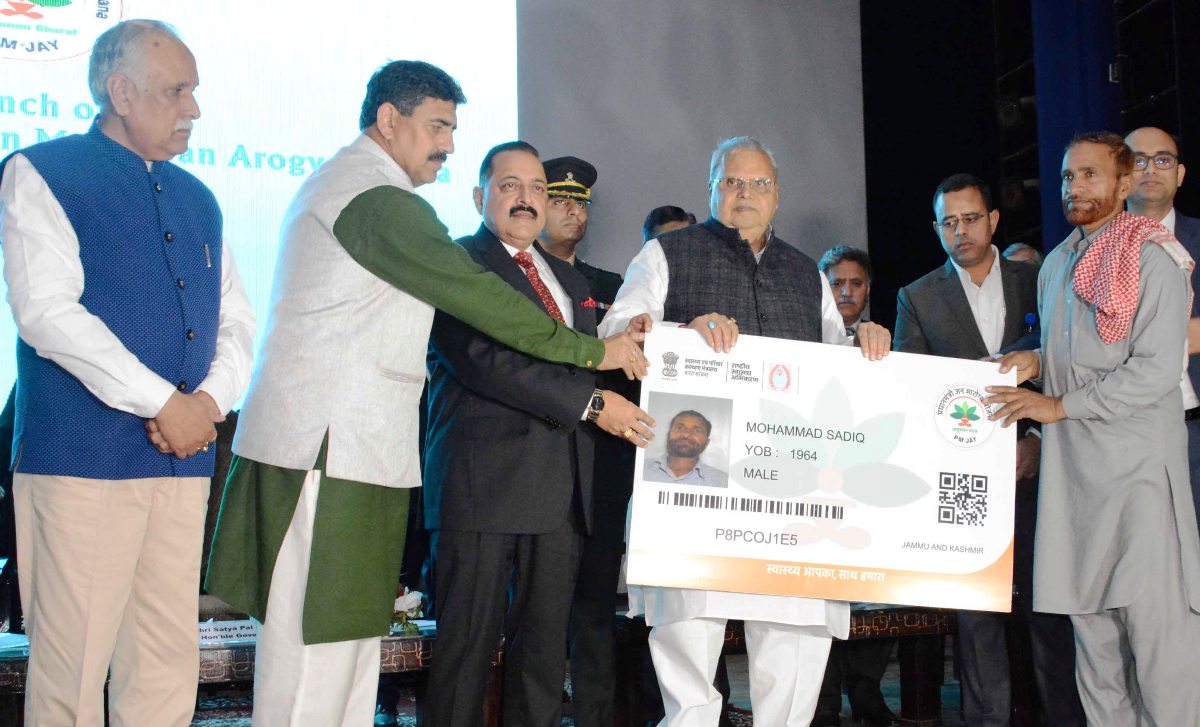
The government-hailed ‘golden card’ scheme hit a roadblock again when the Jammu and Kashmir Private Hospitals and Dialysis Centres Association (JKPHDA) announced a suspension of services over unpaid dues worth over Rs. 300 crore. The issue, however, extends beyond that. Patient care issues, below-par packages, private hospitals’ incurred costs, and overburdening of government hospitals are all facets of the Ayushman Bharat scheme.
The flagship Ayushman Bharat Pradhan Mantri Jan Arogya Yojana (ABPMJAY) scheme was launched in the erstwhile state in December 2018. Initially applicable to Below Poverty Line (BPL) families, it was extended to all economic strata in 2020 under AB PM-JAY SEHAT.
While the JKPHDA deferred its decision to suspend services by two weeks after the State Health Agency (SHA) assured clearance of pending dues to hospitals empanelled with the AB PM-JAY/SEHAT Scheme, multiple hospital officials expanded on the scheme’s drawbacks. A common feeling amongst all was that ever since the SHA took over the scheme in 2024 after IFFCO–TOKIO General Insurance Company terminated its contract, the settlements had piled up.
“Initially the scheme worked fine, but for the last two years there have been problems,” the Medical Superintendent (MS) of one of the city’s private hospitals said. He was speaking on the condition of anonymity. “As per rules, they are required to clear the dues within 20 days of the procedure, but now it can take up to eight months, even a year.” His hospital’s current pending dues stand at Rs. 4 crore.
Another one of the city’s premium private hospitals has pending dues of over Rs 6 crores. An official associated with the scheme spoke on the condition of anonymity. “Indirectly or directly, everybody is suffering, be it the patient or the hospital,” he said. “We are always in a deficit due to the payment. Our dues have been pending for the past three years.”
Doctors’ willingness to treat under this scheme is being affected by the inadequacies in the scheme. Because the packages are below par, hospitals must spend out-of-pocket even when the scheme is in place.
Full of Flaws
The scheme covers around 1,393 procedures across more than 290 empanelled public and private hospitals. It offers a cashless health cover of up to Rs 5 lakh annually. This amount, however, is diversified across procedures, and each procedure has a designated package rate. Doctors feel that the packages are below par and patients, too, say that not everything is included and they have to spend out of their pockets.
The included procedures are: General Surgery and Medicine (Appendectomy, cholecystectomy, hernia repair, and management of systemic diseases); Cardiology (Angiography, angioplasty, bypass surgeries, and pacemaker implantation); Oncology (Cancer chemotherapy, radiation, and surgical oncology); Orthopedics (Joint replacements, fracture management, and spine surgeries); Ophthalmology and ENT (Cataract surgeries, tonsillectomy, and mastoidectomy) and Emergency Care.
“The package designates Rs 8,000 for tonsillectomy, Rs 90,000 for knee replacement, and if the surgery cost comes up to Rs 80,000, it will also include equipment cost, theatre cost and a surgeon will not agree to work with a fee of Rs 10,000. The same is true for tonsillectomy. A surgeon working in a private hospital will not be okay with it. It eventually leads to the hospital spending out of pocket,” the MS said.
“It can also lead to multiple layoffs and bankruptcy. The money spent on doctors will need to be adjusted, and we will eventually have to cut our staff, not everybody can sustain a deficit,” added another insider.
The scheme designates the lowest grade implants available for procedures such as knee replacement, and if the patient chooses to opt for a premium grade implant, they will have to pay for it themselves. There is a problem of awareness also. Many patients believe the Rs 5 lakh is an overarching benefit that covers everything, leading to conflict when they demand care that exceeds the package limits.
Patients Bear Cost
These payment pile-ups and package limitations are also affecting patients. Mohammad Yaseen, 59, has been on dialysis since 2022, and despite getting treated under the scheme, the family has to spend on medicine and injections thrice a week.
“Rs1500 per session is covered by the golden card, but we have to spend on injections and medicine. One Juvobin injection itself costs us Rs 1200, and there is an added cost of medicines. The government should add this cost into the scheme as well because we spend a lot out of our pockets,” he said.
Another patient, Khalid Gul, 52, echoed the same feelings. “It is not feasible for the poor to bear these costs. I come here three times a week, and I cannot spend so much. If they give Rs 5 lakh a year and claim free healthcare, they should make it happen,” he expressed.
According to the managing director of another private hospital in the city, the scheme is ‘full of flaws’. “The packages in the scheme are not respectable at all, doctors become scapegoats. There is no fund flow. Initially, the scheme worked fine, but later the dues piled up, and the patients suffered because of this. Government hospitals, too, are overburdened,” he explained.
The situation is similar in Government hospitals. With crores of dues pending, the hospitals work on a credit-based system with AMRIT (Affordable Medicines and Reliable Implants for Treatment) to offer cashless treatment to patients.
Credit-Based Care
In government hospitals, most patients receive care under this scheme. With the flow of patients to the public sector, hospitals work on a credit-based system with AMRIT to offer free treatment to patients.
AMRIT initiative was launched in 2015 to drastically reduce out-of-pocket healthcare costs by providing life-saving drugs, implants, and surgical consumables; its pharmacies are located in almost all government hospitals across the city.
An official associated with the scheme in a government hospital said that the hospital’s pending dues have reached Rs 36 crore, and procedures worth approximately Rs 180 crore have been conducted since the scheme rolled out. The hospital awaits its due clearance and AMRIT, its settlement.
“We ensure all patients receive free healthcare and do not spend out of their pockets. To ensure this, we work on a credit basis with AMRIT, and once we get our dues cleared, we will have to settle our account with them,” the official said.
An administrative official from another government hospital reiterated the same point. “Our pending dues have reached approximately Rs 13 crore, but almost 95 per cent of our patients get free treatment. We work with AMRIT on a credit basis; we take medicines, implants and everything else from them to facilitate patient care, and once the deficit clears, we will settle our account with them.”
All officials, private and public, had a similar observation to make. They claim that since the takeover by the SHA, the situation has grown worse, and the insurance companies handled the scheme better.
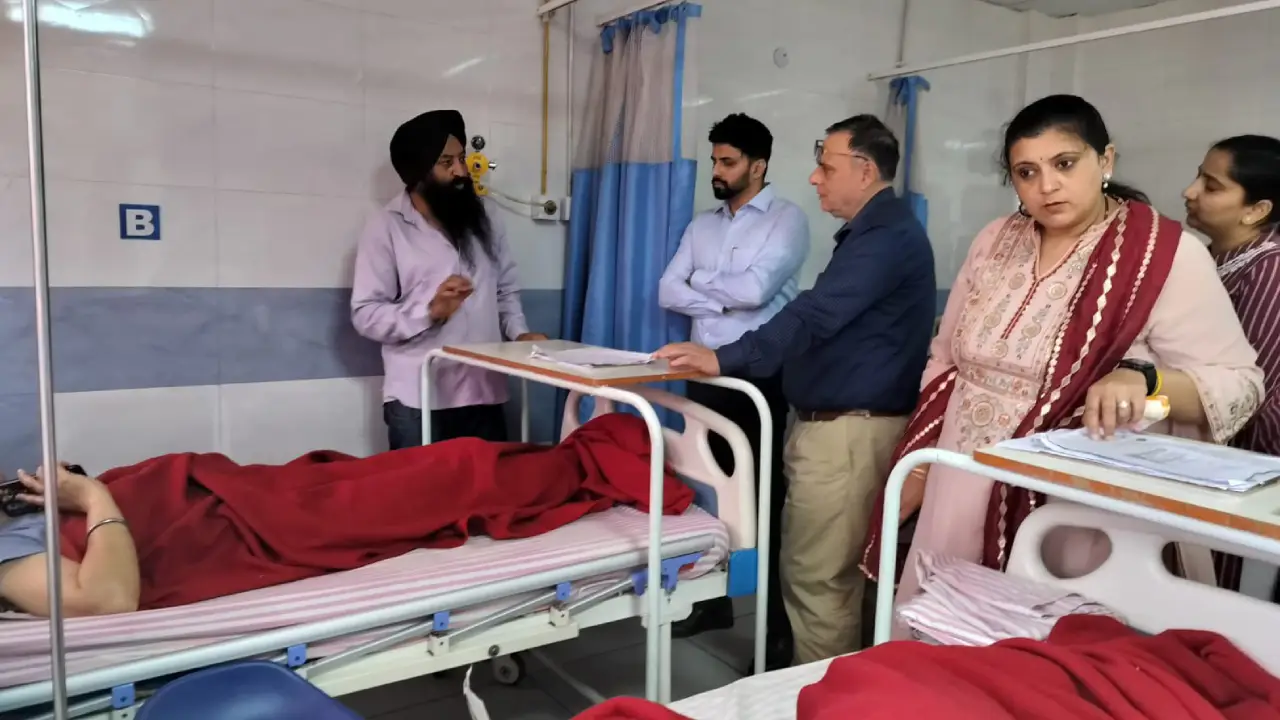
From Insurers to SHA
The last insurance company to terminate its contract with the SHA was IFFCO–TOKIO in 2024. Officials claim that insurance companies – IFFCO-TOKIO and Bajaj Allianz- cleared the dues in the stipulated time or took one month to do so. Currently, it takes more than a year to clear the dues.
As per the rules, settlement must be done within 20 days of a procedure. The reality appears different. Hospitals have dues pending for over a year or two now.
“When it was under Bajaj or even IFFCO, the scheme worked smoothly, but ever since the SHA took over, the dues kept piling up. It would take them a month to pay, but the payment came through; now we have crores of credit piling up with AMRIT,” said a government hospital official.
“The scheme worked well in the first couple of years, but since the insurance companies exited, payments can take up to a year to clear. It is better to end this scheme if this is going to be the case,” a private hospital official expressed.
Due to these inadequacies, both patients and doctors bear the brunt of it. Doctors who work in private hospitals do not wish to continue with this scheme, which will have patients turning to government hospitals.
“Doctors would not want to work like this in private, and patients cannot bear the cost in private hospitals; they will then have to wait their turn in government hospitals, which will add to their woes,” the private hospital MS added.
Crisis Persists
Before the latest policy period ended on June 30, the JKPHDA announced its decision to suspend services over pending dues of more than Rs 300 crore. The association later deferred its decision by two weeks when the SHA sanctioned Rs 175 crore.
As they await the sanctioned money to come through, stakeholders insist the recurring fiasco of delayed payments points to a deeper structural problem within the scheme. For hospitals struggling with mounting dues and patients continuing to incur out-of-pocket expenses, the debate extends beyond reimbursements to the long-term sustainability of a programme built on the promise of cashless healthcare.
Efforts were made to contact the SHA, but no response was received.
(A communication student at the Jamia Millia Islamia, Delhi, the author is an intern at Kashmir Life.)