Thousands of houses were washed away by the July 1893 floods in Srinagar. A correspondent of the British India newspaper, The Englishman, was in Srinagar and gave a detailed description of the flood’s devastation.

On the 5th and 9th of July, 1893, a considerable amount of rain fell, and no one was surprised to see the river rising and familiar landmarks disappearing, one by one as the water crept up the bank, for this is of annual occurrence, and after a few days the river resumed its normal appearance, and no harm was done.
But Jupiter Pluvius (Latin epithet for the Roman god Jupiter in his role as the giver or sender of rain) had something more in store, and on the morning of the 19th, at 10 am, it began to rain heavily, but cleared up somewhat in the afternoon, coming on again about the same time and continuing without cessation the whole of the next day and till late in the afternoon of the 20th.
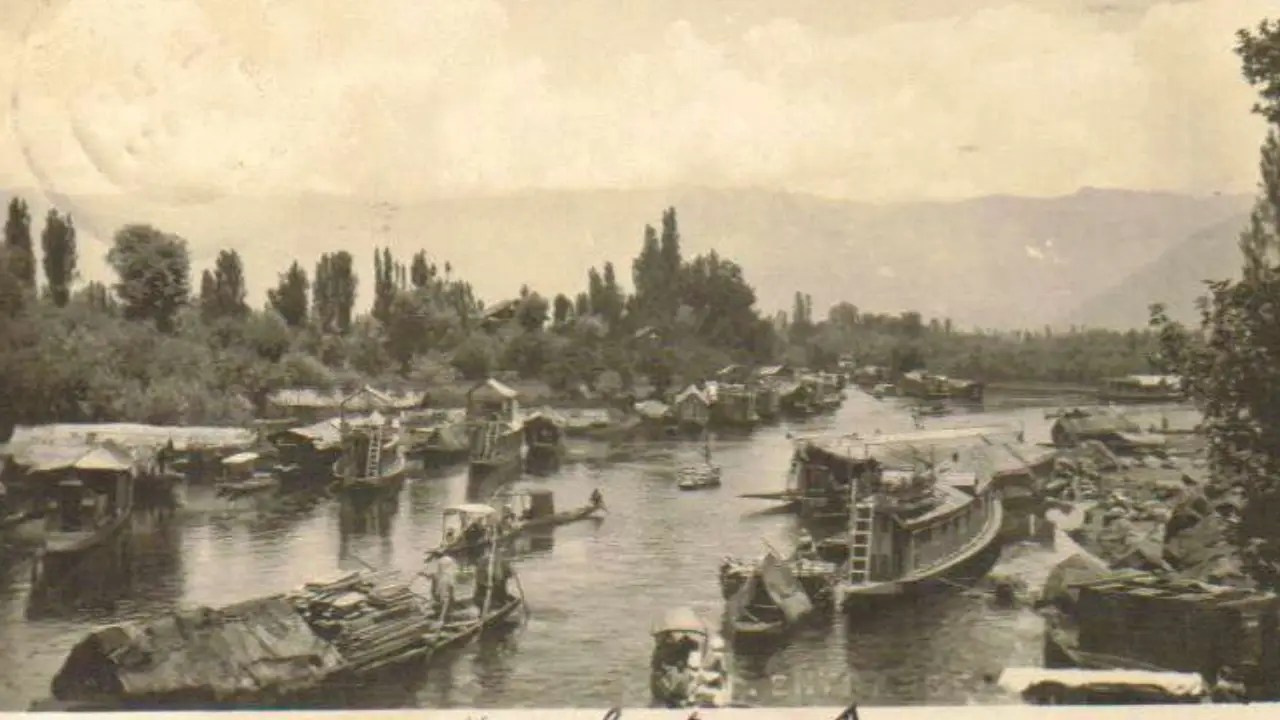
Rising Jhelum
The water steadily rose, and old residents began to make arrangements for boats to remain opposite their houses in case of need. The night was fine and starlit, and everyone was hoping that after a few hours the waters would abate, but still the river rose till it was at first difficult and then impossible to go along the bund in front of Munshi Bagh.
Pertinently, a roaring noise was heard across the other side, and a shout went up that the bund had burst, and in an incredibly short space of time all the ground opposite Hari Singh Bagh occupied by the Maharajah’s garden was covered with water.
This gave the residents in Munshi Bagh some hopes that the water having found this outlet would not come any higher at their end, but still the river came rolling down, and at 3 pm the bund near Dr Deane’s house was breached, and the polo and golf grounds were speedily inundated; at the same time the Chenar Bagh bund gave way and let loose a vast quantity of water, completely swamping all the intervening ground.
Just then, too, the water came trickling, then rushing, in a cascade over the bund opposite the post office, and in a few minutes Hari Singh Bagh was also under water. About 6 pm the river reached its greatest height, and the waters on all sides were perfectly level with each other. The hospital compound had some eight feet of water in it, and all the patients had to be removed and placed in boats, which was done under the careful superintendence of Dr A Mittra.
The Destruction
Then began the awful work of destruction. Nothing was heard save the rush of water, shouts of men, wailing of women, and the crash of falling buildings. Almost the first to go was a busti inhabited by some thirty sweepers and their families in the employment of the Municipality. The water swept down on them so suddenly that they could take nothing away with them, neither food nor clothes, as they hastened as fast as they could through the rising flood, now waist-high, to seek shelter and safety in the large stone-built offices of Mr WR Lawrence, the Settlement Officer.
The newly erected spacious showrooms at the back of Jowahir Lall and Son’s shop next fell in with an appalling crash, and this was followed by the collapse of the Gole Mandir or Round Palace, which stands close to the Kali Mandir on the other side of the river. Half of the Jammu and Cashmere Co-operative Stores, a large two-storeyed building, followed suit, as did a large number of smaller buildings.
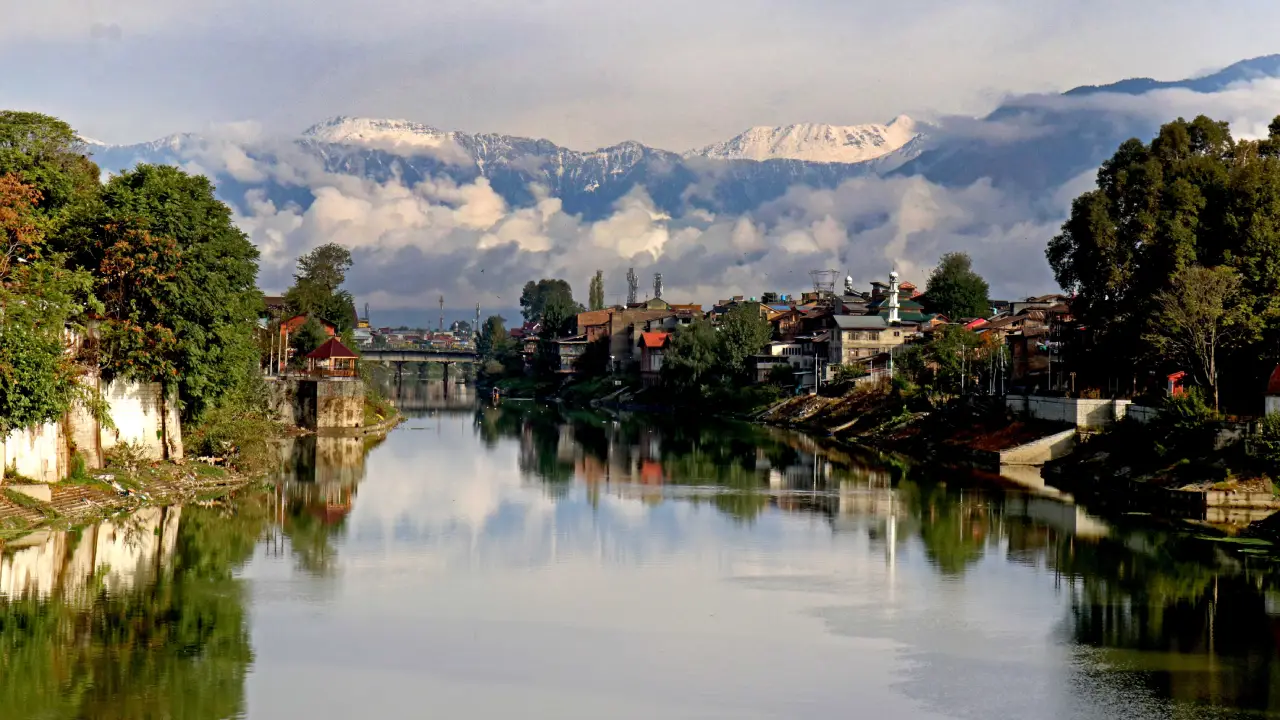
Moved Out
I had every confidence in the stability of the house in which I was living, and resisted every appeal from my boatmen to move out. However, when on going into Captain Yeilding’s house next door to assist his men in moving out the furniture, I sank in three places through the floor up to my knees. I began to think I had better take their advice, and in half an hour I was afloat with all my worldly possessions in most admired disorder around me.
Both our houses are still standing, but I don’t intend going back into mine at all, as the ground must be perfectly sodden with water, and the fabric may collapse at any moment.
The roof of one of the barracks in Munshi Bagh just vacated by Lady Dunmore and family fell in with a loud report, and one or two more houses are dangerously out of the perpendicular, and will no doubt soon come down. Everyone had, of course, promptly taken to boats as soon as the bund burst, and very little loss was incurred, as there was plenty of time to get out the furniture.

The Next Day
July 22nd: Early this morning, news was brought to me that out of the seven huge cantilever bridges that have carried the traffic of the city for some 500 years, six had been carried away, and only one, the first, or Ameera Kadal, now remains, and though awash, it is expected to live through the trial.
The telegraph office was swept away very early. Mr Allan, the Telegraph Master, had just time to wire the Uri Office that the floods were out when the building subsided, so that communication with outside is entirely cut off. The bridge at Maisuma has also been swept away, and one can neither get to nor from.
Raja Sir Amar Singh was indefatigable in going out, doing his utmost to prevent the spread of the water by personally directing the construction of temporary dams at different points, but all was of no use. The river, which has been a good servant for so long now, fulfilled the proverb by becoming a bad master, and the only thing that remained to be done was to provide as suitably as possible for those poor people who had lost their little savings, their houses and crops swept away before their eyes.
As I sat at my window I counted as many as thirty tons of grain, wheat, linseed, and other grain floating past my windows. A gristmill was saved, but not, I fear, for the present. One of my men who had been to take some fodder to my horses, which were perched up on a small piece of land a couple of feet only above the level of the flood, on his return said that the Chenar tree under which the horses were standing was simply alive with rats.
A Day Later
23rd: I have just returned from a tour round the European quarter, and have in a boat passed over what were two days ago beautiful gardens, bright with choice flowers and full of a most varied assortment of kitchen produce. All are now lying under eight feet of water, and all the trouble and care that has been bestowed on them during the past month is thrown away and made of no effect in a few hours.
(Excerpted from the Duke’s Guidebook to Kashmir, pages 246 to 249)