In fascinating Dachigam National Park, JKNC lawmakers reviewed governance and resolved to launch a Delhi protest over post-August 2019 decisions, reports Babra Wani
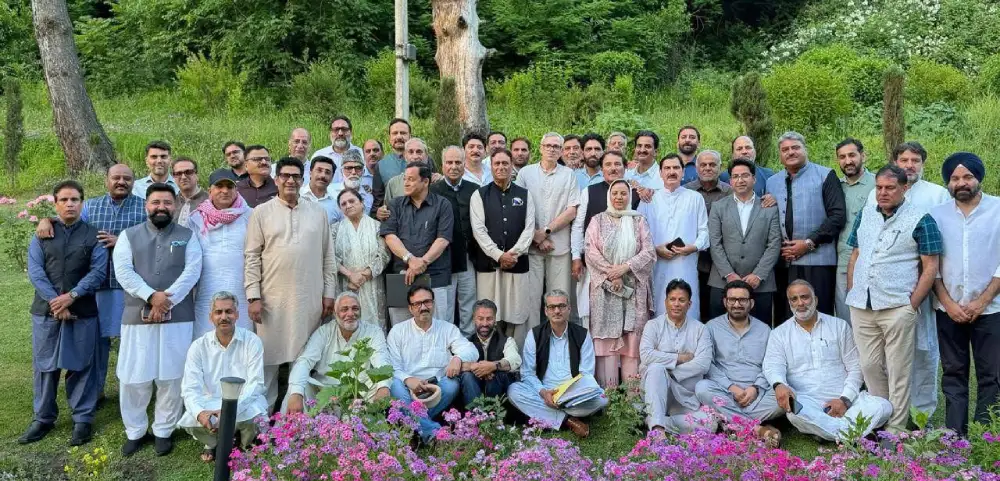
A closed-door meeting of JKNC’s elected lot in an unusually isolated space at Dachigam earlier turned into an unusually candid review of the Omar Abdullah government’s first 19 months in office. Several lawmakers sharply criticised ministers, questioning governance performance and pressing the party leadership to adopt a stronger political position on the August 2019 decisions that stripped Jammu and Kashmir of its special status and statehood.
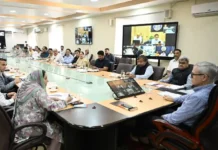
The more than seven-hour off-site meeting, attended by National Conference legislators, alliance partners, independent supporters and Members of Parliament, had formally been convened to review governance and discuss “matters of public importance”. But lawmakers familiar with the deliberations said the discussions largely revolved around two central themes: the government’s administrative performance over the last 19 months and the party’s political response to developments after August 2019.
Multiple legislators who spoke on condition of anonymity said several MLAs openly expressed dissatisfaction with some ministers during the meeting. Lawmakers reportedly accused one particular minister of maintaining an “uncivil” approach towards legislators and raised concerns over his working style, accessibility and response to constituency-related issues.
“Nearly twenty MLAs commented on his functioning and raised different issues,” one legislator said. “Some members had even carried documents with them.”
The criticism, lawmakers said, was not confined to one minister alone. Another Jammu-based minister also came under discussion during the meeting, with legislators privately questioning his administrative experience and ability to manage the department effectively. Both ministers under discussion are holding executive office for the first time. There was pointed criticism of the functioning of some Kashmir ministers too. “To be honest, it was perhaps Ms Sakina Ittoo who did not face any major criticism,” one member said. Ms Itoo has been a minister since 1996 and is currently holding education, health and social welfare.
Non-Responsive Departments
Some lawmakers are understood to have complained that despite repeated interventions from legislators, several departments had failed to respond adequately to public grievances or expedite developmental works in constituencies represented by ruling alliance members.
According to participants, legislators used the meeting to convey frustration over delays in administrative clearances, stalled projects and weak coordination between ministers and lawmakers.
“There was a feeling among many MLAs that legislators were not being heard properly,” another participant said. “The concern was that the government cannot afford disconnects between ministers and elected representatives when expectations among people are already very high.”
The criticism reflected growing pressure within the ruling alliance as lawmakers prepare to return to their constituencies after nearly 19 months in office under the restored Assembly system.
Many legislators reportedly argued that public expectations had risen sharply after the Assembly elections and that MLAs were increasingly facing uncomfortable questions from constituents regarding delivery on governance promises, developmental commitments and political assurances linked to Jammu and Kashmir’s status.
An Accommodative CM
According to legislators present at the meeting, Chief Minister Omar Abdullah listened carefully to the criticism and assured lawmakers that their concerns would be examined. One legislator said the Chief Minister expressed regret over the complaints being raised internally and assured members that corrective measures would be considered.
The meeting also saw renewed discussion on expanding the Council of Ministers. According to lawmakers, a National Conference Member of Parliament from north Kashmir advised the Chief Minister to consider sharing the administrative burden by inducting more ministers into the government.
The suggestion was made in the context of growing pressure on the existing administration and complaints regarding workload management. Legislators said the Chief Minister agreed in principle and indicated that the matter would be examined.
Though no formal decision was taken on cabinet expansion, discussions around the redistribution of work and better coordination within the government remained part of the broader review exercise.
2019 Returns
The second major theme dominating the deliberations was the party’s political position on the August 2019 decisions that bifurcated the erstwhile state into two Union Territories and revoked Jammu and Kashmir’s special constitutional status under Article 370.
Lawmakers reportedly told the leadership that they were increasingly being questioned by people in their constituencies about what the party had done on the issue since coming to power.
Several legislators are understood to have argued that while the party had consistently reiterated its stand publicly, there was now pressure for a more visible political response, particularly after repeated assurances from the Union government regarding restoration of statehood.
According to legislators present at the meeting, members argued that the party needed to adopt a more assertive political position on the restoration of statehood and constitutional guarantees.
“There was a consensus that people are asking questions and expecting visible political action,” one MLA said. “The feeling was that the party should not appear passive on such a major issue.”
On that basis, lawmakers unanimously decided that the National Conference would stage a protest in New Delhi on the opening day of Parliament’s Monsoon Session.
“The feeling was that since the commitments were made at the national level, the protest should also be held in Delhi,” one legislator said.
The decision marks one of the strongest collective political positions adopted by the ruling alliance legislators since the formation of the government.
During the discussions, lawmakers repeatedly referred to earlier statements made by the Union government and submissions before the Supreme Court, indicating that Jammu and Kashmir’s statehood would be restored after elections.
Legislators argued that nearly 18 months had passed since the Assembly elections, but no timeline had emerged regarding the restoration of statehood.
Some participants also suggested that the issue should not remain confined to party politics and favoured broader consultations with other political stakeholders in Jammu and Kashmir.
A Debate Generated
The decision to hold the meeting inside Dachigam also generated political discussion because of the symbolism attached to the secluded venue. Opposition leaders later used the location itself to target the ruling alliance, portraying the off-site session as evidence of a government increasingly detached from public sentiment.
After the meeting concluded in the evening, only a handful of lawmakers addressed the media publicly.
National Conference MLA Hilal Akbar Lone said legislators had discussed departmental performance, pending developmental works and unresolved public grievances. “Chief Minister Omar Abdullah listened carefully to these concerns and directed the concerned ministers to review all pending matters raised by legislators,” Lone said.
He confirmed that restoration of Jammu and Kashmir’s statehood was discussed extensively and announced that the party would register its protest in Parliament during the Monsoon Session. “There is little purpose in protesting here when the commitment was made at the national level,” Lone said. “The Government of India had assured that statehood would be restored after the Assembly elections.”
Lone also said legislators discussed the possibility of convening an all-party meeting so that a collective political course could be explored regarding the restoration of statehood.
MLA Gurez Nazir Ahmad Khan said lawmakers had reiterated their demand for restoration of both statehood and special status. “There is no question of compromise on these demands,” he said.
He also claimed that the BJP had expected to emerge as the ruling force in Jammu and Kashmir after the 2019 constitutional changes but failed to secure that outcome.
Uri MLA Sajjad Shafi also confirmed that the meeting discussed Article 370 and issues on which the party had contested elections. “It has now been nearly eighteen months since we were assured that statehood would be restored immediately after the Assembly elections, but that promise has not yet been fulfilled,” he said.
Shafi, however, denied that cabinet expansion was formally discussed during the meeting.
Opposition Tweets
Soon after news of the meeting emerged, opposition parties and rival political leaders reacted sharply, many mocking both the venue and the secrecy surrounding the exercise.
People’s Conference president Sajad Gani Lone described the Dachigam venue as symbolic of what he termed an isolated administration.
“Dachigam is secluded, isolated, and entry is restricted. That actually sums up the state of the present government,” he wrote on X. He also sarcastically suggested that lawmakers had been taken to the wildlife reserve to either “fall in line” or face political consequences.
PDP leader Iltija Mufti similarly mocked the gathering and posted on X that “MLAs are more endangered than Hanguls”.
BJP media in-charge Sajid Yusuf Shah also took a swipe at the ruling alliance, sarcastically comparing the gathering of legislators to the wildlife species housed inside Dachigam National Park.
The political reactions revived discussion around Omar Abdullah’s “Trust me, I want to burst like a cloudburst” remark made last month during a public interaction, where he had indicated that he would speak openly after Eid.
That statement had triggered widespread political speculation across Jammu and Kashmir, with opposition parties anticipating a sharper confrontation between the National Conference leadership and the Union government over constitutional and political issues.
Following the Dachigam meeting, opposition leaders once again referred to the “cloudburst” remark online, questioning whether the anticipated political escalation had ultimately translated into an internal review meeting and a planned protest in Delhi.
Despite the criticism and political sparring that followed, the Dachigam meeting appears to have provided the clearest indication yet that ruling alliance legislators are seeking both administrative course correction within the government and a more assertive political strategy on issues linked to the post-2019 constitutional changes in Jammu and Kashmir.