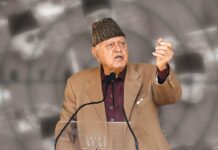
A physician who practised medicine even after entering politics, Dr Sheikh Mustafa Kamal spent four decades inside the National Conference, the party his father founded, as its most outspoken and least conventional insider, writes Masood Hussain
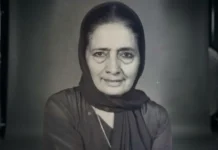
Dr Sheikh Mustafa Kamal, the youngest son of National Conference founder Sheikh Mohammad Abdullah, died in Srinagar on the evening of July 14, 2026. Under treatment for diabetes and kidney issues for several months, he passed away at Paras Hospital. He was 83. While announcing his demise, Chief Minister Omar Abdullah, his nephew, described his uncle’s last months as a brave fight against the odds.
Long before politics defined him, medicine did. Dr Kamal earned his MBBS from Sawai Mansingh Medical College in Jaipur in 1962. He returned to Kashmir to practise as a general physician. He chose to settle not in Srinagar’s inner circle of family and privilege but in Tangmarg, the north Kashmir town from which his mother’s family hailed. He served at the local hospital there and eventually rose to Medical Superintendent within the Directorate of Health Services.
A few years ahead of his superannuation, he took voluntary retirement and joined politics. Even then, he never fully let go of the clinic he ran in Tangmarg. His colleagues remember him seeing patients there for a token fee of Rs 5, well into his years as a legislator and minister. It was a habit that outlasted militancy, elections, and every falling-out with his party.
Reluctant Entrant
Unlike his father’s other children, Dr Kamal was not an obvious inheritor of the family’s political weight. This was even though he was named after Mustafa Kamal Attarturk died as, a famous Turkish leader. His elder brother, Dr Farooq Abdullah, was long positioned as Sheikh Abdullah’s political successor. Another brother, Tariq Abdullah, was appointed managing director of the Jammu and Kashmir Tourism Development Corporation soon after the Sheikh’s return to power in 1975. Tariq stayed largely out of public view until he died in 2006. A cousin raised as an adopted son, Sheikh Nazir Ahmad, became the party’s General Secretary. Nazir was known for having avoided Delhi entirely after 1953 and for never having contested an election.
Of the four, only Dr Farooq Abdullah married and raised a family. Dr Kamal, like Tariq and Nazir, remained unmarried throughout his life. Acquaintances often mention this in the same breath as his reputation for quiet decency. With no children of his own, he was known to dote on the family’s younger generation and its patients alike. By long-standing family understanding, whatever he owned would eventually pass to his legal heirs among the Abdullahs.
Dr Kamal’s own entry into politics came comparatively late, in 1983. He was elected that year to the erstwhile Jammu and Kashmir Legislative Council and was almost immediately drawn into his brother Farooq’s cabinet. The Farooq Abdullah government was dismissed in 1984, following a rift within the family after his elder sister Khalida’s husband, Ghulam Mohammad Shah, engineered the government’s fall. Dr Kamal did not follow his brother-in-law’s breakaway faction, which eventually became the Awami National Conference, now reduced to a letterhead. He stayed with the National Conference. Even so, he continued over the decades that followed to maintain warmth with his sister and her side of the family. Those close to him considered this balancing act, between political loyalty and personal bonds, one of his defining qualities.
Cabinet Years
Dr Kamal contested his first Assembly election in 1987 from the Tangmarg constituency. He won comfortably, defeating Ghulam Hassan Mir, who was part of a group of lawmakers who had switched sides in 1984. Farooq Abdullah made him a junior minister for Works and later brought him into the full Cabinet. Even political opponents took note of his record in office. Even Syed Ali Geelani, no friend of JKNC, praised his performance as a minister during a budget session speech in 1989.
“The government had decided to engage a few thousand daily wagers across various engineering departments, and Dr Kamal allotted each legislator a quota of these temporary appointments,” recalled one official, who later retired as a Deputy Commissioner. “I personally went to Syed Ali Geelani’s residence to deliver the appointment orders. After completing seven years of service, most of these daily wagers were regularised as permanent employees. By my estimate, Dr Kamal may have facilitated the recruitment of nearly 20,000 people during his career through this daily-wager route.”
Militancy erupted in Kashmir the following year. The state’s administrative machinery effectively collapsed for the better part of a decade. Dr Kamal did not leave Tangmarg, even as the entire party leadership migrated. Dr Farooq relocated to London to stay with his wife. Kamal continued to live in the house associated with his mother’s side of the family and kept the clinic running.
“Somewhere around 1995, when Dr Abdullah was reluctant to get back to elections, the Government of India attempted to rope Dr Kamal in,” a former JKNC minister revealed. “He had his integrity; he flatly refused it.”
Kamal returned to the Assembly in 1996, again from Gulmarg, defeating Ghulam Hassan Mir a second time. He was inducted into Farooq Abdullah’s Cabinet once more, this time handling the health and industries portfolios.
“One of Dr Kamal’s defining qualities was his unwavering faith in the integrity of institutions,” recalled a former officer who retired as Director General. “I remember a contractor who was seeking a government work order. He had managed to get almost everyone to recommend his case, and the minister asked for the file. But Dr Kamal was not convinced that the contract should be awarded to him.”
One day, the officer recalled, the contractor came to the office while I was present and complained that despite all the recommendations, his work order had still not been issued. “Trying to press his case, he said, ‘Even Sheikh Nazir Sahib called you.’”
“Dr Kamal cut him short. ‘Who is Sheikh Nazir?’ he said. ‘The man who used to rear poultry for my father (Sou ous meanis maalis kokur rachaan)’.”
“Sheikh Nazir was then the party’s long-time second-in-command. But when it came to taking decisions, Dr Kamal did not spare even him. Recommendations, no matter how influential their source, carried no weight if he believed the decision was not justified.”
For two years, he supervised the development of the Gandola chair car project, and when it was ready, Dr Kamal went with his team and enjoyed a ride with a ticket in his hand.
Dr Kamal took a personal interest in welfare cases. But his authority within the bureaucracy was often eclipsed by powerful officials of the day. His popularity in Gulmarg thus slipped over the years. In the 2002 election, Ghulam Hassan Mir, now contesting for the People’s Democratic Party, defeated him decisively.
Election Battles
Dr Kamal’s electoral career after 2002 became a study in comebacks and reversals. He won a 2006 by-election from Pattan, unseating Maulvi Iftikhar Hussain Ansari, who had shifted from the National Conference to the PDP the previous year. In 2009, Farooq Abdullah gave up his Assembly seat to sit in Parliament. The party fielded Dr Kamal in Hazratbal, and he won there too. But months later, Omar Abdullah expanded his council of ministers and chose not to include his uncle.
His last electoral outing came in 2014, when he again contested Gulmarg. He lost badly, finishing fourth behind Ghulam Hassan Mir and another rival. He did not contest the 2024 election. The party instead gave the Gulmarg ticket to Farooq Ahmad Shah, who had once served as Dr Kamal’s own aide in his first term as a legislator. Shah had since built an independent career in the civil service before returning to politics, and he went on to win the seat.
Away from elections, Dr Kamal remained active inside the party organisation for years afterwards as its Additional Secretary General, a post from which he was removed and reinstated more than once as his relationship with the leadership swung between usefulness and embarrassment.
Outspoken Voice
“He was perhaps the most colourless and understated of the Sheikh family,” remarked another officer who knew him closely. “There was nothing flamboyant about him, and many found him rather unassuming. But he remained steadfast in his belief in his father’s political philosophy and consistently advocated for the rights of the people within the constitutional framework that Sheikh Abdullah had laid down.”
Dr Kamal was gentler in temperament but not in speech. He built a reputation as the party’s most unpredictable public voice. His comments regularly landed his party in difficulty. At the same time, they burnished his image as a man unafraid to say what others in the family avoided saying. He was a persistent critic of the Armed Forces Special Powers Act and the impunity it enjoyed. He argued for years that the erosion of the region’s special constitutional status after 1953 was the root of the unrest that followed. He held up the pre-1953 arrangement as the framework the state ought to return to, one under which Jammu and Kashmir retained a separate head of government and head of state, with Delhi controlling only defence, foreign affairs, and communications.
His remarks against the Congress party were frequent. Observers came to see him as the last committed critic of Delhi left within the Abdullah family. He once likened a Congress leader to a snake concealed in a sleeve, a remark that briefly forced the party to publicly distance itself from him. Separate comments criticising Rahul Gandhi in 2012 led to his removal as party spokesman. Around the same time, he suggested that India itself, not Pakistan, was standing in the way of peace by refusing to sign a no-war treaty. The comment made national headlines and drew censure from within his party. In 2019, he alleged that the government’s own hand lay behind the Uri and Pulwama attacks, a claim that led the BJP to file a sedition case against him.
For Kashmir and the JKNC, Kamal would see Ghulam Nabi Azad as “sweet poison” and Mufti Sayeed as “bitter poison”. He said this in a speech in Chenab Valley, Azad’s erstwhile home turf.
Through it all, his brother and later his nephew largely let the remarks pass rather than confront them directly, a restraint that friends attributed less to agreement with his views than to an unwillingness to publicly discipline family.
Family Ties
Dr Kamal’s closeness to his sister, Khalida Shah, endured despite her decades of estrangement from the rest of the Abdullahs over the 1984 coup. A dispute later broke out between Khalida and a cousin over construction on the family’s shared estate on Maulana Azad Road. She wrote directly to Chief Minister Omar Abdullah seeking his intervention. Dr Kamal was drawn in as a mediating presence within the clan, wary of a private property dispute turning into a public embarrassment for the family. He spent his last years living at his father’s old house on that same road, close to his sister and to the Nedous, his mother’s family.
Those who worked alongside him over the decades remember a courteous, soft-spoken man. He treated rivals and juniors alike with an old-fashioned civility. He rarely allowed political disagreement to curdle into personal animosity.
Curtain Falls
In his final years, Dr Kamal’s health declined steadily. He had survived a bout of Covid-19. He had also been living with dementia for well over a year before his death, cared for at his residence with the support of family and a small nursing staff. He left no will. His properties, including his share of the family estate in Srinagar, the Tangmarg house tied to his mother’s inheritance, and a self-acquired house in Jammu’s Sunjwan area, will pass to his legal heirs under ordinary succession. His total possessions, spanning these properties across Srinagar, Tangmarg and Jammu, are estimated at close to Rs 30 crore.
He is survived by his brother, Dr Farooq Abdullah, his sisters, Khalida Shah and Suriya Mattoo, and the wider Abdullah family, including Chief Minister Omar Abdullah, who called him a man who had put up a brave fight to the very end. Dr Farooq loved his brother, but Kamal loved his sisters more. He would purchase things for them as part of his routine, insiders said.
Kamal’s colleagues fondly recall how he would burst into laughter whenever he reminisced about a favourite childhood escapade, sneaking away with his brother Dr Farooq’s Lambretta scooter and riding it around for hours. On one such outing, the scooter mysteriously disappeared near Dachigam. The incident became a family legend after Dr Farooq reportedly complained to Prime Minister Jawaharlal Nehru, even holding the then Prime Minister of Jammu and Kashmir, Bakhshi Ghulam Mohammad, responsible for the theft.