Amid Ranji Trophy glory, Jammu and Kashmir Cricket Association’s power feud drags the association into court battles, threatening infrastructure, selections, and players’ futures, reports Asrar Syeed
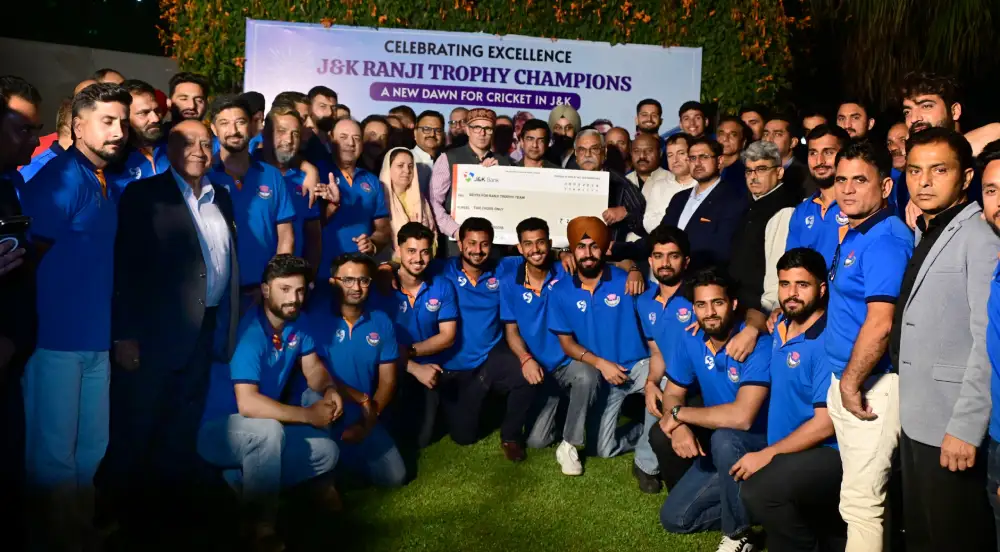
On May 21, 2026, following the withdrawal of the petition Youth Cricket Club and others vs Jammu and Kashmir Cricket Association & Anr, and a Supreme Court order directing the declaration of the JKCA Elections 2025, the results of the Association were declared by Electoral Officer AK Joti IAS (Retd). Within days of the declaration, however, things began falling apart.
A power tussle between newly elected president Javed Ahmed Kitab and the Honorary Secretary once again landed the association in court. This development has left those associated with cricket wondering whether the latest dispute will again affect the region’s cricket infrastructure.
A Long-Awaited Milestone
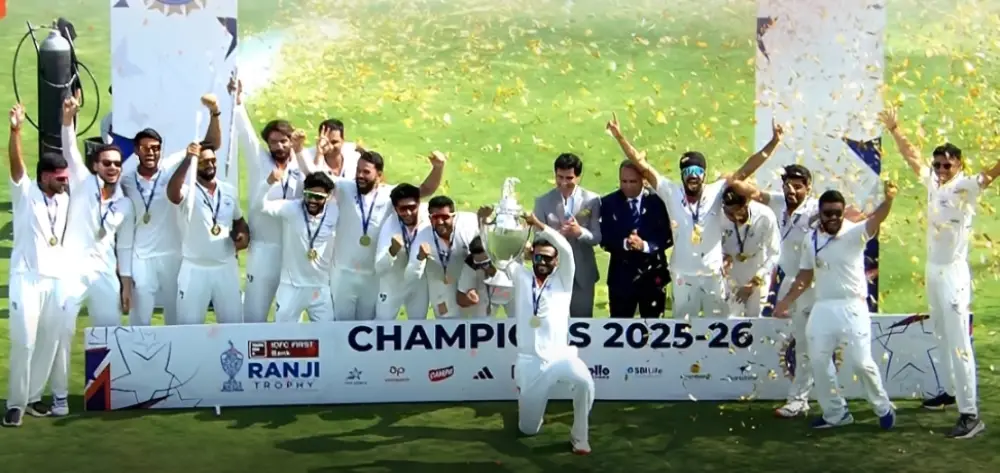
In February 2026, Jammu and Kashmir cricket achieved its first milestone. The Jammu and Kashmir Ranji team defeated a powerhouse like Karnataka to win their first-ever Ranji Title.
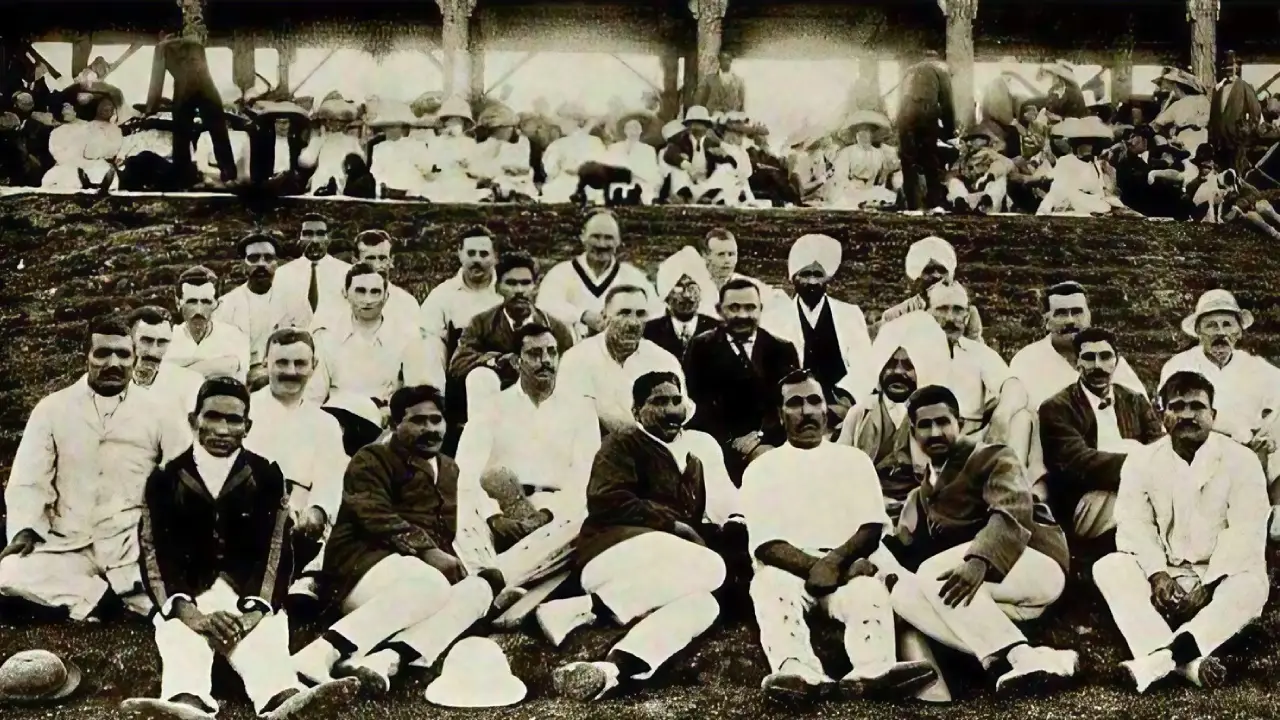
The team’s journey began in 1959-60 with its first appearance on the national stage, but for decades, it struggled to climb the ranks of national cricket. “Till recent years, the Jammu and Kashmir Ranji Team had only one priority: to participate in the tournament,” a keen cricket observer from Kashmir said. “Apart from participation, our state team did not have any major plan to win the tournament; people at the helm also lacked proper vision until recent times when we showed the entire country what we were capable of by winning the Ranji Tournament.”
The JKCA has long been trapped in power contests, differences of opinion, and a lack of proper vision. In 2012, the association was caught in a serious situation after news of a multi-crore scam triggered widespread debate. Beyond this organisational crisis, the association has also been accused of selective approaches and favouritism by players participating in state trials.
The current crisis has renewed doubts among people; after nine years without a properly elected body, the association now finds itself caught in administrative disarray that could deeply impact talented players and the state’s overall cricket infrastructure.
Where It All Began
Newly elected Honorary Secretary Vivek Khajuria convened an emergency meeting of the Apex Council at JKCA headquarters in Jammu on May 23. The meeting’s agenda, as per the order, covered implementation of the JKCA constitution, adherence to the association’s rules and regulations for smooth functioning, appointment of the Chief Executive Officer and General Managers, nomination of two authorised signatories for operating bank accounts, and other key administrative decisions.
President Javed Ahmed Kitab accused the secretary of convening the meeting without the “concurrence of the Association president,” calling it a complete violation of the JKCA constitution. “The Honorary Secretary, Vivek Khajuria, started behaving unilaterally upon the announcement of elections, and his unilateral decision to convene an apex council meeting violated the JKCA constitution, which the Supreme Court of this country passed,” Kitab said.
Repeated attempts were made to contact Khajuria and the Vice-President, but no response could be obtained until the filing of this report. Following this conduct, President Kitab filed a petition alleging the secretary was acting unconstitutionally, specifically citing the violation of Rule 15(c)(iv) of the JKCA Constitution and the induction of ICA nominees Vikrant Taggar and Ankita Jalla into the Apex Council.
The Courts Get Involved
The Court of the Additional District Judge, Srinagar, after hearing the matter and examining the records, granted interim relief in favour of Kitab, upholding that “meetings of the Apex Council, General Body and other governing bodies must be convened only with the concurrence of the President.” The court further remarked, “No office bearer could be allowed to act unilaterally or assume powers which are not vested in him by the constitution of the association.”
“There is a proper constitution of the association which cannot be violated by any office bearer; everyone, including the president, must strictly follow it, and if anyone starts to violate or bypass the constitution, then there are limited options left,” Kitab said, welcoming the court’s remarks.
Following the Srinagar court’s interim relief, Kitab issued communications on May 26 and May 29 calling a Special General Meeting (SGM) for June 6. But as the matter was being processed in Srinagar, another court order followed, this time in Jammu. On June 2, the Sub Judge/Special Mobile Magistrate, Jammu, stayed the “operation of communications issued by President Javid Ahmad Kitab on May 26 and May 29 relating to a proposed Special General Meeting (SGM) scheduled for June 6.”
A separate petition challenging the June 2, interim order was dismissed by the 1st Additional District Judge, Jammu. The appellant had argued that “the President had authority to convene the meeting and that the trial court had erred in granting an ex parte injunction” But the court observed: “The President issued a direction on May 26 and thereafter personally issued an SGM notice on May 29, raising questions about whether the conditions prescribed under Rule 17(e) had been satisfied.” The matter remains sub judice.
A lawyer following the case, speaking anonymously, explained the procedural dispute: “The Special General Meeting, which was called by the newly elected president Javed Kitab, didn’t follow the JKCA constitution properly,” he said. “The President, whenever he needs to call an SGM, must write to the honorary secretary to call an SGM meeting. The secretary, upon receiving such direction, has 10-days to act as per the JKCA constitution. Also, the agenda of the meeting is set by the secretary. But the president, without following this rule, called the meeting on his own within 3 days. The president can call a meeting on his own only if the secretary fails to do so within 10-days.”
“Now, if the president calls a meeting, he needs to issue a proper notice of 21 days. Instead of abiding by all these rules, he proceeded to call a meeting that violated the JKCA constitution. Upon hearing the matter, the Sub-Judge Jammu stayed the communications issued by the president,” the lawyer added.
Suspension and Counter-Move
While the matter remained pending before the courts, on June 25, the JKCA Honorary Secretary issued communication JKCA/Secy/Jmu/2026/142, announcing that President Javed Ahmed Kitab “was suspended with immediate effect.” The statement noted that a resolution circulated among eligible Apex Council members under Rule 23(I) of the JKCA constitution had been “duly considered,” and that “out of nine members to whom the resolution was circulated, eight (08) members have communicated their approval.” The notice stated the resolution “stands duly passed by a majority of 8-0 in terms of Rule 23(I) read with Rule 48(6) of the constitution of JKCA.”
Responding to his suspension, Kitab expressed “deep concern” over the secretary’s continued “unconstitutional” behaviour: “I cannot understand how a secretary can suspend the association’s president; it has amazed me beyond doubt. Maybe there is a motive behind all these actions. Regarding the notification issued, it again violates the JKCA constitution. Kitab alleged that “the resolution was circulated late in the night, and in a very short time the circular was passed, all of this shows the secretary’s mindset.””
On June 27, a Special General Meeting was convened under Kitab’s leadership, attended by members from affiliated clubs and life members. The resulting statement declared that “the general body declared all orders, notifications, show cause notices, resolutions and communications issued by the honorary secretary from 21st May 2026 onwards (including those dated 21, 23, 30 May 2026 and 4, 11, 25, 26 June 2026) as null and void, ab initio, and non est in the eyes of law.”

Voices From Within
A former player associated with the association, requesting anonymity, expressed frustration at the missed opportunity. “Our Cricket recently achieved what remained a dream for decades. People were happy, everyone in the country was speaking about Jammu and Kashmir’s cricket, and our players were receiving appreciation from leading cricketers. Rather than using this opportunity to advance and develop our cricket, we are caught in this ego clash between two people,” the cricketer said.
“See the president wants to take control of everything, but that’s not how things work, on the other hand when two people have completely different mindset such issues can occur but rather than addressing the issue positively and talking about it, both people are caught in an ego clash, that’s not how things work, the association can only work properly when constitution of the association would be followed by every party involved,” he added.
Many close to the association have expressed a wish that former cricketers be given a greater role in its leadership. A sports commentator observed: “See, the newly elected body comprises a maximum of people who have never played cricket themselves; they are people who know nothing about the issues faced by players and the state team. If the JKCA set a new precedent by electing someone who has played cricket and knows the game very well for the highest office in the association i.e. President and Vice-President, Players and association would find it more comfortable to work together and everything would run smoothly.”

The Cost to Players
Shahnawaz* (identity changed), who appeared in state trials three times and once secured a spot on the U-19 state team, spoke about how this power struggle has affected players like him who dreamed of playing for India: “I have been to JKCA trials three times, and honestly, every time it felt the same. You go there with hope, but you are barely given a chance.”
The JKCA has often faced accusations of favouritism, selective selection, and offering limited chances to talented players, a pattern a leading sports observer from the valley described as leading to the “destruction of careers.”
“See, I have been following Jammu and Kashmir cricket for more than a decade, and till recent times, our state was not able to achieve any major results. I have witnessed how people who did not even know cricket properly went on to play Ranji Trophy, while talented players continued to suffer,” the observer said.
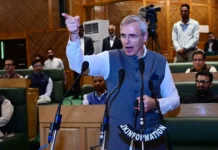
In a recently held session of the Jammu and Kashmir Assembly, a document tabled by Sports Minister Satish Sharma addressed the suspension of three selectors involved in U-14 trials. “Following a probe and upon scrutiny of both selection lists, certain shortcomings were observed in the selection process,” the minister said. “Accordingly, disciplinary action was taken, and the concerned selectors were banned from participating in any selection process for a period of three years.”
The sports observer appealed for those involved in the power contest to set aside personal egos for the sake of state cricket: “We won the Ranji Trophy recently, and entire world praised our cricket, and currently the BCCI president Mithun Manhas is someone whose office is in Srinagar and he is someone who used to be part of JKCA, rather than using all of this to seek new international cricket grounds and betterment, people are busy proving who has the final authority.”
Politics, insiders assert, has been the real crisis for sports in Kashmir. “Cricket is money-rich at the organisational level, and that is why politics is getting involved. It was one party at one time, and then another party took over, apparently following who rules Jammu and Kashmir,” the observer said. “Efforts to get the cricket depoliticised brought in officers, and in Jammu and Kashmir it is no less political. The real objective should be to get sports managed by sportspersons.”