NEW DELHI: In his first high-level interactions since assuming office, Lieutenant Governor of Ladakh, Kavinder Gupta, met Prime Minister Narendra Modi and Union Home Minister Amit Shah in the national capital to discuss the Union Territory’s developmental priorities, connectivity challenges, and opportunities in tourism and local livelihoods.
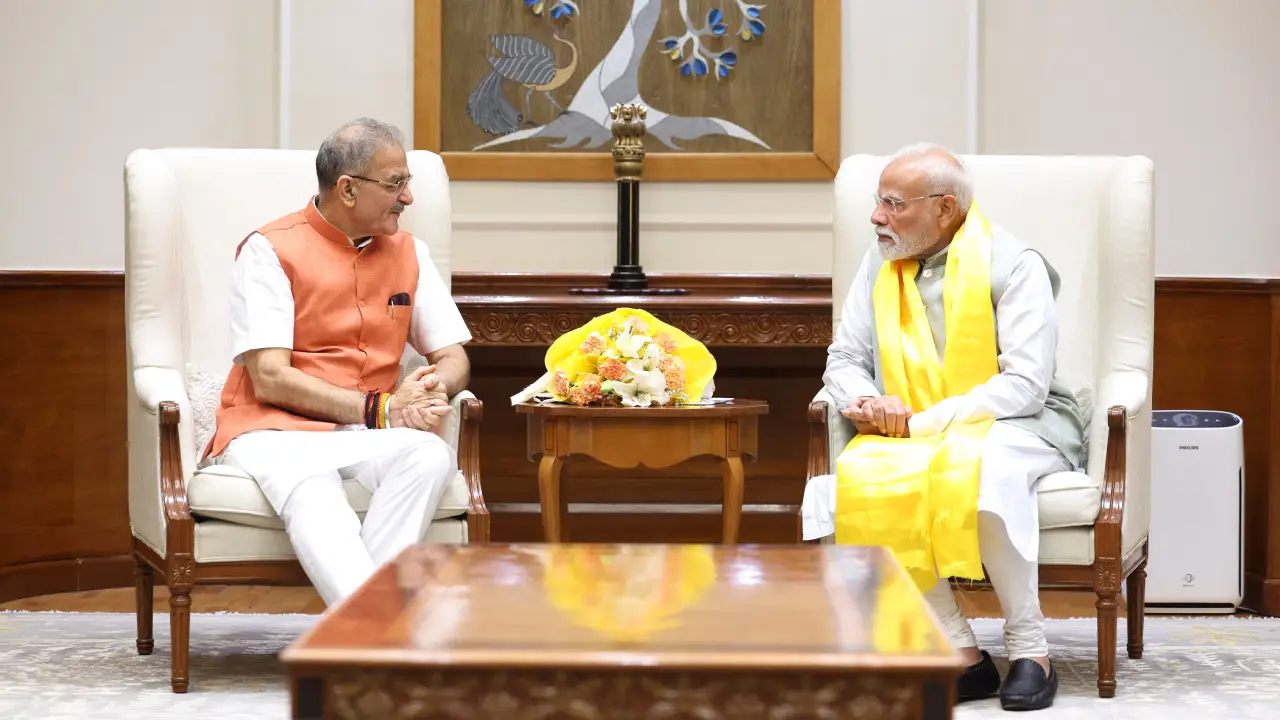
Gupta, who was sworn in as Ladakh’s third Lieutenant Governor on July 18 following the resignation of Brigadier (Retd) BD Mishra on health grounds, is the first politician to hold the post. His predecessors were both non-political appointees — Mishra, a former Army officer, and Ladakh’s inaugural LG, RK Mathur, a retired bureaucrat.
During his meeting with Prime Minister Modi, Gupta provided a detailed briefing on the ground realities and aspirations of Ladakh’s people, emphasising the need for improved connectivity, healthcare services, and livelihood opportunities. He spotlighted Ladakh’s vast potential in eco-tourism, adventure sports, and cultural heritage-based experiences, saying these sectors could drive sustainable economic growth while preserving the region’s identity.
According to an official statement, the Prime Minister reiterated the Government of India’s commitment to inclusive and sustainable development in Ladakh, stressing that governance and welfare benefits must reach “the last person in the remotest village” of the UT. Gupta assured Modi that the Ladakh administration is fully aligned with this vision and pledged to accelerate ongoing developmental projects, strengthen infrastructure, and promote local entrepreneurship.
In a separate meeting with Union Home Minister Amit Shah, Gupta discussed Ladakh’s administrative framework, border area development, and the urgent need to improve telecommunication connectivity in remote and high-altitude settlements. The talks also covered plans to enhance infrastructure to support agriculture, handicrafts, and winter tourism — sectors seen as critical for boosting local incomes.
Shah reaffirmed the Centre’s focus on strengthening border infrastructure and improving the quality of life in Ladakh, while emphasising the importance of peace and harmony alongside development. Gupta, in turn, assured full coordination with the Ministry of Home Affairs to achieve rapid, inclusive growth while safeguarding Ladakh’s unique cultural and ecological heritage.
With both meetings underscoring a shared Centre–UT vision, Gupta’s early outreach to Delhi appears aimed at building momentum for Ladakh’s developmental agenda, especially in sectors where the region’s strategic location, natural resources, and cultural heritage can be leveraged for long-term benefits.