SRINAGAR: In a strong show of regional solidarity and mutual support, West Bengal Chief Minister Mamata Banerjee and Jammu and Kashmir Chief Minister Omar Abdullah met in Kolkata on Thursday, calling for urgent Central government intervention to bolster security in Jammu and Kashmir and revive the region’s battered tourism sector following the April 22 Pahalgam massacre that claimed 26 lives, including three from Bengal.
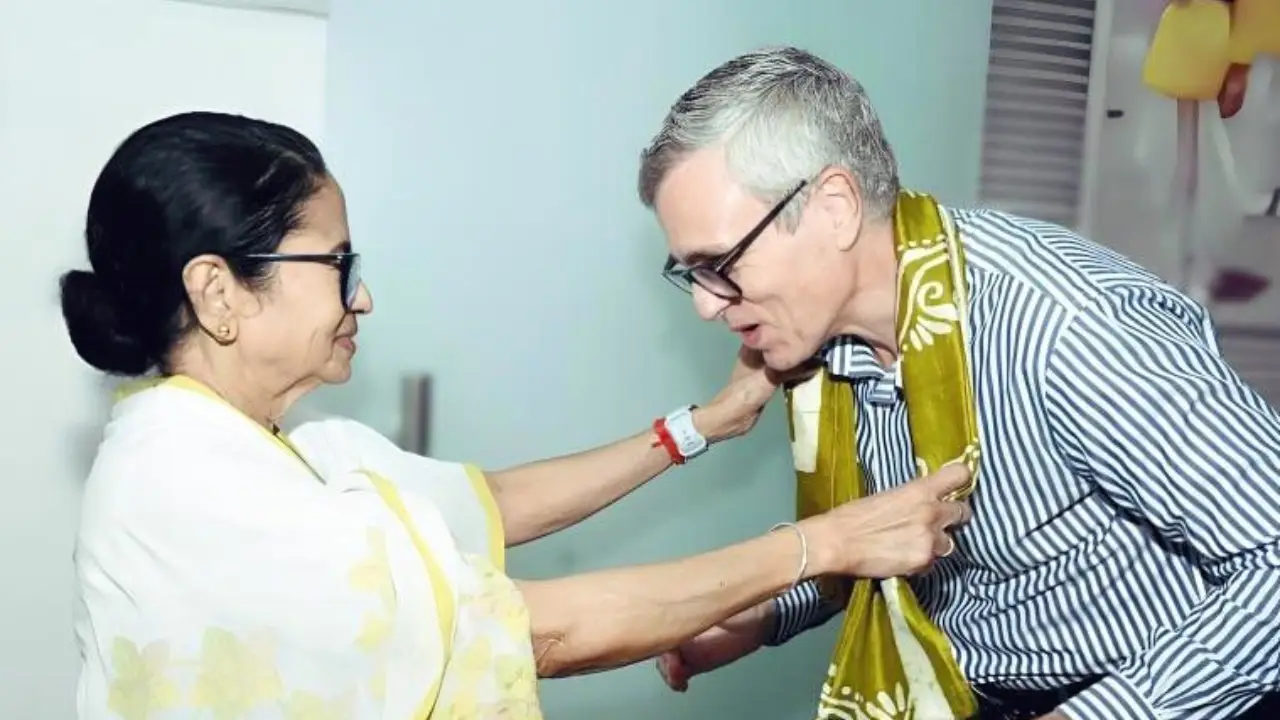
The meeting, held at the West Bengal state secretariat, marked the first public interaction between the two leaders since the Pahalgam tragedy and came alongside Abdullah’s high-profile participation in the Travel and Tourism Fair (TTF) 2025, a major annual event drawing tourism professionals from across India.
Banerjee, who accepted Abdullah’s invitation to visit Kashmir after the Durga Puja festivities, made an emotional appeal to the Centre to take immediate steps to ensure safety and security in the Valley. “Kashmir is not to be feared. It is to be embraced. Our tourists must go there without hesitation,” she said, underlining that border security remains the responsibility of the Government of India and must be strengthened immediately.
“The situation in Jammu and Kashmir must be stabilised not only for its people but also for tourism to flourish again. Tourism is not just an industry in Kashmir—it is the region’s lifeline,” Banerjee said, while urging the Union government to hold direct discussions with Omar Abdullah and ensure proper arrangements are in place to reassure potential travellers.
Omar Abdullah, who shared the dais with Banerjee, thanked the Bengal government for standing by the people of Jammu and Kashmir, particularly during recent tragedies. He recalled how Banerjee had sent a delegation to Poonch and Rajouri after the twin blows of the Pahalgam attack and Operation Sindoor.
“She stood by us when I was going through a difficult phase in 2019 as well. I am deeply grateful to Didi for her continued support,” Abdullah said. “Our relationship with Bengal is one of trust and affection. We are ready to welcome tourists from Bengal and promise them a secure, beautiful, and enriching experience in Kashmir.”
The two leaders also discussed a future Memorandum of Understanding (MoU) between the two states to foster deeper cooperation in tourism, culture, film, and industry. Banerjee noted that Kashmir is a land of “spices, dry fruits, and soulful art,” and proposed cultural and artistic exchanges to build stronger people-to-people connections.
“I urge filmmakers from Tollywood to shoot their projects in Kashmir. It’s time for a new cinematic journey between the two regions,” Banerjee said. She also invited Kashmiris to join Bengal’s Puja festivities and extended an open invitation for participation in the Republic Day and Independence Day celebrations.
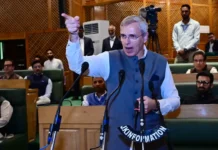
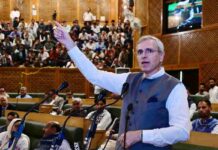
Earlier in the day, speaking at the inaugural session of the TTF Kolkata 2025, Omar Abdullah presented an expansive vision for Jammu and Kashmir’s tourism industry, calling it a “transformative engine” for inclusive economic growth.
“Jammu and Kashmir is no longer just a summer destination. We are actively repositioning ourselves as a year-round hub for leisure, pilgrimage, adventure, and eco-tourism,” Abdullah said, addressing a gathering of travel industry leaders, stakeholders, and journalists.
Joined by Advisor Nasir Aslam Wani, MLA Farooq Shah, and Mushtaq Ahmed Chaya, Chairman of the J&K Hoteliers Club, Abdullah outlined his government’s strategy to diversify the tourism landscape. He announced targeted development of tourism circuits from Poonch to Kupwara, improved air and road connectivity, and aggressive promotion of winter sports through public-private partnerships.
“We are conducting security audits at key tourist zones, and steps are underway to ensure that all visitors feel safe and welcome,” he said. Abdullah stressed the importance of sustainable tourism, adding that homestays, community-led eco-tourism initiatives, and collaborations with Online Travel Aggregators would be key pillars of future growth.
He also underscored the symbolic value of tourism revival following the April 22 attack. “This year has been difficult. There’s a ‘before’ and ‘after’ the Pahalgam incident. But I’m here in Kolkata because I believe tourism is bouncing back. People should believe those who have visited Kashmir after the attack, not those offering opinions from outside,” he said.
The J&K pavilion at TTF Kolkata drew large crowds, with its blend of multimedia exhibits, cultural performances, and curated travel experiences receiving positive attention from domestic tour operators and international travel consultants alike.
The meeting between the two Chief Ministers is being viewed as a significant gesture of political cooperation and mutual outreach between the eastern state and the conflict-hit region. It comes at a time when Kashmir is working to restore normalcy and regain the confidence of the travelling public after a series of violent incidents earlier this year.
Banerjee concluded her remarks with a message of unity: “We are all part of one nation. We must support each other in times of sorrow and build bridges in times of peace. I look forward to visiting Kashmir soon—not just as a Chief Minister, but as a friend.”
As both leaders signalled the start of a new chapter in Bengal–Kashmir relations, their joint pitch for safety, cultural collaboration, and mutual growth set the tone for a renewed inter-regional alliance—one rooted in empathy, resilience, and the promise of a better tomorrow for Kashmir’s tourism economy.