SRINAGAR: At the revered shrine of Sheikh Abdul Qadir Jeelani in Khanyar, Mirwaiz Umar Farooq delivered a compelling sermon, addressing key concerns within the Muslim community. He began by discussing the Waqf Amendment Bill, which is currently under review by the Joint Parliamentary Committee.
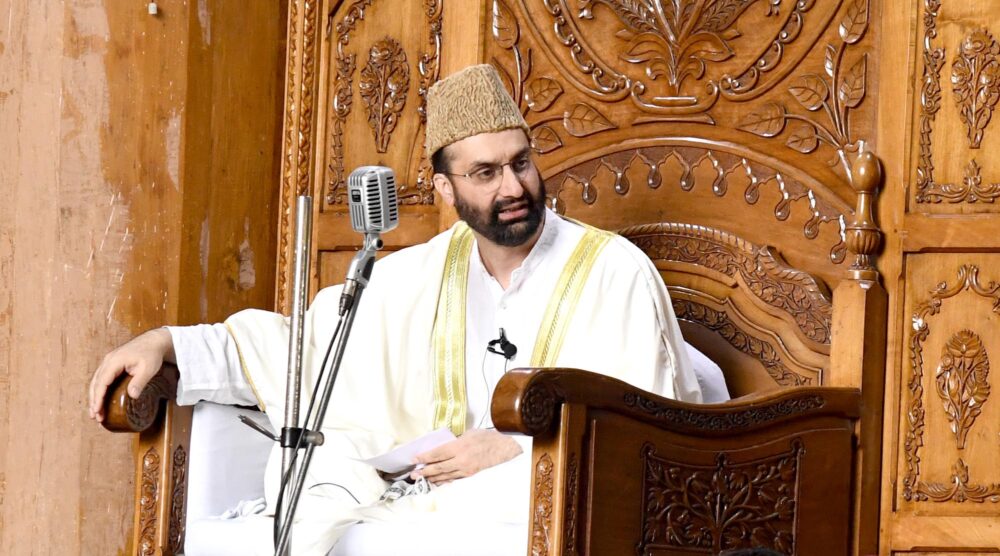
Mirwaiz stressed that Muslims are closely monitoring any potential weakening of the Waqf, an institution that holds immense significance for the community. He warned that any move to undermine the Waqf or disempower the Muslim community would be met with resistance. Additionally, he raised concerns over the exclusion of long-serving individuals, such as Imams, Sajadanisheens, and mutawalis who have traditionally been responsible for managing mosques and shrines.
While acknowledging the need for institutional accountability, Mirwaiz urged the Waqf management to involve the community in its decisions and reintegrate these individuals into the functioning of religious institutions.
Building on his spiritual message, Mirwaiz then focused on the teachings of Sheikh Abdul Qadir Jeelani (REH), particularly his emphasis on Tawheed—the oneness of Allah. He explained that strengthening one’s relationship with the Creator, known as Ta’alluq billah, is central to Islamic faith. This bond with Allah shapes a Muslim’s character and conduct, guiding them towards a life of compassion, justice, and integrity in their dealings with others.
Mirwaiz also highlighted the role of mosques in Islam, pointing out that they are not simply places of worship but dynamic centres for religious, social, economic, and political life, following the example set by Prophet Muhammad (peace be upon him). He called on Muslims to reinforce these community hubs, encouraging them to work towards creating a just and compassionate society.
Addressing broader concerns, Mirwaiz expressed his deep sorrow over the suffering of Muslims in Palestine and across the Middle East, which he described as a matter of pain for all humanity. He also spoke about the challenges faced by Muslims in India, mentioning incidents of discrimination, lynching, and the demolition of homes and mosques, which he labelled as “bulldozed justice”. Mirwaiz urged the government to end such discriminatory practices and treat Muslims as equal citizens of the country.
In his closing remarks, Mirwaiz called for unity within the Muslim community, emphasising the importance of faith in guiding them towards justice, compassion, and service to humanity.