SRINAGAR: Environmental governance in Jammu and Kashmir has come under sharp judicial scrutiny after the Union Territory government, in a compliance report filed before the National Green Tribunal (NGT), disclosed large-scale violations of forest and environmental laws, including the felling of more than 82,000 trees across multiple infrastructure projects without prior fulfilment of mandatory compensatory afforestation requirements.
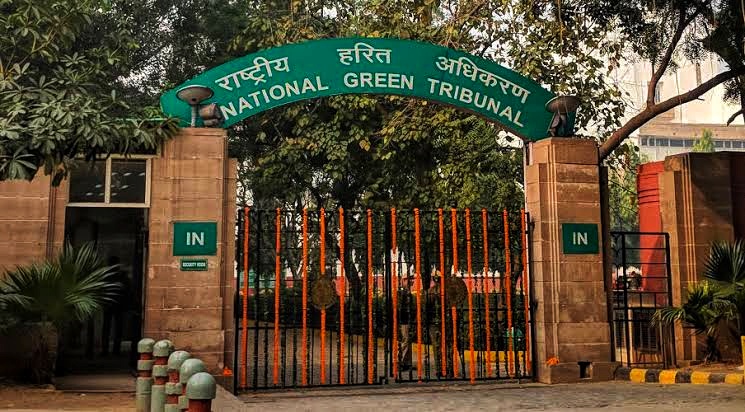
The disclosures were made in Original Application No. 163 of 2024, filed by environmental activist and advocate Rasikh Rasool Bhat, and have raised serious concerns over adherence to the Forest (Conservation) Act, 1980, which mandates that compensatory and mitigation measures must be completed before diversion of forest land is permitted.
According to the compliance report submitted by the Chief Secretary of Jammu and Kashmir, a total of 82,327 forest trees were felled across 145 to 154 projects cleared under the forest conservation regime. The report places the total compensatory afforestation liability at Rs 80.73 crore, of which Rs 45.33 crore remains unpaid, allowing projects to proceed despite non-compliance with statutory environmental conditions.
The government has traced these violations to a policy decision of the State Administrative Council dated July 30, 2019, taken during the period of central rule in the erstwhile state. The decision modified an earlier cabinet resolution and permitted issuance of government sanctions for diversion of forest land for non-forestry purposes even when whole or partial compensatory levies had not been deposited by user agencies. The administration has argued that the decision was aimed at preventing delays in public infrastructure projects and was implemented uniformly across departments.
A central focus of the proceedings is the Handwara–Bangus Road project in north Kashmir’s Kupwara district, executed by the Public Works Department under the Central Road Fund. The 35.5-kilometre road passes through ecologically sensitive forest areas, with nearly 28 kilometres falling within forest land in the Rajwar range. The government has stated that diversion of 14 hectares of forest land was approved following clearance by the Forest Advisory Committee and the Cabinet, and that final forest clearance was issued in September 2019 under the then applicable Jammu and Kashmir Forest Conservation Act.
In its submission, the administration maintained that although 1,023 trees, poles and saplings were originally proposed for removal, statutory approvals were granted for felling of only 488 trees and poles, which were removed after December 2019. It also acknowledged an instance of illegal felling of five trees in 2021, for which a damage bill of Rs 22.58 lakh was raised and fully recovered from the construction agency. The user agency, the report said, has deposited compensatory levies amounting to Rs 3.81 crore for the project, with delays attributed to the administrative transition following the abrogation of Article 370 and disruptions caused by the Covid-19 pandemic.
Strongly objecting to the compliance report, petitioner Rasikh Rasool Bhat told the Tribunal that the government’s own filings reveal post-facto regularisation of violations rather than genuine compliance. He argued that construction activity on the Handwara–Bangus Road commenced as early as October 2017, well before final forest clearance, in violation of settled environmental jurisprudence which requires prior approval before any work is undertaken on forest land.
The petitioner also alleged widespread illegal extraction of riverbed material from nallahs in the Handwara and Rajwar areas, claiming that mining activities were carried out in violation of environmental and mining regulations, causing ecological damage, destabilisation of riverbanks and threats to public infrastructure. While the government has maintained that the extraction was carried out with due permissions and in accordance with amended mining rules, the petitioner has disputed these claims and sought an independent inquiry.
Another major concern raised before the Tribunal relates to the rise in human–wildlife conflict incidents in the Rajwar region. Bhat submitted that large-scale forest diversion and habitat disturbance caused by road construction and allied activities have pushed wildlife into human settlements. He pointed out that official forest proposals had acknowledged the presence of wildlife in the affected compartments, yet projects were approved without wildlife management plans or mitigation measures, leading to frequent encounters that pose risks to both local communities and animals.
The petitioner further argued that while the compliance report admits violations, it fails to propose any disciplinary, penal or criminal action against public servants who permitted illegal construction and mining. He contended that submission of compliance reports without fixing responsibility undermines the rule of environmental law and defeats the purpose of judicial oversight by the National Green Tribunal.
During the proceedings, counsel representing the Union Territory of Jammu and Kashmir sought four weeks’ time to file a detailed action-taken report, including steps taken to recover outstanding compensatory afforestation dues and address the violations highlighted in the Chief Secretary’s submission. The Tribunal has listed the matter for further hearing in April 2026.
The case is being closely watched, as it is expected to have significant implications for forest conservation, administrative accountability and environmental governance in Jammu and Kashmir, particularly on the question of whether executive policy decisions can dilute mandatory statutory safeguards meant to protect fragile ecosystems.