SRINAGAR: Ladakh has disbursed Rs 1.10 crore in production-based incentives to more than 1,200 nomadic Pashmina herders, as the administration seeks to boost fibre production, improve returns to pastoral families and overhaul the payment system in the sector.
The 25 per cent production-based incentive, introduced for the first time this year, has already coincided with a sharp rise in raw Pashmina collection, which reached 19 metric tonnes by July 2026, compared to 16 MT during the whole of 2025.
Lieutenant Governor Vinai Kumar Saxena disbursed the incentive through Direct Benefit Transfer (DBT) during his visit to Korzok for the Changthang Nomadic Festival 2026 on the banks of Tsomoriri Lake.
More than 1,200 Pashmina herders, mostly from Samad, Kharnak and Korzok villages in Changthang, received the payments. Samad accounted for around Rs 44 lakh, followed by Kharnak with Rs 28 lakh and Korzok with Rs 23 lakh.
The incentive was announced at the first meeting of the Ladakh Pashmina Development Board on July 5, 2026.
The administration has also introduced an Rs 8 crore revolving fund for the All Changthang Pashmina Growers Marketing Cooperative Society, which operates the Pashmina dehairing plant in Leh, to address one of the sector’s longstanding problems—delayed payments to growers.
Under the new arrangement, 50 per cent of the value of Pashmina will be paid to producers immediately, while the remaining amount will be released within two months. The administration said this would end the earlier practice of growers waiting eight to 10 months for payment.
Saxena said the 25 per cent production-based incentive was intended to increase the income and profitability of nomadic Pashmina growers while making the sector more sustainable.
He urged the growers to adopt scientific breeding and raise average fibre production from the present 200 grams per goat to at least 350 grams. He also set a target of doubling the Pashmina goat population from around two lakh to four lakh within three years through scientific breeding.
The Lieutenant Governor said 60 per cent of the incentive received by beneficiaries would be reinvested in scientific breeding of Pashmina goats, while 20 per cent would be used for modern combing equipment and basic infrastructure. The remaining 20 per cent can be used by beneficiaries for household and personal needs.
Saxena also stressed the need to improve the cleanliness and quality of raw Pashmina to reduce wastage and enable growers to secure better prices.
Calling Ladakh Pashmina a “Timeless Heritage” of Ladakh and the Changpa nomadic community, Saxena said the objective of the new measures was to ensure that pastoral families who had preserved the tradition for generations received a greater share of the value generated by Pashmina.
“Pashmina is not merely a product; it is a part of Ladakh’s cultural identity and the livelihood of thousands of our pastoral families,” he said, adding that the production incentive and revolving fund were strengthening the Pashmina value chain and improving returns to nomadic pastoral communities.
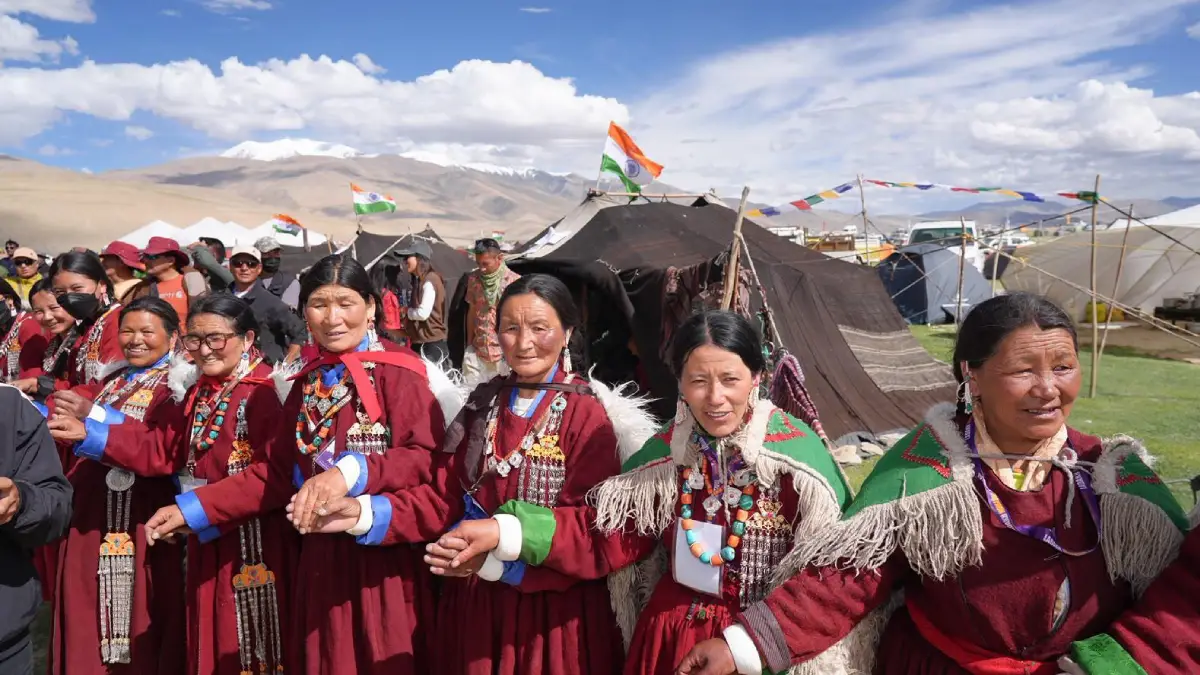
Meanwhile, the Changthang Nomadic Festival attracted more than 10,000 people, including foreign tourists and locals.
The festival, which began as a local celebration, has grown into an international event showcasing Changpa culture, traditional pastoral practices, handicrafts, music, dance, cuisine and the community’s nomadic way of life to visitors from India and abroad.