JAMMU: People’s Democratic Party (PDP) Legislative Party Leader and Pulwama MLA Waheed Ur Rehman Parra on Monday launched a sharp attack on the recently tabled Jammu and Kashmir Union Territory budget, arguing that it lacks originality and fails to address the pressing concerns of the region’s youth and marginalised communities. Speaking in the Assembly, Parra accused the government of excessive reliance on centrally sponsored schemes while neglecting state-specific initiatives that could uplift the people of J&K. He described the budget as a missed opportunity that neither offers hope nor healing to the region.
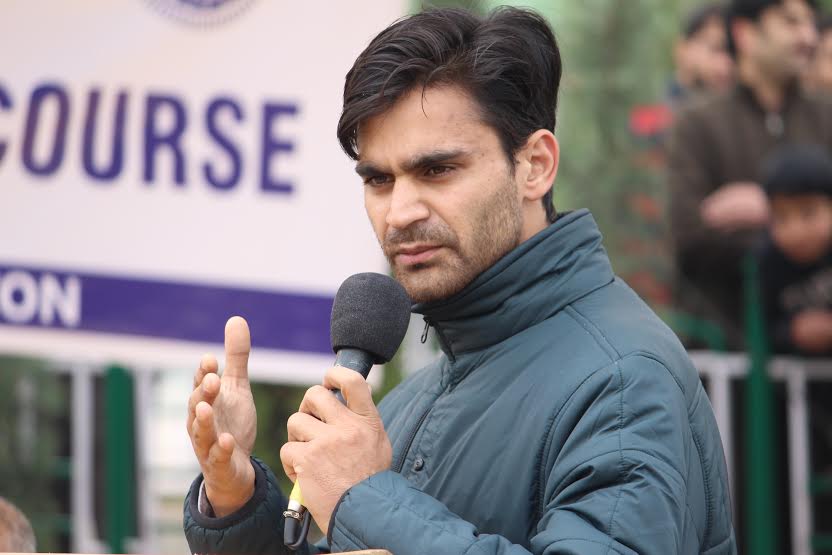
Parra questioned the absence of a state-specific vision, arguing that the budget is merely an allocation of centrally sponsored schemes and programmes with no substantial local planning. “Can the government identify even a single line in the budget that is truly focused on Jammu and Kashmir’s unique needs?” he asked.
He raised concerns over the absence of relief measures for daily wagers, whose regularisation had been a prominent electoral promise of the ruling party. Expressing disappointment over the government’s failure to reinstate the free stamp duty provision for women—a measure introduced under former Chief Minister Mehbooba Mufti’s administration—Parra stressed that this exemption is crucial for narrowing the gender divide in property ownership, which remains stark in J&K. He argued that granting a one hundred per cent exemption on stamp duty, as has been done in states like Uttar Pradesh and Delhi, would significantly boost property registration in women’s names.
Parra pointed out that despite nearly sixty-nine per cent of J&K’s population being under the age of thirty-five, the budget fails to address the pressing concerns of the youth. “The word ‘youth’ is entirely missing, and so are policies or programmes aimed at their upliftment,” he said, endorsing former Chief Minister Omar Abdullah’s assessment of the budget as “pessimistic.”
In a region marred by conflict and displacement, Parra highlighted that women bear a disproportionate economic burden yet remain deprived of legal ownership of assets. He argued that property ownership would grant them greater decision-making authority, provide a safeguard against domestic violence, and enhance their access to formal credit and welfare programmes. By removing the financial barrier of stamp duty, he said, the government could lay the foundation for genuine structural gender justice, ensuring that women are not just caretakers but rightful owners of their homes.
Expressing concern over the lack of attention to the region’s youth, Parra criticised the government’s reliance on centrally sponsored schemes rather than creating state-driven initiatives. He warned that such dependence could prove costly, given the central government’s tendency to favour BJP-ruled states in fund allocations.
Parra accused the government of merely repackaging existing central schemes rather than introducing fresh policies tailored to J&K’s unique needs. He cited several instances where the budget reinforced existing schemes such as e-Abgari for liquor licensing, the expansion of the Kisan Credit Card scheme, the implementation of Pradhan Mantri Awas Yojana, and employment through MGNREGA—none of which are specific to J&K. He pointed out that initiatives such as the SEHAT healthcare scheme, Khelo India training for sports, and PM-SHRI school upgradation programmes are all central schemes with no additional provisions from the state government.
Parra also criticised the government’s decision to discontinue key welfare measures. He demanded the reinstatement of the free stamp duty exemption for women, a crucial relief measure introduced by the previous Mehbooba Mufti-led government. He also highlighted the absence of the Youth Start-Up Loan scheme under the Entrepreneurship Development Institute, which was meant to support young entrepreneurs in the region.
Raising the issue of recent civilian killings in Kathua, Parra demanded a transparent and time-bound probe. He called for the revival of the State Human Rights Commission to ensure accountability and justice for victims of extrajudicial actions. “The absence of a dedicated human rights body leaves victims without recourse, and this must be corrected immediately,” he asserted.
He also expressed serious concern over the controversial fashion show held in Gulmarg, calling it a blatant disregard for the sentiments of the people of Jammu and Kashmir. He questioned how such an event could take place without government approval, particularly during the holy month of Ramadan, and described it as an affront to cultural and religious values.
Expressing deep concern over these pressing matters, Parra urged the government to take immediate corrective measures to address the grievances of the people and uphold their rights and sentiments. He asserted that the budget should reflect the aspirations of the people of Jammu and Kashmir rather than serve as a mere extension of central government policies. Calling on the administration to introduce genuine state-led reforms, prioritise youth employment, revive the stamp duty exemption for women, and ensure greater financial autonomy for the region, he warned that without these measures, the budget would remain a missed opportunity, failing to address the real concerns of the people it claims to serve.