SRINAGAR: The Pashmina Testing and Quality Certification Centre (PTQCC) at the Craft Development Institute (CDI), Srinagar, is expected to conduct around 42,000 tests in the 2026-27 financial year as demand for Geographical Indication (GI) certification and QR coding of Kashmir handicrafts increases.
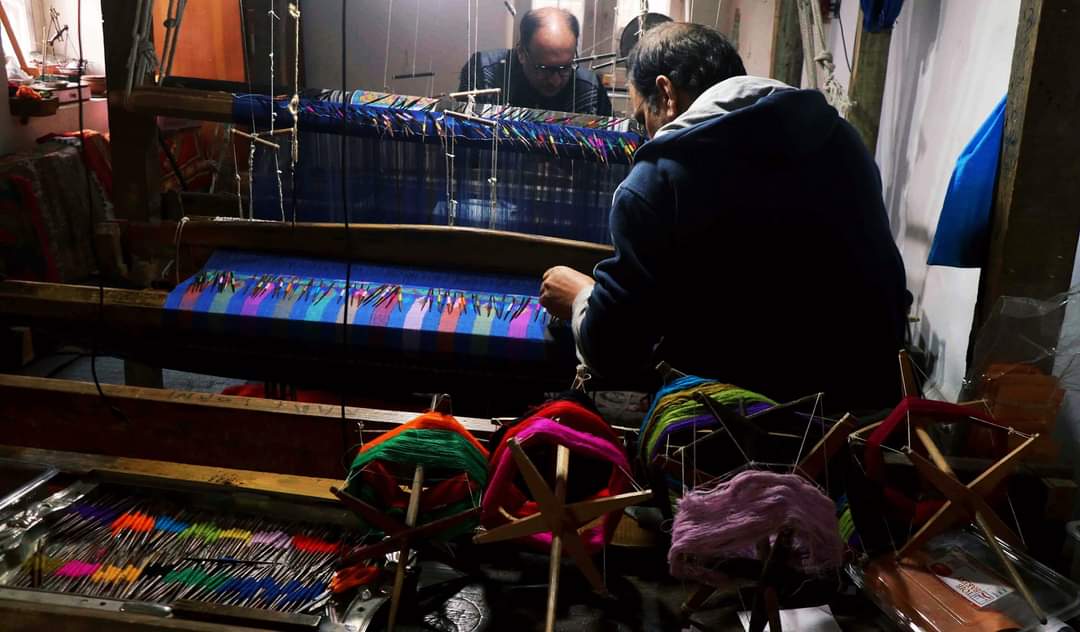
KL Image: Bilal Bahadur
A spokesman for the Handicrafts and Handloom Department, Kashmir, said on Wednesday that the centre’s daily testing capacity had risen from 40-45 tests in 2024-25 to around 170 in the current financial year, reflecting improvements in laboratory infrastructure and operational capacity.
The centre conducted 13,369 tests in 2024-25, followed by 22,351 in 2025-26. It has already completed approximately 21,000 tests in 2026-27, with another 21,000 projected between November 2026 and March 31, 2027.
The increased workload largely relates to GI-tagged products, particularly Kashmir Pashmina, Kani shawls and Sozni-embroidered shawls, for which authentication is essential to establish their genuineness.
To strengthen testing capabilities, the Pashmina laboratory has been equipped with a Scanning Electron Microscope (SEM) and two high-resolution digital microscopes. The department is also procuring an additional OFDA 2000 fibre analyser and another digital microscope under the capital expenditure budget for 2026-27.
The new equipment is expected to improve fibre identification and quality assessment while helping the centre meet the growing demand for testing and QR coding of certified products, the spokesman said.
GI-authorised users submitting hand-spun and hand-woven Pashmina products featuring Sozni embroidery are being given preferential treatment, he added.
The department has also developed an online appointment and token management system to improve transparency and streamline testing, certification and QR coding across its laboratories, including the Indian Institute of Carpet Technology (IICT) and the Quality Control Division (QCD).
Developed by the department’s Resource Cell, the web-based system is expected to become operational shortly on a pilot basis.
Meanwhile, the Directorate is working to increase technical staffing for laboratory operations. Personnel are being sent to the Wool Research Association (WRA) in Thane, Maharashtra, for specialised training to operate the equipment.
The spokesman said additional trained teams would help the centre respond to increased demand following an intensive media campaign promoting GI-authorised users and certified products.
Improved testing and certification are expected to strengthen the authentication of Kashmir’s handicrafts, safeguard the interests of artisans and weavers, and increase consumer and buyer confidence in genuine GI-tagged products.
The department said reliable certification was particularly important for exports and premium domestic markets, where the authenticity of Kashmir Pashmina and related handicrafts plays a key role.