SRINAGAR: Sankarshan Thakur, one of India’s most respected political journalists and Editor of The Telegraph, passed away on Monday in a Gurgaon hospital. He was 63 and had been ailing for some time, having recently undergone surgery.
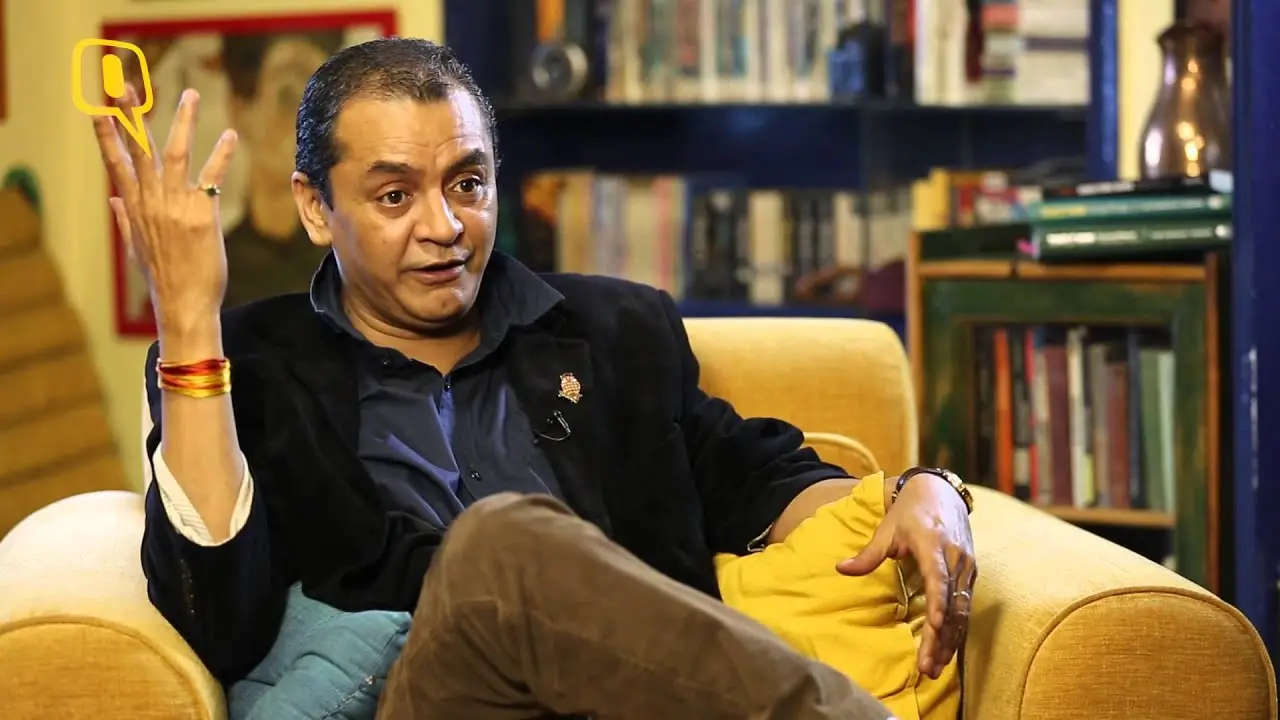
Thakur was regarded as a fierce commentator and an incisive analyst of Indian politics, often turning a sharp spotlight on the government’s handling of sensitive issues, particularly those related to Kashmir. He wrote extensively on Kashmir, where he was known not just as a reporter but as a friend to many. Unlike most visiting journalists, he often stayed in homes rather than hotels, listening closely and reporting with empathy.
Neem Akhter, one of his close friends in Kashmir, said: “He was what no one else was in the context of reporting and commenting on Kashmir. Affable, sweet and soft spoken, but completely different when it came to writing what he considered true. His sizzling commentary on events and politics of Kashmir will remain a reference point and a reminder of his deep understanding of the place, its issues and pain. He came to see me even during my detention and stayed in touch with my family.”
A chronicler of Bihar politics, Thakur authored several acclaimed books, including Subaltern Sahib: The Making of Laloo Yadav, The Unmaking of Bihar, Single Man: The Life and Times of Nitish Kumar of Bihar, and The Brothers Bihari. His writing combined deep political insight with a rare literary elegance, making him one of the finest voices in contemporary journalism.
Born in Patna in 1962, Thakur studied at St Xavier’s High School before graduating in Political Science from Hindu College, Delhi University. He began his journalism career in 1984 with Sunday, later working with The Indian Express and helping launch Tehelka, where he served as Executive Editor. He returned to The Telegraph as Roving Editor and went on to become its National Affairs Editor before assuming the role of Editor.
His ground reporting left a lasting mark, from the Kargil warfront in 1999 to political violence in Manipur in 2001. In recognition of his work, he received the Prem Bhatia Award for excellence in political journalism in 2001 and the Appan Menon Fellowship in 2003 for a book project on Kashmir.
The news of his death has prompted an outpouring of grief from across the political and journalistic spectrum. The Press Club of India described him as “a fearless voice in journalism” whose “sharp political analysis and unwavering commitment to the truth will be deeply missed.”
Congress leader Jairam Ramesh called him “a delightfully brilliant writer” and “one of the strongest defenders of liberal, democratic, secular and pluralistic India.” Omar Abdullah, former chief minister of Jammu and Kashmir, recalled him as one of the rare journalists who “travelled extensively around Jammu and Kashmir and actually listened, he didn’t judge.”
Political leaders, including Congress president Mallikarjun Kharge, Shashi Tharoor, Telangana Chief Minister A Revanth Reddy and BRS leader K T Rama Rao, along with journalists across India, paid rich tributes. Raj Kamal Jha of The Indian Express described him as both “a friend and conscience.”
Sankarshan Thakur’s passing leaves Indian journalism poorer. His fearless reporting, sharp commentary and enduring belief in peace and pluralism carved a space that will be difficult to fill.