SRINAGAR: As many as 149 prosecutions have been launched in Jammu and Kashmir over the past two years for violations involving spurious and substandard pesticides, with authorities recovering Rs 3.50 lakh in fines till December 2025, according to official data, highlighting intensified enforcement in the horticulture sector.
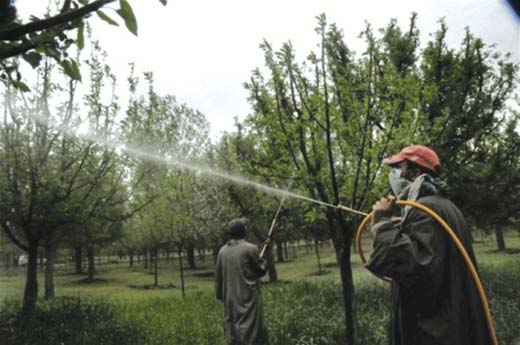
The action follows extensive inspections and sample testing across the Union Territory, where a total of 12,549 inspections were conducted and 10,222 samples analysed. Of these, 190 samples were found misbranded or non-standard, leading to legal proceedings against dealers, wholesalers and retailers under the provisions of the Insecticides Act, 1968.
The enforcement drive forms part of a broader regulatory mechanism aimed at safeguarding the horticulture industry, a key economic sector in Jammu and Kashmir. Authorities said batch-wise sampling, laboratory testing and multi-level verification systems are in place before fertilisers and pesticides are allowed for sale. Consignments entering Kashmir are checked at Lower Munda (Qazigund), with further sampling carried out at the district level to ensure quality compliance.
The Agriculture Production Department has also established a network of testing infrastructure, including two NABL-accredited fertiliser testing laboratories in Jammu and Srinagar, and six pesticide testing laboratories located in Jammu, Srinagar, Kulgam and Baramulla. Standard operating procedures issued in September 2025 further regulate distribution, monitoring and quality assurance mechanisms.
Despite these enforcement measures, the government acknowledged that no exclusive impact assessment study has been conducted to evaluate the effect of tariff rebates or trade concessions extended to foreign countries on the horticulture sector of Jammu and Kashmir, particularly in terms of growers’ income, price realisation and market competitiveness. Officials, however, said the sector is monitored continuously through engagement with stakeholders, including growers’ associations and trade bodies.
On crop insurance, the government said a restructured Weather-Based Crop Insurance Scheme has been introduced for major horticulture crops. In the Kashmir division, the scheme covers apple and saffron, while in the Jammu division, it includes mango, litchi and saffron in Kishtwar district. The tendering process has been completed, and allotment to insurance companies is currently underway.
The government also informed that the Market Intervention Scheme (MIS), which previously supported the procurement of horticulture produce, has remained closed since 2019. However, an evaluation of the scheme is currently being undertaken by the Development Monitoring and Evaluation Office (DMEO) of NITI Aayog, with a designated nodal officer coordinating the exercise in Jammu and Kashmir.
In addition to pesticide-related violations, authorities reported that 110 prosecutions have also been initiated in cases involving fertiliser samples, with Rs 1.31 lakh recovered as fines, indicating a parallel enforcement push in input quality regulation.
Towards strengthening enforcement further, the government has notified detailed Standard Operating Procedures (SOPs) governing the regulation, monitoring and distribution of fertilisers across Jammu and Kashmir under the Fertiliser (Control) Order, 1985 and related legal provisions. The SOP framework designates the Director, Law Enforcement, JK as the nodal authority responsible for supervision, inter-agency coordination and periodic review of compliance and enforcement outcomes.
Under these guidelines, fertiliser consignments are subject to advance reporting, mandatory sampling and laboratory testing before distribution. Movement is regulated through notified checkpoints, with strict documentation, stock verification and digital monitoring through PoS and IFMS systems. Retailers are required to display licenses, stock positions and price lists, while sales are to be linked to soil health cards and Aadhaar verification to prevent misuse and diversion
The SOPs also mandate regular inspections, random sampling from wholesalers and retailers, fortnightly stock verification, and strict penal action, including seizure, suspension of licenses, FIRs and prosecution in case of violations. A structured grievance redressal mechanism has been put in place, requiring complaints to be verified within seven days and action taken reports to be filed within fifteen days.
Officials said the framework aims to ensure tighter quality control, accountability and transparency in the supply chain, while safeguarding farmers’ interests and preventing the circulation of substandard agricultural inputs in the Union Territory.