by Sri Varshith Kumar Reddy E
Jammu and Kashmir ended 2025 with an elected government constrained by external assent, centralised finances, and trade decisions beyond its control. Its political economy reflects these limits: 7.06 per cent growth alongside 23.2 per cent unemployment, untendered lithium reserves, and an apple economy hit by FTA import shocks the local government cannot contest.
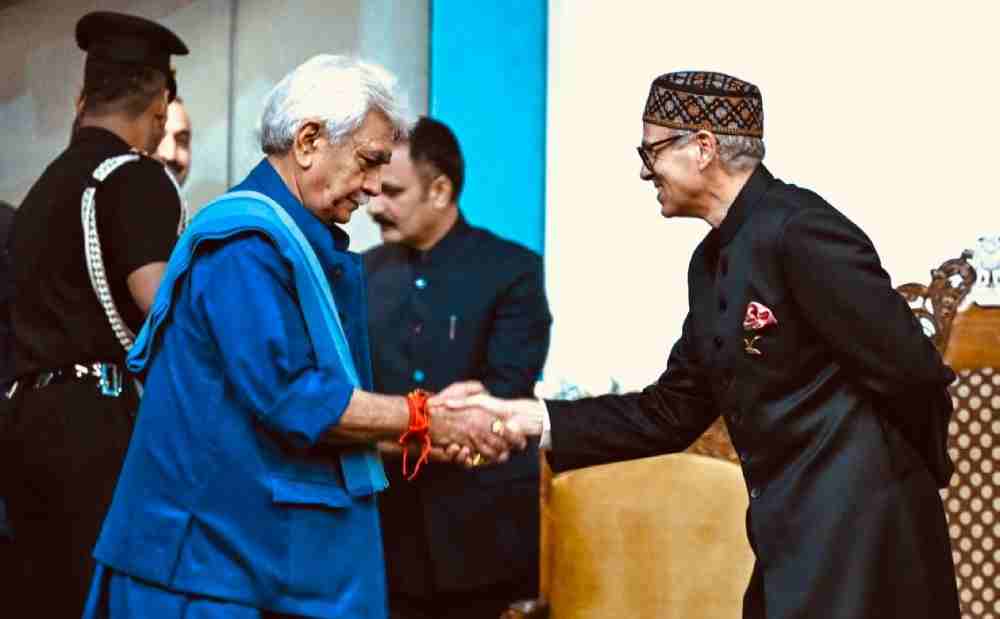
The year 2025 exposed the constitutional contradiction at the heart of Jammu and Kashmir’s governance. An elected assembly operates within the fiscal and administrative straitjacket of Union Territory status.
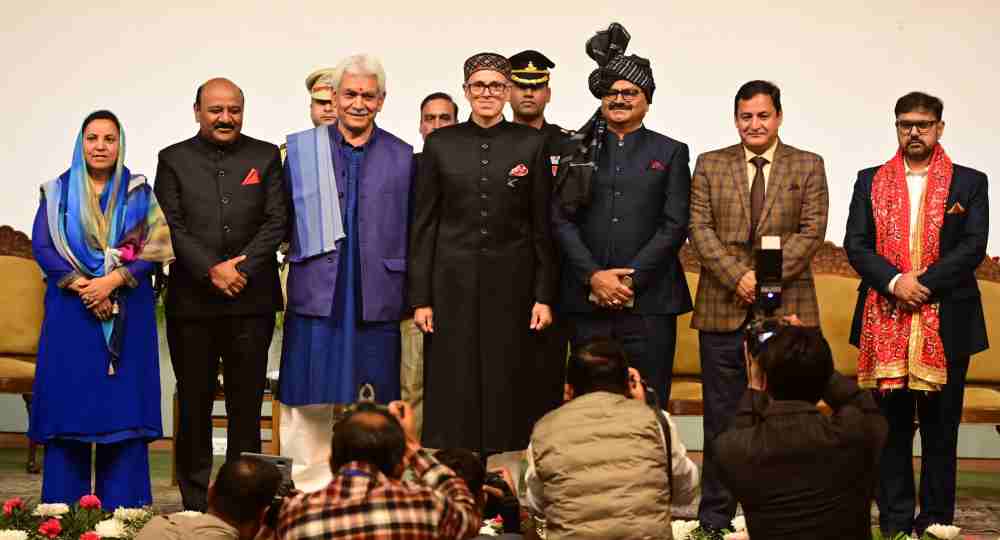
Chief Minister Omar Abdullah’s National Conference government, sworn in after the October 2024 elections, spent the year governing without governing. It passed legislation requiring the Lieutenant Governor’s assent, allocated budgets constrained by central transfers, and protested trade policies determined in New Delhi. The year concludes with this question crystallised, that is, can electoral democracy function within administrative autocracy?
The Budget: Expenditure Without Autonomy
The 2025-26 budget, presented in March, allocated Rs 1,06,641 crore in total expenditure, a nominal 3 per cent increase over the previous year. Capital outlay rose 37 per cent to Rs 26,836 crore, signalling infrastructure ambition. The fiscal reality reveals dependence. Some 65 per cent of revenue receipts (Rs 58,624 crore of Rs 90,529 crore) flow from central grants. Own tax revenue stands at Rs 21,550 crore, merely 7.5 per cent of GSDP. This falls far below the threshold required for fiscal federalism.
The energy sector consumed the highest allocation at Rs 12,477 crore (11.7 per cent of total expenditure), double the all-states average of 5 per cent. This disproportionate spending addresses the structural power deficit that paralysed the Valley during the December cold wave. Residents faced 12-hour curtailments despite generating thousands of megawatts of hydropower for the national grid. A Union Territory lacks the statutory authority to renegotiate Power Purchase Agreements negotiated when J&K was a state. The budget line item for energy is an accounting acknowledgement of powerlessness.
Committed expenditure consumes 56 per cent of revenue receipts. Salaries take Rs 23,894 crore, pensions Rs 15,300 crore, and interest payments Rs 11,518 crore. Outstanding debt stood at 51 per cent of GSDP at the end of 2023-24, with guarantees adding another 8 per cent. The fiscal deficit at 5.6 per cent of GSDP exceeds the Centre’s 3 per cent ceiling for states, a violation that triggers no penalty because J&K is not a state.
GST Revenues: Decline Amid National Growth
J&K’s post-settlement SGST collections declined 9 per cent year-on-year in October 2025, falling from Rs 5,143 crore to Rs 4,693 crore. This contraction occurred while national GST revenues grew 7.5 per cent and gross GST collections hit Rs 1.95 lakh crore, registering 4.6 per cent year-on-year growth. States like Punjab posted 14 per cent growth, Maharashtra 15 per cent, and Haryana 22 per cent. J&K’s revenue decline reflects the consumption slowdown in an economy growing at 7.06 per cent on paper. This is a statistical artefact masking distributional collapse.
The revenue shortfall compounds the fiscal deficit while constraining the government’s ability to fund developmental schemes without central approval. Union Territory status eliminates the political leverage required to negotiate supplementary grants or special category status. The elected government administers a tax system it did not design and cannot reform.
The India-New Zealand FTA: Trade Policy as External Shock
The India-New Zealand Free Trade Agreement, operationalised in December 2025, reduced import duty on New Zealand apples to 25 per cent. For J&K’s horticultural sector, which employs 3.3 million people and contributes 8 per cent to GSDP, this trade policy shock arrived at the worst possible moment. The apple economy had already incurred Rs 2,000 crore in losses during the 2024-25 season due to adverse weather, road closures, and floods.
Stakeholders demanded the Centre reconsider the agreement, warning that imported apples would depress prices when cold storages open for the spring market (April-August). Kashmiri growers sell at Rs 700-900 per box. New Zealand apples, stored for months and entering during the local supply crunch, will undercut residual demand. A state government could impose countervailing duties or negotiate exemptions with institutional weight. A Union Territory administration, appointed by the same Centre negotiating FTAs, possesses no such leverage.
The forward trajectory is grim. The FTA includes provisions for gradual tariff reduction over five years, potentially lowering duties to 10-15 per cent by 2030. Unless J&K secures statehood or the Centre grants horticulture-specific exemptions, the apple economy faces structural displacement. The policy implication for 2026 demands pressure on the Centre to exclude temperate fruits from future FTA tariff schedules or negotiate off-season quotas that protect the August-March harvest window.
Legislative Activity: Passing Bills, Awaiting Assent
The J&K Assembly’s autumn session in October 2025 passed four reform bills. These included the Tenancy Bill (establishing a Rent Authority), the Panchayati Raj Amendment (raising the State Election Commissioner’s age limit to 70), the Shops and Establishments Bill (lifting restrictions on women’s night-shift work and shop operating hours), and the Cooperative Societies Amendment. These bills represent the assembly’s attempt to modernise the legal framework within its truncated domain.
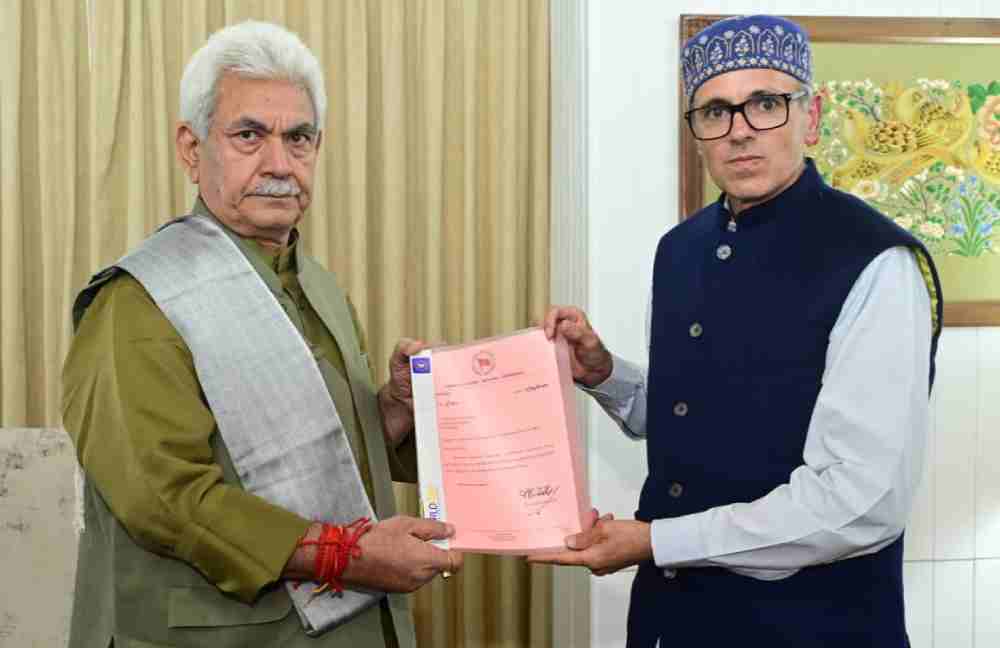
The Shops and Establishments Bill merits scrutiny. Lifting night-shift restrictions for women workers addresses labour market rigidity, potentially expanding employment in retail and hospitality sectors. The removal of shop operating hour limits aligns with tourism’s extended demand curve. However, these bills await the Lieutenant Governor’s assent, a procedural requirement that transforms legislation into supplication. The LG possesses the discretion to withhold assent, refer bills to the Centre, or demand amendments, effectively neutering the assembly’s legislative sovereignty.
The critical question for 2026 is whether the LG signs these bills without substantive revision. If signed, they represent incremental progress. If stalled, they expose the Union Territory model’s legislative futility.
The Lithium Stalemate: 2025 as a Lost Year
The Reasi lithium reserves (5.9 million tonnes with 1,600 ppm lithium oxide) remained untendered throughout 2025. The Centre’s December 2024 auction deadline lapsed without progress. The delay stems from revenue-sharing negotiations and environmental clearance protocols, compounded by the Union Territory’s lack of bargaining power over mineral rights that vest with the Centre.
The global lithium price declined 40 per cent in 2024-25 due to Chinese oversupply, reducing the immediate commercial urgency. The strategic value persists in securing domestic lithium supply for India’s EV battery manufacturing ambitions. For J&K, the question entering 2026 is whether the auction will include local equity participation or remain a concession contract where revenue accrues to New Delhi. A state could negotiate joint ventures with ONGC Videsh or Hindustan Copper, ensuring local equity stakes. A Union Territory administration lacks the statutory authority to demand such terms.
The forward-looking policy prescription demands a revenue-sharing formula where 50 per cent of royalties accrue to the UT exchequer, with 10 per cent earmarked for Reasi district development. Without statehood, this demand remains aspirational.
Unemployment: The Unaddressed Crisis
The July 2025 Periodic Labour Force Survey recorded an overall unemployment rate of 23.2 per cent, with urban youth unemployment at 32 per cent, double the national average of 17.4 per cent. Over 3.61 lakh educated youth remain registered as unemployed. Female unemployment stands at twice the male rate. The economy expands at 7.06 per cent while failing to generate formal employment, exposing growth decoupled from livelihoods.
The budget allocates marginal sums for skill development and entrepreneurship schemes, insufficient to address the structural crisis. Union Territory status constrains fiscal innovation. J&K cannot offer tax holidays to attract manufacturing investment, lacks the autonomy to modify labour codes to reduce compliance costs, and possesses no control over land allotment for industrial estates (land remains under LG purview).
The 2026 trajectory depends on two variables. First, whether the Centre permits fiscal incentives for private investment. Second, whether statehood restoration unlocks land-use autonomy. Without both, unemployment will remain the defining economic failure.
The Durbar Move: Symbolic Victory, Operational Constraint
The restoration of the Durbar Move in October 2025 marked a rare administrative victory. Shifting government offices between Srinagar (summer) and Jammu (winter) revived the 150-year-old practice suspended in 2021. The practice reconnects the UT’s geographical halves. The symbolism matters as recognition that governance requires presence in both regions.
The operational impact remains limited. The LG retains control over police, public order, and land. These domains do not migrate with the Durbar. The files that move are policy proposals requiring Raj Bhavan clearance. The restoration is a heritage ritual within a subordinated structure.
Statehood as the Prerequisite
The year 2025 exposed the limits of electoral democracy within Union Territory constraints. J&K possesses an elected assembly that passes bills awaiting external assent, a Chief Minister who presents budgets constrained by central transfers, and a population demanding trade protection that the government cannot provide. The political economy’s contradictions stem from the constitutional subordination imposed in August 2019. These include 7.06 per cent growth with 23.2 per cent unemployment, hydropower generation with winter blackouts, and lithium reserves without local equity.
The Supreme Court’s December 2023 directive to restore statehood remains unimplemented. Prime Minister Modi’s assurance of statehood “at an appropriate time” has yielded no legislative action. Chief Minister Abdullah raised the demand throughout 2025, receiving verbal reassurances without timelines.
Statehood restoration is the foundational reform required for 2026. Full statehood would transfer police and public order to the elected government, enable independent revenue negotiations on lithium extraction, allow tariff policy advocacy with institutional weight on the FTA apple crisis, and restore fiscal federalism. Without it, the apple economy will face further import pressure, unemployment will metastasise, and the lithium reserves will remain a missed opportunity.
The question entering 2026 is whether the Centre recognises that subordinated democracy is unsustainable. The Union Territory experiment has produced governance without authority, elections without empowerment, and development without dignity. The political economy requires the machinery of statehood to function.
Jawaharlal Nehru, in his address on All India Radio broadcast on November 2, 1947, articulated a principle that resonates with uncomfortable clarity in 2025:
“We have declared that the fate of Kashmir is ultimately to be decided by the people. That pledge we have given, and the Maharaja has supported it, not only to the people of Kashmir but to the world. We will not, and cannot, back out of it. We are prepared when peace and law and order have been established to have a referendum held under international auspices like the United Nations.”
Seventy-seven years later, the irony is complete. The people have decided through the ballot box. They elected an assembly that demands statehood, passed resolutions affirming their constitutional aspirations, and articulated their economic grievances through democratic channels. The machinery of democracy functions. The pledge, however, remains unfulfilled in its essential dimension with the transfer of substantive governance authority to the elected representatives.

The year 2025 has demonstrated that constitutional truncation produces economic dysfunction. Fiscal dependence breeds policy paralysis. Administrative subordination undermines electoral legitimacy. The contradictions will not resolve through time or economic growth statistics. They require the structural reform that Nehru understood as fundamental, that allowing the people’s representatives to actually govern.
Until statehood is restored, J&K will remain a democracy that votes but cannot govern, legislates but cannot execute, and protests without power. The seed of constitutional subordination planted in August 2019 has yielded the harvest of 2025 through governance paralysis, trade policy helplessness, and fiscal dependency.
The question for 2026 is whether recognition leads to reform, or whether the Union Territory experiment continues into its seventh year, grinding the political economy into deeper contradiction. The pledge given must eventually be the pledge honoured.
(The author is a pracademic working on government policy and public institutions. Ideas are personal.)