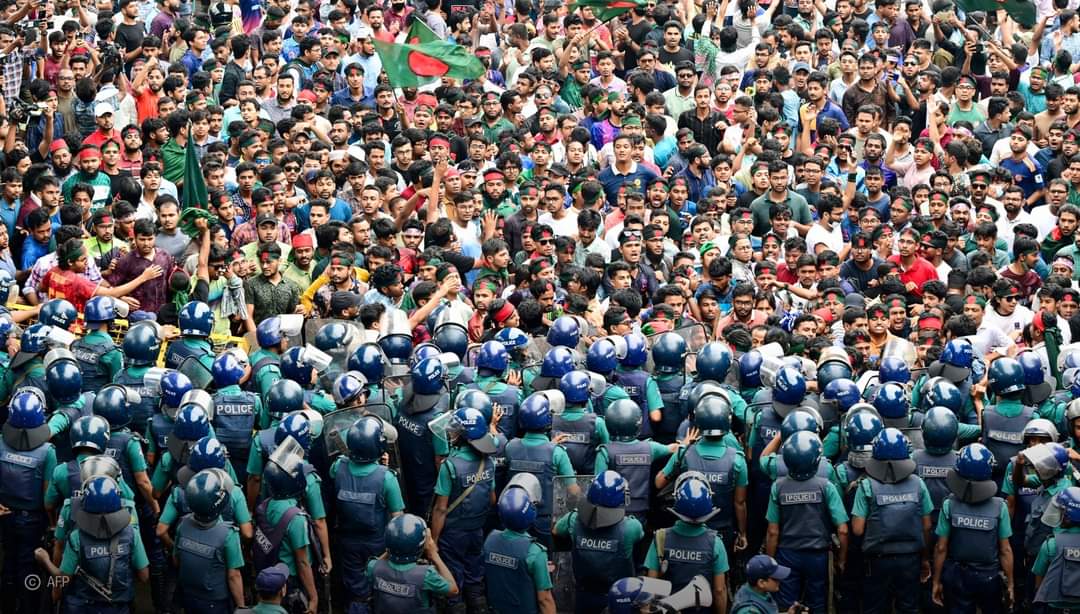
SRINAGAR: Bangladesh’s Supreme Court has annulled most of the controversial government jobs quota system following a week of violent protests led by students primarily in Dhaka. The decision came after nationwide clashes claimed the lives of at least 151 people since July 13, as reported by police and hospitals to Agence France-Presse.
The Supreme Court ruled that 93 per cent of government jobs will now be appointed on merit. The remaining 7 per cent quota will be divided, with 5 per cent reserved for family members of war veterans from Bangladesh’s 1971 War of Independence, and 2 per cent allocated for disadvantaged groups, including ethnic minorities. This marks a significant shift from the previous policy, which reserved up to 30% of government jobs for veterans’ families.
The protests intensified after the court reinstated the quota policy last month, a move seen by many as favouring supporters of Prime Minister Sheikh Hasina. Demonstrators argued the system unfairly excluded new job seekers. This resurgence of unrest echoes similar student protests in 2018, which had previously led Hasina to suspend the quota.
In response to the escalating violence, the government imposed a nationwide curfew on Friday night, deploying the army and granting police “shoot-on-sight” orders to control the situation. Internet services were cut off across the country from Thursday, and public holidays were declared on Sunday and Monday to close government and private offices.
These protests present the biggest challenge to Prime Minister Hasina’s administration since her re-election for a fourth term earlier this year. Her government, already under pressure to stabilise the economy with support from China and the International Monetary Fund, faces accusations of using the quota system to benefit her political allies.
However, the ruling Awami League party has blamed opposition groups, particularly the Bangladesh Nationalist Party (BNP), for instigating the violence.
Despite the Supreme Court’s ruling, student leaders have vowed to continue their protests until the government enacts an order reflecting their demands. A spokesman for Students Against Discrimination has stated, “We welcome the Supreme Court verdict. But we won’t call off our protests until the government issues an order reflecting our demands.”
Prime Minister Hasina held a critical meeting with military chiefs and cabinet secretaries to review the security situation. Although she had planned to leave for a diplomatic tour to Spain and Brazil on Sunday, these plans were cancelled amid the unrest.
Authorities maintained a strict curfew to prevent further violence. The curfew, starting at midnight on Saturday, was briefly relaxed on Sunday to allow citizens to run essential errands.
To control information flow, the government blocked online communications, including mobile and internet services. Many television news channels and local newspaper websites were also down. Additionally, some key government websites were hacked and defaced.
Late on July 19, representatives from both sides met to address the issues. Student leaders demanded reforms to the quota system, the reopening of student dormitories, and the resignation of certain university officials. The government expressed willingness to discuss these demands.
The BNP, backing the protests, has planned further demonstrations while denying any involvement in the violence. The Awami League and BNP have a history of accusing each other of political violence, especially around election periods.