by Sajad Hussain Mir
Performance and social audits highlight gaps between policy intent and outcomes, showing that infrastructure expansion alone is insufficient without accountability, maintenance, and effective service delivery mechanisms
Public governance is about policies, programmes, and institutions working together to deliver services that actually reach people efficiently and fairly. While financial rules and procedural compliance remain important, there is growing recognition that real outcomes must also be closely examined. That is where performance audits come in. Unlike traditional financial audits, which mainly check whether rules were followed and money was spent correctly, performance audits go deeper. They examine whether government programmes are delivering the results they were intended to achieve, especially in a complex and diverse region like Jammu and Kashmir.
Both performance and social audits function best as instruments for continuous learning and improvement. They create a feedback loop between policymakers and the intended beneficiaries of government interventions in far-flung villages. Transparency and citizen engagement are foundational to development. When people understand how schemes are supposed to work and have avenues to report gaps without fear, accountability increases. Public dashboards showing scheme progress, audit findings, and action taken reports can help build trust. At the same time, officials must be protected from undue pressure while being held responsible for results.
Governance in Jammu and Kashmir, or any other State/UT, is not a one-time project. It is an ongoing effort shaped by geography, climate, socio-economic diversity, and administrative realities. Considerable progress has been made in expanding infrastructure and services since the reorganisation. Yet, persistent challenges around maintenance, service regularity, human resources, and quality control indicate that more work remains. Despite significant public expenditure for upliftment, it has been observed that intended objectives are not always optimally achieved. The absence of post-expenditure performance audits makes it difficult to assess whether welfare initiatives have met their goals. When there is a disconnect between the public and implementing authorities after project execution, the likelihood of achieving intended outcomes is significantly reduced.
It is widely acknowledged that a welfare state like India exists primarily for the well-being of its citizens. However, challenges such as corruption and administrative disconnect continue to pose significant hurdles. Consider, for example, urban development initiatives in India. As of November 2025, 4,692 towns and cities have been declared Open Defecation Free (ODF). However, an equally important question is how many of these areas are supported by efficient and well-maintained public convenience facilities. The sustainability of ODF status depends not only on declarations but also on the availability, accessibility, and upkeep of such infrastructure. This highlights that focusing solely on numerical targets may not adequately capture the quality and effectiveness of development.
The importance of performance and social audits, therefore, becomes evident in assessing whether intended outcomes are truly realised. Often, the success of a scheme is closely linked to the performance of related or supporting schemes. If these complementary interventions fall short, the overall impact of the primary initiative is weakened.
Take the Pradhan Mantri Gram Sadak Yojana, for instance. It has improved rural connectivity in many areas. However, durability remains a concern, especially in harsh weather conditions. Maintenance remains a weak point, and long-term sustainability is often overlooked in planning.
A similar pattern is visible in the Jal Jeevan Mission. While there has been a strong push to provide household tap connections, ensuring a regular and reliable water supply remains a challenge in several areas. Building infrastructure is one aspect; ensuring consistent functionality is another.
In the Performance Audit Report (2015) of the Mid-Day Meal Scheme, a flagship programme in government educational institutions, the Comptroller and Auditor General (CAG) observed that checks to ensure meal quality and nutritional adequacy often remained only on paper. Instances of poor-quality food being prepared under unhygienic conditions, along with inadequate infrastructure such as kitchen sheds and utensils, were reported across states, exposing children to health risks. In some cases, the absence of proper kitchen facilities led to cooking in classrooms and corridors, compromising both hygiene and the quality of education. These observations go beyond financial figures of budget and expenditure, highlighting deeper systemic issues.
In healthcare, schemes under the National Health Mission have expanded hospital and health centre infrastructure. However, a gap often persists between infrastructure creation and service delivery. Shortages of trained doctors, specialists, and support staff continue to limit the effectiveness of these facilities.
Even administrative measures, such as district reorganisation and the upgradation of sub-district hospitals to district hospitals, have produced mixed outcomes. While intended to bring governance closer to people, these changes are not always matched by corresponding increases in staffing and infrastructure, resulting in gaps between designation and actual capacity.
Flagship programmes such as the Smart Cities Mission, Swachh Bharat Mission, and MGNREGA have shown visible progress. However, audits and field reports continue to highlight recurring issues, including poor asset maintenance, lack of convergence between schemes, and delays in reaching beneficiaries. A greater focus on outcomes, rather than outputs alone, could significantly enhance their impact.
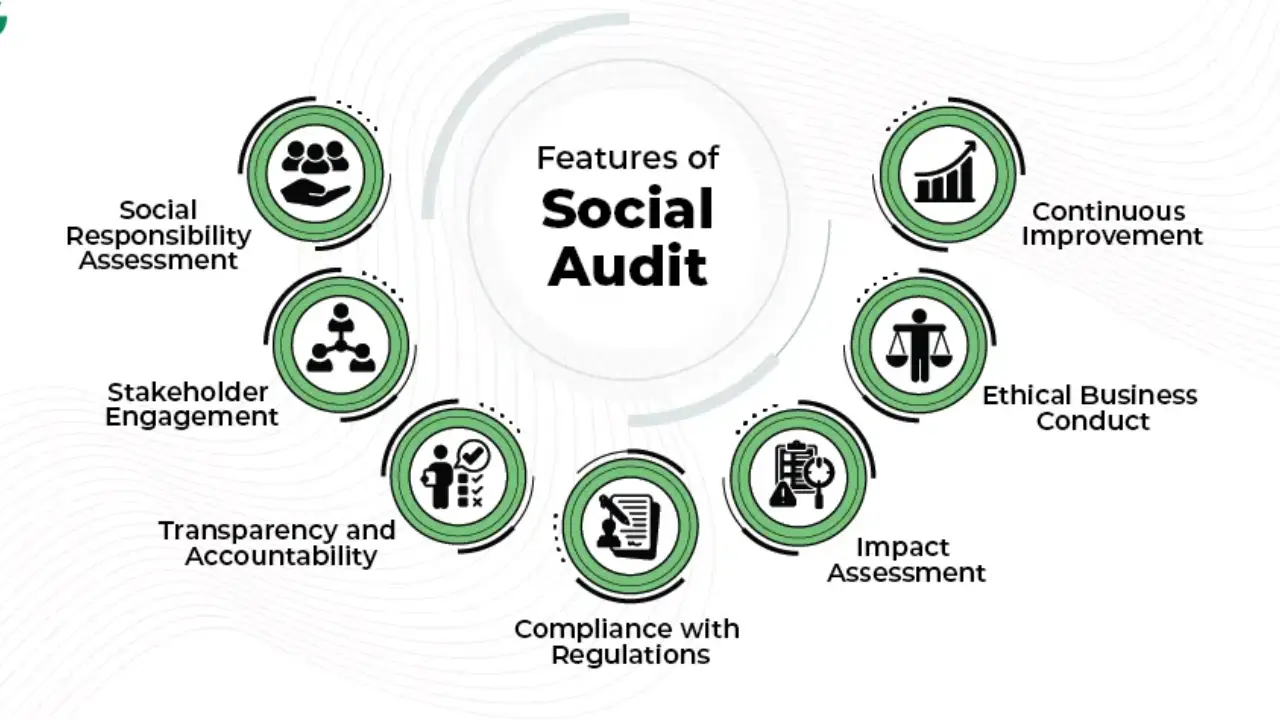
Social audits add a critical dimension by incorporating the voice of the community. They often reveal the gap between policy intent and lived experience. However, their effectiveness depends on follow-up action. Findings are frequently documented but not adequately addressed. Strengthening mechanisms for acting on audit observations is essential for meaningful impact.
In a region marked by diverse terrain and socio-economic conditions, the gap between provision and experience manifests in multiple ways. While infrastructure expansion has been significant, challenges related to maintenance, service continuity, and availability of trained personnel persist. Bridging the disconnect between beneficiaries and implementing authorities is essential. Empowering the public with mechanisms for audit and feedback can ensure continuous improvement in both execution and post-execution maintenance.
Ultimately, the value of performance and social audits lies in their ability to drive systemic improvement. Their effectiveness, however, depends on how seriously findings are acted upon. Strengthening the link between audit reports, timely corrective action, and accountability can significantly improve public service delivery. As Aristotle observed, “The aim of the state is the good life.” In this context, performance and social audits serve as essential tools to ensure that governance moves closer to that ideal, where public systems not only function but genuinely serve the well-being of the people.
(The author is an Assistant Audit Officer in the Jammu and Kashmir government. The ideas are personal.)