by Dr Farooq A. Lone
A reflection on caste, class, community and gender discrimination in Kashmiri society, highlighting how denial of social evils sustains inequality despite religious principles, education and growing social awareness.
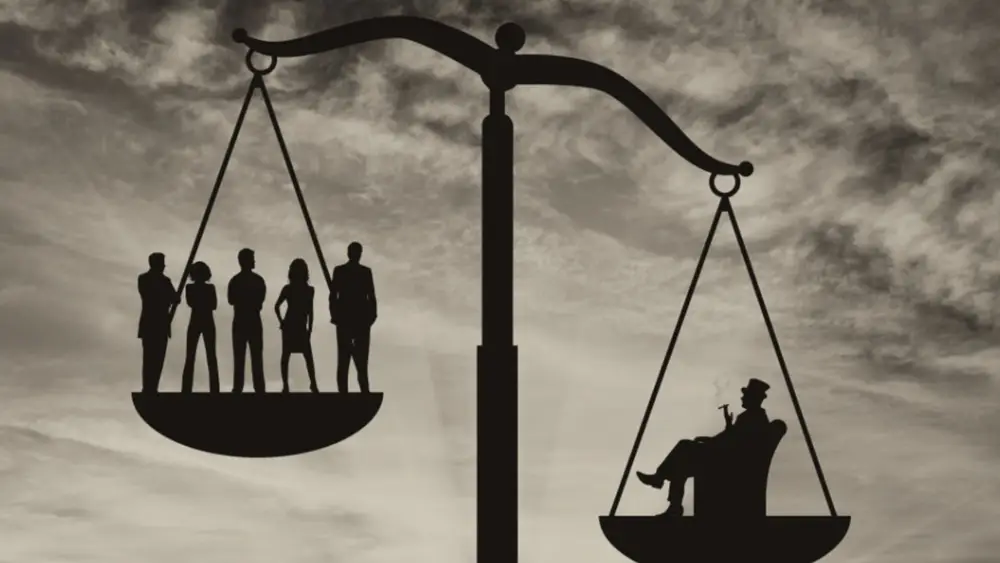
Among many sociological traits is the inbuilt character of humans to portray their own society as being devoid of any social evils. There is an inherent tendency to try to hide the negative aspects within one’s society and culture (in Kashmiri, we say Panun aeb chu Mashoq). This tendency transmits from generation to generation, knowingly ignoring the fault lines and even justifying the apparent weaknesses.
No society or culture can be described as an “ideal” society or culture, all having their shortcomings and scope for improvement. This is what makes life dynamic and ever-evolving. Like the majority of fellow Kashmiris, I am proud of our shared culture and values. Pinpointing some negative aspects is only aimed at creating awareness and an effort to improve overall societal behaviour.
Kashmir Valley is a Muslim-majority region. Islam preaches equality among its followers without any discrimination based on race, tribe, caste or ethnicity. All humans, being descendants of Adam and Eve, are considered equal in every aspect. The only consideration for attaining closeness to the Almighty Creator is piety (Taqwa). The more pious one is, the higher his status before Allah SWT. However, contrary to the notion that caste has no role in Kashmir’s Muslim-majority society, the reality is quite the opposite and somewhat complex.
Class Divisions
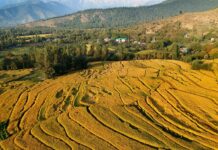
From the advent of my conscious life, I have observed discrimination of various types and levels in diverse situations. Having been born and brought up in a village where there was a major mohalla (Pur) of agriculturists (Zamindars) and three mohallas of landless non-agriculturists (Nangaars), a mohalla of barbers (Nayidpur), a mohalla of shoemakers or mochis (Watalpur), and a mohalla of cattle rearers or milk producers (Goorepur), one could feel a clear societal divide, though outwardly no one would agree.

Whenever there was a marriage or some other function where food was to be served among villagers, those from a particular mohalla would be served separately. Since we had comparatively larger agricultural landholdings, four to five persons drawn from all the mohallas of the village would work in our fields throughout the working season. I was always disturbed to see the utensils of men from a particular mohalla or community being kept on a separate shelf in a separate corner of the kitchen.
Despite my repeated requests to the contrary, the household ladies would ensure their utensils were kept separately. I tended to occasionally eat at least one morsel from their pots to make them feel they were in no way lesser mortals than others in the household. This might make them feel happy for a moment, but they were reconciled to the discrimination meted out to them in every Zamindar household of the village.
Admittedly, with the spread of education, this discrimination has reduced, but has not been eliminated. When I later shifted to Srinagar for work, I employed a boy from this very community as our domestic help, treating him like a family member. It is a separate issue that he had to be let go after some years due to certain undesirable activities.
A Classroom Crisis
When we went to high school, the teachers comprised Kashmiri Pandits and Muslims. The two had separate tea clubs and even separate jugs for drinking water. This type of social divide was common between the two communities, and very few people, mainly the more emancipated among educated friends, would share food at each other’s homes (fortunately, I had a good number among my schoolmates).
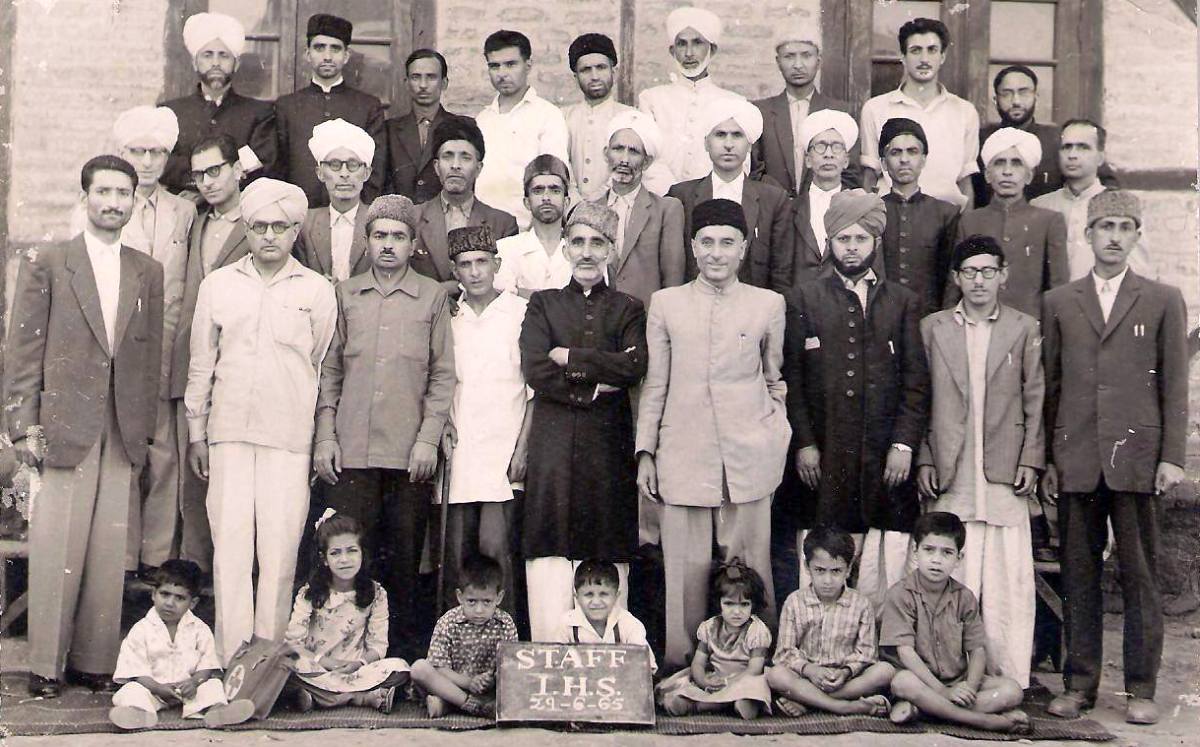
I remember that we had separate utensils for a Pandit friend of my father, who would himself prepare his tea whenever he visited us. This, being considered normal, never affected the bonding between him and my father.
When we joined college at Anantnag, we faced another kind of discrimination. Though most were friendly, some fellow students from the town would look down upon us as villagers (Gaamek) and even use the term Grees in a derogatory tone.
However, when we reached university, students from towns like Anantnag and Baramulla were clubbed with us as Gami bhai in the eyes of some students from Srinagar city. Thus, the university hostel became a great leveller. This type of discrimination changes form, into Kashmiris, Indians, Asians, as we move further away, turning a full circle and reminding us that God has made us the same and that only circumstances place us where we are at particular points in life. Once again, it is asserted that with increased exposure and education, these forms of discrimination are reducing.
A Social Institution
Coming back to caste as a social institution in Kashmir, whether we like it or not, it perpetuates prejudices and stereotypes against certain communities, which, on occasions that matter, are subtly played out. As aptly mentioned by perhaps the best-known sociologist of Kashmir, late Dr Bashir A Dabla, in his book Directory of Caste in Kashmir: “Here prevails an unrealistic notion among some individuals and groups that caste as a working social institution does not exist in this society. But that does not stand as a social reality. The actual reality is that caste as a functional social institution prevails in Kashmiri society.” Even if caste does not exist in the Hindu Varna sense, it remains very significant.

Explaining the complex nature of zaath or caste in Kashmir, Prof Dabla classified Kashmiri castes into three groups: Syed castes, who came into Kashmir from Central Asia in the early 14th century and spread Islam in the region, claiming descent from the family of the Prophet of Islam; Occupational castes, known by the occupations they or their ancestors followed; and Service castes, generally landless people or those whose occupations are considered menial.
The role of caste surfaces in important social matters like marriages. Syeds rarely marry into occupational castes, and the latter similarly refrain from marrying into service castes. Though with the universalisation of education and greater mobility outside the landlocked Valley, social discrimination is reducing with each passing day, it continues to be a major issue, particularly in urban settings.
There is a popular perception of Kashmiris being Pardaraek, glorifying and respecting outsiders over aborigines. Perhaps because of this trait, original inhabitants belonging to occupational and service castes have, over centuries, accepted the higher social status of outsiders, particularly as religious guides and preachers. It is also believed that the majority of original inhabitants who converted to Islam largely belonged to Varnas other than Brahmins, though some castes are common to both communities, such as Bhat, Raina, Koul, Malla, Bangru, Khan, Khar, Kachru and many others. Muslim preachers from outside appear to have assumed a role similar to that of Brahmins for neo-Muslims. One can only pray and hope that Kashmiri society, following the teachings of Islam in letter and spirit, treats all human beings as equals.
Gender Discrimination
Another form of discrimination is gender discrimination. Like many societies, the work of women remains largely unrecognised and unaccounted for. Earlier, men worked outside the home while women attended to domestic chores, remaining economically dependent. With the spread of education, women began working and becoming economically independent.
Yet, in most households, women who work outside still shoulder domestic responsibilities. Many men take it for granted that household work is exclusively women’s responsibility. Perhaps the time has come to end this discrimination. Households where women work in offices or fields must receive help from their partners, and the mindset of reserving domestic chores for women alone must change.
I conclude with the following verses of an Urdu rubai:
Nigahay aib-giri se jo dekha ahl-e-aalam ko
Koyi kafir, koyi fasiq, koyi zindiq-e-akbar tha
Magar jab ho gaya dil ehtisaab-e-nafs par mayil
Hua saabit ki har farzand-e-aadam mujh se behtar tha.
(An IAS officer, the author retired as Chairman, Jammu and Kashmir Public Service Commission. Ideas are personal.)