by Faiqa Masoodi
SRINAGAR: Though meritocracy was always a suspect, at least in government jobs across Jammu and Kashmir, the open merit share has now fallen to an all-time low. Now there are only 40 per cent positions for the open merit and it will include the best performing from all reserved categories thus reducing the OM further across 20 districts of Jammu and Kashmir.
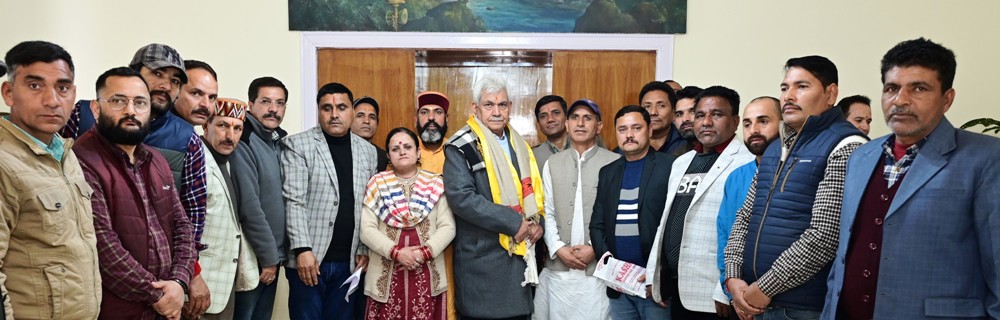
The Jammu and Kashmir political class which is cooling its heels after a high-voltage campaign for Lok Sabha polls, has avoided to land in any controversy as LG Manoj Sinha’s administration announced the new reservation system last week. Two politicians, however, did react but one of them was “reprimanded” by the party.
“The new reservation policy undermines the merit and aspirations of countless intelligent students. Allocating 40 per cent of opportunities to the 70 per cent of the students erodes meritocracy,” PDP’s Waheed Parra wrote on erstwhile Twitter. “Government must reconsider this and balance all stakeholders for equitable opportunities.”
Within minutes after the tweet started generating a debate on social media, his party leader, Mehbooba Mufti tweeted: “Any opinion expressed by a PDP member regarding reservation doesn’t represent the party’s stand or a viewpoint & is purely a personal opinion.”
Within minutes Parra withdrew his comment. While this fetched a good reaction to Mehbooba’s one-liner, it also indicated the new Laxman Rekha that Kashmir politicians are unwilling to touch. Mehbooba is contesting for Lok Sabha from Anantnag-Poonch and her party believes she has a good influence in the area. Parra also contested from Srinagar where he is pitted against Agha Rohullah.
An influential Shia leader in Jammu and Kashmir NC, Agha also reacted. “While reservations for economically and socially backward sections promote inclusivity and address historical inequalities, maintaining at least 50 per cent open merit is vital to ensure equal opportunity and recognise talent regardless of background,” Agha wrote on X. “The balance fosters a diverse and fair society.”
On May 27, 2024, the Jammu and Kashmir administration, under the direction of Lt Governor Manoj Sinha issued amendments to the Jammu and Kashmir Reservation Rules, 2005.
The amendments revise the allocation of the 100 vacancies roster in each service, class, category, and grade. The notification, issued under the powers conferred by Section 23 of the Jammu and Kashmir Reservation Act, 2004, specifies the new distribution of vacancies as follows:
Open Merit: 40 positions
Scheduled Castes (SC): 8 positions
Economically Weaker Section (EWS): 10 positions
Other Backward Classes (OBC): 8 positions
Scheduled Tribes (ST 1 and ST 2): 20 positions
Line of Actual Control/International Border (LAC/IB): 4 positions
Backward Area: 10 positions
This marks a shift from the previous reservation structure under the 2005 rules, which allocated 56 vacancies to Open Merit, 21 to Backward Areas, 10 each to Scheduled Tribes and Scheduled Castes, and 3 to the Line of Actual Control.

The amended rules also redefine the classification of Scheduled Tribes into two categories. Scheduled Tribe 1 includes tribes recognised before the enactment of the Constitution (Jammu and Kashmir) Scheduled Tribes Order (Amendment) Act, 2024, and those listed under the 1989 and 1991 Orders. This group includes tribes such as Bakarwal, Gujjar, and Brokpa. Scheduled Tribe 2 encompasses tribes added by the 2024 Amendment Act, including Gadda Brahmin, Koli, Paddari Tribe, and Pahari Ethnic Group.
Additionally, Rule 15 was updated to ensure a “fair allocation” of reserved seats in undergraduate and postgraduate courses in professional institutions. If reserved seats are insufficient in any selection process, the seats will be rotated to ensure all reserved categories receive their due share over time.
In the quick follow up the decision, the Jammu and Kashmir Socially and Educationally Backward Classes Commission (JKSEBC) formally requested the government for comprehensive details on the progress and upliftment of villages declared as backward. These villages have historically benefited from a 20 per cent reservation under the Residents of Backward Areas (RBA) category, which was later reduced to 10 per cent.
The Commission is led by Justice (Retired) GD Sharma with senior retired bureaucrat and PSC Member Rup Lal Bharti, and retired IPS officer Munir Khan, as members. Established in March 2020, the Commission’s mandate has been extended until September 2024. Its primary remaining task is to reassess the inclusion and exclusion of backward areas based on specific criteria, which it aims to complete by September.
Now, the JKSEBC has sought information regarding the facilities that constitute the criteria for designating backward areas. These criteria include the construction of roads, proximity to colleges and schools, availability of primary health centres or hospitals, access to water and Wi-Fi, and other communication modes. This information will be used to evaluate the current status of villages listed under the RBA category in Jammu and Kashmir.
The narratives being peddled around suggest that the RBA category – which existed only in Jammu and Kashmir, has faced “significant criticism”, especially given that reservations now account for 60 per cent of vacancies, leaving only 40 per cent for the Open Merit category.
The Commission exercise is aimed at excluding the villages that have “achieved the requisite facilities” and have become better. There is a view in a section of the administration that this category should be done away with and the 10 per cent added to the open merit.
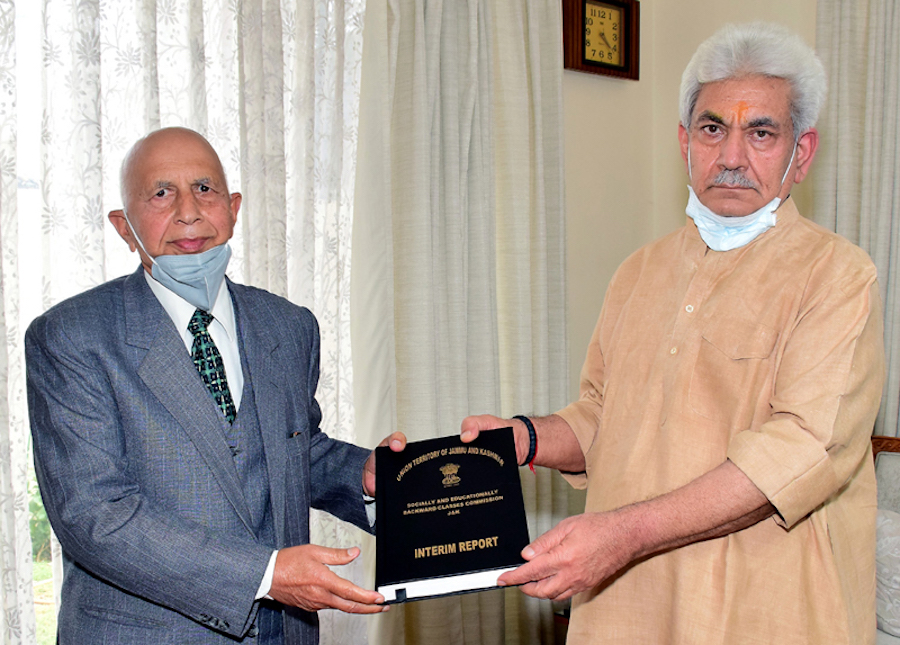
It was based on this commission’s recommendation that the Pahari Ethnic tribe, Paddari tribe, Koli, and Gadda Brahmins were added to the Scheduled Tribe (ST) category. Initially, the RBA category had a 20 per cent reservation, which was reduced to 10 per cent after allegations that influential individuals, including politicians, had their villages included to benefit their kin in government jobs and educational institutions.
Following recent government adjustments, the reservation for Scheduled Tribes (ST) has increased to 20 per cent, while Other Backward Classes (OBC) now have an eight per cent quota. Consequently, the Open Merit category’s reservation has decreased to 40 per cent. When accounting for horizontal reservations for Ex-Servicemen (6 per cent) and Persons with Disabilities (4 per cent), the vacancies under Open Merit are reduced further.
Previously, Scheduled Tribes had 10 per cent reservation, which has been doubled to 20 per cent by including the Pahari Ethnic Tribe, Paddari Tribe, Koli, and Gadda Brahmins. The previous four per cent reservation for Other Social Castes (OSCs) has been replaced by an eight per cent quota for OBCs. Additional reservations include eight per cent for Scheduled Castes (SCs), 10 per cent for Economically Weaker Sections (EWS), four per cent for residents near the International Border/Line of Control, and 10 per cent for the RBA category.