MAHARASHTRA
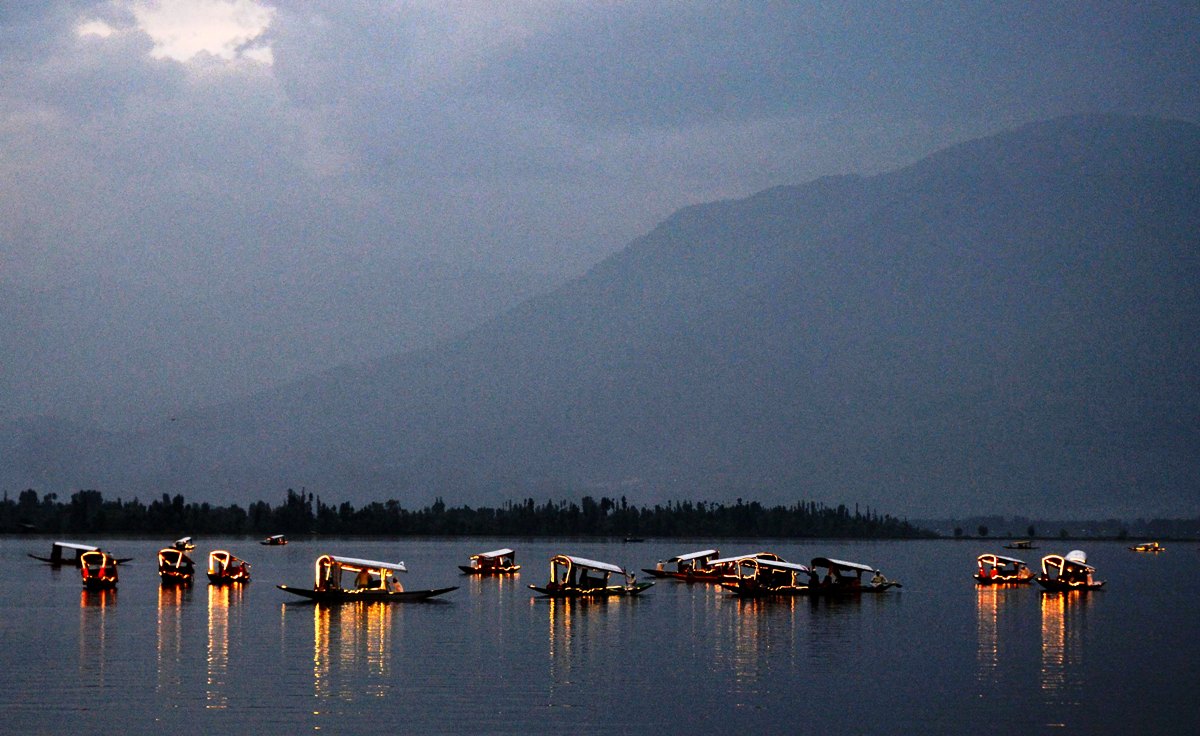
PHOTO BY BILAL BAHADUR
A newlywed man in Maharashtra’s Thane district suffered severe burn injuries after his father-in-law threw acid on him during an argument over his honeymoon destination, media reports quoting police said. The victim, Ibad Phalke, had planned to visit Kashmir, but his father-in-law, Zaki Khotal, insisted on Mecca for prayers, sparking a prolonged dispute. On Wednesday last night, their disagreement escalated on a road in Kalyan West, leading to the acid attack. Ibad is hospitalised with serious injuries, while Zaki is absconding. A case has been registered at Bazarpet police station, and search operations are underway.
In a war on drugs, around 2200 FIRs have been registered and 3200 arrested in Kashmir in the last two years
LADAKH

Tashi Namgyal, the Ladakhi shepherd whose alert about Pakistani intrusions in 1999 led to the Kargil War, has passed away. Namgyal, from Gharkon village near Batalik in Ladakh, was searching for his missing yak on May 3, 1999, when he spotted armed men in Pathan attire digging bunkers across the Line of Control. Recognising them as Pakistani soldiers, he promptly informed the Indian Army, triggering Operation Vijay. His early warning was pivotal in India’s eventual victory in the Kargil War. The Army paid tribute, honouring his vital contribution to the nation’s security during fragile peace.
Kashmir has witnessed 36 deaths, 261 injuries, and over 10,300 wildlife-related incidents due to human-wildlife conflict in the past three years.
SRINAGAR
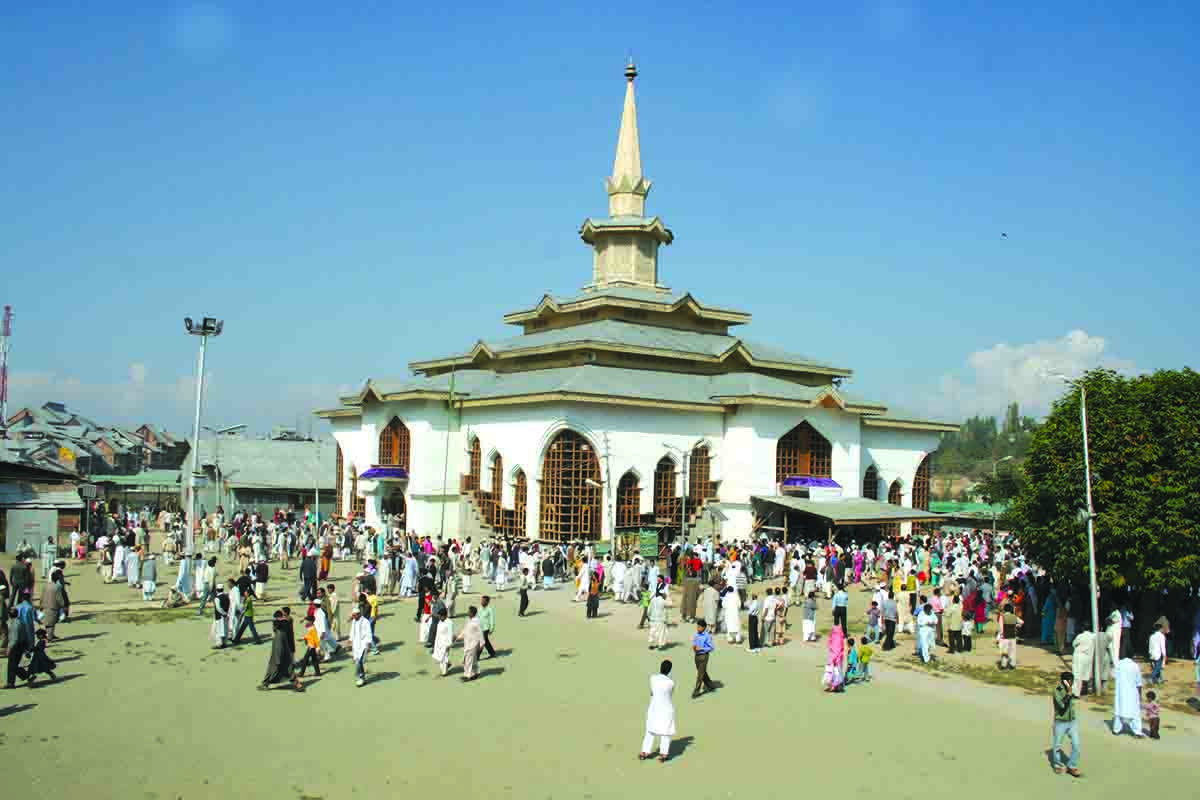
The removal of a chapter on Sheikh Noor-U-Din Wali, a revered Sufi saint, from the Class 9 textbook in Jammu and Kashmir has sparked widespread criticism. Jammu Kashmir Chief Minister Omar Abdullah assured that the chapter would not be deleted, and the matter was being addressed with the education minister. Several leaders, including CPI (M) general secretary Mohammad Yusuf Tarigami and JK Peoples Conference president Sajad Lone, condemned the decision, calling it an assault on the region’s cultural heritage and traditions. Lone described it as “cultural terrorism” and stressed the importance of the saint’s teachings in promoting peace and unity in Kashmir. The controversy arose after the Jammu Kashmir Board of School Education (BOSE) removed the chapter, with concerns that non-local experts were involved in revising the syllabus without consulting local scholars. In response, the government announced the formation of a committee to review the issue, with plans to consult academicians and other stakeholders. The education minister, Sakina Masood Itoo, noted that the changes had been made in previous years, and while it was too late to amend this year’s textbooks, steps would be taken to address the concerns.
Over the past four years, gardens and parks in the Kashmir Valley have generated Rs 37 crore in revenue from entry tickets, videography permissions, and the sale of plant material. Annual figures rose steadily from Rs 6.70 crore in 2021-22 to Rs 14.35 crore in 2023-24 as visitor footfall grew from 60.48 lakh to 65.74 lakh.
DELHI
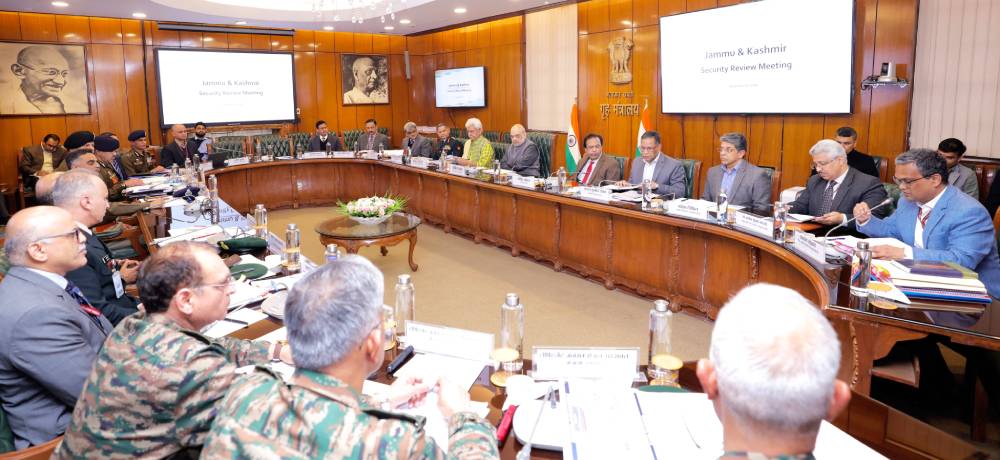
Home Minister Amit Shah chaired a high-level security review meeting in Delhi, focusing on Jammu and Kashmir’s security situation and a roadmap for 2025 to neutralise militants and prevent infiltration. Shah reaffirmed the government’s commitment to achieving a “terror-free Jammu and Kashmir” and assured that all necessary resources would be allocated for this goal, aligning with Prime Minister Narendra Modi’s zero-tolerance policy against sabotage. The discussion highlighted plans to eliminate remaining militants, prevent fresh infiltration, and stop local recruitment by militant groups. The security situation in both the Kashmir valley and Jammu region, which had seen a rise in attacks in 2024, was examined. Shah praised the significant reduction in violence incidents and infiltration, noting that the people of Jammu and Kashmir had shown strong faith in democracy through their participation in elections. The meeting also included a focus on implementing the Area Domination and Zero Terror plans in mission mode, with additional troops deployed in sensitive areas for surveillance and operations against militants.
Cyberstalking and harassment cases in Jammu and Kashmir have remained sporadic over the years, with no cases reported in 2018 or 2020, only one case in 2019, another in 2022, and a slight rise in 2021 with six cases reported.
JAMMU
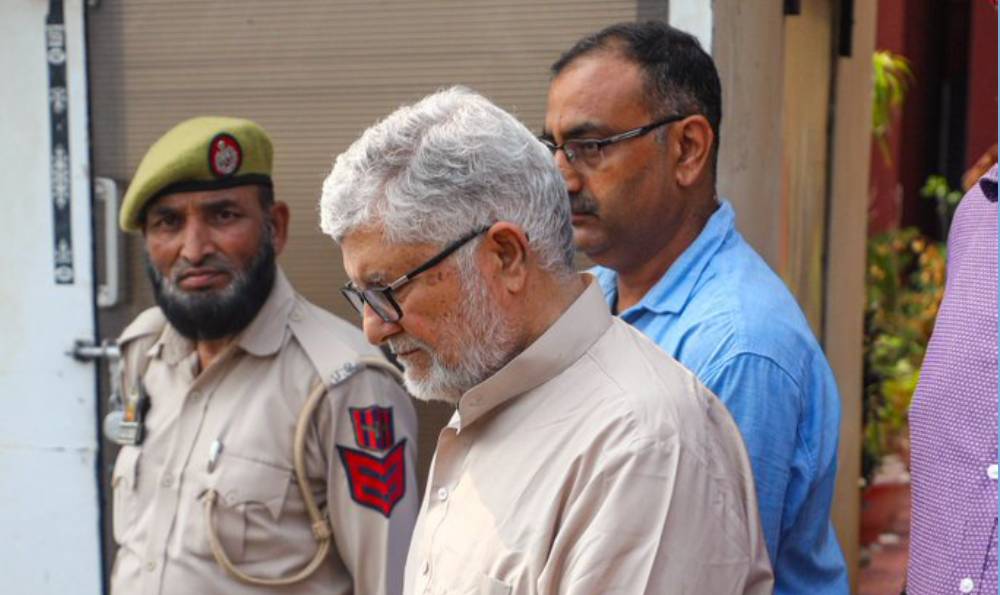
Jammu Kashmir Police’s State Investigation Agency (SIA) filed a supplementary chargesheet against senior lawyer Mian Abdul Qayoom in the 2020 murder of Babar Qadri, a young lawyer from Srinagar. Qadri was gunned down at his residence in Zahidpura on September 24, 2020, by members of the banned Resistance Front (TRF), an offshoot of banned Lashkar-e-Toiba (LeT). The SIA chargesheet, a 340-page document, accuses Qayoom of conspiring with TRF and their handlers in Pakistan to eliminate Qadri due to personal and professional animosities. Qadri had been vocal in criticising Qayoom’s leadership of the High Court Bar Association (HCBA) and his secessionist agenda, even forming a rival group, the Kashmir Lawyers Club. Qayoom had also threatened Qadri multiple times and opposed his bid for HCBA elections. The investigation, initially handled by the NIA, was later transferred to the SIA in July 2023 after concerns over judicial interference and intimidation of Qadri’s family. Qayoom was arrested on June 25, 2024, as the principal conspirator. The charges against him include murder, conspiracy, and violations under the Unlawful Activities (Prevention) Act (UAPA). The case was transferred to Jammu in December 2023 for trial, and Qayoom remains in custody at District Jail Amphalla, Jammu.
KASHMIR
PDP president, Mehbooba Mufti, has called for an independent Environmental Impact Assessment (EIA) before proceeding with the proposed Rs 300 crore Rajouri-Baramulla National Highway project, railway expansion, and satellite townships. She argued that these projects could severely harm the region’s environment and economy, threatening the livelihoods of local communities. While supporting infrastructure development, Mufti emphasised the need for sustainable growth that doesn’t compromise Kashmir’s natural resources. She said the proposed highway runs through eco-sensitive areas in the Pir Panjal range and tourist spots like Yousmarg and Doodhpathri. Such projects could cause ecological disasters similar to Joshimath in Uttarakhand. Besides, Mufti questioned the necessity of duplicating the existing Mughal Road and raised concerns over the environmental damage caused by deforestation and land degradation. She also voiced opposition to the construction of satellite townships along the Srinagar Ring Road, which could affect agricultural and horticultural land. Mufti highlighted the importance of protecting Kashmir’s identity, rooted in its scenic beauty, forests, and orchards, and demanded a transparent EIA, involving local communities and environmental experts, before moving forward with the projects.
JAMMU
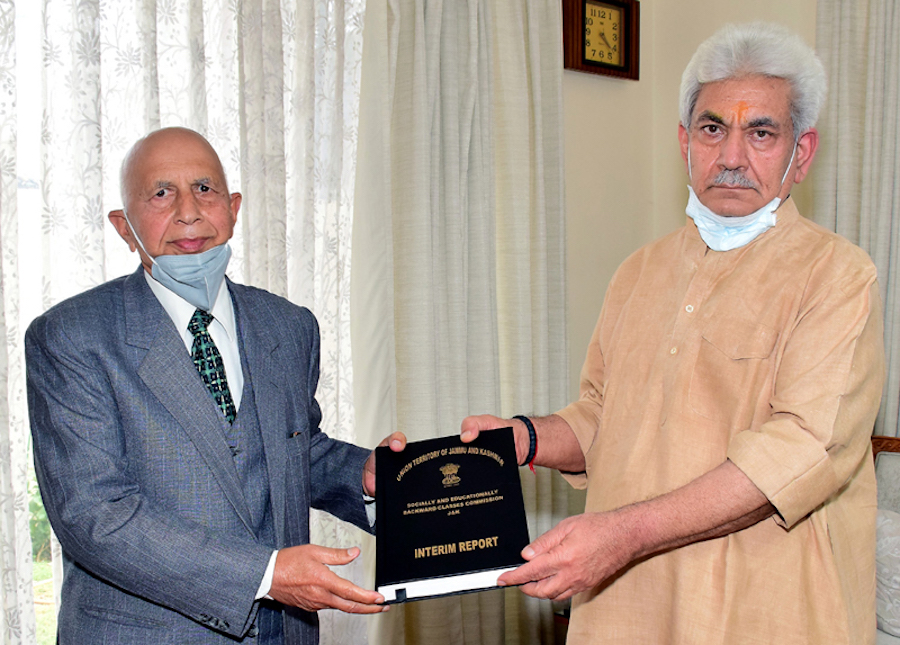
The Jammu and Kashmir government has formally disbanded the Socially and Educationally Backward Classes Commission (SEBCC) without addressing the task of determining which areas should be included or excluded from the backward categories. The commission, led by Justice GD Sharma, was set up in March 2020 and had its term extended several times, but its final term ended without further extensions. The commission was examining 80 proposals for the inclusion of new backward areas and the exclusion of certain areas that had developed over time. A significant point of discussion was the reservation percentage for the RBA (Reserved Backward Areas) category, which had been reduced from 20 per cent to 10 per cent. This, along with a demand to lower the RBA percentage further and increase the Open Merit quota, has been a point of contention, as only 35 per cent of Jammu Kashmir’s population is left in the Open Merit category.
KATHUA
A tragic fire in Kathua claimed the lives of six people, including former Deputy Superintendent of Police Avtar Krishen Raina, his three-year-old grandson, and five others. The incident occurred when the house was filled with thick smoke, suffocating the victims, who were sleeping. Despite efforts by locals to rescue them, the victims were declared dead at the hospital due to smoke inhalation. Four others, including Raina’s wife, were injured and are receiving treatment. Preliminary investigations suggest that the fire started from a Diya in the Puja room, which ignited nearby furniture, causing the smoke. The police have registered a case and are investigating the cause.
SRINAGAR
The High Court of Jammu Kashmir and Ladakh reaffirmed the right of Muslim daughters to inherit their father’s property, emphasising that the Quran bestows inheritance rights first to females and then to males. The court ruled while addressing a case where a woman, who had sought her share from her father’s property 43 years ago, died before receiving it. The woman’s children continued the legal battle for her inheritance, supported by a Division Bench ruling in their favour. The court highlighted the contradiction between practising Islam’s daily rituals and the refusal to grant daughters their rightful share due to local customs, which Islam condemns. The petitioners’ appeal was allowed, and the orders of the Settlement Officer and Settlement Commissioner, who had misinterpreted the Division Bench’s judgement, were quashed. The court directed the Revenue Department to implement the decision within three months, ensuring the petitioners receive their mother’s rightful share of the property.
KASHMIR
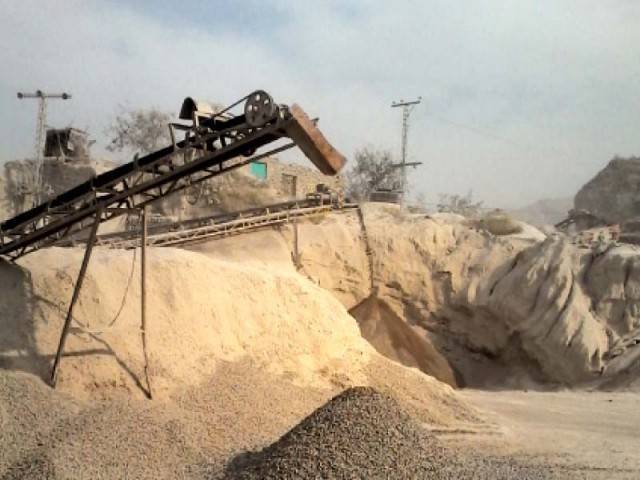 The Jammu and Kashmir Pollution Control Committee (JKPCC) has issued closure notices to 114 stone crushers and 15 brick kilns in Pulwama district for operating without the required No Objection Certificates (NOCs). Of the 135 stone crushers and 27 brick kilns in the district, most are operating illegally. The JKPCC has taken action following concerns over the environmental impact of these unauthorized operations. Legal action is underway, and closure orders, along with environmental compensation, have been issued. However, the Federation of Chambers of Industries Kashmir (FCIK) has strongly opposed these closure notices, arguing that the licenses under SO 60 are not legally required and criticising the JKPCC for its swift actions against long-operating businesses. It warns that shutting down these units will severely disrupt infrastructure projects across the region, as stone crushers are essential for producing aggregates needed for construction. The FCIK also highlights legal issues, claiming the closure notices are based on incorrect interpretations of the regulations. Stone-crushing units and hot-mix plants, which operate under specific local guidelines, are being unfairly targeted, it alleged.
PUNJAB
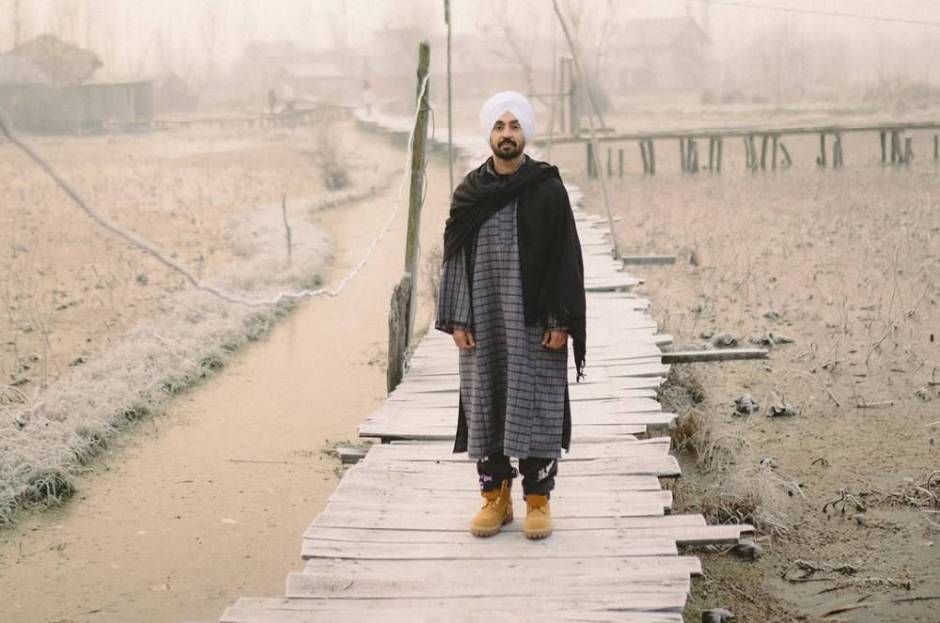
Punjabi superstar Diljit Dosanjh enjoyed a peaceful break in Kashmir last week, sharing his experiences on Instagram. His recent reel showcases serene moments, including playing with birds, exploring picturesque streets, conversing with locals, and capturing photos with fans. He also sipped traditional Kashmiri kahwa during a shikara ride on Dal Lake and visited the historic Khanqah-e-Moula mosque, appreciating its intricate Kashmiri wooden architecture. Along with his trip, Diljit addressed the controversy over his use of ‘Panjab’ instead of ‘Punjab,’ clarifying it was not a political statement but a personal choice. He also expressed concerns about India’s concert infrastructure, stating he would not perform live shows in India until the infrastructure improves.