In late 2024, a controversy erupted in Kashmir with politicians criticising the Bose of School Education (BOSE) Jammu and Kashmir for deleting a chapter on Shaikh Nooruddin Wali, the standard-bearer saint of Kashmir. It was replaced by a write-up by M K Ghandi. The deleted chapter comprised 541 words and with five questions as part of the exercise. It had 245 words on vegetarianism along with five fill-in-blanks on that issue. It suggested further reading for students was Life Divine by Sri Aurobindo Ghosh. Here is the deleted chapter and an addendum on vegetarianism.
Shaikh Noor-ud-Din Wali
by Prof G R Malik
For many long centuries, Kashmir has been known as Resh Waer (the valley of rishis). This is because rishis were found in all parts of the valley. They lived very simple and austere lives. Most of them were vegetarians and considered it a sin to kill a living being. They lived like hermits, doing penance and serving common people in several ways, mainly by planting shady trees for travellers to rest.
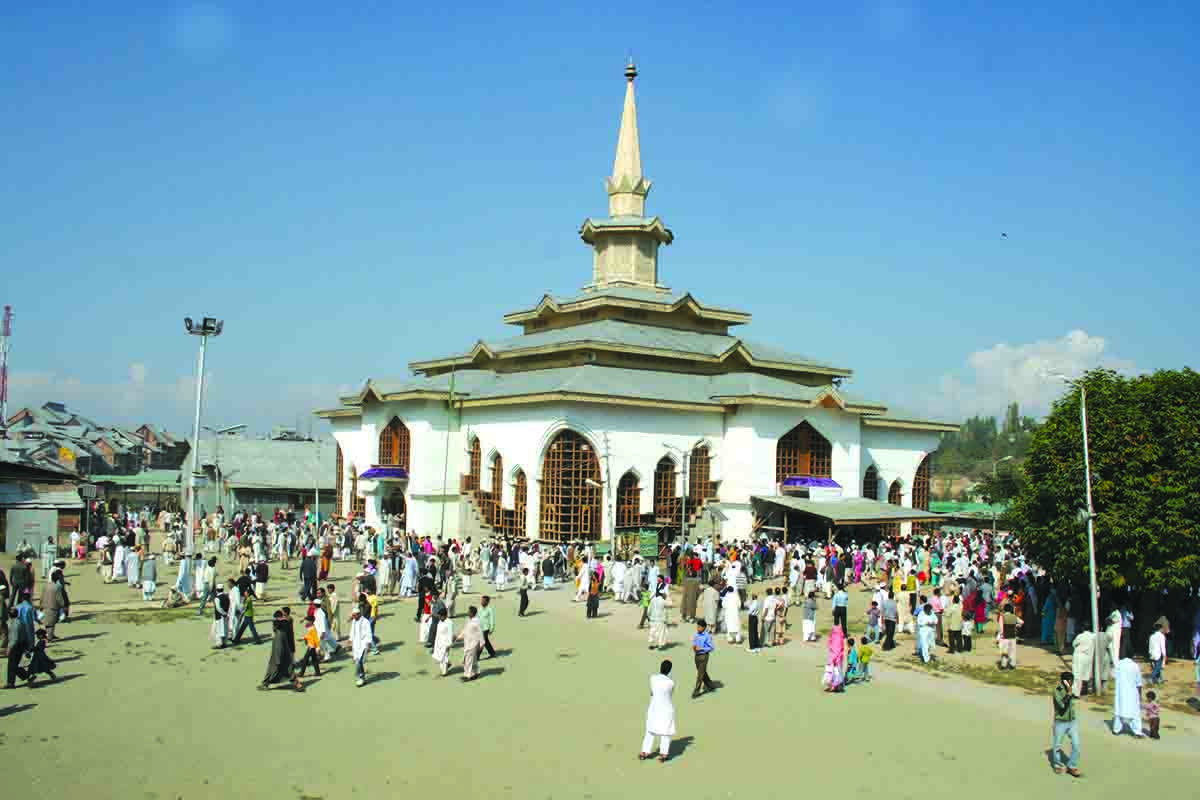
When Islam entered the Valley in the thirteenth century, the rishi tradition continued but was given a Muslim colour and character. The man who played the most leading role in this process was Hazrat Shaikh Noor-ud-Din Wali (RA), also known as Nund Ryosh. He was born in 1377 AD at Kaimoh, Kulgam. His father, Salar Sanz, was the scion of a Rajput family of Kishtwar. Some members of this Rajput family left Kishtwar because of a family feud and settled in Kashmir. Salar Sanz accepted Islam and was named Salar-ud-Din.
The Shaikh exhibited an ascetic tendency from his early childhood. This continued even after his marriage with Zai Ded and the birth of a daughter, Zoon Ded and a son, Haider Baba. At the prime of his youth, he adopted a monastic way of life. He entered a cave near Kaimoh and, according to legends, spent twelve years there, doing penance and purifying his self. It appears from what he did later that this was a period of spiritual training and preparation.
When he finally left the cave, he had turned into a dedicated missionary. He moved from place to place in Kashmir preaching his simple gospel of the fear of God and accountability before Him after death, commitment to the principles of truth, justice, and love and service of mankind.
By his saintly life he set an example of simplicity, truthfulness and devoted service of people. As a missionary, he taught us that a true saint is not one who escapes from life but one who does the duties of life with honesty and humility. In one of his verses, he tells us that the chosen servants of God are those who worship him sincerely and fulfil their duties in life regularly. The Shaikh attracted disciples everywhere. All of them were noble souls and lived lives of piety and in the service of their fellow beings.
The Shaikh won popularity in every nook and corner of Kashmir. Kashmiris called him and continue to call him Shaikh-ul-Aalam (RA) which means the spiritual guide of the world or a saint of world stature. After setting a shining example of a truly saintly life, Shaikh-ul-Alam (RA) died in Rupwan in 1438 AD and was laid to rest at Chrar-i-Shareef.
Shaikh-ul-Aalam (RA) is one of those rare personages of history whose popularity goes on growing even after their death. With the passage of time the Shaikh has become a household name in every part of Kashmir. People continue to repeat his wise sayings and sweet verses. Years after his death, coins were struck in his name during the Afghan rule over Kashmir. Today numerous trusts and educational institutions exist in his name. These include the Shaikh-ul-Aalam (RA) Chair at the University of Kashmir and the Shaikh-ul-Aalam (RA) Museum at the University of Jammu.
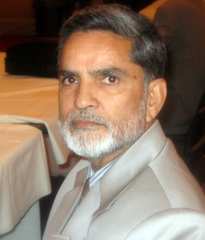
Author: Prof Ghulam Rasool Malik, born in 1945, is a professor of English. Under a post-doctoral Commonwealth fellowship, he studied at the University of Cambridge, UK, in 1987-88. His areas of specialisation are British English poetry and comparative literature. Prof Malik’s publications are: Iqbal and the English Romantics (1988), Rasul Mir (Sahitya Akademi, 1990), The Bloody Horizon: A Study of Iqbal’s Response to the West (1991), Romantic Criticism (IGNOU, 1999) and Urdu book, Surood-I-Sahr Afarin (1993). His articles and book reviews have appeared in The Charles Lamb Bulletin, UK, Muslim World Book Review, UK, Radiance, New Delhi and English Studies in India, Srinagar.
Language Work
Vegetarianism is the practice of eating foods from the plant kingdom. There are several types of vegetarians. Semi-vegetarians avoid meat but eat poultry and other animal foods. Lactoovo-vegetarians avoid poultry and fish as well as meat, but do include milk and eggs in their diets. Some vegetarians practice veganism, eating no animal foods at all.
More recently, people have adopted vegetarian diets based on scientific studies showing that diets high in fatty animal foods may contribute to the early development of disease, including obesity, coronary artery disease, high blood pressure, diabetes mellitus, and colorectal cancer.
Doctors suggest that one should reduce the intake of animal fats, such as those found in meat and dairy products, and increase consumption of fruits, vegetables, and whole grains. The vegetarian plant-based diet typically has the advantage of being low in saturated fat, cholesterol, and salt, but it can be lacking in other ways. Vegetarians need to plan their diets with special care in order to obtain the essential nutrients received from diets that include meat, fish and poultry.
Vegetarians need to eat other foods, such as fortified grains and cereals that provide necessary nutrients like iron, zinc, vitamin D, and some B vitamins like B12 and B6. Vegetarians who avoid milk products must find alternatives that are high in calcium and vitamin D, such as fortified soymilk. Lacto-ovo-vegetarians can use eggs, milk, nuts, peanut butter, dry beans, peas and lentils in place of choices from the meat group.