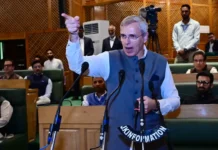
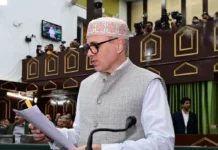
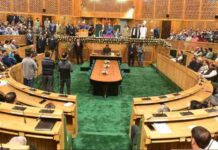
Jammu Kashmir Chief Minister, Omar Abdullah, also the finance minister, presented the budget for 2025-26 on March 7, 2025. Read the text of his speech:

With great humility and a profound sense of duty, I stand before you today to present my first Budget as Finance Minister—marking the first Budget of an elected government in seven years. While it is an honour, I am acutely aware of the weight of responsibility that comes with being the custodian of Jammu and Kashmir’s finances at this crucial juncture. This Budget is more than just a financial statement—it is a roadmap for a new and prosperous Jammu and Kashmir, reflecting the aspirations of our people and laying a strong foundation for economic growth, social progress, and sustainable development. As we navigate challenges and embrace new opportunities, I seek the unwavering support and active collaboration of every Hon’ble Member of this august House. Together, transcending political differences, we must unite to fulfil our shared commitment to building a stronger, self-reliant Jammu and Kashmir, working for the greater good of our people.
The journey of Jammu and Kashmir has been one of resilience and determination. Our government is committed to transforming J&K into a modern, progressive, and economically vibrant region. Our government endeavours to frame a roadmap to reclaim the prudence, sagacity and self-confidence which have been the cornerstones of our identity for generations. Our challenges are vast, and our limitations are many. But we must collectively pledge to confront those challenges head-on, with unwavering resolve. I have endeavoured to prepare this maiden Budget as a true reflection of the dreams of our people, the needs of our future generations, and the aspirations of every citizen of Jammu and Kashmir.
I once again express my gratitude to the people of Jammu and Kashmir for their enthusiastic and confident participation in the recent Assembly Elections. The unprecedented voter turnout is a clear testament to their unwavering resolve to move beyond the shadows of past turmoil and actively contribute to the journey of development and progress. By granting us a strong mandate, they have entrusted us with the responsibility to serve them. Today, they look to the government with renewed hope and expectations for an environment that fosters political empowerment, meaningful employment, sustainable development, social inclusivity, and robust economic growth. I assure them that we will serve them with sincerity and fulfil their aspirations for a prosperous and thriving Jammu and Kashmir.
The restoration of full statehood is a deeply cherished aspiration of the people of Jammu and Kashmir, and our government remains resolute in working towards its fulfilment.
My government is committed to strengthening grassroots democracy by empowering Panchayati Raj Institutions and Urban Local Bodies, which play a crucial role in local governance and development. Our Government is committed to holding elections to these bodies, reinforcing our commitment to accountable, inclusive, and decentralized governance for the holistic development of Jammu and Kashmir
This Budget emphasises inclusive growth, fiscal prudence, and strategic investments in infrastructure, agriculture, industry, healthcare, education, and digital governance. We are focused on bridging regional disparities, empowering youth and women, and fostering a business-friendly environment to attract investment and innovation. To ensure this Budget truly reflects the aspirations of our people, we engaged with elected representatives, industry leaders, and key stakeholders, incorporating their insights to create a people-centric roadmap for a better quality of life for all. We have also set new standards of engagement with and feedback from people’s representatives by directly engaging with each Member of this august House in the budget consultation process.
Jammu & Kashmir is at the threshold of a new era of peace and prosperity, with a semblance of normalcy returning after over three and a half decades of turmoil. This improved environment is contributing to economic progress, with J&K’s economy expanding from ₹1,64,103 crore in 2019-20 to ₹2,45,022 crore in 2023-24. In 2024-25, the primary, secondary, and tertiary sectors are projected to contribute 20.00 per cent, 18.30 per cent, and 61.70 per cent to GSVA, respectively. It is a testament to the strong foundations laid by the leadership of J&K that despite its geographical challenges and the multi-decade turmoil, the socio-economic indicators continue to remain robust. I am confident that J&K will emerge as a leading region in development, playing a vital role in our vision of a developed India by 2047.
Improving our Fiscal Situation
Because of our historical challenges of high committed expenditures and limited revenue streams, Jammu & Kashmir has been facing consistent fiscal stress. Own tax and non-tax revenues cover only 30 per cent of revenue receipts and 25 per cent of budgetary needs. An unfavourable geographical location and years of unrest have hindered industrialization, straining resources and deepening constraints. This has been compounded by the fact that circumstances have not allowed us to fully harness the sectors in which we have the potential. As a result, J&K remains heavily reliant on central grants and often requires ways and means advances and overdrafts to manage liquidity.
Over the past months, we have made significant strides in expanding revenue, curbing non-priority spending, and enhancing fiscal transparency. GST compliance has improved through rigorous monitoring and dealer expansion. To further strengthen revenue realization, we will continue implementing GST tracking for capital works and risk-based e-way bill verifications. Additionally, red-flagged cases will be closely scrutinized using inputs from the Business Intelligence Unit (BIU) and GST Network (GSTN) to prevent leakages and ensure a more robust tax administration.
The government has successfully introduced e-stamping for registrations and launched the e-Abgari platform for the Excise sector, ensuring greater transparency in excise auctions. With robust improvements in billing, metering, and digitization, non-tax revenue has risen to ₹5,824 crore as of January 31, 2025, while tax revenue has reached ₹11,650 crore—both set to exceed last year’s collections. Moving forward, we will continue to build on these initiatives to further enhance revenue generation and fiscal management.
The government’s fiscal stress stems from high committed expenditures, over 70 per cent of total spending, with salaries and pensions alone accounting for nearly 60 per cent of revenue expenditure. Additionally, high AT&C losses and power sector under-recoveries further strain finances.
We are reforming metering, billing, and collection to strengthen the power sector. Under-recovery has dropped from ₹6,552 crore in 2022-23 to ₹5,244 crore in 2023-24, with a target of ₹4,200 crore in 2024-25. Expanding the consumer base, smart meters, online billing, and aerial bunched cables are driving this turnaround.
High AT&C losses resulted in huge outstanding liabilities for power purchases, for which ₹28,000 crore were borrowed in the last few years, raising public debt from 48 per cent of GSDP in FY 2015-16 to 52 per cent in 2023-24. To mitigate this, we are reducing high-cost debt, optimizing liabilities, and calibrating the repayment schedules for long-term fiscal stability.
To tackle fiscal challenges, we are curbing non-priority spending, saving through the austerity measures in place. Aadhaar seeding and biometric verification are streamlining welfare databases in the food supply and social security sectors.
To enhance fiscal transparency, all developmental expenditures are available on the Empowerment/Jan-Bhagidhari portal for public scrutiny. Additionally, independent officers are systematically verifying projects, ensuring timely completion and quality execution.
We are strengthening debt sustainability by keeping all borrowings within approved limits and pursuing fair apportionment of J&K’s erstwhile public debt between the successor UTs. We have also started contributing to RBI’s contingency funds—CSF for debt repayment during stress and GRF for sudden financial obligations.
Taking advantage of the favourable business and banking cycle, J&K Bank has continued its reform journey, strengthening capital adequacy, corporate governance, and professional management. These efforts have revitalized its financial health, with operating profit expected to rise to ₹2,100 crore this year from ₹1,760 crore last year.
We have introduced a key reform in pension management to address delays in account reconciliation and mounting reimbursement dues. J&K Government now ensures timely pension reimbursement to J&K Bank with zero dues from July 2024. These reforms will continue to drive efficiency and transparency in pension management.
We are strengthening fiscal discipline by curbing the reliance on Hundis and overdrafts. Improved liquidity management has significantly reduced the government’s need for ways and means advances or overdrafts. This Budget lays the foundation for a fiscally prudent development path.
Given the favourable fund-sharing pattern of Centrally Sponsored Schemes (CSS), we are making full use of the opportunity through faster execution, timely submission of UCs, and proactive engagement with central ministries. As a result, CSS receipts have risen sharply from ₹5,997 crore in 2022-23 to ₹10,324 crore in 2023-24, and we aim to sustain this momentum. Additionally, we are enhancing the efficiency of developmental spending and promoting private-sector participation to complement government finances and accelerate J&K’s growth trajectory.
Jammu & Kashmir continues to face significant infrastructure deficits in areas like road connectivity, water supply, sewerage, tourism, and power. Addressing these challenges requires substantial financial resources and continued support from the Central Government. This year, we actively engaged with the Central Government, resulting in the formation of an expert committee to resolve fiscal issues. I met with the Hon’ble Prime Minister, Union Home Minister, and Union Finance Minister on multiple occasions. I am pleased to share that our efforts have paid off—the Central Government has approved special assistance for J&K and will support fiscal reforms to enhance revenue and expenditure management.
The budget for J&K Police, which was around 11 per cent of our allocation, has been migrated to the MHA budget from 2024-25 onward. In addition to this, J&K will receive an extra ₹5,000 crore in grants for 2024-25 and 2025-26. I sincerely thank the Hon’ble Prime Minister, Union Home Minister, and Union Finance Minister for their unwavering support in strengthening J&K’s fiscal health and realizing its vision for growth and prosperity.
Due to our fiscal reforms and central assistance, the fiscal deficit will be reduced, bringing us closer to our FRBM target. Jammu and Kashmir’s economy is projected to grow at 7.5 per cent in 2024-25, with an estimated GSDP growth of 9.5 per cent in 2025-26. This momentum will be driven by strategic policy measures, infrastructure development, and business-friendly initiatives.
Enhancing Transparency and Responsiveness in Governance
Good governance is key to a prosperous and inclusive future. Prioritizing transparency, accountability, and citizen participation, we are empowering local communities and ensuring equitable resource distribution. Digital governance, streamlined public services, and socio-economic initiatives are strengthening public trust and accelerating development.
To ensure prompt and transparent public service delivery, the Jammu and Kashmir Public Services Guarantee Act was enacted by our government in 2011. Today, J&K leads in digital governance with 1,166 online services on the e-Unnat portal, over 500 e-services integrated with the Rapid Assessment System (RAS), 387 services under PSGA, and 104 services linked to DigiLocker for secure and accessible documentation.
Our government is committed to transparent and efficient grievance redressal through the JK SAMADHAN & RAABITA platforms, in collaboration with BISAG-N. These initiatives provide auto-routing of grievances, multilingual support, mobile app access, an appeal system, real-time tracking, and feedback analysis. A toll-free call centre (1905) ensures accessibility for all citizens. The RAABITA initiative allows direct grievance registration through the Chief Minister’s Public Services and Outreach Office, ensuring swift resolution. These efforts strengthen citizen engagement and governance transparency, ensuring every voice in Jammu & Kashmir is heard.
Jammu & Kashmir ranks high in the SDG India Index 2023-24. To further improve our SDG ranking, our Government will strengthen data-driven monitoring, improve resource allocation, and implement evidence-based policies. We are committed to aligning the budget with SDGs and advancing Outcome-Based Budgeting and Monitoring.
Our government is committed to fully implementing Direct Benefit Transfer (DBT) to eliminate leakages and ensure 100 per cent Aadhaar seeding for timely fund transfers. To address delays in Old Age, Widow, and Disability pensions, we are transitioning to an Aadhaar-based payment system in phases, ensuring efficiency and transparency in welfare disbursements.
Unlocking Economic and Industrial Potential
Agriculture and Allied sectors
Agriculture and allied sectors are crucial for the livelihoods of most of our population. Our flagship Holistic Agriculture Development Program (HADP), with a ₹5,013 crore outlay until 2027-28, is reshaping subsistence farming into a commercial agri-economy. For 2024-25, ₹815 crore has been allocated, aiming to double value addition, boost growth by 11 per cent, create 2.88 lakh jobs, and establish 19,000 enterprises.
The Competitiveness Improvement of Agriculture and Allied Sectors Project (JKCIP), backed by a $100 million investment from IFAD and ₹117 million from the J&K Government, will support climate-smart farming and benefit around 3 lakh households. Combined with HADP, these initiatives amount to ₹6,813 crore and will transform J&K’s agricultural landscape, enhancing farmer incomes and contributing significantly to the state’s economy.
To boost farm productivity and income, we aim to introduce a two-crop pattern across all agricultural land. Strengthening irrigation, improving market access, and promoting sustainable farming are the key priorities of the Government.
Horticulture is a vital sector for J&K’s economy, contributing significantly to GSDP and supporting millions of people. We aim to increase the area under horticulture crops to 3.75 lakh hectares and boost production by 15-20 per cent over the next five years. High/Medium Density Plantations will expand by 5,500 hectares by 2026-27, and Controlled Atmosphere (CA) storage capacity is targeted to reach 6 LMT by 2029.
In the dairy sector, additional units will be established to increase milk production, ensuring self-sufficiency and improved livelihoods. For fish production, the focus will be on expanding trout farming and other aquatic species to boost yields and sectoral growth. These initiatives will support farmers, create jobs, and promote greater self-sufficiency in agricultural and allied products.
To further enhance farmers’ economic security, we will continue expanding the Kisan Credit Card scheme and aim to establish 2000 Agri-Business Centers (Kisan KhidmatGhars) for wider access to advisory services and market insights.
Efforts to enhance farm credit include revitalizing 537 PACS, with 47 as CSCs, 96 as PMKSKs, and 20 as PMJAKs, along with the registration of 450 new cooperatives and 50 functional FPOs. Additionally, Super Bazars will be established in Kupwara, Bandipora, and Poonch, and key agricultural initiatives will improve infrastructure, including Mushroom Units, a Medicinal Plants FPO Park, compost units, and cold storage facilities.
J&K produces some of the finest quality wool. Despite its superior quality, J&K’s wool fetches low prices, dropping from ₹100 to less than ₹30 per kg due to weak market and industry linkages. The wool and pelt sector has the potential to generate ₹135 crore annually. To address this, the Industries Department will introduce advanced wool processing technologies, provide training to entrepreneurs, and frame a policy to attract private and corporate investments in wool processing mills.
J&K has significant potential for establishing a leather tanning industry. Currently, around 5,000-6,000 pelts produced daily in Kashmir go to waste due to the absence of processing facilities. To harness this opportunity, the government will formulate a policy to promote leather tanning industries, ensuring value addition. Processing these skins into pelts and leather will contribute an additional ₹100 crore to J&K’s economy.
For the year 2025-26, an allocation of ₹2,221.58 crore has been made under capital expenditure for Agriculture and Allied Sectors, marking an increase of ₹332.72 crore over the revised allocation of 2024-25. This enhanced funding will support key initiatives aimed at strengthening the sector and boosting farmers’ incomes.
Rural Economy
Building a resilient rural economy is a key priority for our government. Alongside J&K’s natural beauty and rich agriculture, we must enhance rural sanitation. I propose 2025 as the “J&K Green Mission” year to unite communities in making villages clean and green through waste segregation, proper disposal, and vermicomposting.
To ensure sustainability, the government will implement the Own Source Revenue (OSR) policy, aiming to make every village panchayat self-sufficient over the next five years. Under Pradhan Mantri Awas Yojana – Gramin, 3.40 lakh houses are sanctioned, with 50,000 more to be built in 2025-26, providing quality housing and improved living standards for rural households.
MGNREGA ensures guaranteed rural employment, benefiting 6.46 lakh households in J&K. So far, 9.87 lakh workers have been employed. In the next financial year, the goal is to generate 400 lakh person-days and create over 2 lakh assets, focusing on the vulnerable population.
NRLM has nurtured one lakh SHGs, empowering women across J&K. The mission aims to transform 2.33 lakh Potential Lakhpati Didi households into the Lakhpati fold within two years, with 29,000 already achieving this milestone. To boost women’s participation in the rural economy, 1.5 lakh women farmers will receive training under NRLM. The UMEED program will establish 14,763 SHGs, linking 12,000 SHGs to banks and benefiting 1.32 lakh households.
By March 2026, 500 new Panchayat Ghars and 500 additional CSC rooms will be completed. For the 2024-25, District Capex Budget of ₹1,865.69 crore, the target includes continuing the 3,327 ongoing works and initiating 41,640 new works. Physical verification of 100 per cent works will be carried out to ensure transparency and accountability. The government is focused on completing these projects and enhancing infrastructure for better public service delivery.
The Rural Sector has been allocated ₹3,773.93 crore under capital expenditure for 2025-26, an increase of ₹990.04 crore from the revised 2024-25 allocation.
Tourism
Tourism is deeply ingrained in the culture and economy of Jammu & Kashmir. In 2024, we achieved a record 2.36 crore tourist visits, reaffirming J&K as a premier destination. The Gulmarg Gondola alone attracted 7.68 lakh visitors, while the Kashmir Marathon in October 2024, with 1,800 global participants, placed J&K on the international marathon map.
Additionally, offbeat destinations like Shiv Khori, Mansar-Surinsar, Patnitop, Doodhpathri, and Lolab are gaining popularity. The revival of border tourism in regions like Gurez, Keran, Karnah, and Suchetgarh is not only expanding our tourism footprint but also driving local economic growth.
The tourism sector, granted industry status, has seen strong growth. Our government will develop new master plans for key destinations like Gulmarg, Pahalgam, and Sonamarg, while enhancing infrastructure and amenities in new tourism hubs. Under the Home Stay Policy, our government will expand the number of registered homestays, aiming to increase quality accommodation options and generate more livelihoods. We will focus on promoting this model in rural and offbeat areas to enhance tourism while ensuring sustainability and community involvement.
To promote sustainable tourism, our government is vigorously pursuing multilateral and central funding through the SPREAD (Sustainable Promotion of Emerging Alternate Destination) initiative. This will help develop world-class alternative destinations across J&K, reducing the strain on heavily visited locations. With the Government of India’s support, the initial planning phase is in progress to ensure long-term growth and broader tourism benefits.
Recognising the immense potential of Jammu & Kashmir’s water bodies, we are prioritizing water sports promotion, including kayaking, canoeing, and paddle boating. Tourism assets at Manasbal are being enhanced, and jet skiing, speed boating, and houseboats are being developed at Ranjit Sagar Lake.
Our winter sports infrastructure has seen significant upgrades, with drag lifts operational in Sonamarg and Gulmarg. With the inauguration of the Z-Morh Tunnel, Sonamarg has become an all-weather destination, unlocking its potential for international-standard skiing and ice-skating facilities. I envision Sonamarg as a future hub for winter games, alongside Gulmarg, strengthening J&K’s position as a leading winter sports destination.
Our government recognizes the need to expand tourism in the Jammu region and is committed to its transformation into a premier destination. A state-of-the-art water park at Dwara Village near Sidhra Golf Course under the PPP model will be developed by our Government. Jambu Zoo is being expanded with new species and exotic birds. Basohli is emerging as an adventure tourism hub, while a vertical lift will soon connect Peerkho to the historic Mubarak Mandi Complex. Additionally, a proposal for a Convention Centre near Sidhra Golf Course is being explored under PPP mode. Our government remains dedicated to strengthening infrastructure and positioning Jammu as a key hub for pilgrim, cultural, adventure, and heritage tourism.
Jammu & Kashmir is also re-emerging as a prime filmmaking destination, attracting global producers. To further boost film production, our government will operationalize the Film Policy, making J&K a preferred shooting location.
However, waste management remains a critical challenge at tourist sites, particularly plastic waste accumulation. To address this, our government will formulate an Eco-Tourism Policy to establish J&K as a world-class sustainable tourism destination, ensuring environmental conservation alongside economic growth.
To further strengthen the Tourism and Hospitality sector, I propose to constitute a multi-stakeholder Advisory Committee to address key issues and recommend policy measures. Our goal is to increase tourism’s contribution to GSDP from 7 per cent to at least 15 per cent over the next 4 to 5 years.
Jammu & Kashmir is on a transformational journey to becoming a global tourism powerhouse, blending sustainability with economic prosperity.
To further strengthen the tourism sector, our government has allocated ₹390.20 crore under capital expenditure for 2025-26, an increase of ₹121.77 crore over the revised allocation for 2024-25. This enhanced investment will drive infrastructure development, sustainability initiatives, and new tourism projects, reinforcing Jammu & Kashmir’s position as a leading global destination.
Industrial Development
Our government is making steadfast efforts to attract investment, create employment opportunities, develop backward regions, and expand industries. To fully harness the potential of the ₹28,000 crore industrial package and ensure its success, we are undertaking a comprehensive review of the existing policies. We are committed to ensuring that land allotments for the setting up of industries translate into real investment flows and tangible employment generation, thereby ensuring that the industrial policy delivers its promised benefits to the people of Jammu & Kashmir.
Jammu & Kashmir currently has 64 industrial estates, with 46 more under development, fulfilling our vision of ‘Made in J&K.’ We are committed to ensuring infrastructure development in these estates, including the provision of dedicated dwelling units/labour sarais for the workforce within the estates.
We are also streamlining SGST reimbursement and turnover incentives while encouraging new industries in IT, renewable energy, biotechnology, and incubation centres. To strengthen industry collaboration, we will constitute an Advisory Committee on Industries, ensuring regular engagement with businesses.
Jammu and Kashmir has made significant progress in building a thriving startup ecosystem, but challenges remain in funding access, incubation, mentorship, and market linkages. To bridge these gaps, we will strengthen the Venture Capital Fund, enhance incubation partnerships, and improve market access while ensuring regular policy reviews. I propose an allocation of ₹50 crore this year to support financial aid, mentorship, and incubation for emerging entrepreneurs. These measures will foster innovation, empower startups, and position Jammu and Kashmir as a dynamic hub for entrepreneurship.
I am pleased to share that government departments have significantly boosted local enterprises through procurement on the GeM portal. Over the past year, purchases from local suppliers have risen to ₹1,527.74 crore, including ₹1,010.54 crore from MSMEs and ₹517.2 crore from non-MSMEs—a remarkable 165 per cent increase from 2021-22. Jammu & Kashmir-based businesses are also expanding nationally, supplying goods and services worth ₹4,099.09 crore on GeM, with MSMEs contributing ₹2,763.5 crore and non-MSMEs ₹1,335.59 crore—an impressive 85 per cent growth from 2021-22.
Our Government recognizes the concerns of traders regarding challenges on the GeM platform, including increased competition and compliance requirements. To address this, the government will bring a new policy to provide price preference to local MSMEs in public procurement. This initiative will create a more level playing field, ensuring fair opportunities for J&K-based businesses to grow and compete effectively.We are simplifying processes, raising awareness, and providing support to help local traders benefit from GeM. Our focus is on making digital procurement an enabler, expanding opportunities, and ensuring sustained growth for J&K businesses.
To support MSMEs further, we will expand CGTMSE scheme coverage, implement the Raising and Accelerating MSME Performance (RAMP) scheme, and launch MSME Health Clinics, Skill Development Programs, and Buyer-Seller Meets. We are also promoting ‘Brand J&K’ by focusing on pashmina, saffron, and handicrafts. Thirteen traditional crafts are in advanced stages of Geographical Indication (GI) registration, with seven more crafts targeted this year, ensuring global recognition and protection of J&K’s rich heritage.
The Handicrafts and Handloom Sector supports 4.22 lakh people, mostly from economically weaker sections. Srinagar’s recognition as a ‘World Crafts City’ and inclusion in UNESCO’s Creative City Network is a proud achievement. To empower artisans, PM Unity Malls will be developed in Srinagar and Jammu for direct market access, the Karkhandar Scheme will be expanded, and universal coverage under the Artisan Credit Card (ACC) will be ensured. Key policies, including the J&K Public Procurement, Logistics, and Export Policies, will be introduced to strengthen the business ecosystem and boost global market access.
Mining
Our government is committed to ensuring the availability of essential construction materials at reasonable prices while protecting local communities and preserving our ecological heritage. To promote sustainable resource extraction, District Survey Reports (DSRs) have been finalized for all districts, with nine already approved by the J&K Environment Impact Assessment Authority. To combat illegal mining, a technology-driven regulatory framework, including a Mining Surveillance System using satellite imagery, will be implemented in collaboration with BISAG. Additionally, handheld e-challaning devices will be used for enforcement. These measures will ensure a responsible, transparent, and sustainable mining sector, supporting development while safeguarding the environment.
Jammu & Kashmir is on the path to becoming an industrial and entrepreneurial powerhouse, blending tradition with modern innovation to create sustainable economic growth.
For the Industries Sector, a capital expenditure allocation of ₹602.85 crore has been made for 2025-26, reflecting an increase of ₹291.44 crore over the revised allocation for 2024-25, reinforcing our commitment to industrial growth and development in Jammu & Kashmir.
Improving The Quality of life
Healthcare
Jammu & Kashmir’s healthcare sector has grown rapidly, with over 4,000 health facilities, including two AIIMS, two Cancer Institutes, and two Bone & Joint Hospitals. AIIMS Jammu is operational, and AIIMS Kashmir will be functional by 2025-26. GMC Udhampur is nearing completion, and the work on Government Homeopathy Medical College, Kathua will be expedited. Additionally, the Modern Drug Testing Laboratory in Kathua will be operationalized with key posts filled to ensure smooth functioning.
Additionally, 30-bedded Emergency Medicine Departments will be established in all GMCs, and 10 Nursing Colleges will be fully equipped with faculty and staff. The GMC Handwara project will be fast-tracked with immediate site selection.
Jammu & Kashmir will expand MBBS seats, postgraduate courses, and B.Sc Nursing and Paramedic Colleges to strengthen medical education. Tertiary care facilities will be enhanced, and advanced medical courses will be introduced to ensure quality healthcare across the region.
Under the SEHAT initiative, all residents receive free health insurance of ₹5 lakh per family. With 85.49 lakh Golden Cards issued and 251 hospitals empanelled, we are ensuring quality healthcare access. Moving forward, implementation gaps will be addressed to enhance efficiency and equitable service delivery across Jammu & Kashmir.
Recognising Telemedicine as a solution to our geographical challenges, the Government aims to integrate telemedicine services across various medical specialties, improving healthcare accessibility. Infrastructure will be strengthened to support seamless teleconsultations, AI-powered diagnostics, e-prescriptions, and remote monitoring, ensuring efficient and affordable healthcare for all residents.
Our government will shortly roll out the SEHAT App to revolutionize healthcare in Jammu and Kashmir. This app will provide teleconsultation services, online doctor appointments in government hospitals, and a digital health records system integrated with AB-PMJAY-SEHAT insurance for seamless coverage access. Key features include AI-powered diagnostics, e-prescriptions, medicine delivery, emergency health support, ambulance services, and real-time updates on preventive care, vaccinations, and wellness programs, ensuring accessible, affordable, and efficient healthcare for all residents.
Our government is committed to strengthening the healthcare infrastructure in Jammu & Kashmir to ensure accessible and quality medical services for all. To enhance medical facilities, we have doubled the funding for machinery and equipment to ₹400 crore. Three new Cath Labs will be established—one each in North Kashmir, Pir Panjal, and Chenab Valley—with a budgetary provision of ₹45 crore. Over the next three years, MRIs and PET scanning services will be made available in all new Government Medical Colleges (GMCs), while CT scan services will be fully implemented in all district hospitals with an allocation of ₹110 crore. Dialysis services will be expanded to all 83 Sub-District Hospitals (SDHs) and Community Health Centres (CHCs) over the next two years, with an additional ₹16.80 crore allocated for new dialysis centres in 40 SDHs/CHCs in the next financial year. To achieve TB-free status and also enable early detection and screening of other ailments at the grassroots level,100 portable AI-based X-ray machines will be provided to district and sub-district hospitals over the next two years, with ₹16.50 crore allocated for 50 units in 2025-26. Additionally, we are establishing a 250-bedded Mother & Child Care Hospital (MCCH) at Janglat Mandi, Anantnag, at an estimated cost of ₹86 crore.
To strengthen medical research and emergency services, ₹10 crore has been proposed for research in medical education over the next two years, along with ₹7 crore each for GMC Jammu and GMC Srinagar for the creation of Emergency Medicine Departments over a three-year period. An additional maintenance grant of ₹32 crore has been allocated for oxygen generation plants, lifts, toilets, and ramps. We are also establishing a Government Homoeopathy Medical College and Associated Hospital at RakhHoshyari, District Kathua, at an estimated cost of ₹52 crore. Furthermore, an additional ₹10 crore has been allocated to SKIMS, along with the completion of a 200-bedded IPD facility at SKIMS Medical College, Bemina. To enhance drug quality and safety, the Modern Drug Testing Laboratory in Kathua will be made operational. These initiatives reaffirm our commitment to providing state-of-the-art healthcare facilities and ensuring a healthier future for the people of Jammu & Kashmir
To boost private investment in healthcare, our government will introduce the Health Care Investment Policy (HCIP) to enhance medical infrastructure and services across Jammu and Kashmir.
Non-Communicable Disease (NCD) screening will be strengthened for early detection and treatment. Under PM ABHIM, 13 Critical Care Blocks, 111 Block Public Health Units (BPHUs), and 10 District Public Health Laboratories (DIPHL) will be completed. Linear Accelerators (LiNAC) will be installed at State Cancer Institutes in GMC Jammu and SKIMS Srinagar to enhance cancer diagnosis and treatment. Maternal health services in tertiary care hospitals will be improved with better logistical support, aiming to reduce maternal mortality and ensure comprehensive care for expectant mothers.
Efforts are being directed at consolidating and strengthening existing infrastructure, improving service delivery, and equipping hospitals with adequate manpower and advanced medical technology to provide quality healthcare across Jammu & Kashmir
Combating the drug menace remains a top priority of our Government. De-addiction infrastructure is in place across all 20 districts and will be fully operationalized. So far, 377 Panchayats have been declared NashaMukt, with efforts underway to make J&K drug-free. Awareness campaigns are being conducted in villages, schools, and colleges. Strict action, including the seizure of contraband and property, will be taken against drug peddlers to safeguard the youth from this threat.
The Health and Medical Sector has been allocated ₹1,750.50 crore under capital expenditure for 2025-26, reflecting an increase of ₹643.71 crore from the revised allocation of 2024-25. This investment aims to strengthen healthcare infrastructure, expand medical education, enhance diagnostic facilities, and improve accessibility to quality healthcare services across Jammu and Kashmir.
Education
Our government is committed to strengthening early childhood education by developing 15,000 pre-primary schools with an enrolment target of 1.80 lakh children. To enhance research and quality education, we are leveraging technology and digitization through smart classrooms, Atal Tinkering Labs, and digital resources. Additionally, 600 ICT Labs, 2,000 Smart Classrooms, and 500 Atal Tinkering Labs are being set up to foster innovation and improve the overall educational ecosystem.
Under the PM-SHRI scheme, 396 schools in Jammu & Kashmir have been approved for upgradation to enhance educational infrastructure. To achieve universal education, 46,000 out-of-school children have been identified, enrolled, and mainstreamed. Special emphasis is being given to girls’ education, along with improving punctuality and discipline among teaching staff.
J&K K-12: One Campus, One Future
To transform the education landscape in Jammu & Kashmir, our government is launching an ambitious initiative to upgrade 40 government higher secondary schools—one boys’ and one girls’ school per district—into integrated K-12 institutions. By rationalising nearby primary and middle schools, we will ensure seamless, uninterrupted education from primary to higher secondary under a single administration. This reform, which will be duly aligned with the National Education Policy,will enhance teacher specialization, optimize resource utilization, and improve infrastructure, significantly reducing dropout rates and strengthening school governance.
This initiative, at a total cost of ₹180 crore,will be piloted over a period of two years, with funding from the State Education Budget, PM SHRI Schools Scheme, and potential CSR and PPP partnerships. Each school will receive upgraded classrooms, smart learning facilities, advanced laboratories, vocational training labs, and better sports and sanitation infrastructure. A structured implementation plan will begin with a pilot in 15 schools in the first year, followed by phased expansion, ensuring efficient execution and measurable impact.
To oversee this transformation, a Special Task Force under the Education Department will be formed, supported by district-level committees led by Deputy Commissioners. Regular performance audits and learning assessments will be conducted to track progress. This initiative will serve as a model for educational excellence, paving the way for state-wide adoption of the K-12 system in government schools and ensuring that every child in J&K receives quality, uninterrupted education in a well-equipped learning environment. I propose an outlay of Rs 50 crore in the Budget for this initiative.
Our government is committed to transforming Jammu & Kashmir into an educational hub by fully implementing the National Education Policy (NEP) 2020 and introducing four-year undergraduate programs in all colleges. Infrastructure and services in Degree Colleges will be enhanced. Additionally, polytechnic colleges are being strengthened with 600 additional seats to expand technical education opportunities.
Our Government will roll out a policy to attract private investment in higher education. Efforts will be made to encourage renowned private universities to establish satellite campuses in J&K, creating large-scale education and employment opportunities for the youth.
J&K Board of Professional Entrance Examinations
To ensure transparent and efficient admissions, J&K BoPEE is being streamlined with a Pan-India schedule for seat allocation. An e-counselling module, developed with NIC J&K, digitizes the process from registration to allotment, ensuring fair, merit-based admissions with real-time updates for applicants
To bridge the gap between higher education and industry, the government will facilitate apprenticeships and internships through industry collaborations. The Centre for Innovation and Transformation in Governance (CITaG), launched at IIM Jammu, will drive economic strategy, PPP projects, and governance reforms, focusing on tourism, employment, and revenue generation. I propose an allocation of ₹5 crore to strengthen this initiative.
Jammu University has achieved A++ status, and the Islamic University of Science and Technology is emerging as a leader in skill development and innovation. The government will act as a facilitator to create an industry-ready skilled workforce.
For the School and Higher Education Sectors, a capital expenditure allocation of ₹1,388.97 crore has been made for 2025-26, reflecting an increase of ₹242.75 crore over the revised allocation of 2024-25.
Sports
Jammu and Kashmir is poised to become a leading sports hub with ongoing investments in infrastructure and facilities. The establishment of 100 Khelo India Centres, the development of sports complexes, and synthetic turfs in key stadia set the foundation for a vibrant sports ecosystem.
To nurture talent, the government will continue its efforts to train youth at Khelo India Centres, with an emphasis on increasing women’s participation. Additionally, J&K will enhance its standing as the winter sports capital by hosting more winter games in Gulmarg and promoting water sports through dedicated academies. With continued focus on infrastructure and athlete development, Jammu and Kashmir is set to shape a thriving sports ecosystem for future generations.
Our government is committed to transforming Jammu & Kashmir into a hub of sporting excellence by creating world-class infrastructure and opportunities for athletes. Our Government will be establishing National Centres of Excellence for Water Sports at Dal Lake in Srinagar and Basohli in Jammu, providing state-of-the-art training facilities for water sports enthusiasts. A Gymnastics Academy will be set up at GindunRajbagh and Khel Gaon, Nagrota, ensuring specialized coaching for budding gymnasts. To nurture young cricketing talent, four state-of-the-art Cricket Academies will be established with a budgetary allocation of ₹8 crore. Additionally, two new Youth Hostels—one each in Jammu and Kashmir divisions—will be constructed with a provision of ₹10 crore. High-Performance Training Centers will be developed in all districts in a phased manner to enhance athlete training and performance at the grassroots level. To promote mass participation, we aim to engage 75 lakh youth in sports activities across Jammu & Kashmir, fostering a culture of fitness and excellence.
To further promote sports and tourism, we will host important national and international sporting events in Jammu & Kashmir. Football exchange programs will be conducted to provide local players with exposure to global best practices. Special focus will be given to empowering coaches through capacity-building initiatives such as the Football Development Program and World Coach Programs.
In our endeavour to make quality sports infrastructure accessible, we are developing 247 playfields, stadiums, and sports courts across the region, along with the construction and upgradation of 19 sports buildings. To equip our stadiums with modern amenities, we are also procuring advanced sports equipment and generators.
To further support our sportspersons, we will ensure that travel costs, accommodation, and training opportunities are addressed, enabling athletes to compete at national and international levels without financial constraints. Coaches will receive specialized training to enhance their capabilities, and financial support for athletes will be increased to ensure equal opportunities for all. Our vision is to make sports an integral part of community development, ensuring participation from all sections of society. Two new swimming pools will be commissioned in both capital cities, further expanding training facilities. Additionally, dedicated sports facilities will be created for migrant populations to ensure inclusivity. Special emphasis will be placed on involving the rural and tribal population in games, fostering a culture of sports at the grassroots level. Through these comprehensive initiatives, we aim to nurture talent, promote fitness, and position Jammu & Kashmir as a premier sporting destination in the country
For the Sports Sector, a capital expenditure allocation of ₹152.69 crore has been made for 2025-26, an increase of ₹36.91 crore from the revised allocation of 2024-25.
Employment
We recognise the problem of unemployment as one of the pressing challenges facing J&K. Addressing this is one of the foremost priorities for the government. The slow pace of recruitment by JKPSC and SSB is being expedited. The process for compassionate appointments has also been expedited, with 1,116 cases approved under SRO-43 and 150 under review. Vacant positions for referral to the recruitment agencies are being identified. Of the 10,616 positions referred to JKPSC and JKSSB, notifications for 7,376 have been issued, and exams for 6,090 have been conducted. The Government will fast-track both the referrals as well as the recruitments for vacant posts.
Mission Youth’s initiatives like Mumkin, Tejaswani, and Spurring Entrepreneur, will be used for empowering youth and women entrepreneurs. In the next financial year, Mission YUVA will be launched, aiming to create 1,37,000 enterprises and 4,25,000 jobs over five years, making Jammu and Kashmir a hub for entrepreneurship and employment. Mission YUVA will also drive skill development with training for 1,080 candidates and organize job fairs in Jammu and Srinagar, connecting job seekers with employers.
The initiative will focus on first-generation entrepreneurs, women, and youth from remote areas, supporting MSMEs, startups, and scaling existing businesses. It will offer credit support, subsidies, and access to platforms like ONDC. A dedicated digital platform will provide AI-based planning, training, and progress tracking.
To enhance worker welfare in the unorganized sector, over 34 lakh labourers have been registered on the e-Shram portal. A 24×7 helpline, “SHRAM MITRA,” will be set up in Jammu and Srinagar for worker grievances. Existing labour laws will be amended to align with Ease of Doing Business guidelines, including updates to the J&K Shops and Establishments Act, 1966. Additionally, eligible e-Shram workers will benefit from the Ayushman Bharat Scheme, and night shelters will be developed for migrant workers in remote areas.
The J&K Building & Other Construction Workers Welfare Board is enhancing worker welfare through educational aid, smart cards for secure data tracking, and a transparent online cess collection portal. New training institutions with residential facilities will be established, and workers will benefit from insurance schemes like PMJJBY and A-PMJAY.
These initiatives will create a self-reliant ecosystem by empowering individuals with skills, expanding job opportunities, and strengthening welfare across Jammu and Kashmir. The Government is also exploring solutions for casual, seasonal, and temporary workers to ensure that they too have access to a good quality of life.
To support structured skill development, 1 lakh youth will be trained over five years under PMKVY 4.0, PM Vishwakarma, and other schemes. The Udaan Scheme will be revived to provide youth with job opportunities. 83 trade units have transitioned to NCVT, benefiting 1,800 more students with globally recognized National Trade Certificates.
Further, the Food Craft Institute in Jammu will be upgraded to an Institute of Hotel Management, and 3,000 women in Self-Help Groups will be upskilled to improve their financial stability. 12 new-age courses in IoT, smart healthcare, solar electricians, and EV mechanics will be introduced to enhance employability.
To empower the youth of Jammu & Kashmir with industry-relevant skills and entrepreneurial opportunities, our Government proposes the establishment of the Jammu & Kashmir Skill and Entrepreneurship University (J&K SEU). This institution will provide cutting-edge training in technology, healthcare, tourism, renewable energy, and traditional crafts while fostering innovation, startup incubation, and industry partnerships. By bridging the gap between education and employment, J&K SEU will reduce unemployment, create a skilled workforce, and nurture job creators. A special focus will be given to marginalized communities, ensuring inclusive growth. Our Government is working out the modalities for the implementation of this ambitious initiative.
For labour, Employment and Skill Development an allocation of about Rs 379.14 crore has been made under capital expenditure for the year 2025-26 which is Rs 269.00 crore more than revised allocation of 2024-25.
Expanding social and financial inclusion
Ensuring Food Security
Our government is committed to strengthening food security through a robust and efficient Public Distribution System (PDS). Smart PDS will be implemented in 2025-26 to enhance service delivery, prevent leakages, and ensure fair and transparent distribution of essential commodities across Jammu & Kashmir. As an additional measure of social security, I propose a free ration of 10 kg per person to all AAY beneficiaries starting April 1, 2025, ensuring enhanced nutritional support for the most vulnerable. To further improve accessibility and streamline distribution, the Government will assess and upgrade fair-price shops, reinforcing our commitment to an efficient and inclusive food security system.
Tribal Welfare & Empowerment
Our government is dedicated to the welfare and empowerment of our tribal communities, who have long faced socio-economic challenges. To improve their quality of life, we are constructing 25 new hostels, along with 8 new hostel buildings, 285 smart schools, and 6 Eklavya Model Residential Schools (EMRS). Additionally, 2,000 tribal youth will benefit from livelihood generation, skill development, and professional coaching, while 46,000 students will receive scholarships.
In the 2025-26 fiscal year, we will establish 100 Smart Schools and 11 new Eklavya Model Residential Schools (EMRS), alongside 26 new ST/G&B hostels. We are modernizing 10 existing hostels, and 5 hostels will be completed soon.
Through the DhartiAabaJanjatiya Gram Utkarsh Abhiyan, 393 villages will undergo comprehensive development, focusing on infrastructure, healthcare, education, and livelihoods. For nomadic communities, we will provide 200 Sheep units and develop 10 Milk Villages in the coming year. These initiatives will ensure greater inclusion and empowerment for our tribal communities.
Our government is committed to ensuring safety and support for women through Sakhi Niwas and Shakti Sadan initiatives. To provide secure accommodation for working women and those pursuing education or training, five new Sakhi Niwas will be established in Srinagar, Anantnag, Baramulla, Kathua, and Rajouri, expanding the initiative beyond the operational facility in Roop Nagar, Jammu.
For women in distress, including victims of trafficking, 11 new Shakti Sadans will be set up in Anantnag, Bandipora, Budgam, Doda, Jammu, Kathua, Pulwama, Reasi, Ramban, Poonch, and Srinagar, adding to the existing centres in Jammu and Kupwara. These facilities will provide shelter, care, and rehabilitation services to help women reintegrate into society.
Our government is committed to enhancing support systems for vulnerable children and individuals in need. In 2025-26, a Halfway Home for mentally cured individuals will be completed to provide shelter, rehabilitation, and reintegration support.
To strengthen Early Childhood Care and Education (ECCE), 547 Anganwadi Centers will be upgraded into Saksham Anganwadi Centers and Bal Vidyalayas, creating a stimulating learning environment for young children. Additionally, three Palash buildings in Samba, Ramban, and Poonch will be completed, offering shelter and educational support for boys, and a new VatsalyaSadan will be constructed in Budgam.
Strengthening Social Security through Pension Enhancement
Our Government remains committed to providing financial assistance to the most vulnerable sections of society through the Integrated Social Assistance Scheme (ISSS) and the National Social Assistance Programme (NSAP). These critical social security initiatives support old-aged persons, widows, divorcees, and specially abledindividuals who lack financial stability. I propose an enhancement in pension amounts, benefiting 10,07,324 individuals across Jammu & Kashmir.
₹1,250 per month for persons below 60 years of age
₹1,500 per month for persons aged between60 and below 80 years
₹2,000 per month for persons aged 80 years and above
The revision has been long overdue, as the existing pension amount of ₹1,000, fixed in 2016, has been eroded by inflation and rising costs of essential goods, healthcare, and daily necessities. This enhancement will increase the total pension outlay from ₹1,209 crore to ₹1,755 crore per annum, ensuring greater financial security and dignity for those in need.
Women Empowerment
Our government is committed to strengthening financial security and social support for women. The coverage of the Ladli Beti scheme has expanded significantly from 16,095 beneficiaries in 2017 to 1,61,552 in 2023-24, with financial assistance increasing from ₹24 crore to ₹847 crore during this period.
Free Public Transport for Women: A Step Towards Empowerment
On the eve of International Women’s Day, ourGovernment is proud to announce a transformative initiative to empower women and promote economic inclusion. I propose – Starting 1st April 2025, all women in Jammu & Kashmir will be granted free ridership on government-owned public transport, including eBuses. This initiative will ease financial burdens, enhance access to education and employment, and ensure safer, more affordable travel. By removing transport costs, we aim to increase women’s mobility, boost workforce participation, and foster greater independence. I urge this august House to support this progressive step towards a safer, more inclusive, and economically empowered Jammu & Kashmir.
To further support women from economically weaker sections, I propose an enhancement of financial assistance under the Marriage Assistance Scheme from ₹50,000 to ₹75,000 for AAY category girls. This increase aims to provide greater financial relief to underprivileged families. Moving forward, we will streamline the scheme’s implementation and ensure adequate budget allocation to broaden its reach and impact.
Our Government is committed to women’s empowerment through self-reliance and entrepreneurship. With over 7 lakh women in 90,000 SHGs and 3 lakh women farmers trained, rural livelihoods have been significantly strengthened. Nearly 2 lakh agriculture nutrition gardens now enhance household nutrition security. Under the ‘Lakhpati Didi’ scheme, we will support 40,000 women in launching micro-startups, ensuring a sustainable annual income of ₹1 lakh, and further advancing economic independence across Jammu & Kashmir.
Disaster Management
The 2014 floods highlighted the need for proactive disaster mitigation. To enhance resilience, our Government is establishing a ₹39 crore Disaster Mitigation Fund, the first dedicated fund for prevention, early warning systems, and preparedness. By investing in tools, manpower, and infrastructure, we aim to reduce risks and safeguard lives and property across Jammu & Kashmir.
Recognizing the rising threats of Glacial Lake Outburst Floods (GLOFs) and landslides, our Government is taking proactive measures to protect vulnerable communities and infrastructure. I propose a ₹15 crore allocation for GLOF risk monitoring, early warning systems, and mitigation strategies. Additionally, under the National Landslide Risk Mitigation Program (NLRMP), ₹15 crore is earmarked for risk assessment, monitoring, and engineering solutions to stabilize landslide-prone areas. These initiatives will enhance disaster preparedness and build a climate-resilient Jammu & Kashmir
Accelerating Infrastructure Development
PMDP
OurGovernment expresses heartfelt gratitude to the Hon’ble Prime Minister and the Government of India for their unwavering support through the Prime Minister’s Development Package (PMDP-2015). This transformative initiative has strengthened infrastructure and boosted economic growth in Jammu & Kashmir. Out of the ₹58,466 crore allocated for 53 projects, ₹51,813 crore has been utilized, achieving a 97.04 per cent utilization rate, with 39 projects completed or substantially completed. We remain committed to ensuring the timely completion of the remaining projects, reinforcing our vision for a stronger, self-reliant Jammu & Kashmir.
Power
The power sector is a top priority for ourGovernment, as it is the backbone of a thriving economy. Our vision is twofold: first, to make J&K an energy hub, achieving self-sufficiency and becoming a net power exporter by harnessing its vast hydro potential; and second, to ensure 24/7 reliable and affordable electricity for all households by 2027-28. To achieve this, we are implementing a well-coordinated plan covering all key aspects of the power supply chain.
Jammu & Kashmir has a hydro potential of 20,000 MW, but only 3,400 MW has been harnessed. To fast-track development, Pakal Dul, Kiru, Kwar, and Ratle will add 3,000+ MW by 2027.New projects like Kirthai-I, Dulhasti-II, Bursar, Sawalkote, Uri-I Stage-II, Ujh, and Kirthai-II will add 4,500 MW within a decade, ensuring energy self-sufficiency and making J&K a power exporter. To unlock J&K’s full hydropower potential, my government will introduce a new Hydropower Policy to accelerate development, attract private investment, and drive sustainable energy growth.
To enhance the power distribution infrastructure and ensure a reliable, efficient, and financially sustainable power supply, the Government of India has sanctioned ₹5,620 crore (₹2,807.70 crore for Jammu and ₹2,834.21 crore for Kashmir) under the Revamped Distribution Sector Scheme (RDSS) for Jammu and Kashmir. Under this scheme, J&K has submitted an ambitious investment plan of ₹12,922 crore, focusing on smart metering, loss reduction, and modernisation of the distribution network in both rural and urban areas. Phase-I of the scheme, currently under execution, includes the installation of 11,500 HVDS transformers, conversion of 23,000 km of LT bare conductors to AB cables, bifurcation of 2,750 km of feeders, replacement of 8,000 transformers, and the installation of 14 lakh smart meters. Additionally, IT/OT system integration, Unified Billing Systems (UBS), and Enterprise Resource Programme (ERP) are being implemented to enhance operational efficiency. Notably, over 40 per cent progress has already been achieved in loss reduction works, and the projects are on track for completion by 2026, with more than 40,000 smart meters installed so far.
Looking ahead, the modernization component under RDSS will introduce advanced distribution system automation, construction of new 33/11 kV substations, renovation of existing infrastructure, and deployment of smart grid projects, SCADA/DMS, RT-DAS, GIS, and infrastructure for EV charging. A special emphasis has been placed on enhancing the aesthetic appeal of Jammu and Srinagar by converting overhead electrical networks into underground cabling along major roads. These initiatives under RDSS mark a transformative step toward a modern, resilient, and sustainable power sector, ensuring quality, affordability, and uninterrupted electricity for all consumers across Jammu & Kashmir.
Aligned with our vision for energy independence, we are prioritizing renewable energy. With J&K’s strong solar potential, we are promoting rooftop solar installations under the PM Surya GharMuft Bijli Yojana. Solarization of 22,494 government buildings with the total capacity of 314 MW to be completed by December 2025. To accelerate adoption, J&K will offer additional subsidies, lowering consumer power costs and ensuring long-term financial stability for DISCOMs.5,000 solar agriculture pumps shall be installed under PM-KUSUM Yojana.7 New Small solar Projects with an aggregate capacity of 32.25 MW to be completed this year.
One of the key challenges we face is the gap between the cost of power supply and revenue collection. While the average cost per unit is ₹7, we recover only ₹2.5 due to systemic inefficiencies, high losses, and low tariffs. To bridge this gap, our government is implementing 100 per cent smart metering, strengthening billing and collection mechanisms, and modernizing the entire distribution network. These measures will enhance efficiency, reduce commercial losses, and improve revenue realization. Our goal is to bring down Aggregate Technical and Commercial (AT&C) losses from 41 per cent to 25 per cent by 2025-26, ensuring a financially sustainable power sector.
To provide financial relief and energy security to the most vulnerable, I proposeto provide 200 units of free electricity per month to all Antyodaya families in Jammu & Kashmir. Integrated with the PM Suryaghar Bijli Yojana, this initiative will enable the installation of grid-connected solar systems, generating the required power and eliminating electricity bills. With an investment of ₹750 crore spread over five years, this step will also reduce AT&C losses and promote sustainable energy. I urge this august House to support this transformative move towards a greener, more inclusive, and self-reliant Jammu & Kashmir.
I propose to institute the Chief Minister’s Awards to recognize and reward exemplary efforts by field functionaries in reducing Aggregate Technical & Commercial (AT&C) losses and conducting energy audits. This initiative aims to foster a culture of efficiency, accountability, and innovation in the power sector, ultimately contributing to a more sustainable and resilient energy ecosystem.
Our government remains committed to ensuring a smooth and secure Amarnath Yatra, building on the successes of previous years. With seamless coordination between various government agencies and stakeholders, we will enhance pilgrim facilities, improve safety measures, and ensure the efficient conduct of this sacred journey. Recognizing the Yatra’s significant economic impact on the region, we are dedicated to supporting local businesses, boosting tourism, and creating livelihood opportunities while upholding the spiritual and cultural essence of this revered pilgrimage.
The safety and well-being of our power sector workforce are paramount. Our government will build dedicated Linemen Huts and essential facilities to support thousands of linemen and field staff who work tirelessly—often risking their lives—in extreme conditions. We will also prioritize capacity building and enhanced insurance coverage to ensure their safety and well-being as they perform critical power sector duties. Additionally, a fully equipped Power Training Institute will be established to provide continuous skill development and professional growth.
For Power Sector an allocation of about Rs 2021.37crore has been made under capital expenditure for the year 2025-26 which is Rs 762.80 crore more than the revised allocation of 2024-25.
Physical Connectivity
The Government has made significant strides in expanding physical connectivity, with a focus on improving road access to rural areas. Under the Prime Minister’s Gram Sadak Yojana (PMGSY), all rural settlements with a population of 250+ as per the 2001 census have been connected. Over the past four years, 7,886 km of roads have been constructed, and through accelerated execution and close monitoring, the road construction speed has doubled. This has greatly improved connectivity to remote villages and reduced travel time across all districts.
In 2025-26, our Government plans to blacktop 4,000 km of roads across various sectors, including PMGSY, Cities & Towns Scheme, CRIF, NABARD, and RIDF. Additionally, 150 road and bridge projects will be undertaken under NABARD, with 60 ongoing bridges targeted for completion. Furthermore, under PMGSY-IV, approximately 150 road and bridge projects, covering an estimated length of 750 km, will be executed during this period. These initiatives will further enhance connectivity and infrastructure across Jammu & Kashmir. I am confident that within the next two to three years, all unconnected habitations with a population of more than 250, as per the 2011 census, will be provided with road connectivity.
Work is underway on key national highways, including the Jammu-Akhnoor-Poonch, Srinagar-Baramulla-Uri, and Chenani-Sudhmahadev-Khellani-Kishtwar-Khanabal National Highways. The completion of the Banihal bypass on the Srinagar-Jammu NH has reduced travel time by half an hour. The Delhi-Amritsar-Katra Expressway is under construction, which will cut the travel time between Delhi and Katra to just six hours. The Srinagar and Jammu Ring Roads are in advanced stages, and the Z-Morh tunnel has been completed, with the Zojila tunnel also under progress. Development work has started on the Baramulla-Kupwara-Trehgam, Baramulla-Uri, Pattan Bypass, and Baramulla Bypass, while eight tunnel projects are in advanced stages, including the SudhmahadevDranga and SinghporaVailoo tunnels.
The work on the semi-ring road for Jammu (58 km) is nearing completion, while the four-laning of the semi-ring road for Srinagar has achieved 60 per cent physical progress. Tunnel work on the semi-ring road in Jammu is also underway. Both ring roads are expected to be commissioned by October 2025.
The completion of the final segment of the Udhampur-Srinagar-Baramulla Rail Link (USBRL) marks a significant milestone in enhancing connectivity and development in Jammu and Kashmir. This crucial project will strengthen integration with the rest of the country, boost economic growth, and facilitate faster, more efficient transportation. As we prepare for its full operationalization, we must ensure seamless logistics, robust infrastructure, and adequate facilities to maximize its impact on regional progress and connectivity.
For the Road and Bridges Sector, an allocation of about Rs 4062.93 crore has been made under capital expenditure for the year 2025-26, which is Rs 439.28 crore more than the revised allocation of 2024-25.This enhanced investment will support infrastructure development, improve connectivity, and facilitate economic growth across Jammu & Kashmir.
Irrigation and Water Supply
Our government is committed to improving irrigation and water supply infrastructure. The Tawi Barrage project, aimed at creating an artificial lake with a 1.41 MCM pondage to boost tourism in Jammu, is progressing rapidly and will be completed during the financial year. Additionally, the Shahpur Kandi Dam project, which will provide 1,150 cusecs of water from the river Ravi, is advancing well. Upon completion, it will ensure assured irrigation for 32,173 hectares in Kathua and Samba, benefiting local agriculture and enhancing water security.OurGovernment shallalso undertake completion of 143 irrigation &flood Control schemes under PMKSY-HKKP with an estimated amount of Rs 611.12 cr.
OurGovernment is committed to ensuring clean and safe drinking water for every household in Jammu and Kashmir through the Jal Jeevan Mission. A majority of households have already been connected, and efforts are underway to complete the remaining connections within the mission period. We are focusing on the completion of 1,544 ongoing Water Supply Schemes, improving quality, enhancing last-mile connectivity, strengthening distribution networks, and ensuring sustainable water sources to prevent supply disruptions. This is the last year of the JJM scheme, 3,266 JJM schemes shall be handed over to Pani Samities for operation and maintenance. In addition, water supply schemes of both AIIMS Awantipora and Vijaypur shall be completed; Our Government also proposes strengthening and accreditation of 98 Water Testing Labs this year. Through these efforts, we aim to provide reliable and uninterrupted access to drinking water for all.
Jammu Kashmir Chief Minister Omar Abdullah with the finance department team for a customary photograph before presenting the budget on Marc 7, 2025. DIPR image
Under the Flood Management and Border Area Programme (FMBAP), 10 flood protection projects and 20 irrigation projects under PMKSY are set to be completed this year. The Lar canal in Ganderbal will be upgraded to enhance irrigation efficiency and improve water resource management. Additionally, 143 schemes will be completed under the PMKSY-HKKP scheme, along with 20 water supply schemes and 11 irrigation schemes under NABARD, strengthening water security and irrigation facilities. The construction of entry and exit gates for the Hokersar wetland is also nearing completion.
For Irrigation and Water Supply Sector an allocation of about Rs 2662.71crore has been made under capital expenditure for the year 2025-26 which is Rs 817.87 crore more than revised allocation of 2024-25.
Urban Development and Housing
Under the Smart City Mission, 309 urban infrastructure projects are underway in Jammu and Srinagar, including 20 PPP projects worth ₹666 crore and 55 convergence projects worth ₹3,475 crore. Key initiatives include Srinagar Square, Lal Chowk, Jhelum riverfront, Polo View, and major road improvements, with 29 projects set for completion this year.
Under the Green Urban Transport initiative, 200 e-buses under the Smart City mission are operational on designated inter/intra-city routes, with an additional 200 e-buses approved under the PM e-Bus Sewa program set to be introduced soon. Furthermore, environmentally friendly e-rickshaws, e-autos, and public bicycles shall be further promoted in both capital cities.
The Real Estate Regulatory Authority (RERA) has been made functional to regulate the real estate sector and safeguard consumer interests. To promote organized housing development, land has been allocated for mass housing projects, including Shahjar Heights and the Satellite Township at Rakh-Gund Aksha. Additionally, residential colonies for EWS beneficiaries are being developed in Birpur (Samba), Padgampura (Pulwama), Chatterhama (Ganderbal), Bhalwal, Roop Nagar, and Chowadhi (Jammu), alongside integrated mass housing colonies at Watapora (Bandipora) and a satellite township at Rakh-Gund Aksha. Under PMAY, housing units for EWS, LIG, and MIG families are being completed. Our government remains committed to ensuring the timely execution of these projects and continuing the development of these colonies in the future.
Under AMRUT significant infrastructure improvements have been made, including 74 km of sewer lines, 13,000 sewerage connections, 6 km of pedestrian walkways, 104 km of stormwater drains, and the development of green spaces. In AMRUT 2.0, 49 water supply schemes, including major projects in Sopore and Kathua, will be undertaken, with GIS-based master planning also set to improve urban planning in municipal councils and the twin cities of Srinagar and Jammu.
Solid waste management has been enhanced in 33 Urban Local Bodies, with further plans to establish Solid Waste Management Centers in all 78 urban bodies. Projects for bio-remediation of waste in Kot Bhalwal, Jammu, and Achan, Srinagar, are underway to address hazardous waste accumulation. Additionally, a waste disposal policy will be introduced to mitigate the environmental and health impacts of improper waste disposal. Bio-remediation systems will provide sustainable, long-term solutions with minimal energy input. Our government will continue to take these initiatives forward to ensure a cleaner and healthier environment for the people. Our government will continue to focus on urban development through these initiatives.
Exemption of Stamp Duty for transfer of Property by way of gifts within blood relations.
To promote ease of transactions and reduce legal disputes over property transfers, I propose a reform in the stamp duty structure for gift transactions among blood relatives. Currently, the stamp duty for such transactions varies from 3 per cent to 7 per cent, which discourages formal registration. To address this, I propose reducing the stamp duty on property gifted to blood relatives to zero, benefiting families by encouraging legal documentation and reducing inheritance disputes. This initiativewill provide financial relief, ensure transparency, and streamline property transfers in Jammu and Kashmir.
For Housing and Urban Development Sector an allocation of about Rs 2761.74 crore has been made under capital expenditure for the year 2025-26 which is Rs 823.53 crore more than revised allocation of 2024-25.
Law & Parliamentary Affairs
Our Government is committed to constructing a state-of-the-art Legislative Complex in Jammu to replace the century-old facility at the Civil Secretariat. With an estimated cost of ₹208 crore, ₹72 crore has already been utilized. I propose an allocation of ₹50 crore in this budget for its timely completion, creating a modern, technology-driven environment for efficient and transparent lawmaking.
Our Government is committed to establishing a National Law University (NLU) in Jammu & Kashmir to drive legal education reforms and research. With world-class training aligned to contemporary standards, the NLU will empower future legal professionals and enhance justice delivery. I propose a provision of ₹50 crore the budget for this transformative initiative.
Our Government is committed to ensuring efficient and accessible justice delivery through the development of state-of-the-art judicial infrastructure across Jammu & Kashmir. We are constructing new court buildings, residential complexes for judicial officers, and chambers for advocates while also renovating existing facilities.These efforts reflect our commitment to strengthening the justice system and ensuring legal accessibility for all.I propose an allocation of ₹125 crore in the Budget to meet this requirement.
Information Technology & Governance
Our Government is committed to a Digital Jammu & Kashmir, enhancing efficiency, transparency, and service delivery. The number of online public services has increased from 60 to 1,166, with integrations like Mobile Dost, Digilocker, and Payment Gateway. We are adopting an outcome-based digital strategy, focusing on principles like ‘Line to Online,’ ‘Queue to QR,’ and ‘Cashless &Presence-less Services,’ ensuring accessible and citizen-centric governance.
Our Government is enhancing IT infrastructure and digital governance through an e-Governance Centre of Excellence, fostering innovation in agriculture, health, AI, cybersecurity, and cloud computing. Internship and skill development programs will equip youth with practical IT experience. We will modernize government offices, expand the State Data Center, and boost connectivity via BharatNet and JKSWAN. Initiatives like Wi-Fi hubs, Digital Village Centers, hospital automation, citizen services through IVRS, and Network & Security Operations Centers will improve efficiency, transparency, and service delivery across Jammu & Kashmir.
Air Connectivity
The ₹861.37 crore expansion of Jammu Airport and the ₹1,667 crore expansion of Srinagar Airport are pivotal to enhancing air connectivity in the region. Jammu’s expansion, including a new Civil Enclave on 900+ Kanals, will increase capacity and infrastructure, to be completed by June 2026. Srinagar’s expansion, with an integrated terminal and apron extension, will boost peak-hour capacity to 2,900 and annual capacity to 10 million, transforming it into a world-class hub, driving tourism, trade, and economic growth.
Our Government is expanding the Subsidized Helicopter Service Scheme, with the Jammu-Mendhar-Jammu route recently approved and more routes planned. To strengthen connectivity, six new helipads in Bandipora and one in Kupwara are operational, with additional helipads to be built over the next two years, for which I propose an allocation of Rs 10 crore in this Budget. Under RCS-UDAN, the Kishtwar Airstrip will be developed, boosting regional connectivity and economic growth.
Hospitality &Protocol; Estates
Post-apportionment of our assets with Ladakh, and recognizing the need for additional and better facilities, our government has prioritized the development of modern, self-sustaining accommodation/ Bhawans for the visiting patients, students, people, and officers from Jammu & Kashmir in Delhi, Mumbai, Chandigarh, and Amritsar. I propose a provision of ₹50 crore in the budget.
Our government is committed to improving residential facilities for our employees, recognizing their vital role in governance. With about 4,500 existing residential units in Jammu and Srinagar, we aim to meet the growing demand by expanding infrastructure. In the current fiscal year, nearly 300 new 2BHK and 3BHK units will be added, with 216 in Srinagar and the rest in Jammu. I propose ₹38 crore for their completion in this Budget
Additionally, a new project for twin towers with 64 modern 4-BHK and 3-BHK units at Canal Road, Jammu, will address accommodation shortages at higher levels, with an estimated cost of ₹63 crore. I propose ₹20 crore for this project in the Budget.
Furthermore, we plan to monetize high-potential assets and redevelop outdated accommodations with a token provision of ₹10 crore in this Budget. To support newly created departments, we will expand Civil Secretariat complexes by creating additional Blocks. I propose allocating ₹20 crore for this initiative.
A free, independent, and responsible press is the cornerstone of a vibrant democracy. OurGovernment is unwavering in its commitment to upholding press freedom and ensuring that journalists operate in a secure and transparent environment. The media plays a vital role in shaping public opinion, strengthening democratic institutions, and keeping citizens informed. In this spirit, we are committed to strengthening press infrastructure, facilitating greater access to information, and protecting the rights of journalists. We will take concrete steps to revive and support the Press Club in Jammu & Srinagar, providing a dedicated space for journalists to engage, collaborate, and contribute meaningfully to public discourse.
Supplementary Grant for the current financial year 2024-25
The original grant for the financial year 2024-25 was Rs 1,51,526 crore (Gross) and Rs 1,18, 390 crore (Net of WMA of Rs 33,136 crore). During the course of year from 1st April, 2024 to 31st March, 2025 an amount of Rs. 6242.34 crore shall be withdrawn in excess of grant in respect of Demand No. 01–General Administration Department, 02 – Home, 08 – Finance Department, 10- Law Department, 12- Agriculture Production Department, 18- Social Welfare Department, 19 – Housing and Urban Development, 24-Hospitality and Protocol Department, 29- Transport Department, 30 – Tribal Affairs, 32- Horticulture Department, 33-Disaster Management, Relief, Rehabilitation and Reconstruction Department and 36 – Cooperative Department out of the Consolidated Fund of Union Territory of Jammu and Kashmir to defray expenses on services and purposes required during the period. This had been largely necessitated due to expenses related to Pension, Land purchase at Dwarka, New Delhi, stipend and scholarship in Social Welfare schemes and Grants under Agriculture Department.
Revenue Proposals for 2025-26
My Government is dedicated to expanding social security for the most vulnerable sections of society while enhancing J&K’s competitiveness in the national economy through grassroots-level reforms. This Budget not only strengthens welfare measures but also drives transformative programs to accelerate infrastructure development, productivity, and economic growth, ensuring a more prosperous and inclusive Jammu & Kashmir.
We need to ensure that this is done in a fiscally prudent manner. We need to explore every avenue for upscaling revenue generation while enhancing social protection for the poor. We need to ensure cost savings through austerity measures and efficiency measures. We must also improve the impact of public expenditure by leveraging scale, competition and private initiative. In this direction, we will undertake rationalization of tax on fossil fuels. While fossil fuels are presently essential to our development, the encouragement to their consumption needs to be gradually reduced to encourage shift towards use of cleaner technologies. The prices of these fossil fuels are lower in Jammu & Kashmir than neighbouring States, like Punjab, Haryana, Himachal Pradesh, and Delhi. Hence it is proposed to reduce rebate on Petrol by Rs. 1 per litre and on HSD by Rs. 2 per litre and increase tax rate on aviation turbine fuel to 5 per cent.
We are losing tax revenue due to purchases of new and used vehicles from outside Jammu & Kashmir. But these vehicles use the public road and parking infrastructure in Jammu & Kashmir. Such purchases from outside Jammu & Kashmir not only cause revenue loss but also deprive local dealers of business. Hence for all fresh non-transport vehicles having an authorized dealership/ sale point in Jammu &Kashmir but purchased from outside Jammu & Kashmir shall be levied 12 per cent road / token tax. Thus, there will be a 3 per cent green cess over and above the existing tax rate on such vehicles.
To augment revenues, our government is committed to exploring the introduction or enhancement of various taxes, tariffs, fees, and royalties, as appropriate. This approach will ensure sustainable fiscal growth while balancing economic development and public welfare.The Grant to autonomous bodies including universities, shall be linked to their enrollment, R&D work, consultancy work and revenue realization.
Budget for 2025-26
The total gross receipts are estimated at Rs 1,40,309.99 crore, including the provision for ways and means advances and over-draft of Rs 28000 crore. Given these receipts, the total gross expenditure is estimated to be Rs 1,40,309.99 crore.
The total net budget estimates for the fiscal 2025-26 are Rs 1,12, 310 crore, excluding the provision for ways and means advances and overdraft. The expected revenue receipts are Rs 97,982 crore and capital receipts are Rs 14328 crore. Similarly, the revenue expenditure is estimated to be Rs 79703 crore and capital expenditure to be Rs 32607 crore.
The own revenues both tax and non-tax are estimated to be Rs 31905 crore. In addition to this, Rs 41000 crore is to flow as central assistance and Rs 13522 crore as CSS/ PMDP to the Union Territory of Jammu and Kashmir.
Fiscal Indicators
The tax/GDP ratio is projected at 7.5 per cent for 2025-26.
Fiscal deficit for the year 2025-26 is estimated to be 3.0 per cent. This is substantially lower than 5.5 per cent in 2024-25 (RE). The details are placed before the august House through the FRBM document.
GDP for the year 2025-26 has been projected at Rs 2,884,22crore, which shows a growth of 9.5 per cent over the previous year.
Hon’ble Speaker Sir, with these words, I commend the Budget for the financial year 2025-26 of the Union Territory of Jammu and Kashmir to this august House for consideration.