SRINAGAR: Finance Minister, Nirmala Sitharaman presented the Jammu and Kashmir budget in the Lok Sabha on July 23, 2024. It was her sixth consecutive budget estimate that she presented in the parliament after Jammu and Kashmir.
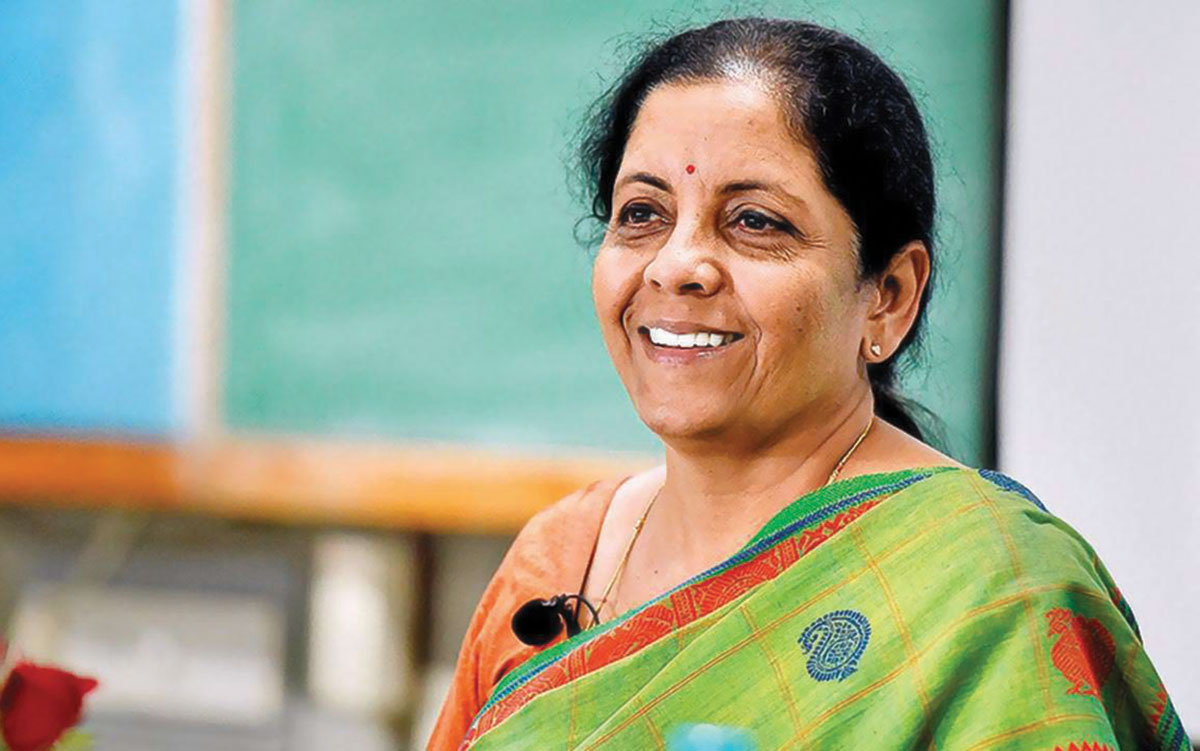
Here is the full text of the speech Ms Sitharaman made:
Mr Speaker Sir,
I am honoured to place the Budget of the Union Territory of Jammu and Kashmir for the financial year of 2024-25 before this august House. Jammu and Kashmir has witnessed unprecedented socio-economic development since the historic reforms initiated in August 2019. Triggered by these reforms, the Union Territory government has pursued the path of accelerated and inclusive growth to fulfil the aspirations of the common man. This has ensured remarkable progress encompassing entire governance – including the developmental activities, public administration and security matters – which has positively impacted every resident irrespective of caste, creed or religion.
Since 2019, the entire region has witnessed an era of peace, progress and prosperity. Life has returned to normalcy in Jammu and Kashmir after over three decades of turmoil. Schools, colleges, universities, hospitals and other public institutions are functioning efficiently without any strikes or any kind of disturbances during the last four years. The earlier practice of daily hartals, strikes, stone pelting and bandhs are things of the past now.
This has also enabled its citizens to discover their untapped potential, address the aspirations of the young generation and contribute wholeheartedly in the development journey. The people of Jammu and Kashmir participated enthusiastically in the recently held Lok Sabha elections. The record voter turnout is testimony to the meticulous and impartial conduct of elections, the robust democratic spirit and civic engagement of the people as also to the success of the reforms initiated in the year 2019. Unprecedented participation by the people of Jammu and Kashmir in the democratic exercise during the Parliament Elections is a clear indication that after decades of turmoil, the people are witnessing a positive and conducive environment to achieve their aspirations.
Hon’ble Speaker Sir, I am confident that Jammu and Kashmir is on a right trajectory and would emerge as one of the most developed region and would contribute immensely to our Hon’ble Prime Minister of India Shri Narendra Modi ji’s vision of Viksit Bharat. Complete Breakthrough in the law and order scenario
The Union Territory government remains committed to dismantle terror-sponsoring ecosystem. The policy of zero tolerance has been adopted against terrorism and security forces have foiled the repeated efforts of those sponsoring proxy wars. The unstinted efforts and sacrifice of security forces have only boosted the confidence and resolve of our society to remain united, courageous and disciplined to fight against those who are promoting terrorism.
While fighting terrorism, the government has also focused on improving overall law and order situation in Jammu and Kashmir. The defining characteristic of the security situation in Jammu and Kashmir which has a direct bearing on day-to-day life of common citizens is ‘street violence’ which was a methodical and regular phenomenon pre 2019. The street violence, engineered and orchestrated by terrorists and secessionist networks is now a thing of past. Students are happy as there are no more school closures, businessmen are happy as there are no more bandhs and hartals, youngsters are happy as peace is bringing lots of economic opportunities, mothers are happy as their children are safe now, citizens are happy that all services like hospitals, public transport, civic services etc. are within their reach now. This harmonious law and order situation has helped the government to initiate and implement socio-economic development.
Improving Fiscal Situation
Mr Speaker Sir, while analyzing the fiscal situation of Jammu and Kashmir, we observed that due to historical challenges in financial management, it has a legacy of very high fiscal stress. This is aggravated by the committed nature of the major expenditures not supported by proportionate increase in its revenues. Its dependence on central grant is to the tune of around 70% of its total expenditure. The perpetual fiscal stress leads to frequent use of ways and means advances and overdraft.
This year the Government of India decided to correct this historical aberration by providing adequate financial support to Jammu and Kashmir coupled with reforms to come out of the perpetual fiscal stress. I am happy to mention here that to correct the complex fiscal issues of Jammu and Kashmir, a special central assistance of Rs17,000 crore has been worked out.
It is observed that around 11 per cent of budget of Jammu and Kashmir is used for Police. Such expenses on policing being unavoidable, leaves limited space for spending on development and welfare projects. I am happy to inform this august House that the Union Government has agreed to take the entire burden of budget of police from Union Territory of Jammu and Kashmir. The Central Government will now provide for the salary, pension and other costs of Jammu and Kashmir Police for which an allocation of Rs 12,000 crore has been made in the annual budget.
In addition, a lump sum special grant of Rs 5,000 crore as additional central assistance is being provided in the current financial year.
As a result of this Rs 17,000 crore of central assistance, the fiscal deficit to GDP ratio will be 3.0 % in the FY 2024-25 well within the target. This unprecedented assistance would lead to complete improvement in fiscal position enabling the Government of Jammu and Kashmir to correct the legacy of financial challenges and work towards fulfilling the developmental needs and aspirations of the people, while maintaining stable fiscal health.
Mr Speaker Sir, the complete turnaround of Jammu and Kashmir Bank post 2019 is a success story. The Union Territory government being the promoter of the Jammu and Kashmir Bank has endeavored to improve its capital adequacy and corporate governance. The Union Territory government facilitated the reforms to limit concentration of power, professionalization of management and induction of professional experts in the Board. When the Bank suffered losses due to the financial indiscipline and the consequent high NPAs, the Union Territory government reinforced the Bank by infusing substantial equity capital over 2019 to 2022. These steps facilitated the transformation of the Bank’s financial health and enabled its business growth and transition out of losses of the pre-2019 period. The success of reforms facilitated by the government is exemplified in the business results of the Bank and its turnaround in the last five years. The Union Territory government has further decided to eliminate the pension overdues for safeguarding the financial position of the bank.
Union Territory has witnessed profound ameliorative, affirmative and progressive changes in the last five years. The Government of Jammu and Kashmir is working on the mantra of “Reform, Perform and Transform”. This has led to several path-breaking initiatives to unlock economic and industrial potential, improve quality of life, promote social and financial inclusion, fortify law and order machinery, decentralize governance systems, improve efficiency and transparency of public expenditure, upscale revenue generation, minimize wasteful expenditure, and step up infrastructure development. Some of these are elaborated in the following paragraphs:
Improving Transparency and Efficiency in Governance
The government has adopted General Financial Rules to ensure discipline in approval, bidding and execution processes. IT reforms were initiated to streamline financial management by ensuring the work-wise allocation of funds through BEAMS (Budget, Estimation, Allocation and Monitoring System) platform. We universalized procurement of goods and services through Government e-Market Place (GEM) to enable competitive and cost-efficient purchases. The Union Territory government received the Gold medal for its major progress in GEM based procurement.
The government ushered transparency in land administration through ‘Aapki Zameen Aapki Nigrani’ portal which enables online access to land records. Registration of land revenue documents was made online to boost citizen convenience and revenues. The Union Territory government also introduced the EMPOWERMENT / JANBAGHIDARI portal for transparency about developmental works. The portal enables citizens to view all ongoing works online and improves accountability in work execution. The Union Territory government started physical verification of all works as also online tracking of work progress with geo-tagged photographs through the PROOF (photographic record of on-site facility) platform.
Direct Benefit Transfer – The efforts of the Union Territory to saturate all the individual beneficiary schemes and ensure 100% Aadhar seeding for beneficiaries have enabled direct transfer of funds to their accounts. More than Rs 6,000 crore was seamlessly disbursed to over 70.46 lakh beneficiaries through over 50 Direct Benefit Transfer (DBT) based welfare schemes (both cash and kind) by March 2024. Jammu and Kashmir recorded 74 crore 42 lakh e-transactions in 2023-24, averaging over 20 lakh electronic transactions registered daily, which is higher than many States.
Aadhar seeding has been undertaken systematically for cleaning databases of various welfare schemes. Through bio-metric verification and provision of e-POS machines, about `230 crore has been saved through DBT and Aadhar-based verification under ration supply. Similarly, savings of over Rs 200 crore have been ensured by leveraging DBT under social security schemes.
Unlocking Economic and Industrial Potential
Agriculture and Allied sectors – Agriculture and allied sectors need to be viewed as sustainable sources of livelihood. For this, path-breaking initiatives have been taken to further the interests of farmers, leading to improvement in their incomes. The Government is working towards bringing all farming lands under two-crop patterns to ensure sustainable income throughout the year. The government has worked for improving efficiency in land utilization by promoting high density plantations. 17,390 hectare under medium density and 663 hectare under high density fruit plantation have been added to increase the income of apple growers. Fresh fruit and dry fruit production has increased from 20.06 lakh MTs in the 2018-19 to 26.43 lakh MTs in the 2023-24, recording an increase of about 10% during these years.
The Controlled Atmosphere (CA) storage capacity has been augmented from 1.14 LMT in 2018 to 2.70 LMT in 2024. Twelve (12) CA stores with capacity of 60,000 MTs have been completed during 2023-24 and seven (7) new CA stores with capacity of 25,000 MTs will be added during 2024-25. In order to ensure economic security for farmer families, a total of 10.90 lakh Kisan Credit Cards (KCCs) have been distributed so far. Total 17 mandis have been integrated with electronic National Agricultural Market (e-NAM) and 51,748 farmers and traders, including 98 FPOs have been registered. Under the PM Kisan Samman Nidhi Yojana, more than Rs 3,000 crore have been deposited directly into the bank accounts of 12.68 lakh eligible farmers.
The Union Territory government is revitalizing the agriculture sector by investing in quality seeds, farm mechanization, high density plantation, cold storages, and farmers insurance. To this end, the government rolled out 29 interventions in Agriculture and allied sectors under the “Holistic Agriculture Development Programme” with a substantial allocation of Rs 5,013 crore. This programme is expected to double the value addition from these sectors, boost the sectoral growth rate to 11%, create employment opportunities for over 2.88 lakh youth and establish around 19,000 enterprises within the next five years.
With the objective of linking Primary Agricultural Credit Societies (PACS) electronically with District Central Cooperative Banks, and bringing about transparency in credit provided to farmers and members of cooperatives, 537 PACS have been prioritized for revitalization. The government is aiming to have one approved PACS in every Panchayat so that it operates inclusively and supports local economy. Artisans and weavers are being provided credit card scheme with an attractive interest subvention of 7% for a period of 5 years.
Under the Pradhan Mantri Awas Yojana – Gramin, 3.40 lakh houses have been sanctioned and construction of 2.10 lakh houses has been completed. 5 marla land was allotted to 477 landless families for house construction. The number of annual works under MGNREGA also increased from 54,300 in 2019-20 to 1,24,623 by the end of FY- 2023- 24.
Tourism – Tourism is a way of life for Jammu and Kashmir that contribute massively to the local economy. This paradise on earth witnessed a record flow of 2.11 crore tourists during the year 2023. Around 1.02 crore tourist have already visited in 2024 till June, 2024. Apart from popular tourist destinations like Gulmarg and Pahalgam, there is a significant flow of tourists in offbeat destinations, like Shiv Khori, Mansar-Surinsar, Patnitop, Dudhpathri, and Lolab. Revival of tourism in border areas, like Gurez and Suchetgarh, has strengthened the local economy.
After granting industry status to the tourism sector, investment in this sector has seen enormous growth. The tourism department invested in improving tourism infrastructure and services and promoting tourist attractions. To accommodate the increasing tourist flow and provide quality services, the Union Territory government introduced the homestay policy. 1,942 homestays with a bed capacity of 14,180 have been registered so far in Jammu and Kashmir. The Union Territory is emerging again as a major attraction for film producers from around the world, establishing Jammu and Kashmir as a prime film-making destination. 102 films/web series have been shot in Jammu and Kashmir in the year 2023.
Industrial Development – The government is making steadfast efforts to attract new investment, create employment opportunities for youth, develop backward regions and expand existing industrial units. We launched the Jammu and Kashmir Industrial Policy 2021-30, the Industrial Land Allotment Policy 2021-30, JK Start-up Policy 2024-27, Private Industrial Estate Development Policy 2021-30, Wool Processing, Handicrafts and Handloom Policy 2020 in this direction.
The Central Government has rolled out the New Central Sector Scheme (NCSS) since 2021 with an outlay of `28,400 crore for industrial development in Jammu and Kashmir. The proactive policies of the Union Territory government coupled with the NCSS benefits ensured investment realization of Rs 3,389 crore during 2023-24. Total 889 units with investment of Rs 18,185 crore and employment of 46,857 have already started work on the ground. Out of these 889 units, 324 units with investment of `9,538 crore are expected to come into production during 2024-25.
Apart from the existing 64 industrial estates, 46 estates are being developed to fulfill the goal of ‘Made in Jammu and Kashmir’. Karkhandar Scheme is being implemented to provide fresh impetus to the craft industry. The government has granted recognition to 656 start- ups in the past year.
To provide new identity to the products of Jammu and Kashmir on the global handicraft map, GI tagging has been approved for 10 crafts, and the process for GI registration of 12 other products is underway. A leading e-commerce company has developed a robust web portal that will make handicrafts of Jammu and Kashmir available in the global market. Handloom and Handicraft exports have doubled from Rs 563 crore in 2021-22 to Rs1,162 crore in 2023-24.
Improving quality of life
Healthcare – Infrastructural up-gradation of health sector has resulted in unprecedented improvements in public health services. With the construction of more than 4,000 health facilities/institutions, broadly confirming to the Indian Public Health Standards (IPHS), including two AIIMS, two Cancer Institutes and two Bone and Joint Hospitals have resulted in achievement of significant milestones in the field of healthcare.
There has been an unprecedented expansion in medical education with establishment of 9 new Medical Colleges. The capacity of MBBS seats has increased from 500 to 1,300. 26 B.Sc nursing colleges and 19 BSc paramedic colleges have been added in public and private sector.
Through the SEHAT initiative, universal health insurance of Rs 5 lakh per family has been provided, free of cost, to all residents. Over 85.49 lakh persons have been issued the Golden cards and about 251 hospitals are empaneled under AB-PMJAY-SEHAT scheme for providing quality health care. About 12.90 lakh treatments have been provided so far worth `2,285 crore which have provided services to 3.60 lakh beneficiaries since August 2020. The scheme has been a game changer for the public at large as it provided the financial support to treatment seekers for availing timely intervention required for leading a healthy life. Tele- medicines services have also been introduced.
The Union Territory government has started over 3,104 health and wellness centers since 2019. Jan Aushadhi centres have been expanded from 38 in 2019 to 270 by March 2024. Over 489 new ambulances have been mobilized for emergency care. These measures have helped the Union Territory to reduce IMR from 22.0 as per National Family Health Survey – 4 to 16.3 as per National Family Health Survey – 5 as also improve sex ratio at birth from 927 as per National Family Health Survey – 4 to 976 as per National Family Health Survey – 5.
Education –The congenial environment in the Union Territory since 2019 has enabled rapid increase in enrolment of students in primary, middle and secondary government schools from 12.40 lakh in 2019-20 to over 14.18 lakh in 2022-23. The Union Territory government has embarked on the initiative to provide early childhood education by starting development of 15,000 pre-primary schools with enrolment of 1.80 children.
Under the Pradhan Mantri Schools for Rising India (PM-SHRI) Yojana, approval has been granted for the upgradation of 389 schools in the first and second phase. Thrust has also been provided to girls’ education. To fulfill the commitment to universal education, 46,000 out-of-school children have been identified, enrolled in various schools and mainstreamed. The punctuality and working discipline of the teaching staff was enhanced by installing facial recognition-based attendance systems in all the schools. The capacity of polytechnic colleges is being augmented with 600 additional seats.
National Education Policy 2020 is operationalized and the four-year undergraduate programmes have been initiated in all the colleges. The Union Territory witnessed spurt in higher education with 51 new degree colleges getting established since 2019. To facilitate online education, electronic content for 50 subjects has been developed and uploaded. The Union Territory government instituted a unique feedback portal to evaluate teachers and institutions. The college and university infrastructure got a major boost through projects under Rashtriya Uchhatar Shiksha Abhiyaan (RUSA) funding. The prestigious national institutes, like IIT Jammu and IIM Jammu, were made operational by providing land and other incentives.
Sports – After three decades, international tournaments have started in Jammu and Kashmir. Now Jammu and Kashmir has positioned itself as a premier sports destination in the country. The reforms undertaken in years 2019 have ushered revolution in sports and participation of youth. There has been a complete transformation of sports infrastructure in the Union Territory with construction of 100 Khelo India Centres, development of indoor sports complexes across the Union Territory besides completion of 702 sports related projects. Multipurpose indoor sports halls have been constructed in almost every district. Playfields have been developed in every panchayat. Floodlighting and synthetic turfing is being installed in several stadia.
Centres of Excellence have been established in Canoeing, Rowing and Fencing in both Jammu and Kashmir divisions. Synthetic Hockey Turf, KK Hakku Stadium, Jammu and Synthetic Hockey Turf, Pologround, Srinagar were constructed and approved by Federation of Indian Hockey (FIH). Synthetic football turf is being developed at Khel Gaon, Nagrota. Jammu and Kashmir is emerging as winter sports capital of the country. 04 events of Khelo India Winter Games have been organized in Gulmarg – the world famous winter destination, since March 2020.
Employment – The government had conceived a pioneering initiative- Mission Youth to transform youth of Jammu and Kashmir into ambassadors of peace and development through structured systematic interventions in the domains of livelihood generation, education and skill development, counseling, sports and recreation. Under the Mission Youth initiatives of Mumkin, Tejaswani, and Spurring Entrepreneur programme, financial assistance is being provided to large number of youth and women entrepreneurs.
We also launched a massive recruitment drive. Since August 2019, total 38,384 persons were recruited in government sector in a fair, merit based, transparent, and expeditious manner. To secure the future of workers in the unorganized sector, more than 34 lakh labourers have been registered on the e-Shram portal. A total of 7.66 lakh self- employment/livelihood opportunities generated/ strengthened since the year 2021-22, till date.
Expanding social and financial inclusion
To ensure quality education of the new generation students from the tribal community, 25 hostels are being constructed. Initiatives such as livelihood units, skill development, and professional coaching are providing new opportunities to tribal youth. The government has undertaken significant initiatives for tribal welfare in the areas of health, education, culture, literature, infrastructure development and livelihoods. Transit facilities were provided to migratory tribal communities. 8 new hostel buildings, 285 smart schools, 6 Eklavya Model Residential Schools were developed. The government provided dedicated coaching facilities, skill development to 2,000 tribal youth and scholarships to 46,000 tribal students. After two decades of anxious wait, forest rights were granted to tribal communities.
The Union Territory government expanded its social security cover for widows, old aged and physically challenged persons. The monthly assistance/pensionary benefits were expanded from around 5.0 lakh beneficiaries in 2014-15 to about 8.61 lakh in 2023-24. Under the merit cum means Minority Scholarship schemes 15,957 students have been covered during 2023-24. Similarly 9,879 students have been covered under Scheduled Caste Scholarship schemes during 2023-24.
The Union Territory government has prioritized setting up of brick and mortar branches in the unbanked villages with population more than 3,000. Of the 10 villages prioritized for providing banking services through brick and mortar branches, 9 villages stand covered. 167 villages which did not have banking services within the radius of 5 km, are now covered through banking correspondents or brick and mortar branches.
Under the PM-SVANidhi Scheme, special credit facility with a working capital has been disbursed to 26,596 street vendors. Under Pradhan Mantri Mudra Yojana (PMMY), `8,063.19 crore loans have been disbursed to 3,63,817 beneficiaries during FY 2023-24 by all the banks. As on March 31st, 2024, concessional credit of Rs 7,686 crore have been sanctioned by banks to 8.83 lakh KCC (Crop) account holders. Rs 1,559 crore have been sanctioned to 2 Lakh KCC-AHF (Animal Husbandry and Fisheries) beneficiaries.
Women Empowerment – The government has expanded coverage of “Ladli Beti” from 16,095 cases in 2017 to 1,61,552 cases upto 2023-24. The financial assistance for the deserving girl children increased from Rs 24 crore to Rs 847 crore during this period. Under the Marriage Assistance scheme, 1,04,326 poor girls were provided financial assistance of Rs 394 crore since 2015-16 to 2023-24.
Over seven lakh women are associated with about 90,000 self-help groups. Training has been provided to around three lakh women farmers. Women farmers have established nearly two lakh agriculture nutrition gardens to meet the nutritional needs of their families. The Rural Livelihood Mission is now working to promote ‘Lakhpati Didis’ across the Union Territory and establish new micro-startups.
The Jammu and Kashmir Reorganization (Second Amendment) Act, 2023 now provides for reservation of one-third of all elected seats in the Jammu and Kashmir Legislative Assembly for women.
Accelerating Infrastructure Development
With support of the Central government, the Union Territory stepped up capital investments to accelerate infrastructure development. Under the Prime Minister’s Development Package, Rs 49,975 crore has been received for 53 projects, of which Rsv48,359 crore has been utilized till May, 2024 and 35 projects are completed or near completion.
1646 languishing projects with cost of Rs 3,268 crore were prioritize and completed through accelerated funding.
Power Sector – The Union Territory government aims to expand its installed hydro power capacity from 3500 MW to about 6500 MW till 2026-27. For this, it has partnered with NHPC to develop the 624 MW Kiru, 850 MW Ratle, 1000 MW Pakal Dul and 540 MW Kwar projects. The Central government provided Rs 2430.60 crore for equity contribution of the Union Territory for these projects.
We are also pursuing development of further 04 hydro power projects of 3284 MW capacity, namely Sawalkote (1856 MW), Dul Hasti stage-II (258 MW), Uri-I stage -II (240 MW), and Kirthai-II (930 MW), with expected investment of about Rs 50,000 crore. The Union Territory will also benefit from its share of free power, long term supply of stable power, expansion of economic activities, and creation of job opportunities. The government is also stressing on development of small hydropower projects and rooftop solar power projects.
The massive expansion of transmission capacity by an around 50% during 2019-24 has enabled the expansion of electric supply to interior villages. Gurez Valley in northern Kashmir was connected to the electricity grid. The process of installing smart pre-paid meters is underway in mission mode. There has been successful loss-reduction of 15% in metered areas with 5.74 lakh smart meters installed by June 2024.
Physical Connectivity – By leveraging Pradhan Mantri Gram Sadak Yojana (PMGSY), Rural Infrastructure Development Fund (RIDF) and Central Road and Infrastructure Fund (CRIF) funding, the Union Territory government rapidly expanded road network to habitations. Considering data of the 2001 census, all rural settlements having population 250 + have been connected under the Prime Minister’s Gram Sadak Yojana, and process of proving connectivity to remaining villages as per the census 2011 is under progress.
7,886 km of roads to various villages have been constructed under PMGSY in the past four years. Through close monitoring and accelerated execution, the road construction speed has doubled. While 2,914 projects got completed and 9,382 km of roads were blacktopped during 2017-20, over 9,235 projects were completed and 21,799 km roads got blacktopped during 2020-24. This has substantially improved road connectivity to remote villages and substantially reduced travelling times in this Himalayan UT.
The work on semi-ring road for Jammu (58 km) is nearing completion, while the four-laning of semi-ring road for Srinagar has achieved 48% physical progress. Work on upgradation of Srinagar-Baramulla-Uri road with bypasses for Pattan and Baramulla towns has been taken up at a cost of Rs 3,554 crore. Constructing 8.45 km long twin tube Qazigund-Banihal tunnel has substantially saved time required on the Jammu-Srinagar National Highway. Works on the 13.15 km 2-lane bi-directional Zojila tunnel and on the 6.40 km Z-Morh tunnel on Srinagar-Leh road, at cost of `4,509 crore and Rs 2,379 crore respectively, are at advanced stages. Project for Sudhmahadev–Dranga tunnels I and II (8 km) on NH- 244 is under tendering on EPC mode for an amount of Rs 3,703 crore. Work on the 1.574 km Khellani Bypass tunnel on NH 244 has achieved 67% physical progress, while that on the 495 m tunnel of NH 244 from Chamoti to Drabshalla is 50% complete.
Rail Connectivity – The work on Jammu-Udhampur-Srinagar-Baramula railway is in the final stages of commissioning. The railway lines between Banihal-Khari-Sumber-Sangaldan section (48 km) and Reasi- Sangaldan Section (46 km) and the electrification of Baramulla-Srinagar- Banihal-Sangaldan section (186 km) have been completed during 2023- 24. With this, 255 km out of this railway line (272 km), which is crucial from socio-economic and strategic dimensions, will get commissioned. The work for remaining section from Katra- Reasi (17 km) is expected to be completed in 2024-25.
Irrigation and Water Supply – The work on Tawi Barrage project envisaging creation of an artificial lake of 1.41 MCM pondage to enhance tourism potential of Jammu has been recommenced. Project execution is in full swing and will be completed during this financial year at an estimated cost of Rs 64.80 crore.
Work on Shahpur Kandi Dam project has progressed well and will help Jammu and Kashmir get its due share of 1,150 cusec water from the river Ravi.
Under Jal Jeeven Mission, Jammu and Kashmir has planned 3,256 schemes at an estimated cost of Rs 13,000 crore. Out of 18.69 lakh rural households, 15.08 lakh (80.64%) rural households have been provided functional household tap connections. The Union Territory has saturated/provided 100% household tap connections in two districts – Srinagar and Ganderbal.
Flood Management program of river Jhelum and its tributaries (Phase-I) was commissioned to increase the carrying capacity of Jhelum from 31,800 cusec to 41,000 cusec. The Phase-II of this Project has commenced at sanctioned cost of Rs 1,623 crore. The work for construction of entry and exit gates of Hokersar wetland will be soon completed.
Urban Development and Housing – Under Smart City Mission, 309 projects are approved for revamping of urban infrastructure in both the smart cities. These include 20 projects at a cost of Rs 666 crore on PPP mode and 55 projects at a cost of Rs 3,475 crore on convergence mode. Projects like development/ up-gradation of Srinagar Square, Lal Chowk, Jhelum river front, redevelopment of Polo view high street, traditional Souq market, craft centre Batmaloo, northern foreshore road, lakefront from Nishat to Naseem Bagh Habak, improvement of road from Dogra Chowk to KC chowk, Apsara road high street, development of Canal road, Talab Tillo street development from Mubarak Mandi to Raghunath Bazaar etc. have been undertaken.
Under green urban transport initiative, 200 e-buses under Smart City mission have been introduced and are operational on the designated inter/intra city routes. Further, 200 more e-buses approved under PM e- bus Sewa shall be introduced in near future. Also, environmental friendly e-Rickshaws/e-Autos, public bicycles were introduced in both capital cities.
Residential colonies are being developed at Birpur (Samba), Padgampura (Pulwama), Chatterhama (Ganderbal), Bhalwal, Roop Nagar and Chowadhi Jammu for EWS beneficiaries. Besides, Integrated Mass Housing Colony at Watapora (Bandipora) and Satellite Township at Rakh-Gund Aksha are also being developed. Further, under AMRUT funding, 82 projects were completed which include laying of 74 km of sewer lines with 13,000 sewerage connections, development of Parking spaces for 1,596 vehicles, construction of 6 km of pedestrian walkways, laying of 104 km of storm water drains, and development of 46,165 square meter of green spaces. 3 km of 1200 mm diameter water supply line to 30 MGD water treatment plant at Rangil was laid for establishing assured water supply for 3 lakh souls.
Decentralizing Governance and Strengthening Public Outreach
The 73rd Amendment to the Constitution was fully adopted after the 2020 amendment to the Jammu and Kashmir Panchayati Raj Act, 1989. The Panchayati Raj Institutions (PRIs) were empowered and twenty-seven subjects were transferred to these institutions for decentralized planning, decision making and supervision.
The elections were held for various tiers of PRIs in 2019, which facilitated the release of the Finance Commission grants. Since then, the Gram Panchayat based Development Plans (GPDPs) have been framed through participatory planning and are being executed to address local needs. Power to grant building permissions in rural areas has been delegated to PRIs at panchayat level.
We are committed to empower local government institutions and strengthen grassroot governance. In this direction, the Union Territory government is making preparations to conduct local body elections, including those towards the constitutional obligations for providing reservations.
After the re-organization, Jammu and Kashmir has embarked on the ambitious Back to Village (B2V) programmes for reaching out to the people at the grass-roots and understanding their felt needs. From 2018- 19 to 2023-24, five rounds of this B2V programme have been conducted, wherein senior officials toured to all villages. This initiative has become quite popular as such tours and local interactions helped redress the grievances of common people.
As a sequel to B2V programme, the “Jan-Abhiyan”, “Public Darbars” and “Block Divas” are being conducted for bringing welfare programmes at the door steps of the people. Further, the “Aspirational Block Development” and “Aspirational Panchayat Development” programmes were started for bridging the developmental gaps of the most backward blocks and panchayats.
Legal Reforms for Social Justice
All the provisions of the Constitution and the benefits of the important central legislations, like the Right of Children to Free and Compulsory Education Act, 2009, the Right to Fair Compensation and Transparency in Land Acquisition, Rehabilitation and Resettlement Act, 2013, the Scheduled Tribes and Other Traditional Forest Dwellers (Recognition of Forest Rights) Act, 2006, the Scheduled Castes and Scheduled Tribes (Prevention of Atrocities) Act, 1954, the Whistle Blowers Protection Act, 2014, the Juvenile Justice (Care and Protection of Children) Act, 2015 and other important central legislations are now enjoyed by the people of Jammu and Kashmir
These reforms have also enabled extension of voting rights for the assembly and local body elections to the hitherto deprived sections of the society, like West Pakistani Refugees, Safai-Karamcharis and Valmikis who were residing in Jammu and Kashmir for decades. Further, these reforms helped the West Pakistani Refugees, Safai-Karamcharis and Valmikis, children of local women married outside Jammu and Kashmir and other similarly situated persons get domicile certificates thereby eliminating their deprivation and discrimination.
Jammu and Kashmir Reservation Act, 2004 was amended to extend the reservation to the persons residing in the areas adjoining actual line of control and adjoining International Border for education and employment as also to bring “Other Backward Castes” of Jammu and Kashmir at par with other parts of the country.
As part of affirmative action, reservation has been extended to Pahari Speaking People and the economically weaker sections for their upliftment. The Reorganization Act, 2019 was amended to provide representation in the Legislative Assembly by way of nomination to Kashmiri migrants and displaced persons from areas of Jammu and Kashmir under occupation of Pakistan.
We have also provided for reservation of one-third of all elected seats for women in Jammu and Kashmir Legislative assembly through Jammu and Kashmir Reorganization (Second Amendment) Act, 2023.
e-Governance initiatives
The Union Territory government has ushered transformation towards digital governance through the e-Office system. Over 450 government offices upto district level have shifted from physical files to e-filing system. This adoption enabled the government to end the darbar move and save huge expenditure annually.
The Union Territory achieved a remarkable feat by offering over 1,100 citizen centric services online and thus securing the national recognition in the NeSDA (National e-Service Delivery Assessment) rankings. This digital revolution has enhanced accountability, transparency, and efficiency in governance.
State of Economy in 2023-24
Jammu and Kashmir is one of the fastest growing Union Territory. This is testified by strong growth in revenue collection during 2023-24. The revenue collection under Goods and Services Tax touched Rs 8,064 crore in 2023-24 with 12 percent growth over such revenues in 2022-23. The revenue from motor spirit taxes reached `1,631 crore in 2023-24 against the receipt of `1,554 crore in 2022-23. The stamp and registration revenue has increased to Rs 678 crore in 2023-24 against Rs 557 crore during 2022-23, showing a growth of 22 percent. The excise collection touched Rs 2,490 crore in 2023-24 against Rs 1,794 crore during 2022-23, registering a growth of 39%. The economy remains on right track with the GDP growth for financial year (2023-24) is expected to be 7.5%.
The Union Territory government has followed fiscally prudent policies while focusing on equitable growth in all the sectors. For sustaining the developmental initiatives, focused enforcement and dealer outreach drives were undertaken. The government pursued the tax and non-tax avenues judiciously.
Dealer registration under GST has been expanded from about 72,000 in 2018-19 to over 2,00,000 in 2023-24. Capacity building of taxation staff was undertaken with support of Institute of Chartered Accountants. For stemming GST leakages, mechanism for tracking purchases was developed. For tracking GST deduction under capital works and improving tax realization, GSTN verification has been linked with bill payment system.
The Union Territory government notified the new excise policy and established all the planned vends through the transparent system of auctions in allotment of liquor vends. With support of NIC, the Union Territory initiated the e-Stamping system for registration of documents. This enhanced stamps and registration revenues from Rs 190 crore in 2018-19 to Rs 678 crore in 2023-24. The e-Abgari platform is being strengthened for tracking the supply chain and enhancing excise revenue. These measures have enabled revenue from GST, Excise and Stamps to register healthy growth.
The non-tax collection has also shown significant growth and resilience. Special focus was given on installing aerial bunching cables and smart meters for tracking power consumption. The installation of around 5.74 lakh smart meters has impacted consumer behavior and limited power consumption and also improved tariff revenue by about 10% in 2023-24.
With this solid foundation laid through series of efforts post 2019, the Union Territory of Jammu and Kashmir is now poised to take giant leap in its development. Few of the important provisions in this annual budget are as below
Economic Sector
Agriculture and Allied sectors:
Establishment of 2,000 Kisan Khidmat Ghars (KKGs) for providing facilities to the farming community at their door step. Reinvigorating Agriculture and allied sectors through Holistic Agriculture Development
Programme (HADP) by strengthening seed systems, boosting production and productivity, creating agri-business ecosystems and securing livelihoods through enhanced jobs and income creation.
Strengthening of Departmental Seed Multiplication Farms.
Competitiveness Improvement of Agriculture and Allied Sectors project in Jammu and Kashmir (JKCIP) to be implemented with an estimated value of USD 100 million loan from International Fund for Agricultural Development (IFAD). The goal of the project is to contribute to the sustained increase in income of rural households by improving the competitiveness of farming operations.
Implementation of all 29 projects approved under Holistic Agriculture
Development Programme.
20 agriculture and allied sector products have been identified, out of which 05 products (Saffron, Sulai Honey, Muskhbudgi Rice, Bhaderwah Rajmash and Udhampur Kalari) have got geographical indication (GI) registration and rest are under process.
Distribution of farm machinery benefitting 70,000 farmers.
Production of designer plants for promotion of high density plantation and rejuvenation of orchards.
25,000 MTs of Controlled Atmosphere (CA) storage capacity to be added.
Development of Chrysanthemum theme Park at Cheshmashahi, Srinagar.
3,000 dairy units to be established providing direct employment to around 4,000 people.
Increase in milk production from 25 to 45 lakh Metric Ton and increase in milk collection/chilling from 2.0 to 8.5 lakh Litres Per Day (LLPD) over a period of five years
100 satellite heifer rearing units will be established in the private sector.
1,800 Pashu Sakhis will receive incentives for ration balancing for 6,00,000 cows and for the milk recording programme of 30,000 dairy cows.
60,000 backyard poultry units will be established in rural areas.
Hybrid fodder seed kits will be provided for 3,600 hectare of land.
100 hydroponic fodder units and 60 silage-making units, along with 6 fodder depots to be established to ensure availability in fodder-deficient areas.
Fish Production to be enhanced from 30,670 MT to 35,250 MT with technological interventions.
For Agriculture and allied Sectors an allocation of about Rs 2053.39 crore has been made under capital expenditure for the year 2024-25 which is Rs 524.33 crore more than revised allocation of 2023-24.
Rural Development and Panchayati Raj:
Under Mahatma Gandhi National Rural Employment Guarantee Act (MGNREGA), 400 lakh mandays to be generated.
Under HIMAYAT training of around 7000 candidates to be completed.
12,000 additional Self Help Groups (SHGs) to be formed during 2024-25
600 new panchayat ghars to be constructed under Rashtriya Gram Swaraj Abhiyan (RGSA) with 100% internet connectivity.
2.60 lakh mandays of training to Panchayati Raj Institution (PRI) members under Rashtriya Gram Swaraj Abhiyan (RGSA).
80,000 houses to be constructed under Pradhan Mantri Awas Yojana Gramin (PMAY-G).
06 Villages to have solid/liquid waste management facilities in order to become clean with litter and plastic free.
26,000 hectare area to be treated with completion of 1,800 works under Integrated Watershed Management Programme (IWMP) during 2024-25.
For Rural Sector, an allocation of about Rs 3731.54 crore has been made under capital expenditure for the year 2024-25.
Tourism and Culture:
New initiative for development of infrastructure and basic amenities in 12 off-beat tourist destinations, 6 each in Jammu and Kashmir divisions, with objective of enhancing tourism appeal and expanding local business and job opportunities.
Development of Keran as border tourist village.
Development of Tosamaidan and Sitharan circuits.
Development of Duggar Dani village at Samba with the traditional set up in the form of “mock village”.
Construction and installation of 130 meter (425 feet) high national flag mast at Patnitop.
Completion of revival and restoration of 75 identified heritage sites/cultural sites.
Establishment and operationalization of 8 cultural centers.
Development and modernization of Shri Pratap Singh (SPS) Museum Srinagar.
Promotion and propagation of sufism in Jammu and Kashmir through structured programmes including operationalization of state of art Suffiana School at Srinagar.
Digitization of all libraries.
For Tourism and Culture sector, an allocation of about Rs 519.70 crore has been made under capital expenditure for the year 2024-25 which is Rs 205.45 crore more than revised allocation of 2023-24.
Forestry and Environment:
Planting of 190 lakh native trees and 100 lakh low cost greening interventions aimed to restore ecosystems, prevent soil erosion and enhance biodiversity.
All 78 urban Local bodies of Jammu and Kashmir to have at least one Nagar Van, Nagar Vatika or an Eco Park.
10 lakh saplings of local, medicinal and economic importance species to be distributed among the farmers for planting to augment trees outside forests and improve livelihood.
Infrastructure at wetlands like Gharana, Hokersar and Shallbugh to be developed for promotion of eco-tourism.
Establishment of Continuous Ambient Air Quality Monitoring Station (CAAQMS) in Jammu.
Implement of Van se Jal, Jal se Jeevan, an innovative water conservation techniques through water shed management approach, promote sustainable agricultural practices and revitalize traditional water bodies, including wetlands.
Conservation and rejuvenation of Wular Lake to enhance the livelihood of the local people, through ecotourism.
Enhancing avenues of livelihood generation through involvement of the Panchayat level Biodiversity Management Committees (BMCs) and integrating them with Self Help Groups (SHGs) registered with NRLM for sustainable collection and disposal of forest produce.
For Forest sector, an allocation of about Rs 186.45 crore has been made under capital expenditure for the year 2024-25 which is Rs 52 crore more than revised allocation of 2023-24.
Cooperative Sector:
Establishment of Micro Food Processing Units for creating employment opportunities, especially in rural areas.
Construction / Establishment of Mini Super Bazars at District / Village/ Block Level.
Construction of 6 Grain storage units in 6 districts which are deficit in grain storage facility under the Scheme “World’s Largest Grain Storage”.
For Cooperative sector, an allocation of about Rs 25 crore has been made under capital expenditure for the year 2024-25 which is Rs 5 crore more than revised allocation of 2023-24.
Social Sector
Health and Wellness:
Two Cancer Institute’s at Jammu and Srinagar to be made fully operational during 2024-25.
Enhancing DNB Seats to 400 thereby improving the availability of Specialists.
Health records to be saturated by creation of ABHA IDs for 1.35 crore population.
100% screening of 30+ age population for hypertension and diabetes.
Dialysis Services to be strengthened further at 16 existing facilities and 10 new health facilities.
AIIMS, Awantipora to be made functional by March, 2025.
New Nursing College at Handwara to be set-up.
Attainment of TB free status in all the remaining districts.
For Health and Medical Education Sector, an allocation of about Rs 1674.51 crore has been made under capital expenditure for the year 2024-25.
Education Sector:
2,176 new Kindergartens to be established to attain saturation in all the 13,804 schools in phased manner.
Separate annual library grant ranging from Rs5,000 to Rs 20,000 covering schools from Primary to Senior Secondary for purchase of books under Samagra Shiksha Abhiyan.
Only fortified rice to be served to about 8.95 lakh students at elementary level (I to VIII) under Mid-Day Meal Scheme for improving nutritional health of students.
Infrastructure of 389 schools to be upgraded under Pradhan Mantri Schools for Rising India (PM SHRI) Scheme.
3.50 lakh adults to be made literate under New India Literacy Programmer (NILP)
Scholarship @ Rs 5,000/ student under Beti Anmol Scheme for BPL girl students.
18,499 Schools to be provided sports equipment’s with the financial implication of `16.04 crore.
2,584 Schools to be provided ICT labs and Smart Classrooms.
43 Robotic Labs and 30 Virtual Reality Labs to be established.
Establishment of Science Centres in 100 Schools.
Vocational Education to be introduced in new 554 Schools.
Construction of 05 newly established colleges to be completed during 2024-25.
Two hostel blocks, two science blocks and six additional lecture blocks in various colleges to be completed.
08 colleges to be accessed and accredited in the 2024-25.
100% admission through Common University Entrance Test (CUET)
e-Samarth across Jammu and Kashmir.
For School and Higher Education Sector, an allocation of about Rs 1,284.47 crore has been made under capital expenditure for the year 2024-25 which is Rs 185.69 crore more than revised allocation of 2023- 24.
Social / Tribal Welfare:
All persons with disability to be covered under Nirmaya Health Insurance Scheme.
04 Vatsalya Sadans to be operationalized for intellectually challenged person (boys/girls) two each in Jammu/Kashmir.
653 Anganwadi Centres (AWCs) have been targeted for upgrading as Bal Vidyalayas.
11 Shakti Sadan and 04 Sakhi Niwas to be established.
7,708 women beneficiaries with establishment of 1,502 units to be targeted under self-employment scheme
14 Palash and 13 Parisha child care Institutes are targeted for modernization with state of the art facilities.
250 small nature of tractor and link road connectivity to be provided to tribal population.
80 schools to be transformed into smart schools in tribal areas.
Smart cards to be provided to migratory tribal population.
Transit accommodations to be established for trans-human tribal population which includes accommodation for 150-200 families, community kitchens, medical dispensaries, veterinary dispensaries, community toilets and livestock yards.
186 villages, having 500 schedule tribe population, to be covered under
“Pradhan Mantri Adi Adarsh Yojana (PMAAGY)” scheme.
10 Cluster Tribal Model villages to be completed in 2024-25.
10 milk villages are targeted to be completed during 2024-25.
For Social and Tribal Welfare, an allocation of about Rs 358.52 crore has been made under capital expenditure for the year 2024-25 which is Rs 11.32 crore more than revised allocation of 2023-24.
Relief and Rehabilitation of Kashmiri Migrants:
Completion of construction of 1,500 flats as transit accommodation for Kashmiri Migrant employees during 2024-25.
Remaining 276 posts out of 6,000 posts under PM-Package for Kashmiri Migrants to be filled in 2024-25.
For Relief and Rehabilitation of Kashmir Migrants an allocation of Rs 1044.92 crore has been made under revenue and capital expenditure during 2024-25, which is Rs 134.70 crore more than the revised allocation of 2023-24
Sports and Youth Initiatives:
75 lakh youth engagement in various sports events to be held at the Panchayat, Block, District, UT and National level during 2024-25.
20 national sports events to be organized in 2024-25.
200 playfields and 100 sports courts to be constructed.
Swimming pools to be completed at Moulana Azad Stadium, Jammu and Gindun Park Rajbagh, Srinagar.
For Sports sector, an allocation of about Rs 145.19 crore has been made under capital expenditure for the year 2024-25 which is Rs 35.19 crore more than revised allocation of 2023-24.
Skill Development, Youth Empowerment and Employment:
New initiative to create ecosystem for promotion of enterprises and self- employment, generate over 5 lakh opportunities for self-employment and expand investments through credit support.
New age courses to be introduced in 10 Industrial Training Institutes.
Placement drives for 1,000 pass outs to be organized in collaboration with big business and industrial establishments.
Training of 6,000 women Self Help Groups registered with NRLM to be completed
Financial support through self-employment schemes like Seed Capital Fund Scheme, Youth Start-up Loan Scheme, National Minorities Development and Finance Corporation, Women Entrepreneurship Programme and under Mission Youth schemes to be provided to youth to undertake self-employment ventures.
Outreach and counselling activities to be conducted for aspiring job seekers through Model Career Centers (MCCs).
Up skilling of youth through youth clubs.
For Skill Development and Employment, an allocation of about Rs 176.98 crore has been made under capital expenditure for the year 2024-25 which is Rs 60.78 crore more than revised allocation of 2023-24.
Food Civil Supplies and Consumer Affairs:
Additional 10 kg of rice per month to Priority Households will be provided under Prime Ministers Food Supplementation Scheme.
e-KYC of all beneficiaries under Public Distribution System to be completed.
Roll out of Smart PDS in Jammu and Kashmir.
For Food and Civil Supplies sector, an allocation of about Rs 445.25 crore has been made under capital expenditure for the year 2024-25 which is Rs 65.79 crore more than revised allocation of 2023-24.
Infrastructure Sector 83.1 Power Sector:
Better availability of power which will give boost to tourism and Industries thus fulfilling the goal of no poverty, economic growth to provide sustainable jobs and promote equality.
Smart metering of all consumers.
iImplementation of Loss Reduction works already in place. Majorly LT- AB Cabling work and removal of bare conductor to improve billing efficiency and bringing down the AT & C losses.
Implementation of underground cabling project to extend the Grid connectivity to Holy Shri Amarnath Ji cave on both the axis (Baltal and Pahalgam)
Improvement of 105.00 km HT/LT line for smooth and uninterrupted power supply to its consumers.
Augmentation/Creation of 35.45 MVA Sub-Stations to give relief to Critically Overloaded Power Transformers and ensuring for availability of additional power supply to avoid frequent breakdown and load shedding.
Creation/Augmentation of 38,150 KVA Distribution Transformer sub- stations to improve voltage regulation of distribution network and enhance capacity of existing sub-stations.
Under segregation of critically overloaded 11 KV feeders, 55 Ckm are being segregated for enhanced feeder stability.
Replacement of 14,000 Ckm of dilapidated LT bare conductor by LT-AB cable to strengthen the LT networks and to stop the theft of power. This replacement of bare conductor by LT- AB cable coupled with installation of smart meters will help in reducing the AT & C losses.
At 11 KV level, 5,351.53 Ckm of feeders to be renovated with new and better (thicker) conductor to reduce T & D losses.
At 66/11 KV and 33/11 KV Sub stations, 200 capacitor banks will be installed to improve the voltage profile at peak load hours and will reduce the MVA consumption.
31 receiving stations (33/11kV) have been projected for capacity addition of 210.60 MVA.
Providing of reliable power supply to the far-flung and remote areas of Gurez.
04 GSSs at 132 KV level will be constructed which will enhance capacity by 40 MVA during 2024-25, 100 MVA during 2025-26 and 90 MVA during 2026-27.
16 GSSs at 132kV level will be augmented which will enhance capacity by 556 MVA during 2024-25 and 50 MVA during 2025-26.
06 GSSs at 220kV level will be augmented which will enhance capacity by 90 MVA during 2024-25 and 720 MVA by or before 2026-27.
An addition of 3,014 MW installed capacity in phased manner till year 2026-27 with cumulative increase of design energy of 10,714.50 Million units per annum.
For Power sector, an allocation of about Rs 2020.67 crore has been made under capital expenditure for the year 2024-25 which is Rs 698.28 crore more than revised allocation of 2023-24.
Jal Shakti (Water Supply and Irrigation):
Out of 3,256 water supply schemes under Jal Jeevan Mission (JJM), 776 schemes have been completed and remaining 2,480 schemes have been targeted for completion for coverage of balance 4.26 lakh households with Functional Household Tap Connections (FHTCs) to achieve 100% coverage under tap water connections.
NABL recognition of all 76 Sub Divisional level laboratories.
Roll out of Operation and Maintenance policy for rural water supply schemes.
Training of about 15,000 Nal Jal Mitras under NJMP through Skill Development Mission.
450 water supply schemes under languishing programme and 159 water supply schemes under National Bank for Agriculture and Rural Development (NABARD) loan assistance are targeted for completion in 2024-25.
225 flood control schemes to be completed, which will protect 1,467 hectare of land from erosion and flood threats.
16 flood control projects under Flood Management and Border Area (FMBA) programme / River Management and Border Areas (RMBA) programme to be completed during current financial year.
Shahpur Kandi Dam project likely to be commissioned during current financial year, which will benefit Jammu and Kashmir with 1,150 cusecs of irrigation water facilities to 32,186 hectare of land in Kathua and Samba.
Balance work of Tawi Barrage to be completed during 2024-25.
197 minor irrigation schemes to be completed during 2024-25, which envisages creation of irrigation potential of 38,723 hectare.
For Jal Shakti Department, an allocation of about Rs 2661.96 crore has been made under capital expenditure for the year 2024-25 which is Rs 1129.03 crore more than revised allocation of 2023- 24.
Housing and Urban Development:
05 Sewerage Treatment Plants (STPs) with sewerage treatment of capacity of 65.33 MLD are under implementation.
Under AMRUT 2.0, UT Water Action Plan for 153 projects of 78 ULBS has been completed. This includes 99 projects for water supply connections aiming to provide 2.25 lakh new tap household connections. Also 50 projects for rejuvenation of water bodies to be undertaken.
Under Smart Cities Mission out of 309 projects, 223 projects have been completed and 86 project likely to be completed in 2024-25.
Pollution abatement of river Tawi by way of laying interception and diversion network at old city.
Revamping of transport nagar Narwal Jammu and Parimpora Srinagar.
100% source segregation of municipal solid waste by March 2025.
Development of Smart Integrated Satellite Township along Ring Road at Jammu and Srinagar.
Introduction of 200 e-buses under PM e-Bus Sewa scheme.
Pollution abetment projects of rivers Basentar at samba and Doodh Ganga at Srinagar/Budgam is being undertaken and the project Pollution abatement of River Devika at Udhampur to be completed.
Western Foreshore Road along Dal Lake, Srinagar to be constructed.
Inter Model Station (IMS) in collaboration with NHAI to be developed at Katra.
Finalization of Master Plan of all 78 Cities/Towns.
Development of Sewerage network of Houseboats in Dal-Nigeen Lake including sewerage network of hamlets inside lake.
Construction of Modern Abattoirs at Gujjar Nagar and Dogra Hall Jammu.
Sewerage Scheme to be taken at Chrar-i-Sharief, Budgam.
For Housing and Urban Development Sector, an allocation of about Rs2760.26 crore has been made under capital expenditure for the year 2024-25 which is Rs 131.99 crore more than revised allocation of 2023- 24.
Connectivity:
5,000 Kilometres of road length to be black-topped during 2024-25 under Pradhan Mantri Gram Sadak Yojana (PMGSY)/Cities and Towns scheme / Central scheme/Central Road and Infrastructure Fund (CRIF)/National Bank for Agriculture and Rural Development (NABARD) loan assistance/pothole free road scheme.
194 new projects sanctioned at an estimated cost of Rs 1023.42 crore under NABARD to be taken for execution during 2024-25.
Rs 1000 crore new road and bridge projects to be taken up under NABARD loan assistance under RIDF Tranche XXX during 2024-25.
Completion of 60 ongoing bridges is targeted during 2024-25.
For Road and Bridge Sector, an allocation of about Rs 4061.74 crore has been made under capital expenditure for the year 2024-25 which is Rs 118.87 crore more than revised allocation of 2023-24.
Industrial Development:
Rapid development of 46 new Industrial Estates to attract investment and create employment opportunities
Under Jammu and Kashmir Rural Employment Generation Programme (J & K REGP), 1,372 units are targeted to be setup during 2024-25.
New Start-up Policy to be introduced for creating entrepreneurship ecosystem.
Up-gradation of infrastructure in existing Industrial Estates.
The Private Industrial Estate Development Policy to be revamped.
324 units are expected to come into production this year having employment potential of 18,000 persons.
For Industries and Commerce Sector, an allocation of about Rs 534.62 crore has been made under capital expenditure for the year 2024-25 which is Rs 138.36 crore more than revised allocation of 2023-24.
Science and Technology:
4,000 AC agriculture pumps to be replaced by Solar Pumps in phased manner under PM-KUSUM Component “C”.
Around 04 MW rooftop solar power plants to be installed on the government buildings. 22,494 Government buildings to be 100% solarised in phased manner.
100 kw floating solar power plant to be installed in the Dal Lake, Srinagar for demonstration purpose to attract the tourists.
5,000 improved biomass cook-stoves to be provided in the tribal areas to reduce indoor air pollution and fuel use.
Land bank to be identified for development of solar parks.
Under Special Area Development Programme (SADP) tourist and religious places to be taken-up for complete solarization.
Solarization of all routes and camps of Shri Amarnath Ji Yatra.
Operationalization of Bio-Technology Park at Kathua.
Science talent Scholarships for Undergraduate and PG Students.
Young Scientist Awards/Fellowships among the outstanding researchers.
For Science and Technology Sector, an allocation of about Rs 159.80 crore has been made under capital expenditure for the year 2024-25 which is Rs 71.80 crore more than revised allocation of 2023-24.
Transport Sector:
IDTR at Kot Bhalwal, Jammu likely to be completed and operationalized in 2024-25.
Institute of Inspection and Certification Centre (ICC) at Samba, Jammu likely to be completed in 2024-25.
Implementation of Vehicle Location Tracking Platform (VLTP) for safety of women in public transport vehicles.
Automated Testing Stations (ATSs) to be established for testing fitness of motor vehicles in private sector.
Introduction of policy of Registered Vehicle Scrapping Facility (RVSF) for carrying out dismantling and scrapping operations of vehicles for End of Life vehicles (ELVs) in a scientific manner
Construction of Modern Bus Terminal at TRC, Srinagar.
For Transport Sector, an allocation of about Rs22 crore has been made under capital expenditure for the year 2024-25 which is Rs 8.11 crore more than revised allocation of 2023-24.
Budget for 2024-25
The total gross receipts are estimated at Rs 1,51,526 crore, including the provision for ways and means advances and over-draft of Rs 33,136 crore. Given these receipts, the total gross expenditure is estimated to be Rs 1,51,526 crore.
The total net budget estimates for the fiscal 2024-25 are Rs 1,18,390 crore, excluding the provision for ways and means advances and overdraft. The expected revenue receipts are `98,719 crore and capital receipts are Rs 19,671 crore. Similarly, the revenue expenditure is estimated to be `81,486 crore and capital expenditure to be `36,904 crore.
The own revenues both tax and non-tax are estimated to be Rs 30,586 crore. In addition to this, Rs 42,278 crore is to flow as central assistance and Rs 12,502 crore as CSS/ PMDP to the Union Territory of Jammu and Kashmir.
Accordingly, the Jammu and Kashmir Appropriation Bill No (01) in respect of Budget Estimates for 2024-25 is proposed to be presented to authorize payment and appropriation of Rs 1,51,525.7743 crore from and out of the Consolidated Fund of the Union Territory of Jammu and Kashmir.
Fiscal Indicators
The tax/GDP ratio is projected at 7.91% for 2024-25 which is higher than the previous year of 6.56 %.
Fiscal deficit for the year 2024-25 is estimated to be 3.0%. This is substantially lower than 5.3% in 2023-24 (RE). This decrease has been possible due to the special financial assistance from the central government.
GDP for the year 2024-25 has been projected at Rs 2,63,399 crore which shows a growth of 7.5 % over the previous year.
Mr Speaker Sir, with these words, I commend the Budget for the financial year 2024-25 of the Union Territory of Jammu and Kashmir to this august House for consideration.