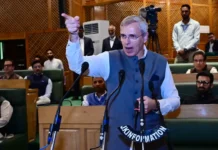
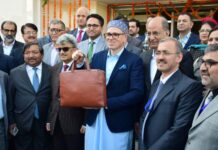
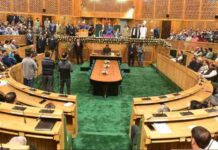
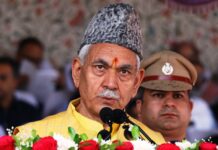
Chief Minister Omar Abdullah, who also holds the portfolio of Finance Minister, shared the union territory’s budget for 2026-27 on February 6, 2026. Read the text of his full speech
With deep humility and unwavering resolve, I rise today to present my Second Budget as Finance Minister. It is a privilege to be entrusted with the responsibility of shaping the financial future of our land. This Budget is not merely a ledger of figures; it is a fiscal compass charting our path towards a brighter horizon. It lays strong foundations for enduring economic growth, social harmony, and sustainable prosperity. As we embark on this shared journey, I invite every Hon’ble Member of this august House to come together and work collectively to build a strong and flourishing Jammu and Kashmir.
The soul of Jammu and Kashmir has been forged in resilience and strengthened by hope. Through changing seasons and testing times, our people have stood firm, drawing wisdom from the past and courage for the future. Guided by this enduring spirit, our Government is committed to transforming Jammu and Kashmir into a modern, progressive, and economically vibrant region. Together, we will turn obstacles into steppingstones and aspirations into achievements.
We are building a business-friendly ecosystem that invites innovation and investment, turning Jammu and Kashmir into a hub of enterprise and ideas. This vision has been shaped through wide-ranging consultations with elected representatives, industry leaders, and stakeholders. Their voices have enriched this Budget and ensured that it remains people-centric. By engaging directly with every Member of this House, we have laid the cornerstone of a new culture of participatory governance.
The past year has been nothing but challenging for Jammu and Kashmir and for the entire nation. At the national level, we see our growth path suddenly challenged by geopolitical challenges. While the national economy is accelerating at a 6–8 per cent growth rate, we see our access to global markets being constrained by trade frictions. Even in Jammu and Kashmir, just as our economy was consolidating with renewed vigour, the barbaric terrorist attack at Pahalgam and its aftermath shocked us. The devastating floods in August and September have severely battered the Jammu region. These two calamities have further accentuated the fiscal challenges before us. All the sectors of economic activity, including tourism, handicrafts, horticulture and agriculture are badly affected. There is a substantial loss of jobs and business in all sectors, leading to financial stress on the families.
This Budget gives us an opportunity to analyse these challenges incisively and respond to them resolutely by reforming with greater vigour. This Budget is anchored in the vision of inclusive and sustainable growth and driven by fiscally prudent strategic investments across infrastructure, public services and governance. It seeks to bridge regions, unlock potential, and create pathways of opportunity especially for our youth and women, who are the architects of tomorrow.
STRENGTHENING FISCAL SITUATION
Jammu and Kashmir’s fiscal stress stems from high committed expenditure and limited own-revenue capacity. Own tax and non-tax revenues cover only 25 per cent of our budgetary needs. The geographical difficulties, structural constraints, and inefficiencies—especially in the power sector— further accentuate this stress and lead to reliance on central support. To address this, my government has pursued fiscal reforms to enhance revenues, rationalize spending, and improve fiscal transparency.
While the GST rate rationalization undertaken by GST Council has dented our revenues, we have leveraged the analytical inputs from Business Intelligence Unit (BIU), GST Network (GSTN) and Bhaskaracharya National Institute for Space Applications and Geo-informatics (BISAG) to prevent leakages and ensure strong GST enforcement. We have deployed the e-Abgari portal and e-Stamping to streamline Excise administration and Land Registration. We also ensured transparent auctions to boost revenues. This has led to our tax revenue and non-tax revenue rising to Rs 10,265 crore and Rs 4,964 crore respectively as of December 31, 2025. While these figures are lower than last year’s collections of Rs 10,624 crore and Rs 5,114 crore respectively, we are making sustained efforts to exceed last year’s collections by 31st March.
The Government’s fiscal stress stems from the committed expenditure on salaries, pensions and debt servicing which alone account for nearly 60 per cent of overall outlay. Hence initiatives in debt management are being taken to lower high-cost liabilities and eliminate off-budget debt. We are strengthening debt sustainability by keeping all borrowings within approved limits and improving liquidity management. For the third consecutive year, we have enforced the austerity measures for curbing non-priority spending. My government is pursuing the power sector reforms to reduce losses and improve billing efficiency. We are expanding the consumer base and aerial bunched cables and executing loss reduction works in all districts. These reform measures are expected to ease financial stress and lay the foundation for a fiscally prudent development path.
ACCELERATING INVESTMENTS
Still Jammu and Kashmir continues to face significant infrastructure deficits in areas like road connectivity, water supply, sewerage, tourism, and power. For addressing these challenges, substantial financial resources and continued support from the Central Government are essential. My government actively engaged with the Central Government to resolve our fiscal issues. I met with Union Home Minister and Union Finance Minister on multiple occasions. I am pleased to share that the Central Government has remained cognizant of our difficulties and consistently supported us through special assistance.
This year, Jammu and Kashmir was brought under the ambit of Special Assistance to States for Capital Investment (SASCI) Scheme. This decision reflects the confidence of the Government of India in the reform orientation, financial discipline, and execution capacity of Jammu and Kashmir. SASCI scheme provides us 50 year interest free loans for undertaking capital investments and infrastructure projects. It has emerged as a transformative fiscal instrument as it emphasizes on substantive reforms in several key sectors by providing financial incentives for such reforms. My government has proactively leveraged this new opportunity.
Under the untied allocation of Rs 1,431 crore, we are accelerating execution capital projects, including the hydro-electric power projects. Our capital works aim at strengthening infrastructure across critical sectors. Recognising the progress achieved and the effective utilisation of funds by Jammu and Kashmir, the Central Government approved an additional allocation of Rs 1,431 crore under the untied component.
Building resilience and reducing disaster risks is now a critical priority under SASCI. After the devastating floods in Jammu region, we ensured detailed visit of the inter-ministerial team and coordinated their inspections. My government submitted detailed reports and proactively pursued financial assistance with the Central Government which has now approved further allocation of
Rs 1,431 crore for disaster mitigation and restoration works. We will utilize these SASCI funds for the creation of protective and preventive infrastructure, and strengthening preparedness.
Under the Reform components of SASCI, Jammu and Kashmir has undertaken far-reaching Mining Sector Reforms, qualifying for incentive of Rs 100 crore. Similarly, the Land governance reforms were started to improve transparency, ease of doing business, and citizen trust. As on date, land records of 6,839 villages have been fully computerised, Cadastral maps in 6,464 villages are digitised. Over 68 lakh land parcels have been recorded and ULPIN has been assigned to 13.25 lakh parcels. The Revenue Court Case Management System is operational in 881 revenue courts, significantly reducing delays, disputes, and inconvenience to citizens. These reforms helped us complete the Digital Crop Survey and qualify for an incentive of Rs 60 crore. Under the NAKSHA initiative, the aerial survey in Bishnah town has been completed, thereby earning an incentive of Rs 5 crore.
Under Urban Planning Reforms, a GIS-based databank of industrial land has been integrated with the India Industrial Land Bank. Reforms such as land pooling, GIS-based planning, green buildings, flexible zoning, road rationalisation, and amendments to building regulations have been undertaken. Based on these, my government has submitted a proposal for availing Rs 415 crore under this incentive.
I am happy to note that the fiscal consolidation measures, the persistent implementation of reforms and the strategic capital investments are accelerating our economy. Our Gross State Domestic Product (GSDP) is estimated to grow from Rs 2,36,059 crore in 2023–24 to Rs 2,62,458 crore for 2024–25 and is projected to rise to Rs 2,88,422 Crore in 2025-26 signalling a decisive leap in our GSDP. In 2025-26, the primary, secondary, and tertiary sectors are projected to contribute 20 per cent, 18 per cent, and 62 per cent to GSVA, respectively.
Jammu and Kashmir’s economy is estimated to grow at 11 percent, driven by our sustained initiatives and strategic policy interventions. This positive GSDP trajectory has supported Jammu and Kashmir to tackle the aggravated fiscal challenges after the Pahalgam tragedy and the recent floods. With confidence in our direction and faith in our collective strength, I am certain that Jammu and Kashmir will emerge as a leading region of development, innovation, and opportunity.
FORTIFYING GOVERNANCE and ADMINISTRATION
My Government is working to strengthen administrative capacity, modernize civil services, ensure efficient recruitment, and enhance institutional infrastructure in Jammu and Kashmir. We have actively implemented Mission Karmayogi, which aims to train civil servants through its “role-based,” competency-driven approach. Out of our 3.74 lakh employees, 1.25 lakh employees have been onboarded and 53,073 employees are actively engaged in their training.
My Government has made employment generation a central pillar of its governance agenda, with a clear focus on speed, transparency and merit in public recruitment. I am pleased to inform this House that 7,650 candidates have been appointed to Government service during the year 2025 purely on the basis of merit, through a transparent and technology-driven recruitment process, restoring faith of our youth in public institutions.
I propose to fast-track the recruitment process for 23,800 additional posts, including 2,800 gazetted, 14,000 non-gazetted and 7,000 Class- IV posts, so that these vacancies are filled in a strictly time-bound manner.
In addition, 910 compassionate appointments have been provided during 2025, ensuring that families who have lost their sole breadwinners are able to live with dignity, security and hope. These measures reflect our firm resolve that every deserving youth gets a fair opportunity, and that public employment in Jammu and Kashmir remains transparent, accountable and accessible to all.
My Government is fully conscious of the long- standing aspirations of daily rated, casual and temporary workers, who have served the administration for years under difficult conditions and with limited job security. Last year, a high-level committee was constituted to examine all legal, financial and administrative aspects of regularisation of daily rated workers, so that a fair, transparent and sustainable policy framework could be evolved. I assure this House that my Government is committed to finding a just and humane resolution to this long-pending issue, and based on the recommendations of the committee, a structured and phased roadmap for regularisation will be announced in the coming period. Our objective is to ensure that those who have devoted the prime years of their lives to public service are given dignity, security and a stable future, within the framework of law and fiscal responsibility.
My Government acknowledges the invaluable contribution of ASHA and Anganwadi workers, who form the backbone of our public health and early childhood care systems. Their dedication at the grassroots level, especially in reaching the most vulnerable sections, deserves our deepest appreciation. Government is committed to remove impediments to ensure timely release of their honorarium.
I am also pleased to inform this House that the honorarium of Vocational Instructors has been enhanced, reflecting our commitment to recognising the role of skilled educators in strengthening employability and vocational education.
We have strengthened the infrastructure of our recruitment and accountability agencies. Construction of police stations for the Anti- Corruption Bureau in Jammu, Baramulla, and Anantnag will be completed by the end of the financial year. Similarly, the Jammu office of JKSSB is nearing completion and the construction of JKSSB building at Srinagar is expected to be completed by June 2027.
My Government has restored the Darbar Move in a structured and modernized manner, reaffirming its importance as a unique administrative tradition that strengthens regional integration and participatory governance.
The restoration of the Darbar Move has already begun to revive economic activity in Jammu, benefiting transport operators, hospitality sector, small traders, service providers whose livelihoods depend on this seasonal movement of administration.
My Government is working to strengthen facilities and welfare measures for Government employees associated with the Darbar Move, including improved accommodation, better office infrastructure, digital connectivity and enhanced logistical arrangements, so that the Move becomes more efficient, employee-friendly and cost- effective.
This approach ensures that the Darbar Move is not merely symbolic, but a productive governance mechanism that supports both economic vitality and employee well-being.
ADVANCING AGRICULTURE AND ALLIED SECTORS
The agriculture and allied sectors are undergoing transformation through interventions under Holistic Agriculture Development Programme (HADP) and the Competitiveness Improvement of Agriculture and Allied Sectors Project (JKCIP), backed by IFAD assistance. The focus has shifted from subsistence practices to a diversified, climate- smart and income-centric agricultural economy. The cultivated area has expanded from 12.71 lakh hectares to 13.50 lakh hectares. The Seed Replacement Rate (SRR) has risen from 12 percent to 22 percent, enhancing productivity and crop resilience.
Protected cultivation has expanded and 332 hi- tech greenhouses and 848 polyhouses established over 29.84 hectares. These facilities have enabled enhanced cropping intensity up to 250 per cent and reduced climate-induced risks. The area under oilseeds has expanded substantially from 1.4 lakh hectares to 2.1 lakh hectares, resulting in a doubling of oilseed production and reducing dependence on imported edible oils.
Kissan Khidmat Ghars (KKGs) are empowering farmers by enabling technology-driven last-mile delivery. By 2025–26, over 8 lakh farmers were onboarded onto Kisan Sathi and KKG apps, with 1,300 KKGs getting operational. By March 2027, universal digital farmer coverage is targeted through full integration of Digital Crop Survey (DCS). Under PM Fasal Bima Yojana, 2.01 lakh farmers covering 75,732 hectares were registered during Kharif 2025, ensuring effective crop risk mitigation.
Under Command Area Development (CAD) and Modernization of Command Area Development (M-CAD), irrigation potential of 4.53 lakh hectares has been created by December 2025 and further 16,207 hectares potential is proposed for 2026–27. Mushroom cultivation has emerged as a high- return allied enterprise, with production increasing by 31 per cent from 2,100 MT to 2,742 MT over the past three years through establishment of 227 mushroom units and distribution of 1.18 lakh compost bags. Apiculture has popularized with honey production growing at 77 per cent in three years to over 3,895 MT, aided by distribution of 1.03 lakh bee colonies and establishment of 11 honey processing units.
Under the High-Density Plantation Scheme for horticulture, about 1,119 hectares have been covered since 2017–18 till December 2025 with assistance of Rs 139 Cr. Further, 18,915 hectares are covered under medium-density plantations. Our fruit production increased from 26.43 LMT (2023– 24) to 26.92 LMT (2024–25). We aim to reach 29.72 LMT production by 2029–30. Further, 1455 hectares shall be covered during 2026-27 under High/Medium Density Plantation.
A mega fruit nursery is commissioned at RS Pura, Jammu with capacity of 5 lakh quality saplings of subtropical fruits. Two elite nurseries/Plant Establishment Quarantine (PEQs) are being developed at Marta (Udhampur) and Lehwan (Anantnag) for providing high-quality planting material.
During year 2026–27, public and private sector nurseries aim to produce 8.00 lakh planting material and 17.84 lakh rootstock fruit plants. Further, 06 hectares of mother orchards, 15 hectares of rootstock banks and 40 hectares of plant propagation units will be established during 2026-27. Further strengthening conservation efforts, SKUAST, Jammu has established a state-of-the-art Ex-Situ Gene Bank, becoming the third institution in India with such a facility.
The dairy and livestock sector has recorded robust growth with annual milk production reaching 28.75 lakh metric tonnes, driven by systematic breed improvement, expanded artificial insemination coverage, and improved animal management practices.
I am proposing setting up of 7 Milk Processing Plants of 1 Lakh Liter per day capacity in JandK costing appx. Rs. 770 Crore funded through UT Capex and GoI Scheme. This scheme is going to benefit 11 Lakh Dairy farmers. My target is to take JandK in milk processing from current 4 per cent to 25 per cent in next few years.
We are proposing a top-up subsidy of 15 per cent under the Integrated Dairy Development Scheme (IDDS) for PMFME beneficiaries establishing milk processing. The formation of 4,000 new Dairy Cooperative Societies (DCS), along with Milk FPOs and SHG clusters will strengthen grassroots ownership and efficient procurement. To support this ecosystem, 40 Bulk Milk Coolers (BMCs), 40 testing labs, 200 Milk-o-Chill units, and 5 insta chillers will be deployed.
For transforming the dairy ecosystem, we will be expanding milk processing from 5 per cent to 12 per cent for enabling efficient handling of 10 LLPD and enhancing productivity. This will boost organized dairy cooperative turnover from Rs 407 crore to Rs 1,898 crore annually, translating into an additional Rs 300 crore in income for 3 lakh farmers each year. With these interventions, annual milk production is projected to increase to 32 lakh metric tonnes and milk collection and chilling capacity is expected to rise to 5.5 LLPD by 2026–27.
The e-National Agriculture Market (e-NAM) platform has been successfully rolled out, enabling farmers to sell their agricultural and horticultural produce without physically bringing it to mandis. Out of our 19 wholesale mandis, 17 mandis are integrated with the e-NAM platform. Since its inception in 2020–21, over 55,000 farmers, traders, FPOs, and commission agents are registered and cumulative trade worth Rs 1,721 crore has been conducted through e-NAM up to December 2025.
To further boost the poultry sector, we will establish 800 commercial poultry units and 50,000 backyard poultry units so as to produce approximately 250 million eggs. This will make poultry farming more remunerative and reduce dependence on imported poultry inputs. Further, fish production is expected to increase from 31,000 MT in 2025–26 to 33,000 MT in 2026–27, contributing to improved availability of fish and enhanced incomes for fish farmers.
The Agriculture and Allied sectors has been allocated Rs 1,878 crore under capital expenditure for 2026-27.
RURAL DEVELOPMENT
Under the Mahatma Gandhi NREGA, 250.07 lakh person-days were generated in 2025-26. The construction of Panchayat infrastructure is progressing steadily, with 367 Panchayat Bhawans tendered, 354 allotted and 297 works taken up. Under PMAY, 3.21 lakh houses have been completed, while construction of the remaining 14,000 houses is in progress. Soil and moisture conservation activities such as contour bunding, terracing, water harvesting and field protection works have been initiated under IWMP, resulting in treatment of 1,219 hectares of degraded land and completion of 369 conservation works covering 5,286 hectares in 2025-26.
Under the Lakhpati Didi initiative, 2,00,952 SHG women have already become Lakhpati Didis. The remaining 32,048 potential households will be covered by June 2026 to enhance women’s economic empowerment and rural enterprise. We will proactively increase the number of Lakhpati Didis by converging this initiative with Mission Yuva. Under UMEED, 98,312 women farmers were trained in 2025-26. JK-RLM facilitated credit linkage for 13,103 SHGs amounting to Rs 418 crore, benefiting roughly 26,200 households.
Capacity building under the Rashtriya Gram Swaraj Abhiyan (RGSA) has trained 14,685 officers and officials, including Panchayat Secretaries. The year 2025 was designated as “JandK Green Mission 2025” to drive community-led environmental stewardship and Plantation drives.
The Rural sector has been allocated Rs 3,456 crore under capital expenditure for 2026-27, an increase of Rs 40 crore from the revised allocation for 2025-26.
TOURISM
My Government considers tourism as a key pillar of economic growth and livelihood generation in Jammu and Kashmir. Despite the challenges faced during the year, including the unfortunate Pahalgam incident and subsequent floods, Jammu and Kashmir recorded over 1.61 crore tourist visits in 2025, reflecting the resilience and continued confidence in our destination. I propose to build a sustainable, inclusive and year-round tourism economy, balancing infrastructure development with environmental conservation and community participation. Our focus will be on developing new world-class tourist destinations, strengthening tourism circuits, and positioning Jammu and Kashmir as a global tourism brand, with financial and technical support from the Ministry of Tourism, Government of India.
Environmental infrastructure has been prioritized, with sanctioning of 3.2 MLD STP at Gulmarg and starting of upgradation of Solid Waste Management Plant. Similar measures are planned at Sonamarg for reinforcing protection of fragile ecosystems. My government is also working on restoration of heritage sites and shrines through the Culture Department. This initiative will aim to preserve cultural identity, boost local economies through tourism, and strengthen community pride.
For diversification of Tourism towards winter sports, water sports, and adventure tourism, procurement and execution of supportive infrastructure is underway. Water sports facilities at Wullar–Manasbal and Bani–Basohli are being developed. Sports tourism is also being promoted through strategic invents. The Kashmir Marathon and Jammu Marathon are placing JandK on the national and international sporting map. The 2nd Kashmir Marathon 2025 with a three-day Expo recorded over 3,000 registrations, with participation from 27 States/UTs and 11 countries. We garnered
Rs 2.11 crore in sponsorships and Rs 0.20 crore in registration fees, validating its economic and promotional potential. In 2026-27, we will be organizing an International Film Festival in association National Film Development Corporation. The festival will bring the world cinema to Jammu and Kashmir, promote cultural diversity and stimulate local economy.
We have launched JK Tourism Mobile App for offering verified real-time information, integrated booking services, and AI-based assistance. This will become the entry point for tourists providing comprehensive support and boost business opportunities for local hotels and entrepreneurs. The Homestay Policy addressed peak-season accommodation shortages while empowering local households. We have established over 1,600 registered homestays in Kashmir Division and 300+ in Jammu Division. We have partnered with JandK Bank to provide concessional assistance for such homestays, which will be popularized through our portals and JK Tourism Mobile App.
Skill development and entrepreneurship form a core pillar of the Government’s employment strategy in Jammu and Kashmir. We intend to launch a skill mission to equip our youth with superior skills. For this Skill and Entrepreneurship framework will be developed covering foundational skilling, internships, and industry-ready technical skilling. The mission will emphasize upgradation of polytechnics and ITIs, on-the-job training opportunities and lifelong learning.
The Tourism and Youth Affairs sector has been allocated Rs 472 crore under capital expenditure for 2026-27, an increase of Rs 61 crore from the revised allocation for 2025-26.
CULTURE
My Government accords high priority to the preservation, restoration and promotion of our rich cultural and heritage assets, which are central to the identity, history and tourism potential of Jammu and Kashmir.
During 2026–27, provision has been made for completion of all ongoing projects under Phase-I of the Heritage Revival, Restoration and Maintenance Scheme, and for fast-tracking the execution of approved projects under Phase-II and Phase-III. I further propose to ensure comprehensive coverage of heritage conservation, including execution of heritage projects of the Tourism Department across Jammu and Kashmir, and the value-based restoration of the Mughal-era Nishat Garden in Srinagar.
I also propose to expedite the modernisation of the SPS Museum, strengthen and modernise the public library network, and expand inclusive cultural infrastructure through establishment of new Cultural Centres at Bandipora, Shopian, Anantnag, Kishtwar, Udhampur, Poonch and Budgam.
In addition, enhanced budgetary support will be provided to the JandK Academy of Art, Culture and Languages to promote youth engagement through cultural programmes and national initiatives ensuring that our cultural heritage remains vibrant, accessible and future-oriented.
The Culture Department has been allocated Rs 109 crore under capital expenditure for 2026-27.
INDUSTRIES
Despite the challenging environment, the Industries sector recorded strong progress during 2025–26, reflecting investor confidence. Since 2020, 2,227 industrial units in the organised sector, involving an investment of Rs 15,940 crore and generating employment for 73,827 persons, have commenced production. Investment grounding reached an all- time high of Rs 5,260 crore till December 2025. Under the New Central Sector Scheme (NCSS) of
Rs 28,400 crore, 971 applications involving Rs 14,292 crore were registered, with 87 per cent of new and expansion units commencing production. Claims of
Rs 403 crore were approved under NCSS, taking cumulative approvals to Rs 840 crore. For 2026–27, amendments to the JandK Industrial Policy 2021–30 are proposed to sustain industrial growth post- NCSS, ensuring continued employment and income security.
My government is taking decisive measures to support medium and small enterprises (MSMEs) and facilitate ease of doing business. I propose to introduce a Self-Certification Scheme for MSMEs, under which entrepreneurs will receive a single in-principle approval with a three-year grace period for clearances, enabling them to start operations without procedural delays and compliance bottlenecks. I further propose to extend incentives to sick MSMEs at par with new industrial units, so that viable enterprises are revived, existing jobs are protected, and business closures are prevented. Reimbursement of CGTMSE (Credit Guarantee Fund Trust for Micro and Small Enterprises), guarantee fees up to Rs 10 lakh loans was approved with an allocation of Rs 41.30 crore. Jammu and Kashmir secured the 5th rank in Ease of Doing Business in November 2025.
The first-ever MSME Health Clinic was launched with IIM Jammu, covering 417 units, with focused revival plans underway for 70 sickness-prone MSMEs. MSME formalisation surged, with Udyam registrations rising from 0.24 lakh in 2021 to 5.85 lakh in 2025–26, and a target of 7.1 lakh units by 2027. We received the national MSEFC Excellence Award for online and timely MSME dispute resolution. The startup ecosystem expanded from 69 startups in 2020 to 1,342 in 2025–26, including
490 women-led ventures.
A new Startup Policy was launched and 18 startups were sanctioned seed funding of Rs 20 lakh each. Over 1,100 ideas were generated through bootcamps and outreach. Enhanced allocations are proposed in 2026-27 for upgrading infrastructure in existing Industrial Estates to support MSMEs. Startup support will be strengthened through higher budgetary allocations, incubators and co-working spaces in Srinagar and Jammu. To sustain rural self-employment, higher allocation is proposed under JandK Rural Employment Generation Programme (JKREGP) for FY 2026–27.
The Handloom and Handicrafts sector provides direct and indirect employment to nearly 4.45 lakh individuals, primarily from economically weaker sections. GI certification capacity increased fivefold, eight new crafts were GI-registered in 2025, and 17 more are in advanced stages. We are strengthening QR-code-based certification and testing infrastructure. We won the National ODOP Gold Award for the second consecutive year. Artisan Credit Card saturation is being pursued aggressively, with Rs 21.06 crore disbursed to 1,011 artisans during 2025–26. Our four artisans received National Honours, including the Shilp Guru Award and National Awards for Handicrafts.
The Industry and Handicrafts sector has been allocated Rs 461 crore under capital expenditure for 2026-27, an increase of Rs 137 crore from the revised allocation for 2025-26.
TRANSPORT SECTOR
The Institute of Driving Training and Research (IDTR) at Kot Bhalwal will be made operational this year for professionalizing road safety in Jammu. The IDTR will be equipped with seven automated driving tracks and state-of-the-art machinery, ensuring that every new driver is trained to the highest national safety standards.
In parallel, the transition to Automated Testing Stations (ATS) is underway to ensure vehicle fitness and commuter safety while protecting the environment. This technology-driven approach involves electronic evaluation of brakes, suspension, and emissions, replacing manual fitness testing. Registration certificates have already been issued to private operators, with the first ATS operational since September 2025. The Inspection and Certification Centre at Samba will be soon commissioned to serve as a government-sector hub for automated testing.
JKRTC continues to provide uninterrupted transport of passengers and food grains and horticulture products, reinforcing its role as a reliable and resilient public transport and logistics provider. We need to strengthen inter-district transportation, particularly in rural and underserved areas to provide reliable, comfortable, and affordable services. The revival of Jammu and Kashmir Road Transport Corporation (JKRTC) will be a key focus in 2026-27. As part of a green mobility initiative under the PM e- DRIVE scheme, 200 electric buses are planned to be inducted, with an estimated investment of Rs 350 crore, replacing aging diesel fleets with modern, zero-emission vehicles. To further strengthen JKRTC’s commercial and logistical capacity, 50 new trucks will be procured under SASCI funding of Rs 75.70 crore.
The Transport sector has been allocated Rs 21 crore under capital expenditure for 2026-27.
MINING SECTOR
While we are blessed with unique mineral wealth, it is important that it is harnessed transparently and sustainably. Hence we are implementing the Integrated Mining Surveillance System (IMSS) in collaboration with BISAG-N. This system will enable satellite-based monitoring of mining areas, generate real-time triggers on illegal mining activities and share this with enforcement officers for prompt verification and legal action. The first phase of IMSS has been operationalized and over 110 triggers have been generated for technology- driven action for curbing illegal mining.
To strengthen on-ground enforcement, e-Challan machines have been introduced in collaboration with JandK Bank for issuing on-the-spot challans to violators. The first-ever auction process for the seven limestone mineral blocks in Jammu and
Kashmir marks a significant step in implementing mining reforms. This will enable transparent digital auctions for mineral resource allocation and boost our revenues.
The Mining sector has been allocated Rs 4 crore under capital expenditure for 2026-27, an increase of Rs 2 crore from the revised allocation for 2025-26.
HEALTH and MEDICAL EDUCATION
Significant upgradation of health infrastructure in the recent years has improved public healthcare delivery and medical education. More than 4,000 health infrastructure facilities have been developed, including 15 Medical Colleges, two AIIMS, and two State Cancer Institutes.
The new 160-bedded block at the Bone and Joint Hospital, Srinagar with cost of Rs 140 crore has been operationalised since July, 2025. The commissioning of the 100-bedded Mother and Child Care Hospital at Lamberi (Rajouri), upgradation of SDH Billawar to a 100-bedded facility, construction of a 50-bedded Hospital at Sunderbani, upgradation of the 100-bedded Hospital at Nowshera, and the 125-bedded District Hospital at Reshipora, Budgam has been accelerated.
To strengthen diagnostics, the process for installing 1.5 Tesla MRIs in new GMCs and 3 Tesla MRIs at GMC Jammu, GMC Srinagar and SKIMS has been initiated. Installation of CT Scan machines is underway in major hospitals, like DH Budgam, SSH Srinagar, DH Poonch, SMGS Jammu, CD Hospital Jammu and SMHS Srinagar. This initiative will be further expanded. PET-Scan facilities will be installed at GMC Srinagar and will be extended to GMC Kathua during 2026–27 to enhance cancer diagnostics.
Mobile Medical Units and Mobile Dental Units are proposed to improve outreach in far-flung areas. The SEHAT App has been launched to enhance healthcare delivery by integrating services, providers, and patients on a single digital platform. More than 16 lakh users have started seeking benefits on the App. Digital health and remote care are being upgraded with provision of Rs 32 crore for establishing 80 Telemedicine Centres and enabling clinical consultation in far-flung regions. De-addiction OPDs are functional and six new facilities are under construction to expand de-addiction support.
Construction of Homeopathic College at Rakh- Hoshiari, Kathua, and Ayurvedic College at Amargarh, Sopore will commence in 2026–27 to expand AYUSH education and care options. All 523 Ayushman Arogya Mandirs dedicated to Ayush services have been fully operational across JandK, providing Ayush therapies and preventive health interventions. Ayush infrastructure has been expanded by commissioning the 10-bedded Integrated Ayush Hospital at Jammu and Government Ayurvedic Hospital at Kulgam.
Medical education capacity has been strengthened. During the current year, 548 medical seats will be added, comprising 340 MBBS, 128 PG, 34 PG (Ayurveda), and 46 DNB seats. AIIMS Kashmir will be commissioned by June 2026. GMC Srinagar and GMC Jammu have each been allotted 20 additional MBBS seats. Further, GMC Doda, GMC Anantnag, GMC Baramulla and GMC Kathua have each been allotted 50 additional MBBS seats, thereby expanding pool of medical professionals. Quality nursing education will be enhanced through creation of trained manpower in 10 Nursing Colleges. With the unprecedented approval of 240 MBBS and 120 PG seats, infrastructure of all GMCs will be strengthened in FY 2026–27 with budget of Rs 216.00 crore.
The Health and Medical Education sector has been allocated Rs 1,866 crore under capital expenditure for 2026-27.
SCHOOL and HIGHER EDUCATION
Path-breaking reforms have been undertaken in the education sector to ensure comprehensive implementation of the National Education Policy (NEP). To strengthen early childhood education, pre-primary classes have commenced in 15,550 schools. We provisioned Rs 30 crore for establishing 5,000 Kindergartens with child-friendly infrastructure. In 2025–26, 1,735 Kindergartens were set up and 7,672 schools received child- friendly furniture. Additionally, 188 modern Kindergarten buildings costing Rs 122 crore have been sanctioned under Samagra Shiksha.
School infrastructure is being upgraded with 396 schools being developed as Exemplar Schools under PM-SHRI. Further, 762 additional classrooms worth Rs 160 crore have been approved. To promote future-ready learning, ICT facilities will be established in 2,036 schools. 4,200 Smart Classrooms are being commissioned under Samagra Shiksha and PM-SHRI. Innovation capacity is being expanded with the ongoing 172 Atal Tinkering Labs, and the proposed 500 ATLs.
Skill-linked education and governance reforms are progressing in parallel. Vocational Education has been introduced in 554 schools, with 2,294 vocational trainers. Further, 2,214 vocational labs are under implementation. Teaching capacity is being enhanced with 594 Lecturer vacancies being referred for recruitment. Further, 2,217 schools are being solarized. To enhance monitoring and learning outcomes, District Vidya Samiksha Kendras are being set up for educational analytics.
The reforms launched by our Government have led to significant improvement in school education results of 2025-26, with Class 10 and 12 pass percentages reaching roughly 85 per cent, marking one of the best performances in recent years. Key improvements include increased, high-performing, girl-student passing rates (86 per cent) and a notable rise in government school performance.
My Government is undertaking crucial initiatives in Higher education sector to make our youths skilful and competitive. The Four-Year Undergraduate (FYUG) Programme is being universalized in all Degree Colleges. Records of 34.50 lakh students of Classes X, XI, and XII have been uploaded on DigiLocker by JKBOSE as part of the digital transformation initiative. Additionally, 74 Government Degree Colleges were upgraded with NAAC accreditation. To enhance quality of education, infrastructure of Jammu and Kashmir Universities is being strengthened with support under RUSA 1.0 and 2.0.
The key initiatives and priorities of the Higher Education Department will aim at development of classrooms, laboratories, and libraries for universities and colleges, improvement of Autonomous and Affiliated Colleges, and development and up-gradation of their sports infrastructure. All colleges in Jammu and Kashmir are offering access to the National Digital Library of India (NDLI) for faculty and students. Under the sustainability initiative, 494 buildings are proposed to be solarized at a total cost of Rs 50 Crore.
During the next Financial Year 2026–27, five college buildings at GDC Kakreyal Katra, GDC Zainapora, GDC Vaillo Larno, GDC Tulail, GDC Chenani, and the Architect College of Engineering at Jammu shall be made functional. Further, construction of buildings at GDC Frisal, GDC Qazigund, GDC Darhal, GDC Verinag, and GDC Majalta will be completed during 2026–27. The capital projects for GDCs at Kunjwani, Mandi, Ajas, Dadu Basantgarh, Marheen, Ramkote and Batote are being accelerated.
A Policy for the establishment of private universities is being finalized to increase access to higher education and boost creation of skilled workforce. Four Research Hubs in Jammu Division and three Research Hubs in Kashmir Division are being upgraded to expand research capacity in line with NEP aspirations. To build a stronger research ecosystem, 22 Lead Research Colleges have been identified for equipping them with laboratories and academic infrastructure in alignment with NEP standards.
The School and Higher Education sector has been allocated Rs 1,513 crore under capital expenditure for 2026-27.
SCIENCE and TECHNOLOGY
We will be undertaking a path-breaking initiative in the Science and Technology sector by investing
Rs 30 Crore to operationalize two non-functional Industrial Biotechnology Parks at Kathua and Handwara. This will leverage institutional partnerships with SKUAST-Jammu and SKUAST- Kashmir and help these Parks transform into vibrant research and entrepreneurship hubs by equipping them with advanced instruments and qualified scientific staff. This biotechnology innovation ecosystem will generate Rs 1,000 Crore in economic value and create high-value scientific jobs.
Under PM-KUSUM, 5,000 solar agriculture pumps have been installed covering nearly 14,000 acres with capacity of 14 MW. This will result in average annual savings of about Rs 18,000 per farmer. An allocation of Rs 20 crore is proposed under PM-KUSUM 2.0 for expansion of solar-powered agriculture pumps to reduce diesel consumption.
In the government sector, 2,725 buildings have been solarised with capacity of 39 MW, yielding substantial fiscal savings. Further, 13 Small Hydro Power Projects with capacity of 35 MW are under implementation through the IPP mode. To ensure an inclusive clean energy transition, I propose saturation of 100 tribal villages as Solar Villages. We have distributed 15,000 smokeless cook stoves and 11,200 solar home lighting systems to improve energy access and health outcomes in tribal areas.
We are currently supporting 274 ongoing RandD projects and providing 130 scholarships to students from the +2 level up to PhD for supporting higher education and research. To develop skilled manpower in emerging sectors, we propose skilling and placement linkages for approximately 2,000 youth in renewable energy, clean technologies and biotechnology.
A major initiative proposed is the establishment of Hybrid Solar Parks of 15 MW each to provide turn-key infrastructure for utility-scale solar deployment. This will reduce project risks and enable faster commissioning of solar projects. To accelerate clean technology adoption, we propose expansion of Electric Vehicle charging infrastructure, including solar-based charging stations and solarisation of feasible government buildings.
The Science and Technology sector has been allocated Rs 177 crore under capital expenditure for 2026-27, an increase of Rs 42 crore from the revised allocation for 2025-26.
SPORTS
My Government is prioritizing youth development through an integrated approach to sports, culture, fitness and civic engagement. Modern sports infrastructure is being developed to ensure a bright future for young athletes. So far, 2 Centres of Excellence and 92 Khelo India Centres have been established
Digital enablement will be operationalized to scale youth registrations on the My BHARAT portal from 5.5 lakh to 20 lakh. We aim to build a digital athlete ecosystem with unique IDs, performance dashboards, verified certificates and tracking from grassroots to elite levels. A structured tournament pathway has been institutionalized and over 15.39 lakh students now participate at various levels, leading to around 2,500 athletes representing JandK at the National School Games.
Jammu and Kashmir successfully conducted the 5th edition of its flagship Winter Sports Programme, reinforcing its position as India’s premier winter sports capital. We also hosted the first-ever Khelo India Water Sports festival, giving fresh momentum to rowing, kayaking, and other water-based disciplines. The hosting of the 3rd Asian Pencak Silat Championship, with participation of about 300 athletes from over 12 countries, showcased JandK’s organisational excellence.
JandK athletes have delivered strong results, with 11 Gold, 9 Silver and 18 Bronze medals at the 69th National School Games and notable performances at international events including the Paris 2024 Paralympics.
Over 29 lakh youth engagements were ensured up to December 2025, with large number of sports activities, including 1 national event, 20 UT-level championships, 5 major leagues and 338 community sports programmes, alongside flagship events such as the Jammu Cyclothon, Football and Cricket Premier Cups, South Kashmir Volleyball League, Snow Festivals and the 6th Khelo India Winter Games 2026 in Gulmarg and Srinagar.
The Sports and Youth Affairs sector has been allocated Rs 155 crore under capital expenditure for 2026-27, an increase of Rs 17 crore from the revised allocation for 2025-26.
LABOUR andEMPLOYMENT
Employment generation through entrepreneurship is a key priority of this Government. To systematically promote self-employment across Jammu and Kashmir, we have launched Mission YUVA as a mission-mode initiative anchored on the 4-C framework of Culture, Capacity, Capital and Connectivity. Mission YUVA has achieved wide and deep grassroots outreach.
The Mission YUVA App has recorded around two lakh downloads, with applications received from nearly 95 percent of Panchayats across the Union Territory. So far, about 70,000 applications have been received, and 53,000 Detailed Project Reports have been prepared through a strong institutional framework at the district level. Twenty Small Business Development Units at the district level, eighty Business Helpline Desks at the sub-division level, and 2,000 YUVA DOOTs at the grassroots are actively handholding applicants, supporting them throughout the entrepreneurial journey.
As a result of this structured approach, 47,000 applications have been approved by District Level Implementation Committees, and 16,500 enterprises have been sanctioned by banks, with nearly Rs 800 crore already disbursed. Another 20,000 applications are under active processing with banks and are expected to be sanctioned shortly. Applications returned by banks are reprocessed through a facilitative, non-rejection mechanism, supported by a dedicated Business Helpline.
Capacity building remains integral to Mission YUVA. Over 8,000 entrepreneurs have completed structured training, while another 5,000 are currently undergoing entrepreneurship development programmes. To ensure transparency, efficiency, and accountability, Mission YUVA is supported by a comprehensive end-to-end digital dashboard enabling real-time monitoring of applications and outcomes.
The Mission YUVA App functions as a one-stop digital platform for aspiring entrepreneurs, enabling business initiation, AI-based DPR preparation, access to a DPR repository, skill learning hubs, enrolment for capacity-building courses, as well as career counselling and job-matching services. Market access is being strengthened through an ONDC-based seller platform, which is already operational. In the coming year, the Government will further scale up Mission YUVA through convergence with skilling, credit, and market- linkage initiatives, supported by adequate budgetary provision. Mission YUVA reflects this Government’s firm commitment to empowering youth as job creators and to building a self-reliant and resilient economy in Jammu and Kashmir.
Transforming Skilling Ecosystem in Jammu and Kashmir form a core pillar of the Government’s employment strategy in Jammu and Kashmir. A comprehensive four-track Skill and Entrepreneurship framework has been adopted, covering foundational skilling at the school level; a Career Launchpad for youth through minor skilling alongside graduation, internships, placement support and accessible coaching; industry-ready technical skilling through restructuring of polytechnics under the proposed Skill University, upgradation of ITIs through PM-SETU, and strengthened on-the-job training under PM-NAPS additional UT support; and continuous upskilling and lifelong learning through model skill centers and convergence with Government of India initiatives. These tracks will be enabled by a robust ecosystem comprising structured placement mechanisms, career guidance through digital platforms and podcasts, an Annual Skill Convocation, and a Skill Samiksha Kendra on the lines of the Vidya Samiksha Kendra. The introduction of a Skill Score and Skill Passport will ensure transparent assessment, portability of skills, and improved employability outcomes for the youth of the JandK.
Five new ITIs will be developed as Hub ITIs, under the new Central scheme, which will serve as specialized centres for advanced technical training, high-end skilling, and industry-linked vocational education.
To further improve labour welfare and grievance redressal, a toll-free helpline “Shram Mitra” (18008905457) has been established to provide timely support to workers. Infrastructure for labour mobility and social security is also being enhanced through the construction of new Labour Sarais at Wanpoh (Anantnag) and Rajouri, along with upgradation of Labour Sarai Kathua to provide safe night shelters for migrant labourers. Additional Labour Sarais at Washbugh (Pulwama) and Budgam, and a Model Labour Sarai at Nowshera are also in the pipeline.
The Labour and Employment sector has been allocated Rs 244 crore under capital expenditure for 2026-27, an increase of Rs 98 crore from the revised allocation for 2025-26.
IMPROVING LIFE OF MIGRANTS
My Government remains committed to the resettlement and welfare of Kashmiri migrant families. We are accelerating the construction of 6,000 Transit Accommodations for Kashmiri Migrant Government Employees. As on date, out of the 4,096 completed flats, 3,250 flats have been allotted. During the current financial year, 944 flats have been completed and we propose to complete the targeted 1,200 flats during 2026–27.
The PoJK Bhawan at Suketar, Jammu is targeted for completion during 2026–27. Once completed, it will emerge as a powerful tribute to resilience of the displaced persons from Pakistan- occupied Jammu and Kashmir and Western Pakistan. Multi-Purpose Community Hall at Jagti Mini Township, Jammu will be soon commissioned to advance welfare of migrant communities.
My Government also remains firmly committed to ensuring dignified living conditions and seamless access to essential services for migrant families. In this direction, we aim to improve the civic and utility services in Migrant Colonies at Jammu and all Transit Camps. We aim to extend the benefits of the Ayushman Bharat – SEHAT health insurance scheme to migrant families. We will strengthen the digital service delivery to simplify and expedite access to essential documentation for migrants.
A dedicated online platform has been established for issuance of key certificates for migrants and for registration and grievance redressal related to migrant properties. I am pleased to share that, through this digital initiative, over 1.64 lakh Domicile Certificates, 36,541 Migrant Certificates, 2,325 RBA Certificates, 1,597 EWS Certificates, and 2,789 Income Certificates have been issued to Kashmiri Migrants. Additionally, 14,619 Registration Certificates have been issued to Kashmiri Migrants and Displaced Persons from PoJK, ensuring empowerment for the migrant community.
ENSURING FOOD SECURITY
Smart PDS has been initiated for rollout in 2026– 27 to strengthen service delivery, curb leakages, and enhance transparency in the distribution of essential commodities across Jammu and Kashmir. As an important measure of social protection, the Government has started providing 10 kg of free ration per person to all AAY beneficiaries from 1 April 2025, thereby ensuring enhanced nutritional support for the most vulnerable households.
Additional food grains are already being supplied free of cost to eligible AAY beneficiaries as promised. Further, fair price shops are being upgraded to improve accessibility and streamline distribution, reinforcing our commitment to an efficient, inclusive and citizen-centric food security architecture.
The Food and Civil Supply sector has been allocated Rs 331 crore under capital expenditure for 2026-27, an increase of Rs 57 crore from the revised allocation for 2025-26.
ENSURING TRIBAL WELFARE
My government aims to ensure tribal welfare in a holistic fashion by strengthening their education, housing, rural infrastructure, and livelihoods. At present, 28 Tribal Hostels with capacity of about 2,900 students are providing free boarding, lodging, and education. Additionally, 26 hostels are under construction. We will commission 10 such hostels in the coming months. Six Eklavya Model Residential Schools (EMRS) are functional and over 260 smart classrooms have been established. Pre-Matric and Post-Matric scholarship schemes continue to benefit ST students and improve retention and educational access.
Under the Dharti Aaba Janjatiya Gram Utkarsh Abhiyan, 393 tribal-majority villages across 20 districts have been covered, with Rs 39.21 crore released during 2025–26 for infrastructure and allied works. Livelihoods are being strengthened through about 1,500 mini sheep, goat and dairy units, along with 10 Milk Villages and 3 Milk Chilling Plants. For nomadic and transhumant tribes, 7 transit accommodation units are under construction along migration routes, of which 2 are completed.
Janjatiya Gaurav Divas was celebrated at Mendhar in Poonch District—a frontier border district of India on 15th of November, 2025, to commemorate the 151st birth anniversary of the revered tribal freedom fighter Shri Birsa Munda. Tribal Research Institute at Khimber, Srinagar is supporting evidence-based policymaking through surveys, baseline studies, impact assessments and documentation of tribal culture, language and heritage. Forest Rights Act (FRA) Cells are being established at UT and district levels with an outlay of Rs 3.77 crore to ensure effective implementation of the Forest Rights Act.
The Tribal Affairs sector has been allocated Rs 235 crore under capital expenditure for 2026-27.
SOCIAL SECURITYand WOMEN EMPOWERMENT
We have expanded social security coverage for vulnerable and financially distressed households through the Integrated Social Assistance Scheme (ISSS) and the National Social Assistance Programme (NSAP). In 2025–26, the scale of pension was enhanced and new eligible members were added. My government increased the monthly pension rates from Rs 1,000 to Rs 1,250 for beneficiaries below 60 years, to Rs 1,500 for those aged 60 to 80 years, and to Rs 2,000 for those aged 80 and above.
The number of elderly persons, widows, and persons with disabilities covered by social pensions was increased from 7.35 lakhs in March 2024 to 10.19 lakhs in January 2026. Of these, 8.83 lakh beneficiaries are under the Integrated Social Security Scheme and 1.36 lakh under National Social Assistance Programme (NSAP). The annual pension outlay was enhanced from Rs 1,209 crore to Rs 1,755 crore, ensuring greater financial security and dignity for the most vulnerable citizens. We will work with the Central Government to increase the Disability pension further by 25 per cent, benefiting over 1.62 lakh pensioners.
In 2025–26, the financial assistance under the Marriage Assistance Scheme was enhanced from Rs 50,000 to Rs 75,000 for poor girls from AAY families. The earlier requirement of being an 8th class pass was also relaxed to saturate the coverage of the scheme for all eligible girls. As a result of these reforms, the number of beneficiaries increased from 26,000 in 2024–25 to 44,302 in 2025–26, with expenditure amounting to Rs 234 crore as of December 2025.
Inclusive education will be strengthened through Special Schools for specially-abled children at Baramulla and Anantnag. The Composite Home at Nanil, Anantnag will soon be operational. The Half Way Home at Ganderbal will strengthen rehabilitation and reintegration services. The SC/ST Building at Muthi, is scheduled for inauguration in April 2026.
My government is committed to strengthening financial security for girl children through the Ladli Beti Scheme. Since its inception, the scheme has grown from just 16,095 beneficiaries in 2017 to around 1.92 lakh girl children enrolled by late 2025. The coverage of this scheme was further expanded with provision of Rs 450 crore in 2025-26, benefiting 16,165 girl children.
Under the NRLM, 96,000 Self-Help Groups (SHGs) have been formed, mobilizing over 7.84 lakh rural households to foster savings, credit access and enterprise development. We have successfully implemented free ridership for women on all government-owned public transport, including Smart City e-Buses and JKRTC services, from April 2025. The ridership of women in such buses has jumped substantially providing secure, green and convenient transport for women. This has been a path-breaking reform, making JandK one of the few regions in the country to operationalise zero-fare travel for women.
The Social Welfare sector has been allocated Rs 170 crore under capital expenditure for 2026-27.
DISASTER MANAGEMENT
We all have witnessed the devastation caused by natural calamities in recent past. Hence the government is emphasizing on disaster mitigation and preparedness. For building resilience to future disasters, my government has, for the first time, started building a Disaster Risk Mitigation Fund with initial corpus of Rs 39 crore. I am pleased to share that the guidelines for the Disaster Risk Mitigation Fund are being finalised. Under National Landslide Risk Mitigation Programme (NLRMP), six priority projects have been identified for undertaking timely mitigation measures.
To strengthen disaster preparedness and response mechanisms, the Government is undertaking the construction and operationalization of State-of-the- Art Emergency Operations Centres (EOCs) in Jammu and Kashmir. District Emergency Operations Centres are being established in all 20 districts, which will significantly enhance our capacity in disaster risk management, coordinated response, and resilient recovery. The UT-level Emergency Operations Centre is being constructed at Ompora, Budgam, which will function as the central Command and Control Centre for disaster management operations.
The SAKOON 2.0 platform has digitized the entire disaster relief process, replacing manual procedures with an end-to-end online system. Relief disbursement timelines have been reduced from 5–6 months to 15–20 days, ensuring transparency, accountability, and direct benefit transfer.
The Disaster Management sector has been allocated Rs 351 crore under capital expenditure for 2026-27.
PLANNING PROGRESS
To enhance institutional capacities and policy formulation, we have partnered with IIM Jammu to make the Centre for Innovation and Transformation in Governance (CITaG) operational. CITaG has started work on Skill Development Plan, PPP Policy, FDI Policy Framework, PPP project assessments, and projects for new tourism destinations. CITaG has successfully also trained 400 officers from Planning and Finance departments, strengthening policy delivery capacities.
Jammu and Kashmir has made significant progress on Sustainable Development Goals (SDGs). As per NITI Aayog’s SDG India Index 2024-25, JandK has emerged as one of the fastest improving UTs. Major improvements have been achieved under Zero Hunger, reflecting success in nutritional interventions.
In Jammu and Kashmir, there are 1,421 border villages, out of which 124 strategically important villages have been selected for development under Vibrant Villages Programme-II. We will stress on improving living conditions, livelihood opportunities and grass root infrastructure in these strategic border villages. We undertake works for all-weather road connectivity under PMGSY-IV, telecom connectivity through the Digital Bharat Nidhi, television connectivity via the Broadcasting Infrastructure Network Development (BIND) scheme, and on-grid electrification under the Revamped Distribution Sector Scheme (RDSS) in the border villages.
The Planning sector has been allocated Rs 331 crore under capital expenditure for 2026-27 an increase of Rs 16 crore from the revised allocation for 2025-26.
POWER DEVELOPMENT
We have developed a forward-looking power sector plan to achieve round-the-clock electricity supply for all consumers by 2027–28. This strategy addresses generation, transmission, distribution, and reforms for ensuring sustained energy security and long-term financial viability. We have started taking decisive steps on all these dimensions.
Four major hydropower projects (HEPs)—Pakal Dul, Ratle, Kiru, and Kwar with a combined capacity of 3,014 MW, are under rapid execution.
We have leveraged the SASCI funding to provide our share of equity for these projects in accelerated fashion. The Pakal Dul HEP of 1,000 MW and the Kiru HEP of 624 MW are scheduled for commissioning this year. Once operational, these projects will generate approximately 3,230 MU and 2,272 MU of energy annually respectively. The 12 MW Karnah HEP is also targeted for commissioning this year. The 37.5 MW Parnai HEP has reached an advanced stage of execution. Several other projects, including the Kwar HEP, Ratle HEP, Kirthai-I and Kirthai-II, are at advanced stages of construction or appraisal. The commissioning of these projects will enhance the availability of clean and low-cost power and reduce need for market purchases. We will also be reviving the long-stalled 1,856 MW Sawalkote HEP with the strong support of the Central Government.
We have finalized a comprehensive Renewable Energy Policy for 2026–27, encompassing solar, wind, rooftop wind, and Battery Energy Storage Systems. Under the PM Surya Ghar Muft Bijli Yojana, 16,816 households have been solarized to provide free and clean electricity. Further, government buildings have been solarised aggressively. These measures will enhance reliability and reduce energy bills.
I am happy to inform the house that the Ministry of New and Renewable Energy has sanctioned the installation of rooftop solar systems of 2 kW each at 2.22 lakh AAY households under the RESCO model. We will award these works to capable agencies for ensuring time-bound execution. These systems are expected to generate 200 units per month per household, entirely free of cost for the beneficiaries, for the operational life of 20 years, under the PM Surya Ghar Muft Bijli Yojana. Special initiatives are being taken for strengthening power infrastructure along the Baltal and Pahalgam axes for the Amarnath Yatra through permanent underground cabling for ensuring uninterrupted and safe supply.
For strengthening the transmission and distribution infrastructure, a record 5,708 MVA has been added to the distribution sector and 4,239 MVA to the transmission sector over the past five years. We will further undertake construction of new 220/132 kV and 132/33 kV substations, augmentation of existing substations, and reconductoring of lines with HTLS conductors to enhance transmission capacity across all districts. These investments will improve load-handling capability, reduce outages, enhance voltage regulation, and ensure uniform development across regions.
My government is also focusing on loss reduction, service improvement, and enhanced consumer satisfaction. For this, installation of new and augmented distribution transformers, comprehensive HT/LT network improvements, strengthening of receiving stations and sub- transmission lines, and electrification of unelectrified households in remote areas such as Kathua, Poonch, Rajouri, Gurez, and Bandipora is being undertaken. We are installing smart meters to reduce ATandC losses and under-recovery in the power sector. Already with installation of 10.44 lakh meters, losses have been reduced by 9 per cent, while revenue has increased by 16 per cent.
To further enhance consumer satisfaction, dedicated Power Management Cells are being established to enable monitoring of feeder-wise power curtailment, with accountability fixed for deviations. Where ATandC losses have been reduced below 10 percent, 24×7 power supply will be ensured. These measures initiated are improving the generation, transmission, distribution of power supply and improved sustained energy security. During the last winter, the peak demand met was 3,157 MW in December 2024. This winter, JandK registered an all-time high peak of 3,362 MW. We have also successfully improved the continuity of supply by reducing curtailments.
My government will soon notify the Energy Conservation Building Code for prioritizing energy efficiency, cost savings, and sustainable power management. We will start the implementation of an End-to-End Energy Tracking System to monitor energy flow across generation, transmission, distribution, and SLDC operations. AI and IT-based solutions will be deployed for load forecasting, asset management, loss reduction, consumer services, and cybersecurity.
The Power Development sector has been allocated Rs 1,718 crore under capital expenditure for 2026-27.
PHYSICAL CONNECTIVITY
With commissioning of the Udhampur–Srinagar– Baramulla Rail Link (USBRL), Kashmir has been connected with the rest of India through all- weather train services, fulfilling a long-cherished dream. The USBRL project, featuring India’s longest transportation tunnels and the world’s highest railway arch bridge over the Chenab, will greatly enhance mobility, tourism, and economic activity. The first-ever Food Corporation of India (FCI) food-grain freight train connecting Kashmir with the national freight network has been operationalized. This will enable all-weather freight movement, reduce pressure on NH-44, and accelerate economic growth. Expansion and modernization of Jammu Tawi Railway Station and Jammu Airport are progressing steadily.
Jammu Kashmir’s road network is witnessing massive upgrade with an investment of Rs 61,528 crore in construction and upgradation of Delhi–Amritsar–Katra expressway, five National Highways, and two Ring Roads for Jammu and Srinagar cities. Three tunnels, including the Sonamarg Tunnel, have been completed, while eight tunnels, including the Zojila Tunnel, are at advanced stages of completion. I express my gratitude to the Central Government for sanctioning 19 new National Highway projects at an estimated cost of Rs 10,637 crore to further strengthen connectivity.
Significant progress has been made on major ring road projects as well. In Jammu, 54 km of the 58 km alignment and in Srinagar, 75 per cent of Phase-I of the 44 km ring road has been completed. In view of the extensive damage to road infrastructure due to the unprecedented rainfall and flash floods, we have initiated permanent restoration works at an estimated cost of Rs 861 crore.
Under PMGSY- IV, 2,400 unconnected rural habitations in Jammu and Kashmir will be connected. Jammu and Kashmir has secured approval for 316 road projects for construction and up- gradation of 1,781 km of road length, under Batch- I of PMGSY-IV, benefiting 429 eligible habitations at an estimated cost of Rs 4,224 crore. We are submitting over 1,400 additional projects, covering 7,000 km at an estimated cost of Rs 13,200 crore, under PMGSY–IV Batch–II for providing all-weather road connectivity to 1,209 unconnected habitations.
During the year 2026–27, I propose to undertake macadamization and black-topping of nearly 3,500 kilometres of roads. This will be achieved through multiple flagship programmes, including the PMGSY, Central Road and Infrastructure Fund,
NABARD, Cities and Towns programme, and the Pothole-Free Roads Programme for ensuring safer, smoother, and more reliable road connectivity. We have also taken up 116 project proposals, with an estimated cost of Rs 364 crore, for sanction under NABARD RIDF–XXXI.
The Public Works sector has been allocated Rs 4,061 crore under capital expenditure for 2026-27, an increase of Rs 333 crore from the revised allocation for 2025-26.
JAL SHAKTI
In fulfilment of the commitment to provide clean tap water to every household, under the Jal Jeevan Mission, more than 15.62 lakh rural households (81 percent) have been successfully provided with piped water connections. Additionally, Har Ghar Jal (HGJ) certification has been achieved in 867 villages, marking significant progress towards universal water coverage. We will work with the Central Government to expedite the ongoing JJM works after verifying due diligence and source sustainability of all works.
Water supply project at AIIMS Awantipora, costing Rs 54.58 crore will create 1,600 KLD capacity for initial operational needs. Work on Phase-II (2,400 KLD) drawing surface water from the Jhelum and Water supply project at AIIMS Vijaypur have also achieved significant progress.
Under UT Capex, 393 water supply schemes have been completed out of 810 planned schemes, improving potable water access across multiple districts. Additionally, the Lar Canal Project in Ganderbal, costing Rs 25 crore under NABARD RIDF-XXX (2024-25), is under execution. To ensure water quality and compliance, 2 UT-level and 20 district-level laboratories have attained NABL accreditation and 28 sub-divisional labs have secured NABL recognition.
The Shahpur Kandi Dam Project has made significant progress. Since 22nd September 2025, regulated gravity flow of water has commenced, with the canal presently conveying approximately
150 cusecs. My government has significantly expanded irrigation coverage under the Command Area Development Programme, benefiting over
2.25 lakh hectares of cultivable land and further extending irrigation access through ongoing projects. During the year 2025–26, 26 on-farm channel projects have been taken up under NABARD, with a targeted coverage of 21,745 hectares. Of this, 17,212 hectares have already been achieved and additional 5,585 hectares have been brought under irrigation through works executed.
I am happy to note that the Department has received central funding in flood control sector which was pending for the past few years. To improve water efficiency in rain-fed and vulnerable areas, activities under the Watershed Development Component of PMKSY 2.0 including land levelling, contour bunding, check dams, farm ponds, and drainage line treatment are being implemented to regulate runoff, prevent waterlogging, and control soil erosion.
The Jal Shakti sector has been allocated Rs 2,558 crore under capital expenditure for 2026-27, an increase of Rs 545 crore from the revised allocation for 2025-26.
HOUSING AND URBAN DEVELOPMENT
My Government accords high priority to sustainable urban transformation through improved civic services, affordable housing, environmental management, and institutional reforms. The 277 Smart City projects have been commissioned to give massive fillip to urban infrastructure in Jammu and Srinagar. 200 e-Buses are already operational in these cities. Now, 200 additional e-buses are being procured under PM e-Bus Sewa scheme. To enhance financial sustainability, asset monetization of the Multilevel Car Parking at General Bus Stand Jammu is being undertaken through PPP mode, with projected annual revenue of Rs 12 crore.
To strengthen wastewater management, projects have been taken up under SBM-Urban 2.0 for construction of STPs with 100 MLD capacity, 445 km of Interception and Diversion network, and 490 KLD Septage Receiving Facilities. A cluster-based approach has been adopted for co-treatment of septage from smaller Urban Local Bodies (ULBs) at larger STPs. Approval has already been accorded to ten such Co-location projects with an allocation of Rs 270 crore.
Under AMRUT 2.0, 90 projects in water supply and sewerage sector worth over Rs 1,000 crore have been approved, of which 17 have been completed and 67 are under execution. Further, DPRs of 65 projects amounting to Rs 622 crore under AMRUT 2.0 have been approved and tenders floated.
In Municipal Solid and Wet Waste Management, Material Recovery Facilities are being commissioned in all ULBs for dry waste processing. Construction and Demolition waste processing facilities have been taken up in Jammu and Srinagar. Bioremediation of 28 lakh MT of legacy waste is also targeted for completion during the year. Under Sanitation Infrastructure, construction of Individual Household Latrines, Community Toilets, Public Toilets, Urinals, and Aspirational Toilets is progressing across ULBs. 217 Community Toilet seats, 578 Public Toilet seats, 227 Urinal and 375 Aspirational Toilet seats have been tendered.
For Integrated Waste Management, Srinagar City has been selected under the CITIIS 2.0 Program. An Action Plan of Rs 67 crore has been formulated for a 700 TPD pre-processing unit, 150 KLD leachate treatment plant, 300 TPD briquetting plant, and RFID tagging of 2.40 lakh households and 80,000 commercial units. Under Pollution Abatement of Water Bodies, projects amounting to Rs 358 crore have been taken up to add 28 MLD of sewerage treatment capacity. For Pollution abatement of Dal Lake, construction of a 30 MLD STP for uncovered areas has been taken up at a cost of Rs 306 crore.
In the sphere of Urban Planning, 25 Class-II towns have been approved for GIS-based Master Plans with assistance of Rs 22 crore under AMRUT 2.0. The Master Plans of Jammu and Srinagar are under final review and shall be notified shortly to ensure orderly expansion and environmental sustainability. Under Credit Enhancement Initiatives for smaller cities, the AMRUT 2.0 Credit Guarantee Fund of Rs 300 crore has been launched enabling access to formal credit for urban infrastructure.
Housing for all remains a key priority. Under PMAY-U 1.0, 42,585 beneficiaries stand approved, of which 34,730 dwelling units have been completed. Under PMAY-U 2.0, 26,582 applications have been registered of which 2,522 houses have been sanctioned. The JDA Heights Phase-II project comprising 144 flats across six towers is targeted for completion by June 2026.
To cater to rapid Housing demand, sites have been identified for mass housing colonies in self- financing/PPP mode in Srinagar and Jammu.
To improve Urban Infrastructure, investment is being made in parking spaces, bus stands, urban roads, sewerage and drainage networks, slaughterhouses and civic facilities. Construction of multilevel car parking facilities is underway in Jammu, Ramban, Doda, Udhampur, Kishtwar, Kathua, Samba, Reasi, Shopian and Bandipora. Additional parking projects at Baramulla and Vijaypur, Bus stands at Bandipora and Samba, and multilevel car parking at Mubarak Mandi, Jammu, and revamping of Parimpora Bus Stand and Transport Nagar are being taken up.
A flagship recreational initiative includes development of an 11.64-acre Water Park at Jagti, Nagrota in PPP mode, comprising water rides, resort, retail and family entertainment infrastructure. JandK shall pursue bankable projects including the second phase of Tawi riverfront, Revitalization of Qalai Andar Srinagar, Nageen riverfront and Anantnag riverfront under the Urban Challenge Fund.
To facilitate Ease of Doing Business in Urban Construction, Building Byelaws have been relaxed and Auto-DCR has been notified for faster building permissions. Under Urban Livelihoods and Social Protection, the twin capital cities of Jammu and Srinagar have been selected under Deendayal Jan Aajeevika Yojana (Shehri) for socio-economic profiling and targeted interventions for vulnerable households.
The Integrated Command and Control Centre has been made live with Integrated Data Centre, Intelligent Traffic Management System, e-Bill GIS, Video Management System, Emergency Response System, and Environmental Sensors. The Intelligent Traffic Management System has been implemented with MPLS fibre-based connectivity for real-time monitoring and automated enforcement.
The Housing and Urban Development sector has been allocated Rs 2,809 crore under capital expenditure for 2026-27, an increase of Rs 791 crore from the revised allocation for 2025-26.
LAW and PARLIAMENTARY AFFAIRS
My Government aims to ensure efficient and accessible justice delivery through the development of quality judicial infrastructure. We are constructing new court buildings, residential complexes for judicial officers, and chambers for advocates. Construction of the new High Court Complex at Srinagar, a mega project approved at a cost of Rs 908 crore, will be accelerated during FY 2026–27, strengthening judicial infrastructure and improving access to justice.
Our Government is steadfastly pursuing the construction of a state-of-the-art Legislative Complex in Jammu to replace the century-old facility at the Civil Secretariat. Works on the Legislative Assembly Complex at Jammu, sanctioned at a cost of Rs 208.53 crore, will advance further to provide a modern and efficient legislative facility. We have also started implementing National e-Vidhan Application (NeVA) project. It is being operationalized in phases. The NeVA project will include procurement of Network Equipment, Desktops, and other IT equipments to enable paperless functioning.
The Government remains committed to establishing a National Law University (NLU) in Jammu and Kashmir to advance legal education, promote research, and contribute to institutional reforms in the justice sector.
The Law and Parliamentary Affairs sector has been allocated Rs 257 crore under capital expenditure for 2026-27, an increase of Rs 17 crore from the revised allocation for 2025-26.
INFORMATION TECHNOLOGY
Jammu and Kashmir was honoured with the prestigious Technology Sabha Award 2025 for e- Unnat portal that has revolutionized digital governance by integrating services into a single platform with 100 per cent service availability. The number of services has increased from 1,166 to 1,547, with 162 additional services currently under development. Jammu and Kashmir ranks 1st among Union Territories and 4th nationally in terms of number of e-services, reflecting strong digital adoption and enhanced accessibility for citizens.
We are working on significant upgrades to the JandK State Data Centre. The hiring of Meghraj Cloud Services is in process. Meghraj will provide Infrastructure, Platform, Software and Storage to government departments, enabling optimized ICT spending and rapid deployment of e‑services. It will also ensure data residency and robust security standards for public sector applications.
My Government is aiming to establish state-of-the- art IT/ITES Parks in Jammu and Srinagar to attract investment, generate employment, and create a robust technology ecosystem. The initiative emphasizes Government-Industry-Academia collaboration. A Centre of Excellence in AI has been sanctioned with outlay of Rs 20 crore over four years. This Centre is set to drive research and applications of AI in education, governance, and the regional startup ecosystem.
Cybersecurity has been accorded high priority to safeguard critical infrastructure and digital assets. Fourteen Cyber Crisis Management Plans (CCMPs) of different departments have already been approved by CERT-In. More than 200 departmental websites and applications have been secured, and endpoint protection has been enhanced through 5,100 EDR and UEM deployments. In this direction, we are also on the ‘Digital Literacy and Cyber Hygiene’ initiative. We are establishing a Mini Security Operations Center (SOC) to ensure continuous cyber surveillance and rapid incident response.
A comprehensive Government Process Re-engineering exercise will be undertaken to simplify workflows and improve the efficiency of online services. Departments will move towards complete end-to-end digitization and integrate with national platforms such as Aadhaar, DigiLocker, UMANG, MyScheme and Meri Pehchaan. The rollout of e-Office 2.0 up to Tehsil and Block levels has institutionalized paperless governance. As of date, 21,972 users of 4,061 offices have been onboarded. The system has ensured transparent file movement, faster decision-making, and improved administrative efficiency, reinforcing accountable and citizen-centric governance.
Our e-Governance journey is guided by the principles of Line to Online, Queue to QR, Ask Only Once, My Data, Secure by Design, and Privacy by Default. The State Data Centre will be upgraded and augmented during 2026–27 to support our rapidly expanding digital ecosystem. Integration with Government Cloud platforms will enable a hybrid cloud architecture, ensuring high availability, scalability, and reliability of critical applications. This shall also include establishment of Near Disaster Recovery (DR) Centre and Far Disaster Recovery (DR) Centre.
To make government services more accessible, a centralized WhatsApp-based service delivery platform will be introduced. Citizens will soon be able to access 100–150 high-volume services across
15 departments through secure, multilingual chatbots. My Government will invest in advanced capacity building of citizens. Training programmes in cybersecurity, AI, blockchain, and e-Governance will be scaled up, and the Chief Minister’s IT Internship Programme will be further strengthened to build a future-ready talent pool capable of supporting Digital JandK. To bridge the digital divide, a Digital Village Centre initiative has been conceptualized for grassroots access to digital services and digital skilling.
We are working to integrate BHASHINI with government websites and digital platforms, enabling multilingual access in Indian and local languages. This will be a major step towards inclusive, citizen-friendly and accessible digital governance across the JandK. New 900 CSC touch points have been established and are currently operational. Under the DigiDost doorstep service, 39,000 services were delivered. CSCs have facilitated 16 lakh financial transactions worth
Rs 350 crore, enrolled 80,000 farmers under PMFBY and delivered nearly 20 lakh citizen services, significantly improving last-mile access in rural and remote areas.
The GAD/Information Technology sector has been allocated Rs 109 crore under capital expenditure for 2026-27, an increase of Rs 36 crore from the revised allocation for 2025-26.
FOREST
In the Forestry sector, our emphasis on conserving our wealth of forests and wildlife, institutionalizing climate action, and adopting holistic approach for development. To promote afforestation, we have planted over 510 lakh saplings over the last five years to expand tree cover. In 2025-26, around 5,000 hectares area will be afforested and total 100 lakh saplings will be planted under various schemes. Under the Action Plan on Climate Change, 46,000 quintals of fodder are targeted to be produced for local communities, providing fodder worth Rs 1.40 crore free of cost.
Demarcation and digitization of forest boundaries are being accelerated for protection of forest land. We are targeting 19,752 installations and 55,056 surveys of boundary pillars. In Jammu, survey and digitization will be completed for encumbrance-free forests. Boundary pillar installation in Protected Areas is also underway, with works already completed in multiple wildlife sanctuaries, conservation reserves, and wetland reserves.
For development of wetlands and zoological infrastructure, Rs 35 crore has been earmarked. Additionally, Rs 25 crore has been earmarked for Wular Lake, covering eco-parks, shoreline protection, cultural walkways, cycling tracks, and recreational spaces. The works on cycling tracks from Watlab, Adipora, and Ninglee will be taken up for execution next year. We will also start eco-tourism projects through the Forest Development Corporation in 2026-27.
Wildlife conservation and rescue infrastructure are being strengthened. Twenty-four enclosures are open to the public at Jambu Zoo with eleven more planned, and new species, like Striped Hyenas, Zebra, Rhino, Snow Leopards, Red Panda and other Primates, are being added in graded fashion.
Environmental safeguards are also being implemented in project-linked catchments of major projects. Under CAMPA, two catchment area treatment (CAT) Plans for Pakal Dul and Shahpur Kandi HEPs are being taken up. The Biodiversity Conservation Plan for Pakal Dul is under implementation. CAT Plans for Kiru and Kwar HEPs will be initiated in 2026-27.
The Forest and Wildlife sector has been allocated Rs 241 crore under capital expenditure for 2026-27, an increase of Rs 60 crore from the revised allocation for 2025-26.
COOPERATIVE SECTOR
Our cooperative sector is witnessing a major transformation with the adoption of the Multi- Purpose Primary Agricultural Credit Societies (M-PACS) model and a range of reforms for growth and financial stability. All 537 PACS have adopted common byelaws to function as M-PACS, allowing diversification into allied sectors such as dairy, fisheries, and horticulture. The computerisation of PACS is also progressing rapidly, with all 537 PACS having completed their Dynamic Day-End process, thus functioning as e- PACS. We are upgrading existing PACS and cooperative office buildings through construction of new office spaces and modernization of Cooperative Training Institutes. We are also undertaking construction of Super Bazars, storage rooms, and digital service counters to promote customer-friendly facilities.
Grain storage projects are also being undertaken to create storage capacity at strategic locations. FCI has conveyed in-principle approval for leasing these spaces; thereby creating business opportunities for PACS in foodgrain storage. Three such storage projects of 1,000 MT at Rajbagh, Kathua and of 2,500 MT each at Mirhama, Kulgam and Turkpora, Kupwara are under construction. These facilities will improve price realization for farmers and ensure preservation of food grains.
To promote value addition to agricultural produce, food processing units are being established at the cooperative and PACS level. These units will facilitate processing, packaging, and branding of local products, thereby improving market access, and income opportunities for cooperative members and SHGs.
We have also fully operationalized the two new schemes announced in the last year’s Budget. The Cash Credit Limit scheme for PACS will enhance the working capital availability and enable timely disbursement of short-term credit to farmers. Similarly, the Cooperative Infrastructure Development Fund has been created to provide dedicated financial support for building and upgrading cooperative infrastructure.
The Cooperative sector has been allocated Rs 27 crore under capital expenditure for 2026-27.
Having outlined the sector-wise priorities and budgetary allocations of my Government, I now turn to a set of focused initiatives that will directly touch the lives of our people. These measures reflect our commitment to social justice, inclusive growth and targeted welfare, and are aimed at providing immediate relief and long-term empowerment to the most vulnerable sections of society.
My Government will enhance budgetary support to the Jammu and Kashmir Trade Promotion Organisation (JKTPO) to actively promote handicrafts and handloom products through regular Buyer–Seller Meets, creating direct market linkages between local artisans and national and international buyers. This initiative will strengthen market access, branding and income opportunities for artisans, and help position Jammu and Kashmir’s handicrafts as a globally competitive cultural and economic asset.
I am happy to share that we have received financial support of up to Rs 200 crore for the construction of Unity Mall. It will serve as the Crafts Bazaar providing permanent platform for local products, handicrafts, handlooms, and traditional enterprises from all States and UTs. Under the third component of SASCI, Jammu and Kashmir was allocated Rs 210 crore which has been leveraged for providing our share for eligible CSS Schemes.
My Government has made rapid progress in Financial Management Reforms by smoothly transitioning all Centrally Sponsored Schemes (CSS) from Treasury mode to SPARSH (State Payment, Receipt and Accounting System) mode. We have also mandated the use of Aadhar-based payments for all DBT CSS. Under the SPARSH module roll out, 151 SNA accounts have been opened with the Reserve Bank of India, the Cyber Treasury is fully operational, sanctions of over
Rs 2500 crore were received and over 23,000 bills have already been processed. I propose the modernisation of the Accountancy Training Institutes at Srinagar and Jammu at a cost of
Rs 10 crore, under the SASCI framework. My government has submitted a proposal for availing
Rs 350 crore under this incentive. To build long-term institutional capacity. This initiative will place Jammu and Kashmir among the leading States and Union Territories in digital financial governance, and marks our commitment to a transparent, corruption-free and citizen-centric financial system.
My Government is fully aware that a number of posts in far-flung and difficult areas remain persistently vacant due to challenging living and working conditions. This affects service delivery in critical sectors such as health, education and administration. I wish to inform this august House that my Government is actively contemplating a structured incentive scheme for employees posted in such remote and hardship areas, with the objective of improving retention and ensuring equitable access to public services for citizens living in the most difficult terrains. This initiative will aim to balance employee welfare with effective governance, so that no region of Jammu and Kashmir remains underserved due to staffing constraints.
My Government will ensure that all industrial units availing any form of Government concession, whether in the form of subsidy, electricity or land, give due priority to employment of local youth from JandK, so that industrial growth directly translates into jobs, skills and income opportunities for the residents of JandK. This policy will align investment with inclusive development, ensuring that the benefits of industrialization are shared equitably with local communities and contribute meaningfully to regional prosperity.
To support our horticulturalists, I announce implementation of Restructured Weather Based Insurance Scheme (RWBIS) in JandK for Apple (traditional and high density both), Saffron in Kashmir Division and Mango, Litchi and Saffron in Jammu Division, in which sum insured would be Rs 6594.93 Crore.
Currently, 68 Controlled Atmosphere (CA) stores with a combined capacity of 2.92 LMT are operational, against the requirement of 6.00 LMT. An additional 15,000 MT of CA capacity is being added in 2025-26 and 38000 MT CA capacity is aimed in 2026-27.
To ensure balanced regional development and wider dispersal of CA storage infrastructure, I propose to focus top-up subsidy for such CA storage in districts other than Pulwama and Shopian, where CA capacity has saturated. For achieving this target 40 CA Stores with an investment of
Rs 1400 Crore would be needed. Subsidy of Rs 600 Crore would be provided by the Government and top-up subsidy shall be available to these CA Stores from 2026-27.
The Government will provide 25 per cent top-up subsidy for popularizing micro and sprinkle irrigation scheme. In the first instance, I have earmarked Rs 116.86 Crore for the purpose which will improve/enhance water use efficiency by 60 per cent to 80 per cent and benefit farmers of 3 Lakh hectare land.
I am also announcing Aromatic and Medicinal Plan Mission with financial outlay of Rs 150 Crore and I am allocating Rs 10 Crore in the next FY.
This mission will leverage the vast natural resources of Jammu and Kashmir and substantially boost livelihood and income generation opportunities.
JandK Government has been importing high genetic breed animals from all over the world since 1980s but after a few years left with cross breed animals. Last year 600 Dorper and Texel sheep from Australia and 40 Bulls from USA have been imported. This process will go on in coming years. To ensure high genetic breed intact, my Government will establish one Embryo Transfer Technology Lab (ETT Lab) in every district by investing Rs 65 Crore in phased manner.
I propose to further strengthen rural infrastructure, sanitation and livelihood support by converging and optimally leveraging various Central schemes, with a special focus on achieving ODF-Plus status across rural Jammu and Kashmir.
To ensure long-term sustainability of these assets, I further propose to leverage District Capex funds from 2026–27 onwards for engaging capable agencies for professional operation and maintenance of rural sanitation infrastructure, so that these facilities remain functional, hygienic and community-owned. This initiative represents a decisive shift from asset creation to asset sustainability, and will significantly improve public health, environmental outcomes and quality of life in rural areas.
My Government remains deeply committed to ensuring the safety, comfort and spiritual experience of pilgrims visiting the holy Shri Amarnath Ji shrine. During 2025–26, over 200 infrastructure works for the Shri Amarnath Ji Yatra were completed, improving safety and pilgrim experience. I propose to further modernise pilgrimage infrastructure with an outlay of Rs 180 crore during 2026–27, in partnership with the Border Roads Organization, to improve road connectivity, emergency response systems and logistical support. This initiative will ensure that the Shri Amarnath Ji Yatra becomes safer, smoother and more dignified for pilgrims from across the country.
My Government has launched the JK e-Pathshala DTH Channel to ensure universal access to quality education for students across Jammu and Kashmir, especially in remote and hilly areas.
This free-to-air channel, broadcast through Doordarshan DTH deliver curriculum-aligned lessons from Class 1 to 12 without dependence on internet connectivity. JK e-Pathshala will provide live and recorded lectures, revision content and repeat telecasts, ensuring continuity of learning beyond classroom limitations. Two dedicated digital studios have been established and over
300 educational videos have already been produced. This initiative marks a major step towards bridging the digital divide and building an inclusive, technology-driven education ecosystem in Jammu and Kashmir.
From next year, we will also develop a class- specific channel through e-Pathshala initiative which would greatly compliment the efforts of our teaching community.
My Government will introduce indoor games facilities in all the government schools of JandK to promote holistic development of students. The initiative aims to strengthen cognitive skills, strategic thinking, concentration, and decision- making abilities among learners. These games encourage positive competition, teamwork, discipline, and stress reduction in a structured school environment. The availability of such games will ensure constructive engagement of students during leisure periods and also during adverse weather conditions. An amount of Rs 18 Crores has been earmarked for this purpose.
I propose to upgrade 1,000 Anganwadi Centres into modern Bal Vidyalayas, at a cost of Rs 72,000 per centre, with improved learning spaces, child- friendly infrastructure and enhanced safety standards, so that our youngest children receive a nurturing and stimulating educational environment.
I further propose to construct 127 new Anganwadi Centres, one in each CDPO block, to bridge critical infrastructure gaps and ensure that every child has access to quality early childhood care and nutrition services.
I propose an outlay of Rs 70 crore for scholarship support to over 3 lakh tribal students, covering
2.82 lakh Pre-Matric and about 17,000 Post- Matric Scheduled Tribe students, so that no tribal child is deprived of education due to financial hardship. To promote forest-based livelihoods, 100 Van Dhan Vikas Kendras are being set up under PM Van Dhan Yojana with an outlay of Rs 15 crore. I further propose to promote Tribal Home Stays in tourism-potential areas, with financial support of Rs 5 lakh per unit, to create sustainable income opportunities and community-based tourism models. A pilot community platform for tribal artisan clusters is being launched with Rs 50 lakh to improve branding and market access.
The extension block of Lal Ded Hospital in Srinagar will be commissioned in 2026-27 at a cost of
Rs 118 crore to augment gynaecology and obstetrics capacity with 108 additional beds and a NICU facility. We will also introduce the IVF facility in Lal Ded Hospital. The construction of a 249-bedded Mother and Child Care Hospital at GMC Anantnag will be initiated in 2026-27. I further propose to establish full-fledged Emergency Medicine Departments in all Government Medical Colleges over the next two financial years, to ensure round-the-clock trauma care, rapid emergency response and improved survival outcomes for accident victims and critical patients.
Cardiology services are being strengthened with inauguration of two new Cath Labs at GMC, Anantnag and Jammu. With funding under PM- ABHIM, 17 Critical Care Blocks (two 100-bedded and twelve 50-bedded) are under construction. I propose to strengthen advanced cardiac care services in Jammu and Kashmir by establishing Cath Labs at Government Medical College, Rajouri and Government Medical College, Baramulla during 2026–27, at a total cost of
Rs 30 crore. A Cath Lab at GMC Doda for the Chenab Valley will also be taken up. The Food Safety Organisation will be strengthened through enhanced testing facilities and funding to safeguard public health.
In recent years, Jammu and Kashmir has witnessed a concerning rise in the incidence of cancer, posing a serious public health challenge for our people. Recognising the urgency of this issue, My government will roll out a Cancer Control Strategy for JandK in collaboration with NITI Ayog and ICMR. The focus will be on implementing various interventions and strategies for management of cancer in JandK and will include collaborations for infrastructure development, training and capacity building with reputed national level organizations like the Tata Memorial Centre. The core focus of the strategy will be prevention, early diagnosis and better treatment of cancer patients through improved diagnostic equipment and treatment modalities. The government will also roll out a population based cancer registry for better management of cancer patients in JandK.
To strengthen the peripheral healthcare system and enhance the quality and availability of medical services across Jammu and Kashmir, my Government will implement a time-bound action plan for upgradation of services in peripheral Medical Colleges, based on the recommendations of a high-level committee already constituted for this purpose. This focused upgradation will lead to a significant qualitative improvement in healthcare delivery, reduce referral burden on tertiary hospitals, and ensure that specialised medical services reach people closer to their homes, especially in remote and underserved regions.
I propose to establish two dedicated Emergency and Accident Hospitals, one at Uri and another at Poonch, to strengthen critical healthcare infrastructure in border areas which are prone to shelling, cross-border incidents and natural emergencies. These hospitals will be equipped to provide 24×7 trauma care, emergency surgery, and critical medical services, ensuring rapid medical response during accidents, disasters and security- related incidents. This initiative will significantly enhance disaster preparedness and civilian safety in vulnerable border regions, and reflects the Government’s commitment to safeguarding the lives and well-being of people living in the most sensitive areas of Jammu and Kashmir.
I also propose purchase of Bullet Proof Ambulances for border districts, starting with two ambulances for Poonch and Tandghar for next Financial Year.
I propose to extend the existing free Government transport facility to Persons with Disabilities. This initiative will enable PWDs better access to mobility.
As a measure to ensure a strong social protection framework, I propose to provide full fee waiver to all students belonging to AAY families studying in Government Schools from Class 9 to 12, who are not covered under any other education related scholarship scheme. This measure will ensure that no child from the poorest household is forced to discontinue secondary education due to financial constraints. The scheme will have a high- impact investment in human capital with minimal fiscal burden.
To promote equitable access to higher education for the poorest youth and prevent dropouts at the college level due to economic hardship. I propose to extend full fee waiver to undergraduate students from AAY families studying in Government Degree Colleges, who are not receiving any other scholarship assistance. This will ensure that poverty does not become a barrier to academic aspiration.
I propose to introduce a Sponsorship Scheme covering 6,000 orphan children, who have lost both parents or their sole bread-earner, having no stable source of income and are not receiving any such benefit from Mission Vatsalya framework. Each child, under this, will receive a monthly sponsorship of Rs 4,000 through Direct Benefit Transfer, to support education, nutrition, healthcare and basic living needs. This initiative reflects our Government’s commitment that no child shall be left behind due to circumstances beyond their control.
To reduce the household energy burden on vulnerable families, improve health outcomes by discouraging use of solid fuels, and protect poor households from inflationary pressures, I propose to provide six free LPG cylinders per year to all AAY households of Jammu and Kashmir, covering the poorest of the poor. The scheme represents a direct cost-of-living relief for the most deprived sections.
SUPPLEMENTARY GRANT FOR THE CURRENT FINANCIAL YEAR 2025-26
The original grant for the financial year 2025-26 was Rs 1,40,310 crore (Gross) and Rs 1,12,310 crore (Net of WMA of Rs 28,000 crore). During the course of year from 1st April, 2025 to 31st March, 2026, an amount of
Rs 3,077.04 Crore shall be withdrawn in excess of grant in respect of Demand No. 01-General Administration, 02-Home, 06-Power Development, 07-Education, 08-Finance, 10-Law, 20-Tourism, 32-Horticulture and 36-Cooperative out of the Consolidated Fund of Jammu and Kashmir to defray expenses on services and purposes required during the period. This had been largely necessitated due to expenses related to expenses related to Darbar Move TA, Salary Arrears, Purchase of Vehicles, Purchase of Power, Equity to HEPs, Mid-Day Meals, Pensionary Benefits, CDF, Leave Salary, Subsidy, Shri Amarnath Ji Yatra and Recapitalization.
REVENUE PROPOSALS FOR 2026-27
My Government is dedicated to expanding social security for the most vulnerable sections of society while enhancing JandK’s competitiveness in the national economy through grassroots-level reforms. This Budget not only strengthens welfare measures but also drives transformative programs to accelerate infrastructure development, productivity, and economic growth, ensuring a more prosperous and inclusive Jammu and Kashmir. We need to ensure that this is done in a fiscally prudent manner. We need to explore every avenue for upscaling revenue generation while enhancing social protection for the poor. We need to ensure cost savings through austerity measures and efficiency measures. We must also improve the impact of public expenditure by leveraging scale, competition and private initiative. Hence it is proposed to reduce rebate on HSD by Rs 2 per litre. This will rationalize the price of HSD and encourage shift towards cleaner technologies. Even with this reduction of rebate, the HSD price in Jammu and Kashmir will be still lower than that in our neighboring States, like Punjab, Haryana, Himachal Pradesh, and Delhi.
BUDGET FOR 2026-27
For 2026-27, the total gross receipts are estimated at Rs 1,27,767 Crore, including the provision for ways and means advances and over-draft of Rs 14,000 Crore. Given these receipts, the total gross expenditure is estimated to be Rs 1,27,767 Crore. The total net budget estimates for the fiscal 2026-27 are Rs 1,13,767 Crore excluding the provision for ways and means advances and overdraft. This includes Rs 80,640 Crore and Rs 33,127 Crore under Revenue Expenditure and Capital Expenditure respectively under Budget Estimates 2026-27 and Rs 90,018 Crore and
Rs 23,749 Crore as expected Revenue Receipt and Capital Receipt respectively under Budget Estimates 2026-27. The own revenues both tax and non-tax are estimated to be Rs 31,800 Crore. In addition to this, Rs 42,752 Crore is to flow as central assistance and Rs 13,400 Crore as CSS to Jammu and Kashmir.
FISCAL INDICATORS
The tax/GDP ratio was projected at 7.5 per cent for 2025-26. The tax/GDP ratio is projected at 6.6 per cent for 2026-27.
Fiscal deficit for the year 2025-26 was estimated to be 2.98 per cent. This was substantially lower than 5.5 per cent in 2024-25 (RE). Fiscal deficit for the year 2026-27 is estimated to be 3.69 per cent. This is substantially higher than 3.63 per cent in 2025-26 (RE).
GDP for the year 2025-26 had been projected at Rs 2,88,422 Crore, which showed a growth of 9.5 per cent over the previous year. GDP for the year 2026-27 has been projected at Rs 3,15,822 Crore (indicative nominal GDP), which shows a growth of 9.5 per cent over the previous year.
Hon’ble Speaker Sir, with these words, I commend the Budget for the financial year 2026-27 of Jammu and Kashmir to this august House for consideration.
Thank You ! Jai Hind !