SOPORE
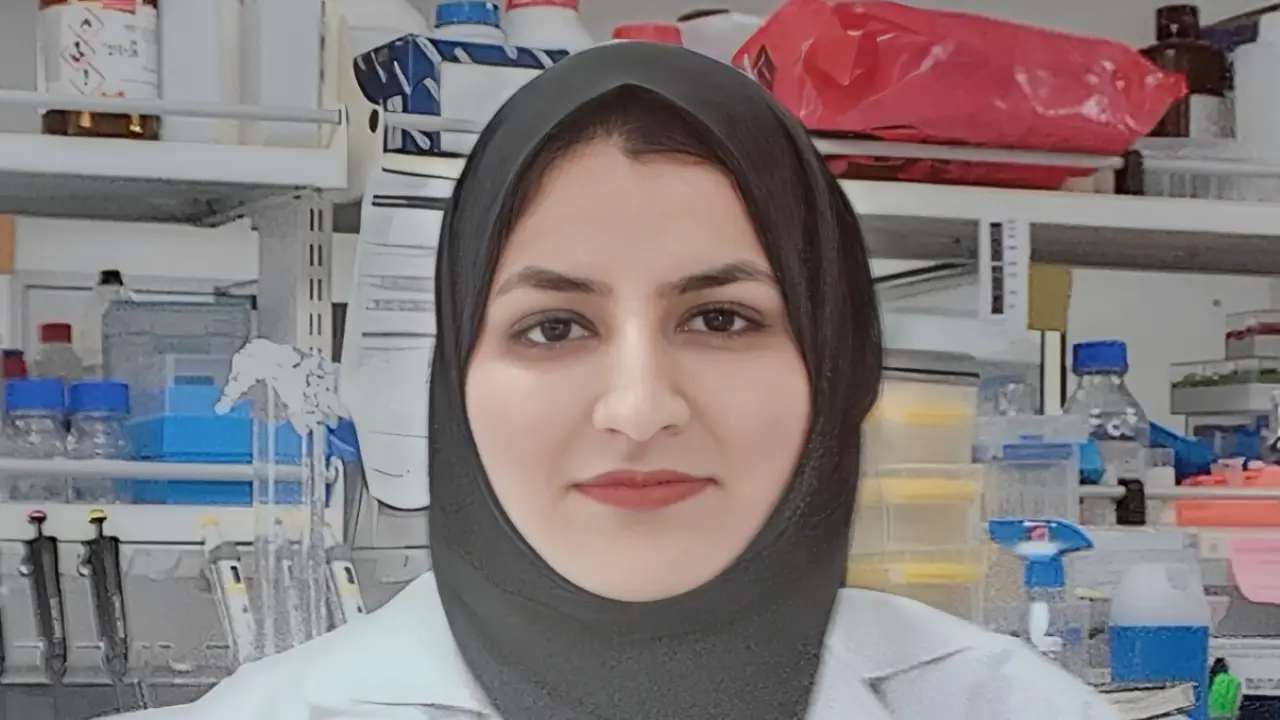
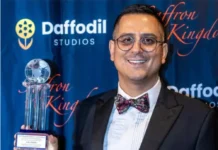
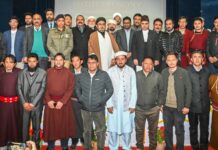
Momina Javid, a young biochemist from Sopore, has won the prestigious IDEX Master’s Excellence Fellowship from Université Paris-Saclay, France. A former Gold Medalist and Junior Research Fellow at Jamia Millia Islamia, Momina will pursue a dual Master’s in Infectious Disease Biology across Cambodia and France, culminating in degrees from both Université Paris-Saclay and the University of Health Sciences, Cambodia. Her academic journey, marked by distinction at Jamia Hamdard and a CGPA of 9.24 in her Master’s, includes research at AIIMS and work in CAR-T cell therapy at Jamia’s MCARS. Her selection was based on academic merit, research aptitude, and PhD potential. Momina credits her mentors, especially JK Scientists, for their guidance.
COIMBATORE
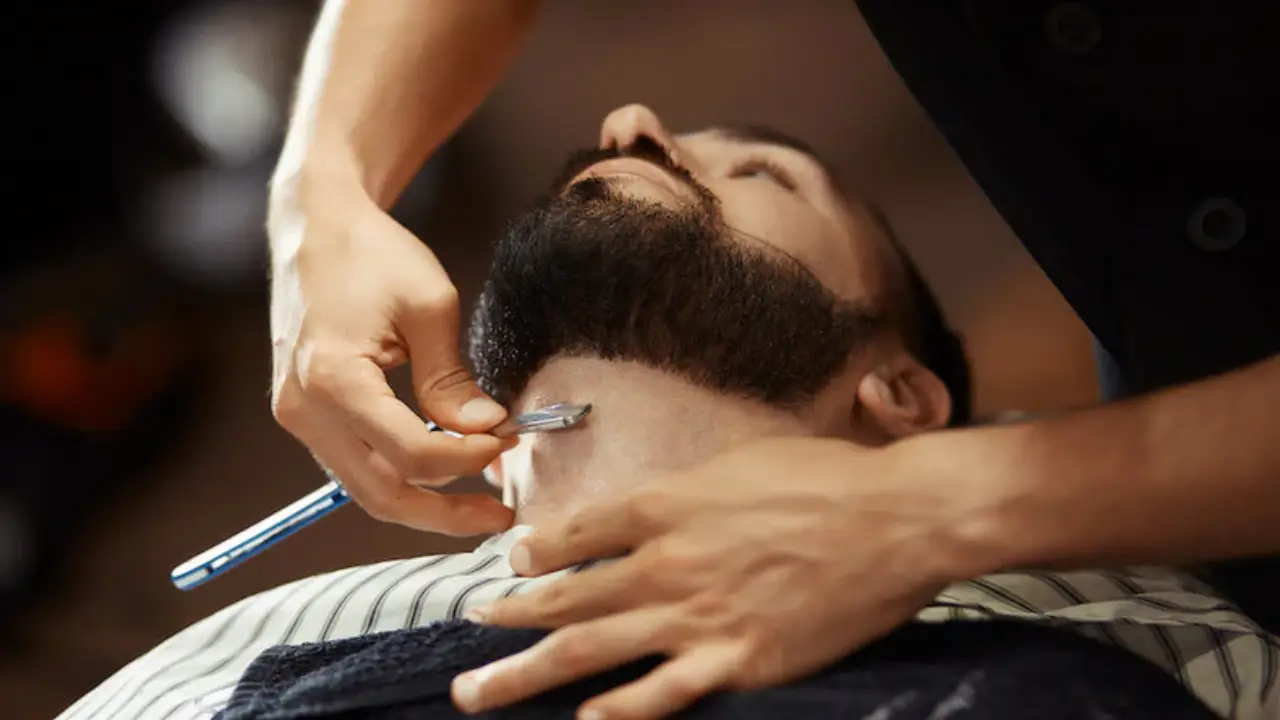
A Muslim doctor from Srinagar has alleged religious discrimination after being asked to shave his beard to secure admission for a super-speciality course in nephrology at Kovai Medical Centre and Hospital (KMCH), Coimbatore. The seat was allotted through NEET Super Speciality counselling. On visiting KMCH, the doctor claimed he was compelled to sign a no-beard policy, prompting him to withdraw, citing faith-based objections. Despite offering to wear a mask, he said the hospital cited inflexible grooming rules based on its chairman’s standards. The doctor has since approached the National Board of Examinations in Medical Sciences for re-counselling and a refund. While KMCH denied admission, it defended its dress code. The Jammu and Kashmir Students Association has sent a letter to Tamil Nadu Chief Minister MK Stalin urging state intervention, stressing the policy undermines secularism and penalises students from minority communities.
JAMMU KASHMIR
In a significant humanitarian ruling, the High Court of Jammu and Kashmir and Ladakh directed the Ministry of Home Affairs (MHA) to repatriate Rakshanda Rashid, a 63-year-old woman deported to Pakistan during the post-Pahalgam massacre crackdown. Rashid, who had lived in Jammu for 38 years with her Indian husband and children, was deported on April 30 despite holding a Long-Term Visa (LTV) and having applied for Indian citizenship in 1996. Justice Rahul Bharti, citing her poor health and lack of support in Pakistan, ordered her retrieval within ten days, describing her deportation as a grave violation of human rights. However, the Central Government is likely to seek a stay on the order in a higher court. Rashid’s family has filed a caveat, ensuring they are heard if an appeal is moved. The Court observed that her case was not properly examined, and her expulsion contradicted the MHA’s own exemption for LTV holders. Her deportation was part of Operation Sindoor, a mass expulsion of Pakistani nationals after the April 22 Pahalgam massacre.
DELHI
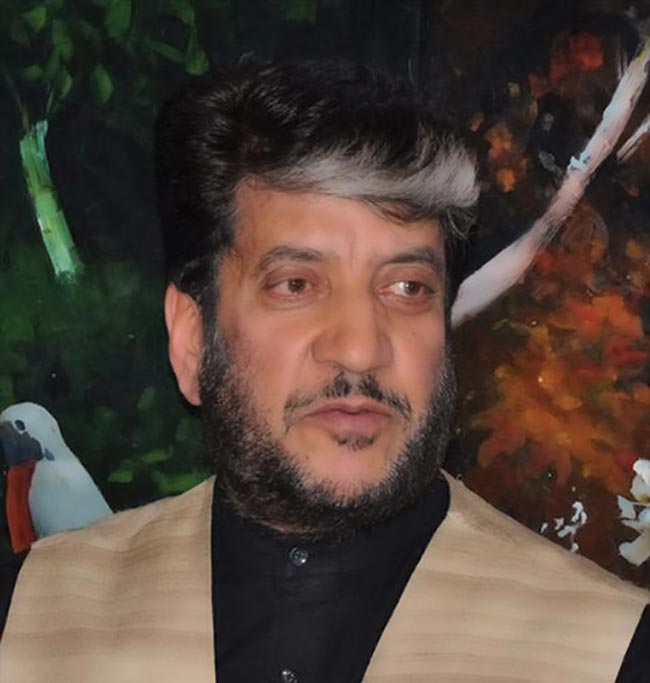
An emotional appeal by Sehar Shabir, daughter of jailed separatist leader Shabir Shah, for her father’s medical treatment has triggered rare political consensus in Kashmir, with parties across ideological lines urging the Centre to act on humanitarian grounds. Shah, imprisoned in Tihar Jail since 2017 without conviction, is reportedly battling life-threatening illnesses, including suspected prostate cancer. Sehar claimed her father has been denied medical records, surgeries, and even phone access for years. National Conference MP Ruhullah Mehdi, in a letter to Home Minister Amit Shah, invoked constitutional and international legal obligations to ensure dignified care for Shah, calling the denial of treatment a violation of the Nelson Mandela Rules. PDP chief Mehbooba Mufti, Peoples Conference leader Sajad Lone, and Hurriyat’s Mirwaiz Umar Farooq echoed similar concerns. A parallel appeal was made for Hameed Fayaz, head of the banned Jamaat-e-Islami, who is reportedly in urgent need of surgery. Both cases have intensified calls for the humane treatment of political prisoners. Justice and Development Front, a new party led by former Jamaat members, said silence on prisoners’ health crises is not an option, stressing that dignity and healthcare are fundamental rights even in custody.
JAMMU
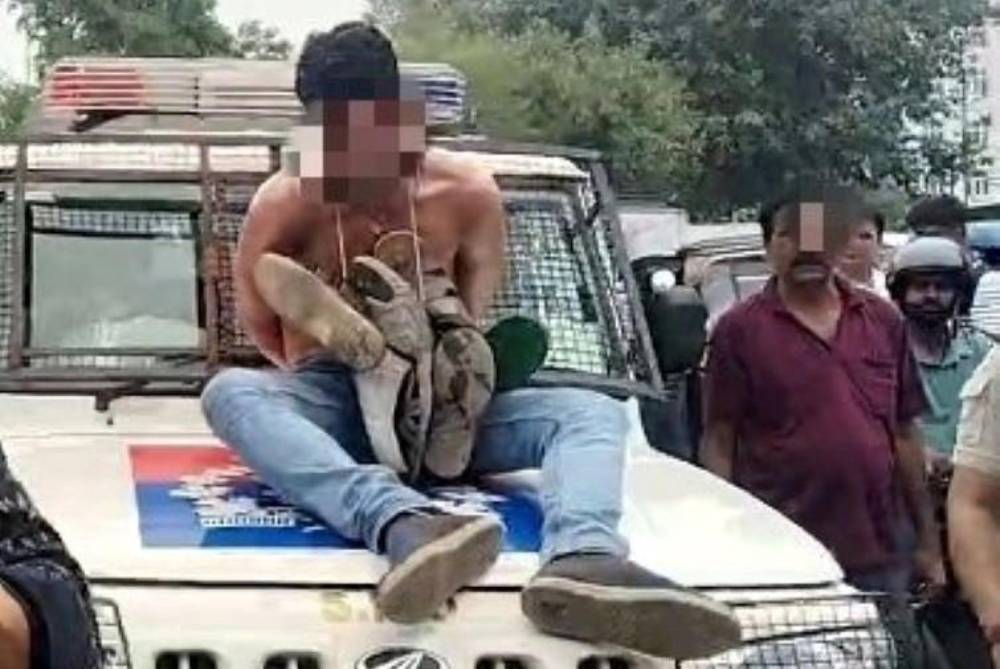
A dramatic incident in Jammu involving the public humiliation of a theft suspect has sparked outrage, legal complaints, and a departmental inquiry. On June 24, police paraded a 24-year-old Kashmiri man, allegedly involved in theft, through the streets with a garland of shoes and made him sit shirtless on the bonnet of a moving police vehicle. A video of the act went viral, prompting accusations of vigilante-style policing and constitutional violations. Senior Superintendent of Police Joginder Singh condemned the episode as “unprofessional” and ordered an inquiry, distancing the force from the actions of the personnel involved. The suspect, reportedly under the influence of drugs, was caught after a confrontation with a robbery victim. While police justified the arrest, the suspect’s public shaming has drawn sharp criticism, especially from Mirwaiz Umar Farooq, who called it a targeted humiliation of Kashmiris. Prominent lawyers across India complained with the National Human Rights Commission, citing violations of Article 21 and established custodial rights. They alleged a pattern of performative punishment replacing due process. This is the second such incident this month in Jammu, triggering calls for police reform and raising concerns over growing impunity and regional bias within the law enforcement system.
SAIDA KADAL

Under its Mission Ehsaas, the Nigeen Lake Conservation Organisation (NLCO) has launched the revival of a nearly century-old spring in Saida Kadal’s Batyarbal area, marking the 14th such restoration initiative across Kashmir. Prompted by a request from local children, NLCO prioritised the restoration, which will span about a month. The effort, supported by Srinagar Municipal Corporation (SMC), LCMA, and volunteers, aims to restore water heritage and tackle the looming water crisis. Once cleaned, the spring’s water will undergo testing to confirm potability, as was done with the 13 previously revived springs, all now reliable drinking sources. NLCO Chairman Manzoor Ahmad Wangnoo and environmentalist Syed Farooq Geelani highlighted the transformation of neglected springs into clean water sources and the importance of community involvement. A protective roof has also been proposed to ensure long-term preservation.
PAHALGAM
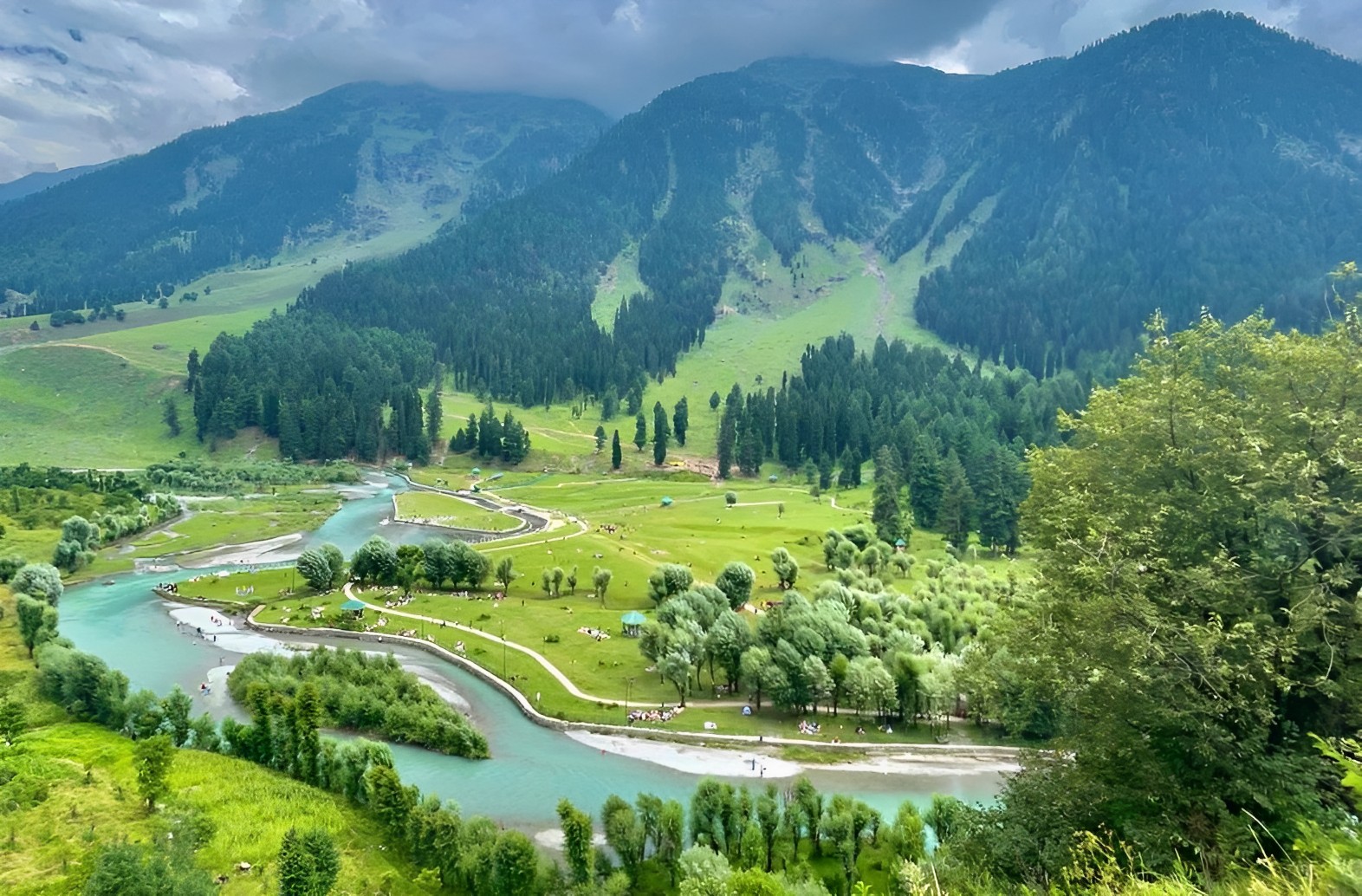
Kashmir’s tourism industry, which suffered a massive blow after the April 22 Pahalgam massacre, is showing early signs of recovery. The assault led to a mass exodus of tourists and cancellation of over 95 per cent of bookings, bringing the sector to a standstill. However, renewed government efforts, including reopening 16 of the 48 shut tourist sites and the launch of the Vande Bharat train by Prime Minister Modi, have spurred a gradual revival. Chief Minister Omar Abdullah, who visited Pahalgam and Gulmarg to chair tourism-related meetings, shared scenes of returning crowds and praised the recovery as the result of collective effort. The attack was carried out by three Pakistani militants, with Chief Minister Abdullah confirming that the perpetrators were non-natives. He urged authorities not to paint locals as complicit, suggesting any aid extended may have been under duress. Tour operators attribute the recovery to reduced hotel rates, national tourism campaigns, and the upcoming Amarnath Yatra, which is boosting bookings. Although tourist footfall has reached only 30–40 per cent of pre-attack levels, officials and stakeholders are optimistic that July will mark a full resurgence. Abdullah reiterated his call for the restoration of J&K’s statehood as a constitutional right.
HARWAN
Kashmir is facing a deepening rural emergency as a severe water crisis grips its rice-growing belt, particularly in Awantipora, Pulwama, and Check Dara on Srinagar’s outskirts. Soaring temperatures, minimal snowfall, and vanishing snow reserves have led to dried-up canals and parched paddy fields, spelling disaster for farmers in the region. In the once lush fields of Check Dara and Anantnag, deep cracks now run through the land as desperate farmers watch their rice saplings wither under an unrelenting sun. Farmers blame the unusual heatwave and snow deficit, with many saying this is the first time in years they have witnessed such extreme desiccation. Amid this worsening crisis, a glaring administrative vacuum is compounding the distress. Hundreds of engineering posts remain vacant in departments vital to water management and irrigation. The Jal Shakti Department alone has over 220 engineering vacancies, while the Public Works and Mechanical Engineering Departments also face severe staffing shortages. The PDP has publicly slammed the government, calling it a collapse of responsibility and urging Chief Minister Omar Abdullah to intervene urgently. Without swift action to fill vacancies and restore infrastructure, Kashmir’s agriculture faces a bleak future, with fears of crop failures, drinking water shortages, and intensifying public anger looming large.
DELHI

In a landmark infrastructure boost for Jammu and Kashmir, the central government has approved Rs 10,637 crore for 19 major road and tunnel projects, with two key tunnelling ventures, Peer Ki Gali on the Mughal Road and Sadna tunnel in north Kashmir, standing out for their strategic and developmental significance. The Peer Ki Gali tunnel, sanctioned at Rs 3830 crore, aims to transform the Mughal Road into an all-weather route, linking the Pir Panjal districts of Rajouri and Poonch with Shopian in south Kashmir. This will serve as a critical alternative to the often-disrupted Jammu–Srinagar National Highway (NH-44), enhancing mobility, enabling faster military movement, and integrating isolated regions with the Valley’s economic grid. Equally important is the Sadna tunnel, approved at Rs 3330 crore, which will provide year-round access to the Karnah region via Kupwara, Chowkibal and Trehgam, areas frequently cut off during harsh winters. Both tunnels will be executed by the Border Roads Organisation under the Ministry of Defence, given their strategic relevance near the Line of Control. The government has also sanctioned the Rs 95 crore Qazigund bypass and sought a Detailed Project Report for the widening and upgrade of the 63-kilometre NH-444 between Srinagar and Qazigund. This alternative highway, passing through Pulwama, Shopian and Kulgam, is expected to boost trade, particularly for Shopian’s apple economy, and improve access in winter.
Other significant projects cleared include the Rs 966 crore Trehgam–Chamkote road, Rs 852 crore Zaznar–Shopian section, Rs 700 crore Lal Chowk–Parimpora flyover in Srinagar, Rs 445 crore Magam flyover, and a Rs 71 crore bridge over the Rambiara river in Shopian. These projects are expected to dramatically improve road safety, reduce travel time, enhance border connectivity, and unlock new opportunities for tourism and commerce in the region.
NOWSHEHRA
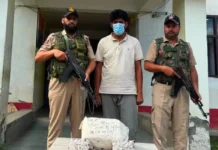
Former BDC chairman Vikas Kumar Sharma was arrested in Rajouri with 10 grams of heroin. A resident of Thill Hakima, he was intercepted while travelling from Lamberi to Bagnoti and tried to flee but was caught. A case under the NDPS Act has been registered. Sharma, previously a sarpanch and elected BDC chair in 2019, has three FIRs registered against him between 2006 and 2020.