by Ruhail Maqbool Sheikh
Conservation of the Doodh Ganga is not a matter of choice; it is a shared responsibility. If this lifeline is allowed to become a drain, we endanger not only nature but our health and survival.
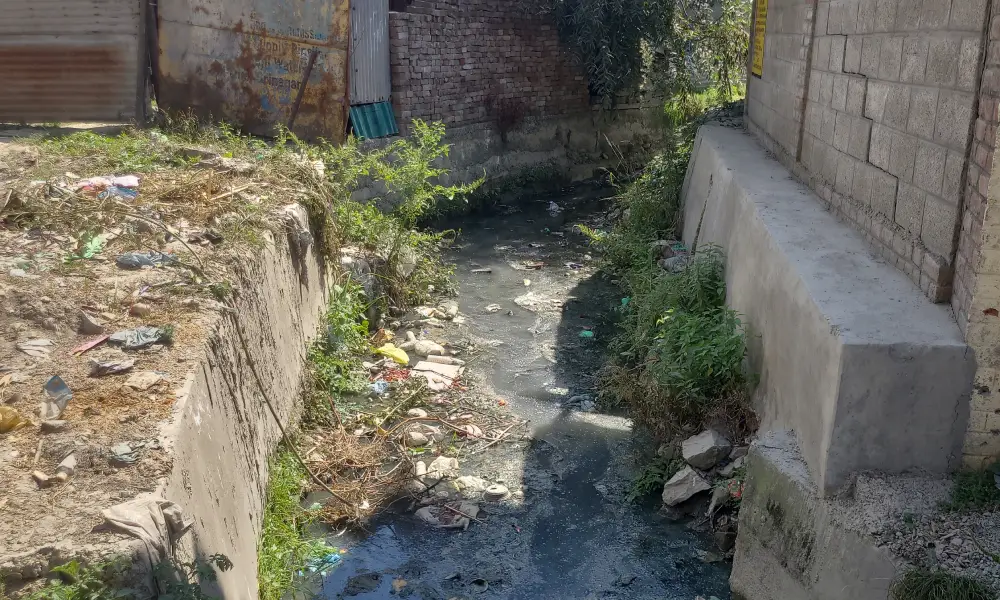
The story of Doodh Ganga is the story of how a pristine gift of nature is being slowly turned into a channel of waste, and yet, how hope continues to flow through the people who depend on it. Originating from the snow-capped Pir Panjal mountains, this stream once symbolised purity, nourishment, and life. It meandered across valleys, quenching the thirst of villages and towns, irrigating fields, and sustaining aquatic life.
Today, after repeated visits to different stretches of the Nallah, I saw a disturbing picture of neglect, pollution, and indifference. Yet amid this decay, what gave me courage was the awareness and readiness among people to save this lifeline. It is this dual reality of crisis and opportunity that shapes my story and my call for collective action.
Troubling Observations from the Ground
When I walked along the banks of Doodh Ganga, what struck me first was not its beauty but the scale of its pollution. Through field visits and research, I recorded several grave issues that demand urgent attention.
In many places, untreated household wastewater was being discharged directly into the Nallah. Drains carrying sewage emptied into the flowing water without treatment. This was not only unsightly but a dangerous source of waterborne disease.
I also came across heaps of cow dung and household garbage lying beside the very pipelines that supply drinking water to thousands of people. Here, pollution was not a question of aesthetics or ecology but of public health. What entered the Nallah was flowing straight into homes.
Polythene bags, food wrappers, and construction debris floated in the current, sometimes blocking the natural flow. This degraded water quality destroyed aquatic life that depended on a clean habitat.
In several stretches, unplanned construction had narrowed the river. These encroachments reduced the carrying capacity of the Nallah, increasing vulnerability to floods and erosion while robbing it of space to breathe.
During discussions with employees at the water filtration plant, I learned that chemical dosages had to be raised substantially to make the water potable. This was proof that the natural quality of the water had declined so sharply that treatment had become more expensive.
What I witnessed made one truth clear: polluting the Doodh Ganga is not only damaging a stream, it is poisoning ourselves.
Awareness and Community Engagement
Although the pollution was distressing, the response of the people gave me hope. Through my research, I held discussions with individuals from different walks of life, and each interaction reinforced the belief that collective action is possible.
Doctors and health workers explained how contaminated water was leading to more cases of cholera, diarrhoea, typhoid, and skin diseases. They stressed that protecting the Doodh Ganga was inseparable from protecting public health.
Teachers and students welcomed awareness sessions and promised to spread the message of conservation in schools and homes. Students, with their eagerness and innocence, showed that change could begin at the grassroots.
Imams and other religious leaders reminded communities of the moral duty to protect nature. They said that water is sacred and that polluting it is a sin. Their words carried weight and resonated deeply.
Officials and local representatives acknowledged the urgency and promised to work alongside civil society.
What struck me most was the cooperation of every stakeholder: villagers, professionals, and students alike. There was no denial of the problem, only agreement that awareness must now be turned into action.
Saving It Means Saving Life
Doodh Ganga is not simply a water channel. It is the lifeline of thousands. Polluting it endangers food, health, and livelihoods. The consequences of neglect are severe.
Contaminated water spreads disease, devastating communities, especially children and the elderly. Polluted water reduces soil fertility, harming food production and the livelihood of farmers. Aquatic life is dying as oxygen levels fall and pollutants rise. The costs of treatment at filtration plants increase, draining already limited resources.
Protecting Doodh Ganga means protecting our survival. It is not only an environmental concern but a human rights issue.
The Way Forward
The solution lies in shared responsibility. Every individual and institution has a role. Citizens must stop dumping garbage, cow dung, or construction debris near the Nallah or pipelines. Waste must be managed responsibly, and awareness must be put into practice.
Municipal bodies, the Jal Shakti Department, the Pollution Control Board, irrigation authorities, and the health and education departments must coordinate and ensure strict monitoring. Polluters must face penalties, and negligence cannot be tolerated. Only accountability will bring change.
Communities should reclaim dumping sites and convert them into clean, green spaces. Planting trees and maintaining sanitation can restore what was once lost. Dustbins must not replace gardens; instead, gardens must return where they belong.
A Call to Action
The voices of doctors, teachers, imams, students, officials, and villagers are united in concern. Conservation of the Doodh Ganga is not a matter of choice; it is a shared responsibility. If this lifeline is allowed to become a drain, we endanger not only nature but our health and survival.
If we act now, we can still restore Doodh Ganga to its former glory. We can revive its crystal waters, ensure safe drinking supplies, and pass on a healthy ecosystem to future generations. The Nallah is calling, not with words but with its choking flow. It asks us to stop treating it as waste and honour it as the source of life that it truly is.
Let us pledge to protect Doodh Ganga, not only for ourselves but for every generation yet to come.
(The writer is a water quality analyst. Ideas are personal.)