SRINAGAR: Eminent intellectuals, legal experts, educationists, psychiatrists, doctors and social activists on Thursday called for a united societal response against the growing menace of drug addiction in Kashmir during a community awareness programme organised by Common Interest Conversations at the Amar Singh Club Srinagar.
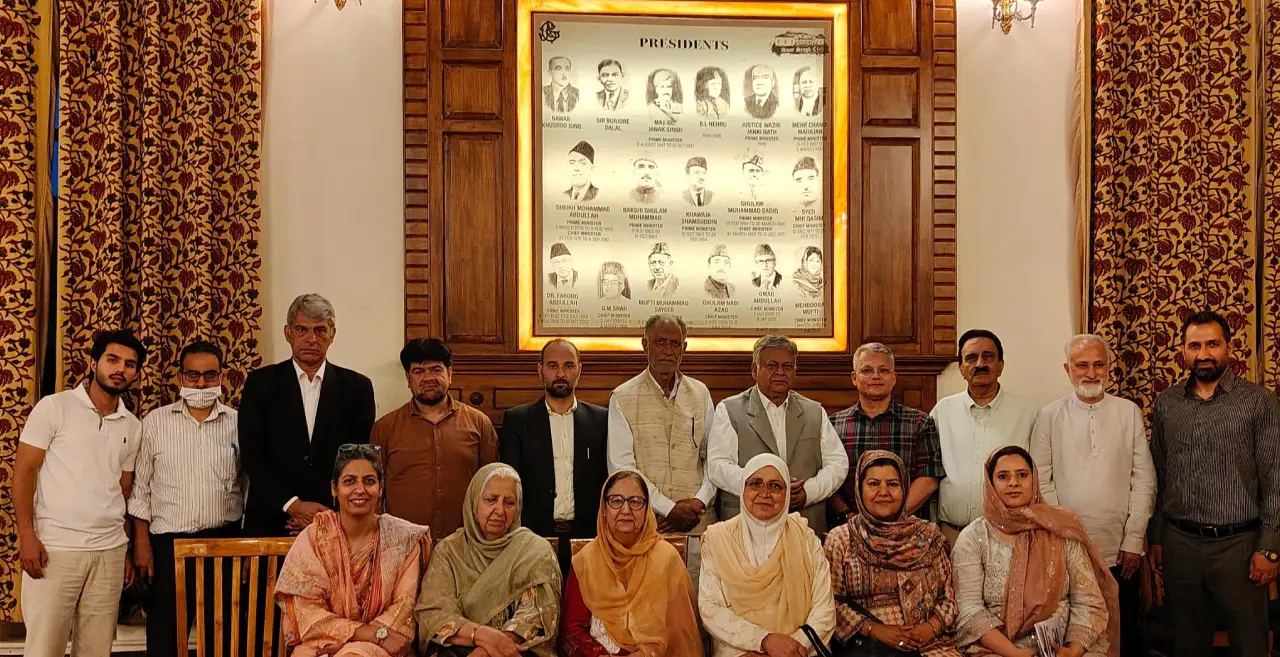
Held under the theme “Resilient Minds, Drug-Free Future,” the programme brought together experts from diverse professional backgrounds to deliberate on the social, psychological, legal and medical dimensions of substance abuse affecting society.
The programme was chaired by Senior Supreme Court Counsel Zaffar A Shah, who stressed the need for collective reflection and preventive intervention to protect youth from addiction.
Addressing the gathering, Shah said the drug crisis could not be addressed through punitive measures alone and society needed to understand the deeper social and emotional vulnerabilities pushing young people towards addiction.
“Almost every household today is worried about the future of its children,” he said, adding that unemployment, emotional stress, family instability and social uncertainty were among the factors contributing to substance abuse.
Secretary Amar Singh Club Nasir Hamid Khan said the programme aimed to create awareness and encourage constructive dialogue around the growing threat of drug abuse.
“The objective is to bring together experts from different fields to deliberate upon the social, psychological, medical and economic dimensions of substance abuse,” he said.
Private Schools’ Association JK president Bilal Ahmad Bhat termed drug addiction a “serious social concern affecting almost every section of society” and called for timely intervention and awareness at the community level.
Veteran social activist Tasneem Akhter said field-level interactions with affected families had revealed the devastating emotional and social impact of addiction on homes and communities.
“Practical fieldwork helped us realise that statistics alone cannot capture the human suffering caused by addiction,” she said.
Chairman Birla Open Minds International School Pampore GM Lone expressed concern over the decline in work culture and increasing frustration among youth.
“We have opportunities and resources, yet many young people are unwilling to engage in productive work. Unrealistic expectations and artificial lifestyles are contributing towards hopelessness,” he said.
Assistant Professor Psychiatry Dr Shazia Kounser said society still hesitated to openly discuss mental health issues despite the increasing burden of psychological distress and addiction.
She cautioned against superficial awareness trends on social media and stressed the importance of expert-led mental health interventions.
Consultant Psychiatrist Dr Fazl e Roub described heroin addiction as one of the most serious public health challenges confronting Kashmir and called for a coordinated referral and rehabilitation mechanism involving families, schools, healthcare institutions and specialised treatment facilities.
Former Head of Community Medicine SKIMS Abdul Majid Ganai emphasised preventive approaches in tackling addiction and referred to a detailed study conducted among college students in Kashmir which highlighted the stigma associated with openly discussing substance abuse.
Senior lawyer Bashir Siddiqui said NDPS-related litigation had increased significantly in recent years, reflecting the seriousness of the crisis.
He stressed the need for proper investigation, procedural fairness and strict implementation of narcotics laws.
Medical Officer PHC Zadibal Dr. Lubna Khan said addiction had evolved into a “serious social epidemic” affecting adolescents and young people at an alarming rate.
She said awareness campaigns alone would not suffice unless followed by counselling, rehabilitation and sustained community participation.
The programme also featured participation from psychiatrists, educationists, lawyers, civil society members, social activists and youth representatives who collectively called for stronger family engagement, value-based education, community awareness and coordinated institutional action to combat substance abuse and safeguard future generations.