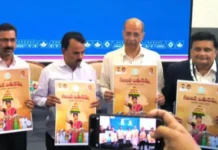
SRINAGAR: The UMEED programme has formed 96,595 Self Help Groups (SHGs) in Jammu and Kashmir, mobilising more than 8.10 lakh rural households, officials said on Thursday during a review of rural development schemes.

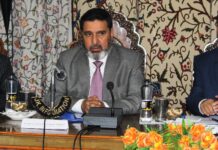
The figures were presented at a meeting chaired by Secretary, Rural Development Department (RDD) and Panchayati Raj Mohammad Aijaz Asad, which assessed the saturation status of key Individual Beneficiary Schemes across the Union Territory.
Officials said the programme has exceeded its SHG formation targets and significantly expanded women-led economic mobilisation in rural areas. The review also covered other flagship schemes, including MGNREGA, PMAY-G, SBM-G, MKSP, SVEP and HIMAYAT.
The Secretary directed departments to maintain updated household coverage data and ensure scheme-wise and district-wise reporting to accurately reflect current achievements. He also called for comparative performance analysis since April 2026 and revision of saturation targets where required.
Under MKSP, officials informed the meeting that 176 Detailed Project Reports for Integrated Farming Clusters have been completed, covering over 51,000 SHG households. The Secretary sought further details on fund utilisation and implementation timelines.
In the livelihoods sector, HIMAYAT has trained more than 35,700 youth under DDU-GKY Phase 1, while 1,700 candidates have been trained under Phase 2 of the 2025–28 Action Plan, which has a target of 32,000 trainees.
Under MGNREGA, 444.39 lakh person-days of employment have been generated, according to figures presented at the meeting.
The housing sector has recorded the completion of over 3.24 lakh houses under PMAY-G against a target of 3.34 lakh, while SBM-G has achieved 100 per cent saturation in ODF Plus Model Villages and Individual Household Latrine coverage.
The Secretary emphasised the need for evidence-based planning, strengthened field monitoring and structured reporting to ensure saturation of eligible beneficiaries under flagship rural development schemes across Jammu and Kashmir.