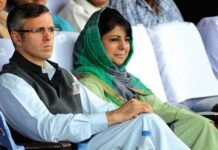
SRINAGAR: Eid-ul-Fitr was celebrated with religious fervour across Jammu and Kashmir on Monday, with thousands of worshippers gathering at mosques and Eidgahs to offer prayers for peace and prosperity. The largest congregation took place at the Hazratbal shrine in Srinagar, where Chief Minister Omar Abdullah and former Chief Minister Farooq Abdullah joined thousands of devotees for the prayers. They also prayed at the grave of the JKNC founder, Sheikh Mohammad Abdullah. Omar’s twins accompanied him to the prayers.
Across Jammu and Kashmir, Muslims assembled in large numbers at designated prayer sites to mark the end of the holy month of Ramzan. In Srinagar, prayers were offered at various mosques and shrines, including Khanqah-e-Moula, Charar-e-Sharif, and Peer Dastgeer Sahib. Similar scenes were witnessed in other districts such as Budgam, Baramulla, Kupwara, Bandipora, Ganderbal, Pulwama, Shopian, and Kulgam.
In Jammu, the largest Eid gathering was held at the Eidgah ground in the city, where hundreds of Muslims came together for prayers. Other districts in the Jammu division, including Poonch, Rajouri, Doda, Kishtwar, Ramban, Reasi, Udhampur, Samba, and Kathua, also saw vibrant celebrations. The occasion was marked by communal harmony, as Hindu and Sikh neighbours joined in greeting their Muslim friends.
Despite the widespread celebrations, a sombre note prevailed in Srinagar as Eid prayers were not permitted at the historic Jamia Masjid and the Eidgah grounds. Mirwaiz Umar Farooq, Kashmir’s chief cleric, said he was placed under house arrest and barred from delivering the Eid sermon at either location. The Anjuman Auqaf Jamia Masjid, which oversees the affairs of the grand mosque, expressed regret over the authorities’ decision to restrict religious gatherings, including Shab-e-Qadr and Jumu’at-ul-Vida prayers.
Mirwaiz strongly condemned the move, stating, “Eidgah and Jamia Masjid belong to the people. Barring them from these sacred spaces even on Eid reflects an oppressive and authoritarian approach that prevails in Kashmir today.” He further questioned why congregational prayers were being disallowed despite government claims of normalcy in the region.
I am deeply pained and strongly condemn the authorities decision to once again deny the Muslims of Kashmir the basic right to offer Eid prayers at Eidgah and Jama Masjid which have been closed down and I have been detained at home
Even at the peak of miltancy during 1990’s Eid… pic.twitter.com/Q5kstVUlq8
— Mirwaiz Umar Farooq (@MirwaizKashmir) March 31, 2025
Officials cited ongoing construction work at the Eidgah as the reason for the restrictions. Chairperson of the Jammu and Kashmir Waqf Board assured that alternative arrangements had been made for congregational prayers at Hazratbal and other mosques. However, the decision to keep Jamia Masjid closed and to prevent prayers at the Eidgah sparked criticism from political and religious groups.
Despite the restrictions, the faithful across the region observed the festival with devotion. Sermons in various mosques emphasised the values of unity, compassion, and service to humanity. Worshippers prayed for lasting peace and prosperity in Jammu and Kashmir. They also made special prayers for Palestine.
Authorities had deployed security personnel at key locations to ensure a peaceful observance of the festival. The government also made sanitation arrangements at various prayer sites to facilitate devotees. By the end of the day, Eid prayers had concluded without any reports of untoward incidents from anywhere across the erstwhile state.
Mirwaiz Umar Farooq, while unable to address the faithful in person, extended his Eid greetings through a statement, urging people to reflect on the spirit of the occasion and uphold values of brotherhood and empathy. “May Almighty Allah accept the prayers, fasting, and good deeds of the people and bless them with peace, prosperity, and happiness,” he said.